
J Shar Timber Harvesting brings tethered logging to Western Montana
MONTE TURNER | Hagadone News Network | UPDATED 2 weeks, 6 days AGO
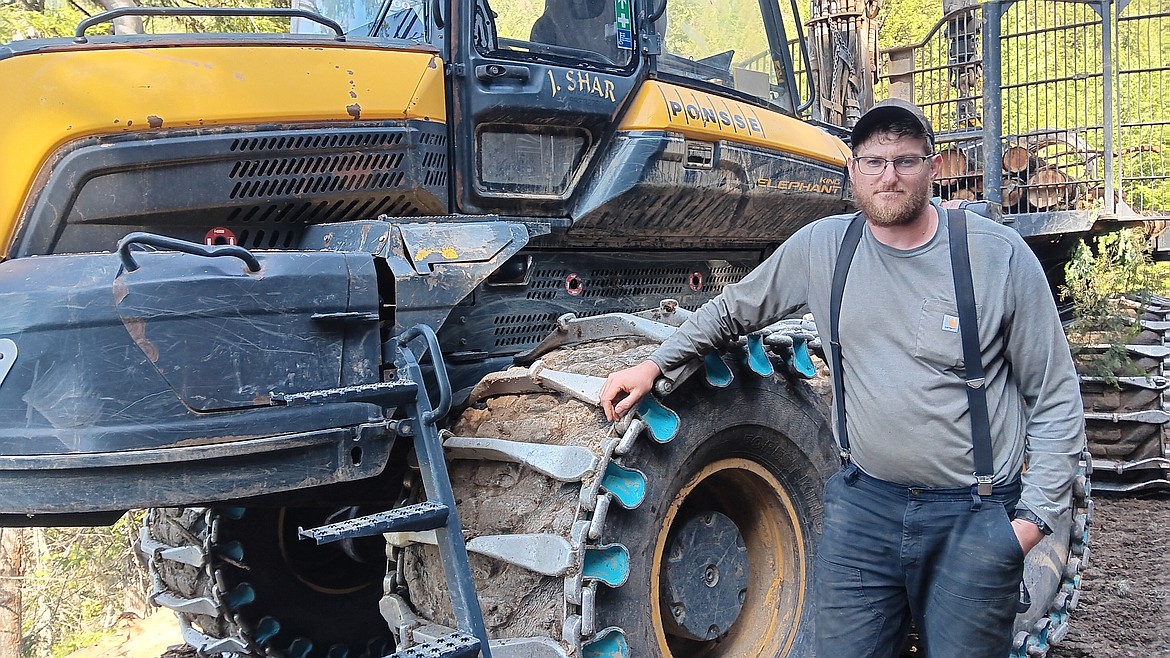
Matt Fitchett has been a part of J Shar Timber Harvesting for 18 years. The younger brother of Jared Fitchett, who runs the operation, and the son of Dan Fitchett, Matt says he can’t see himself working any other place. The steel tracks on the tires are called bands in other countries and Matt Fitchett said they are easier to put on the Ponsse forwarder than putting normal chains on skidder tires. (Monte Turner/Mineral Independent)
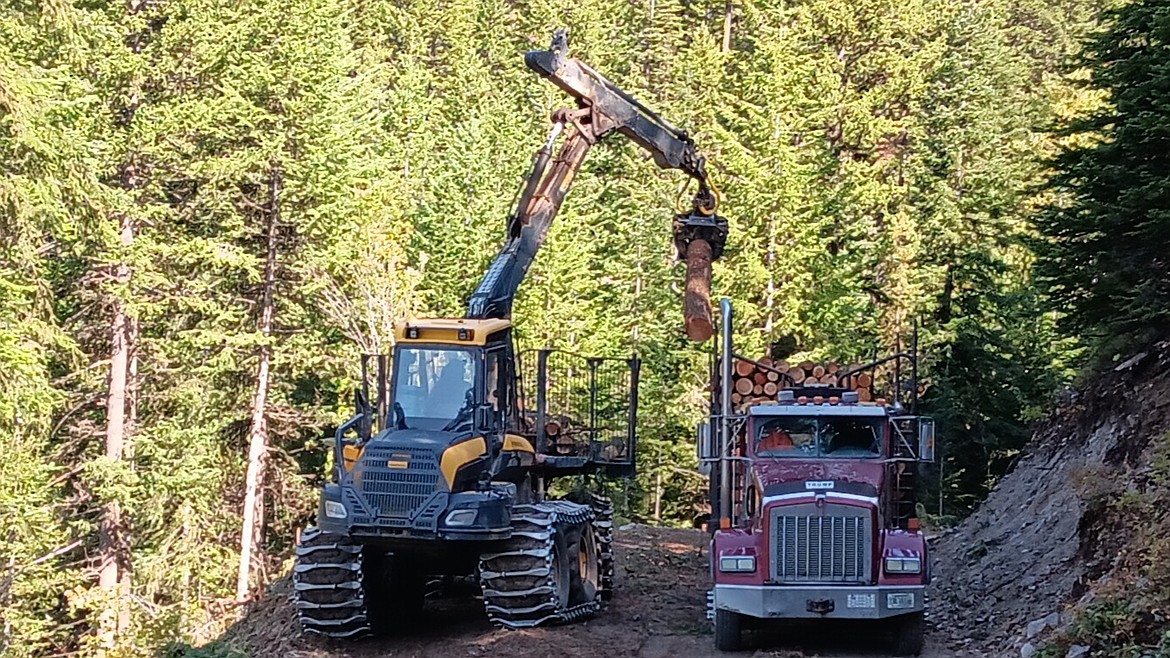
J Shar Timber Harvesting specializes in smaller diameter logs and work on some of the steepest mountains in western Montana and Idaho. (Monte Turner/Mineral Independent)
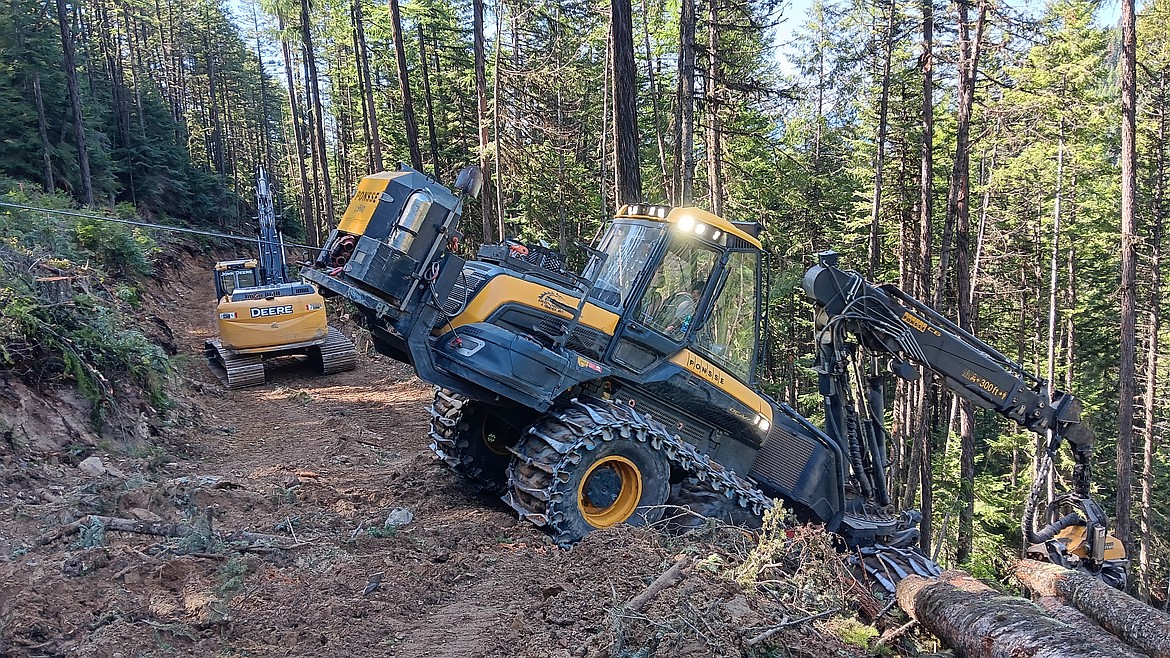
A cable tethering system on the Ponsse equipment allows timber harvesting to be done on extremely steep slopes. (Monte Turner/Mineral Independent)
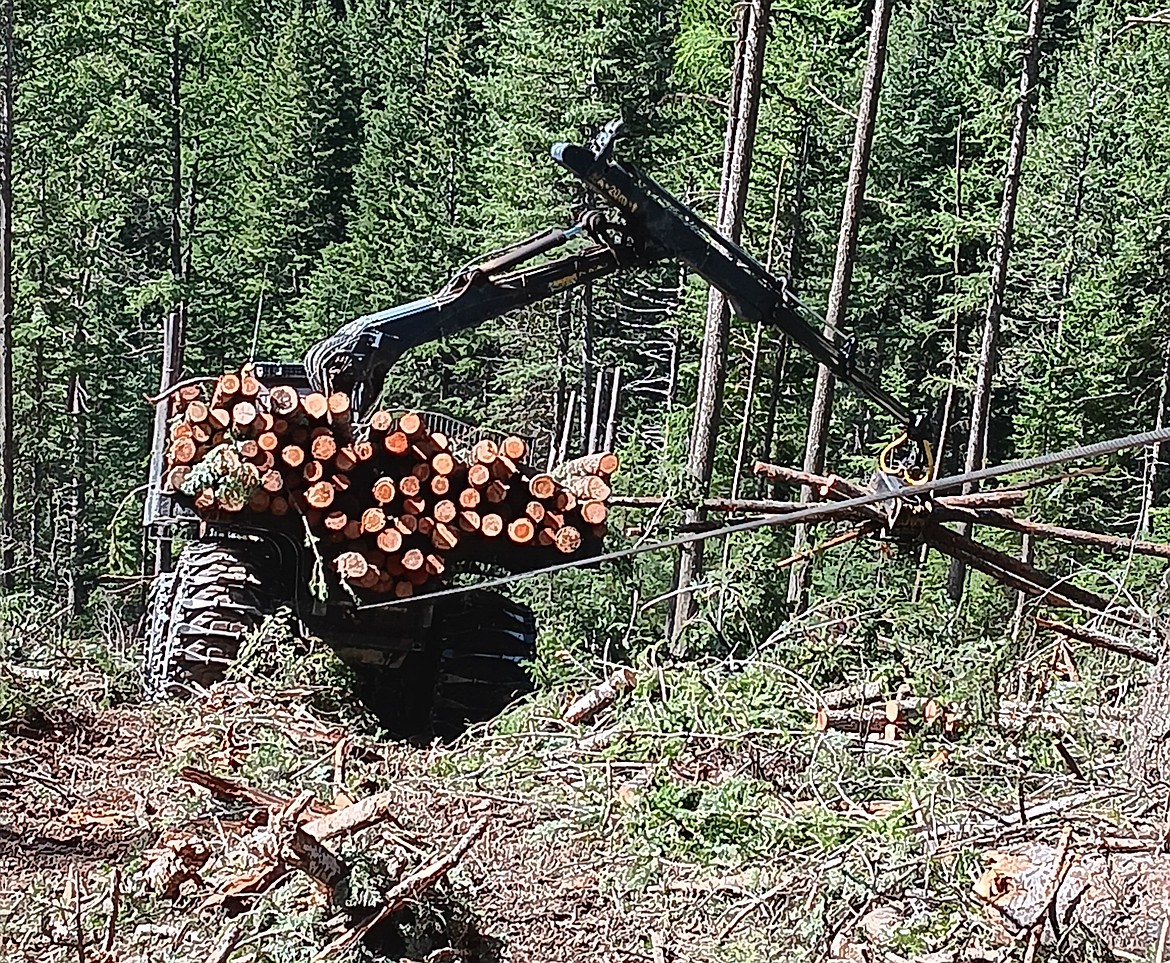
A cable is anchored above the forwarder and works with the drive train in moving the massive machine up and down the mountain. A tension setting is inside the cab if extra strength is required. (Monte Turner/Mineral Independent)
When Jared Fitchett looks at a mountain covered in timber, he sees more than trees. He sees the slope, the soil, the moisture, the regeneration, the value of the timber and, perhaps most importantly, the safest and most efficient way to get the wood off the mountain without unnecessarily disturbing the ground beneath it.
That way of thinking has made Fitchett and his J. Shar Timber Harvesting operation one of the more innovative logging outfits working in Montana.
Now, Fitchett has brought that operation to Superior.
J. Shar Timber Harvesting is a cut-to-length timber enhancement company founded by Fitchett in 2001. The company began in Heron, where Fitchett grew up in a logging family at the head of Elk Creek surrounded by mountains that are steep in just about every direction. He started helping his parents in the logging business when he was 15 years old, where he learned the traditional way of logging. His career eventually took him halfway around the world, where he discovered a radically different approach that would help shape the way he operates today.
It happened in Siberia. The Discovery Channel had a reality show produced by RAW TV called Siberian Cut. The Fitchett brothers were hired to participate, but when the final call came, only Jared made the trip.
He spent three months in Siberia filming the program. Only three or four episodes aired in the United States, although the show continues to be broadcast in many European countries. For Fitchett, however, the TV show turned out to be far more important than simply a three-month adventure. It introduced him to Finnish logging technology he had never seen before, particularly the tethered logging system.
The massive machines are manufactured in Finland, with their North American headquarters in Rhinelander, Wisconsin. That is where J. Shar purchased its equipment and parts.
Tether logging allows specially equipped machines to operate on terrain that would be extremely difficult, dangerous or environmentally damaging for conventional logging equipment. A hydraulic-powered winch attached to the machine is connected to an anchor point higher on the mountain. The cable helps stabilize the machines as they travel up and down steep slopes, allowing the operators to work where ordinary equipment would have difficulty maintaining traction.
For Fitchett, the technology made sense. He knew steep country. He knew logging. And he understood from experience what heavy equipment could do to the forest floor. But he also wanted to understand what happened after the machines left.
Fitchett has spent years observing how soil, slash and logging traffic affect forest regeneration. He has even used laser temperature readings to compare bare soil with areas covered by scatter mat and slash where he learned that a thin layer of limbs and slash can help keep the soil moist during the hottest part of the summer and can influence how successfully a forest regenerates.
“Everything I harvest is new from the 1910 fires,” he said.
Fitchett believes that if the soil and surface are handled correctly, natural regeneration could potentially eliminate the need for replanting following some logging operations. His knowledge doesn't come from a classroom. It comes from years of working in the woods, studying what happens to the ground and watching forests grow back. That same practical approach is evident before he ever starts a machine.
“When I look at a jobsite, I walk the entire area from border to border examining the timber, steepness, ground makeup and everything that goes into making calculations for safety and economic viability," he said. "I don’t want the entire [timber] sale. I find what we’ll be good at doing and then recommend to the buyer that other companies need to come in for what they specialize in.”
That philosophy has made J. Shar particularly valuable to Idaho Forest Group. Sources from IFG say one of the biggest advantages J. Shar brings to its program is the company's ability to work efficiently in smaller trees and mobilize more easily than many other logging companies. The company also has equipment capable of handling roads, snow plowing and rehabilitation work. J. Shar can harvest and merchandise small wood on steep ground efficiently, and the company is scheduled to provide services on two additional Idaho Forest Group timber sales after the current project is completed.
Fitchett's approach also fits well with the needs of Big Sky Forest Products in St. Regis. The St. Regis mill specializes in smaller-diameter wood, exactly the kind of timber J. Shar is equipped to harvest.
“They have provided 98% of our wood this year. They are fantastic to work with and cut our logs to the exact length we need,” said Liz Thompson, business manager of Big Sky Forest Products.
That precision is one of the biggest differences between the equipment Fitchett operates today and the logging equipment of his youth. J. Shar uses a cut-to-length system. The harvester cuts the tree, removes the limbs and processes the tree into logs of specific lengths right in the woods. The forwarder then picks up those logs and transports them to a loading site or directly to logging trucks.
Fitchett's younger brother, Matt, 37, operates the forwarder and loads the cut-to-length logs onto trucks owned and driven by their father, Dan.
Matt came back to the family business after Jared needed a skidder operator.
“I wasn’t happy with what I was doing so I came over,” he said.
Like his brother, Matt grew up around logging.
“I’ve been doing this for over 18 years now and I can’t see myself doing anything else,” he said.
Matt has operated three Ponsse machines with J. Shar. The company's current machine is a 2016 model that was originally sold to a lumber harvesting operation in Norway. J. Shar took ownership of it in 2020. Matt explained how the machines work together.
“We have the harvester that Jared runs and it cuts the logs and processes them in the woods and the forwarder that picks it up and loads the timber onto a trailer for transporting to a loading site or directly onto the logging trucks," he said. "The harvester has a winch on the front of the machines, it goes downhill and the loader has a winch built into the framework of the back of the machine as it goes the opposite way to collect the wood. The hydraulic powered winches are synced with the drive system that assists the machine up and down the hill.”
It is technology that is particularly well suited to Mineral County. Fitchett points to the steep slopes of the Mag 7 timber sale as an example.
Downhill skiers might classify portions of the sale as double or triple-black-diamond terrain. The country is so steep and brushy that reaching a suitable anchor point for the tether can mean crawling through the vegetation on hands and knees. Fitchett has done exactly that. Once he reached a large tree suitable for anchoring the machine, he wrapped the tether partially around a massive stump, using the stump to increase the strength of the cable. He then slowly guided the harvester down the mountainside, cutting, limbing and processing trees into precise lengths along the way.
“Anything steeper than this, I’d say you need a cable logging system,” Fitchett said, referring to the traditional tower-and-boom system used to cable logs up steep mountains.
J. Shar was the first tether operation in Montana. Fitchett had been familiar with some of the machinery before his trip to Siberia, but the winching systems opened his eyes to what the technology could do. He also sees an important role for the U.S. Forest Service in making that technology possible and credits the agency for working hard to maintain lumber production in the region.
“There are more timber sales in Mineral County than most of the other counties in Montana," he said. "And they have more tether machines operating than the whole state which is because the terrain is so doggone steep.”
The current Mag 7 sale was originally purchased by Tricon Timber in 2017 and transferred to IFG during the sale of the sawmill. The section J. Shar is working contains fir and western larch. Lodgepole pine is what Big Sky Forest Products in St. Regis needs, so these logs are being hauled to a mill in Washington. Dan makes two trips a day at 180 miles one way. Matt loads the logs onto the truck and then meets his father somewhere along Interstate 90. The two swap rigs, with Matt bringing the empty truck back to the jobsite to load it again.
The smaller logs may not bring the same return as sawlogs, but Fitchett has found a way to make the numbers work.
“Does it pay as much as our saw logs? No, but I’m able to capture that value on small margins, like a grocery store, proving consistent quantities every day,” he said.
Inside the harvester's cab, a computer analyzes the value of every log as it is processed. Fitchett can keep track of the value of the timber being harvested and have a remarkably precise estimate of what is on the ground.
For a logger who grew up in the days of chainsaws, chokers, small dozers and crews walking the mountains, the change is remarkable.
“We grew up in this business. My family worked in the days of chainsaws, chokers, and ‘hookers,’ when crews traveled up and down the mountains on foot all day. Small dozers were our workhorses. That experience builds the confidence to handle nearly any tangle or crisis on site.”
Fitchett has seen the industry change from both ends. He knows the old way because he lived it. And he has embraced the new way because he believes the technology can make logging safer, more efficient and less damaging to the forest floor.
In 2023, Gov. Greg Gianforte recognized J. Shar Timber Harvesting with a Forest Products Award for its work in actively managing Montana forests, responsibly developing forest resources and promoting the use of Montana wood products.
But Fitchett's biggest concern isn't the enormous investment required to purchase and maintain modern logging equipment. It isn't getting a machine stuck in the bottom of a ravine or a mechanical breakdown, because he and Matt will figure it out and solve those problems. What worries him is who will operate the machines in the future.
Fitchett's wife and three children are now settled into their new home in Superior, where his wife homeschools the children. And while he sees tremendous opportunity in modern equipment, he worries that fewer young people are being exposed to logging as a career.
“With this new modern equipment, it definitely gives them a better option to be in (the industry) as they are safer and more reliable and then the physical aspects aren’t as great," he said. "And there is plenty of logging out there! It’s not like it used to be and that’s sad. You don’t see it as much as you used to but it’s here. It’s still here in a smaller way; it’s here in a very modern way.”
That may be the best description of Fitchett's operation. Logging is still logging. Trees are still cut, processed and hauled away. But the way it is being done is changing. For Jared Fitchett, the future of logging isn't something waiting over the next mountain, because he is already climbing it.
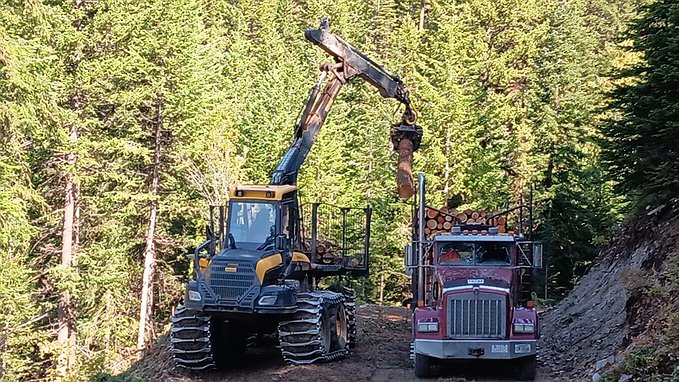 J Shar Timber Harvesting specializes in smaller diameter logs and work on some of the steepest mountains in western Montana and Idaho. (Monte Turner/Mineral Independent)
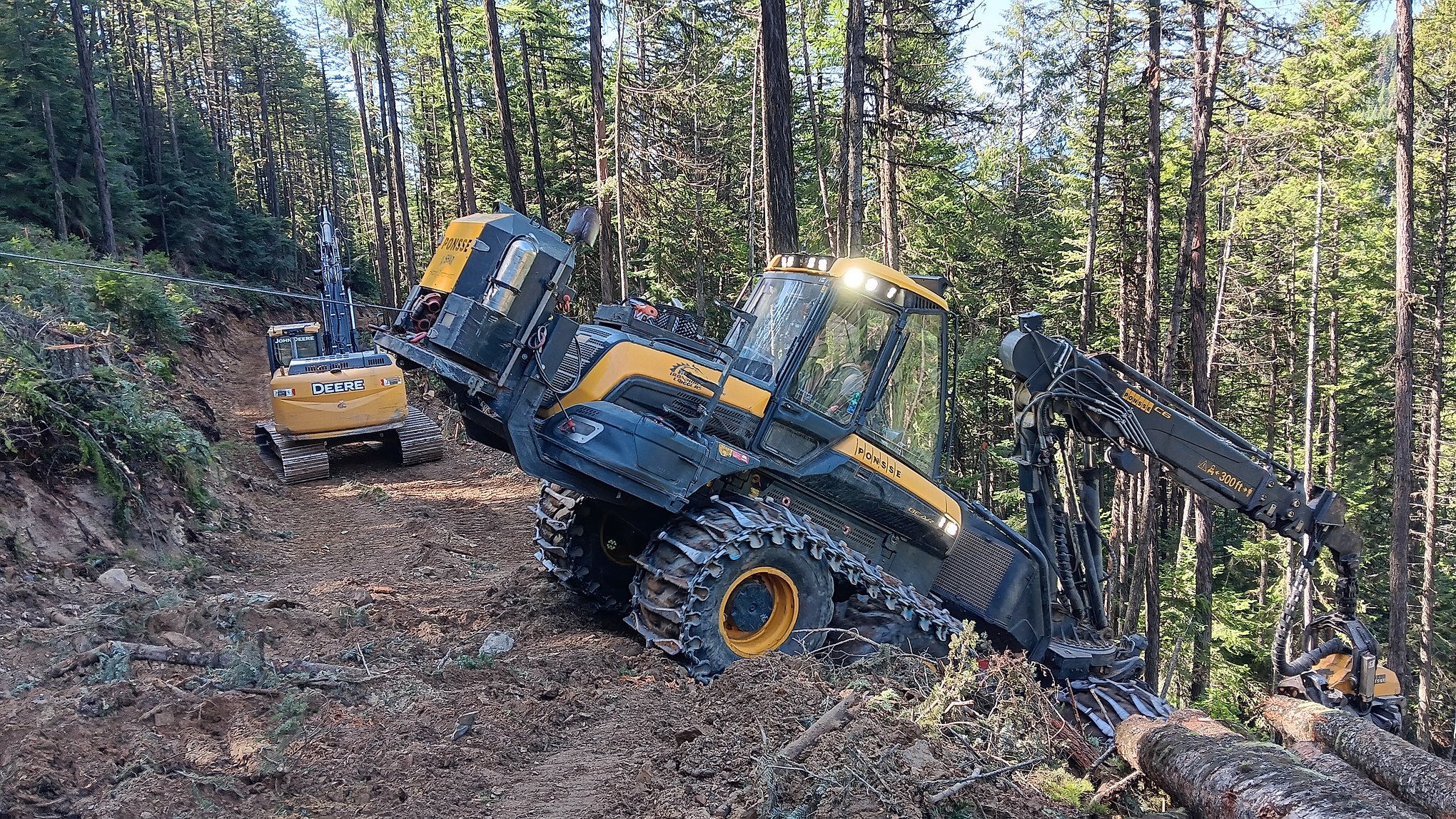 A cable tethering system on the Ponsse equipment allows timber harvesting to be done on extremely steep slopes. (Monte Turner/Mineral Independent)
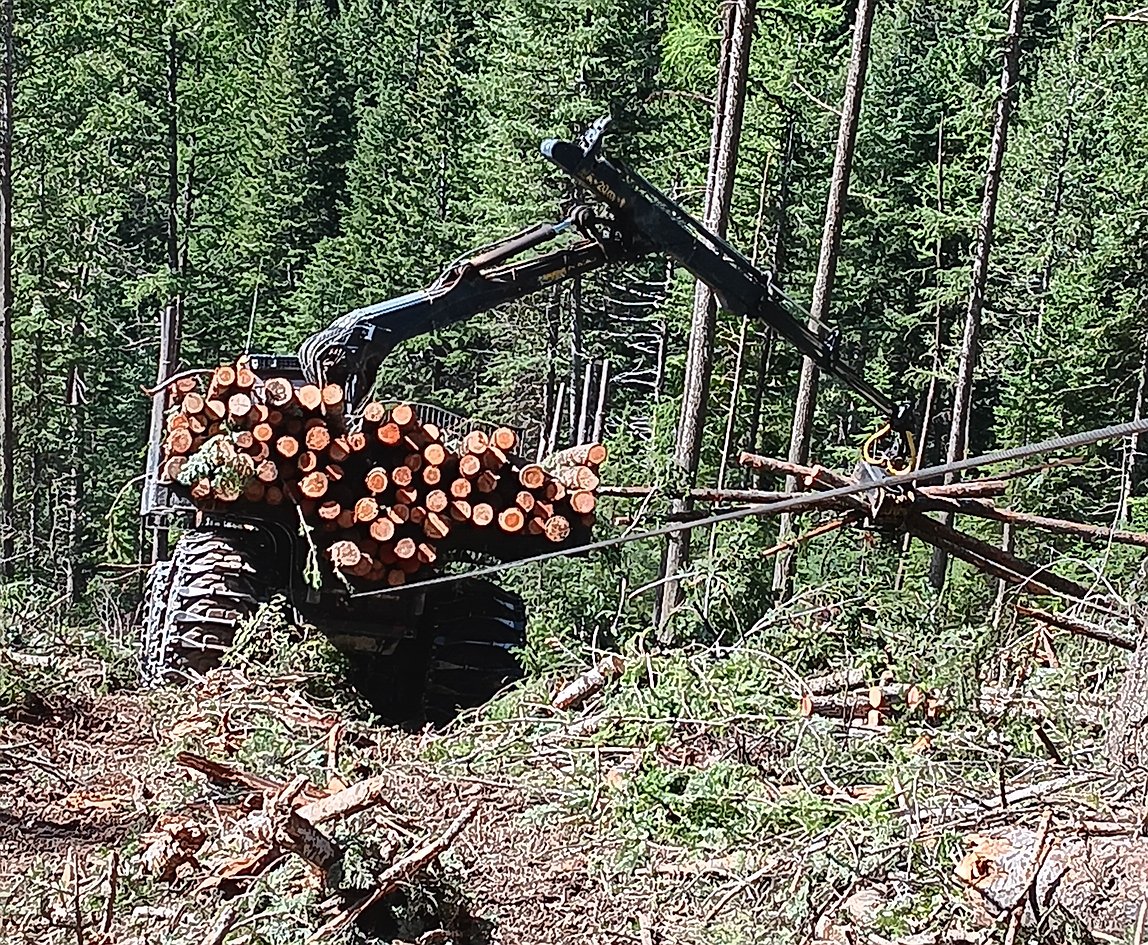 A cable is anchored above the forwarder and works with the drive train in moving the massive machine up and down the mountain. A tension setting is inside the cab if extra strength is required. (Monte Turner/Mineral Independent)
ARTICLES BY MONTE TURNER
Montana-Idaho border reconfigured after survey retraces original state lines
The Bureau of Land Management has completed its official resurvey of the Montana-Idaho boundary near Lookout Pass, going back to the original survey monuments and retracing the line that was established more than 120 years ago.
Montana-Idaho border reconfigured after survey retraces original state lines
The Bureau of Land Management has completed its official resurvey of the Montana-Idaho boundary near Lookout Pass, going back to the original survey monuments and retracing the line that was established more than 120 years ago.

Mineral County ride program making running errands a cinch
MCPC provides both regularly scheduled rides and unscheduled medical transportation, and the price depends on the type of trip.