
Nonprofit takes up work to overturn wrongful convictions
LAURA GUIDO / Idaho Capital Sun | Bonner County Daily Bee | UPDATED 2 weeks, 1 day AGO
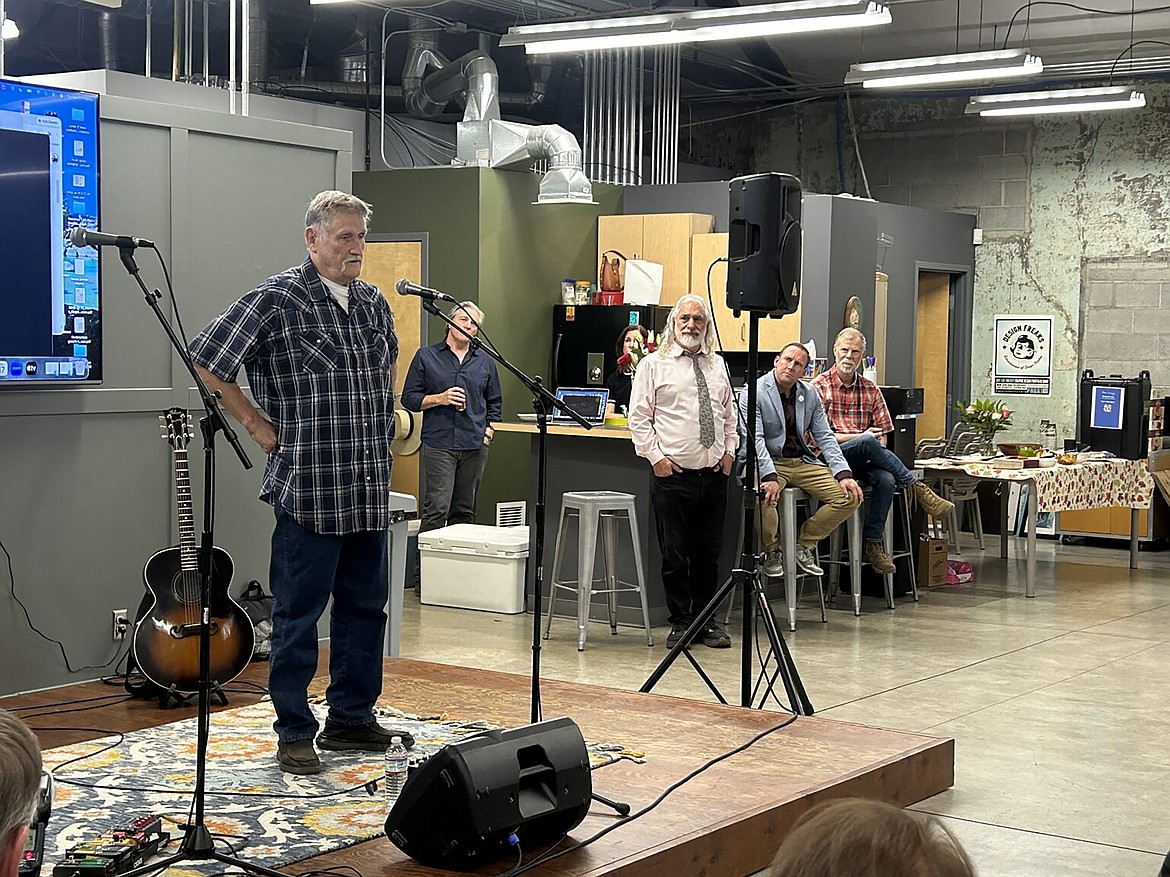
Charles Fain, who in 2001 was exonerated and freed from prison after 16 years, speaks at a Sept. 17, 2026, event in Boise to announce a new nonprofit taking up the work of trying to overturn wrongful convictions in the state. To his right are retired founder of the Idaho Innocence Project Greg Hampikian and The Innocence Center Executive Director Mike Semanchik.
Photo by LAURA GUIDO / Idaho Capital Sun
Charles Fain says his three favorite letters in the alphabet are D-N-A.
In 2001, Fain was exonerated and released from an Idaho prison after nearly 20 years on death row for a rape and murder he did not commit, using DNA analysis. After his release, the Idaho Innocence Project helped police identify the true perpetrator and got Fain a certificate of innocence and compensation for wrongful conviction.
The Idaho Innocence Project has been shuttered for more than two years because of a lack of funding. However, on Sept. 17, Fain joined Innocence Project founder Greg Hampikian and fellow exoneree Amanda Knox to usher in a new group continuing the work of overturning wrongful convictions.
Knox sits on the board of The Innocence Center, a nonprofit, free law firm based in San Diego that will take on cases in Idaho to try and free wrongfully convicted inmates.
Hampikian, a forensic DNA expert, also lent his expertise to Knox’s defense team in the highly publicized case and helped free her from an Italian prison after she was wrongfully sentenced for the murder of her roommate while studying abroad.
“It would be a desperate situation if these projects didn’t exist,” Knox said in an interview last week in Boise. “And when I heard that the Idaho Innocence Project was shutting down, I was really, really worried for the state of Idaho, because who else is going to do it?”
The Innocence Center Executive Director Mike Semanchik was admitted to the Idaho bar on Sept. 18 so that he may work as an attorney for these cases in Idaho.
“We’re committed to making this happen and making sure that wherever there are innocent people in prison, there’s an organization to support them,” Semanchik told a small gathering last week to kickoff the new work.
Hampikian, a forensic DNA expert, also lent his expertise to Knox’s defense team in the highly publicized case and helped free her from an Italian prison after she was wrongfully sentenced for the murder of her roommate while studying abroad.
Wrongfully convicted individuals can apply for assistance from the Innocence Center by filling out its application form. To qualify, they must have received a conviction and are currently incarcerated, are factually innocent, and have new, strong evidence of innocence.
After review, the firm will decide whether to take on the case.
Semanchik told the gathering last week that community support would be crucial to continuing where the Idaho Innocence Project left off.
“This work takes a village,” he said.
The Innocence Center has freed 43 people. The average time the center’s clients spend in prison before being released is about 16.5 years, he said. Some are released after more than 30 years, he said.
Knox said that, despite spending four years in prison for a murder she didn’t commit, she had an easier time being released than many of her counterparts in the U.S.
“You have to get out to make your life back, and it is so hard to get out once you’ve been convicted,” Knox said.
Knox noted that the work to free people in the U.S. can take decades, and it’s not easy.
“It is heartbreaking work,” she said. “It will take and take and take from you, but in the end, there is another human being and another life that is saved on the other side.”