
Wayfarers collaboration redefines accessible trails in Montana
ELSA ERICKSEN | Hagadone News Network | UPDATED 15 hours, 23 minutes AGO
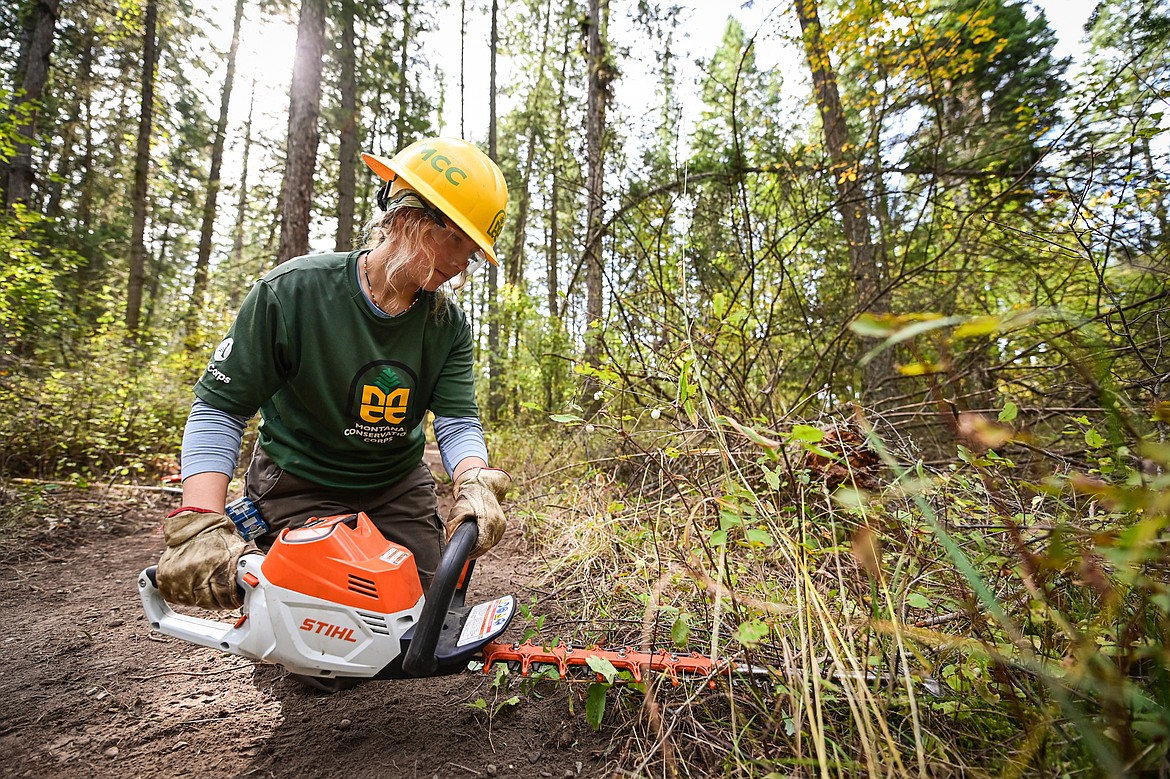
Montana Conservation Corps crew member Ella Lund clears brush along the side of the Harry Horn Trail at the Wayfarers Unit of Flathead Lake State Park on Thursday, Sept. 24. An MCC crew was widening, leveling and making improvements to aspects of trails as part of the Park Accessibility Project, which aims to make outdoor recreation safer and more accessible for all residents, including those with disabilities. (Casey Kreider/Daily Inter Lake)
Casey Kreider
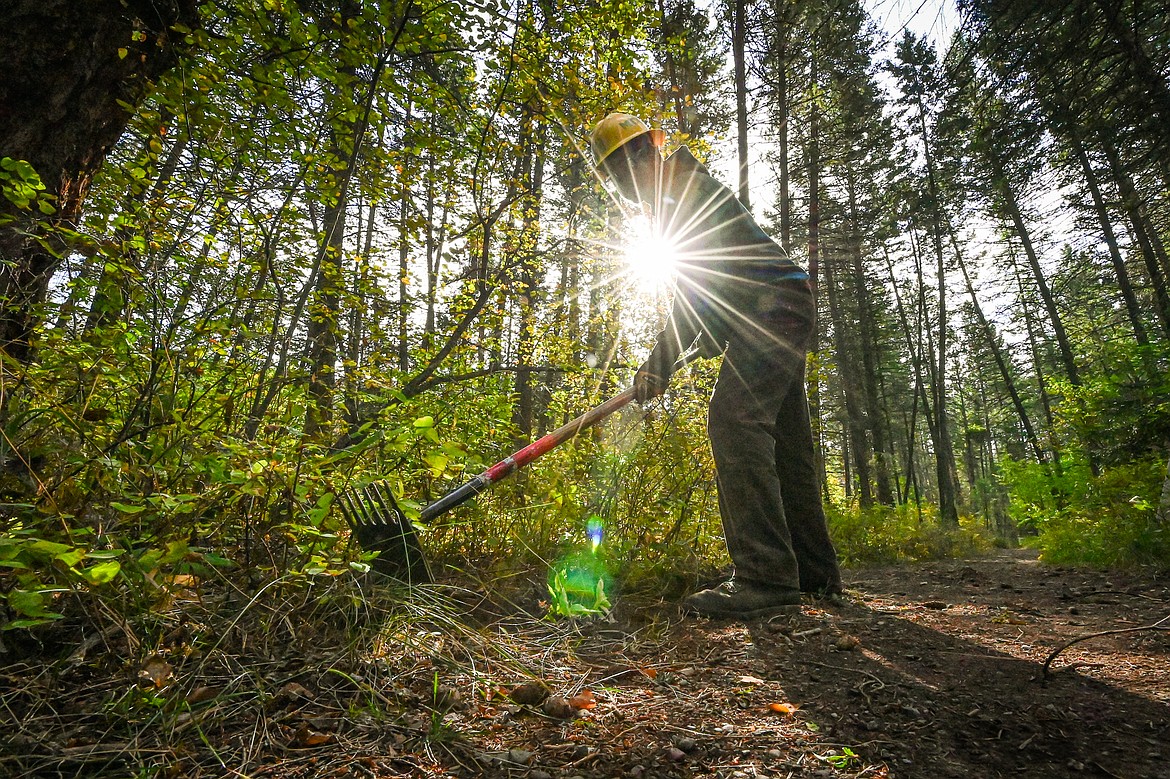
Montana Conservation Corps crew member Miguel Mora clears brush along the side of the Harry Horn Trail at the Wayfarers Unit of Flathead Lake State Park on Thursday, Sept. 24. An MCC crew was widening, leveling and making improvements to aspects of trails as part of the Park Accessibility Project, which aims to make outdoor recreation safer and more accessible for all residents, including those with disabilities. (Casey Kreider/Daily Inter Lake)
Casey Kreider
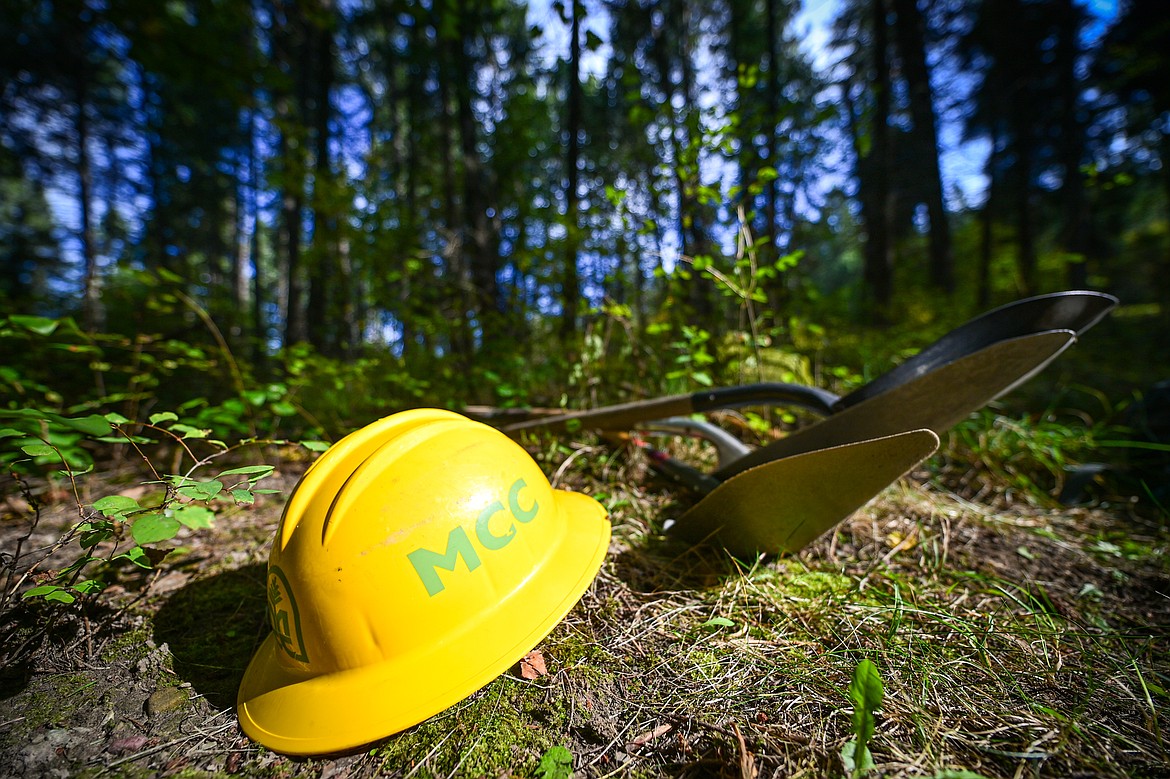
A Montana Conservation Corps helmet and tools along the Harry Horn Trail at the Wayfarers Unit of Flathead Lake State Park on Thursday, Sept. 24. An MCC crew was widening, leveling and making improvements to aspects of trails as part of the Park Accessibility Project, which aims to make outdoor recreation safer and more accessible for all residents, including those with disabilities. (Casey Kreider/Daily Inter Lake)
Casey Kreider
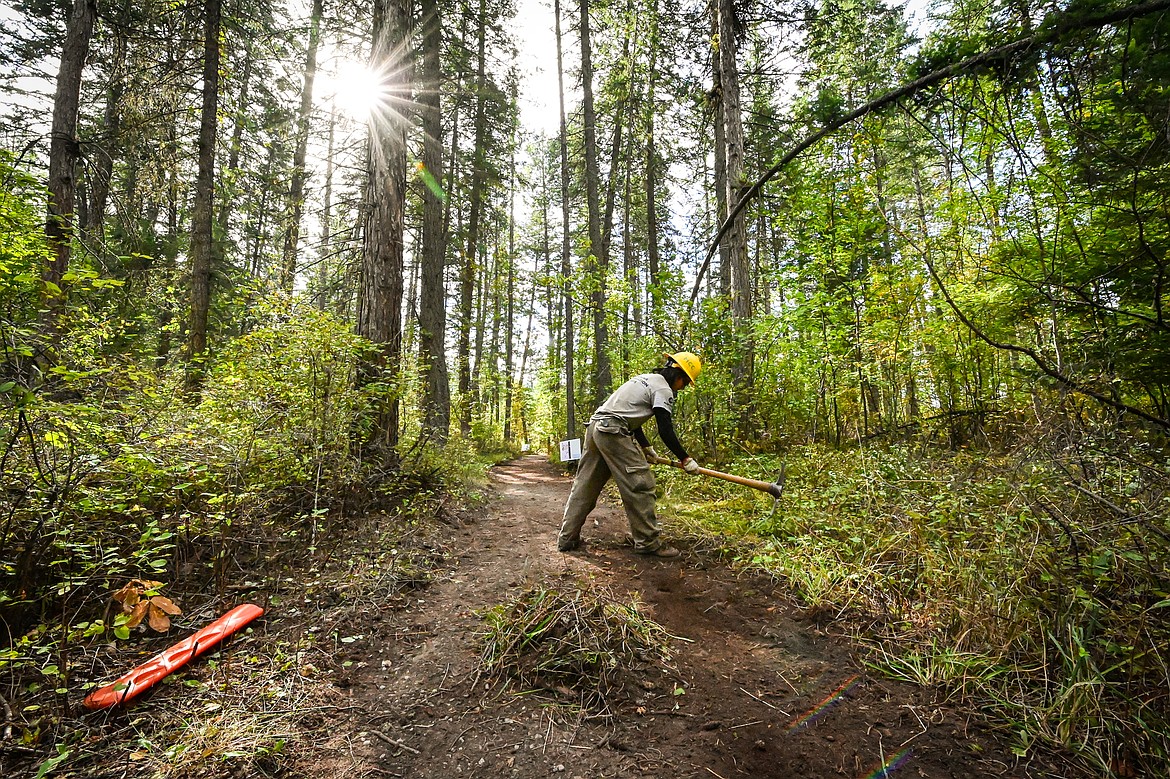
Montana Conservation Corps crew member Ryan Quan clears brush along the side of the Harry Horn Trail at the Wayfarers Unit of Flathead Lake State Park on Thursday, Sept. 24. An MCC crew was widening, leveling and making improvements to aspects of trails as part of the Park Accessibility Project, which aims to make outdoor recreation safer and more accessible for all residents, including those with disabilities. (Casey Kreider/Daily Inter Lake)
Casey Kreider
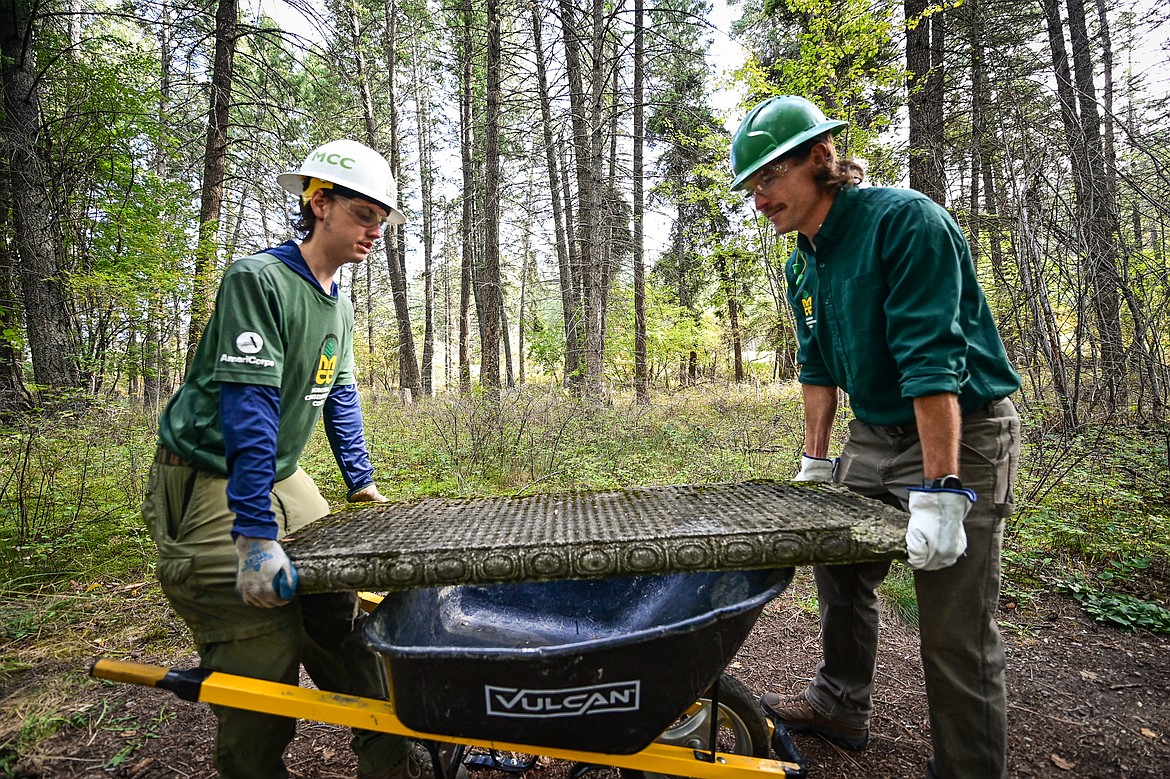
Montana Conservation Corps Regional Director Gavin Wisdom, right, and crew member Draconian Rothenberger remove the top of a cement bench from the Harry Horn Trail at the Wayfarers Unit of Flathead Lake State Park on Thursday, Sept. 24. An MCC crew was widening, leveling and making improvements to aspects of trails as part of the Park Accessibility Project, which aims to make outdoor recreation safer and more accessible for all residents, including those with disabilities. (Casey Kreider/Daily Inter Lake)
Casey Kreider
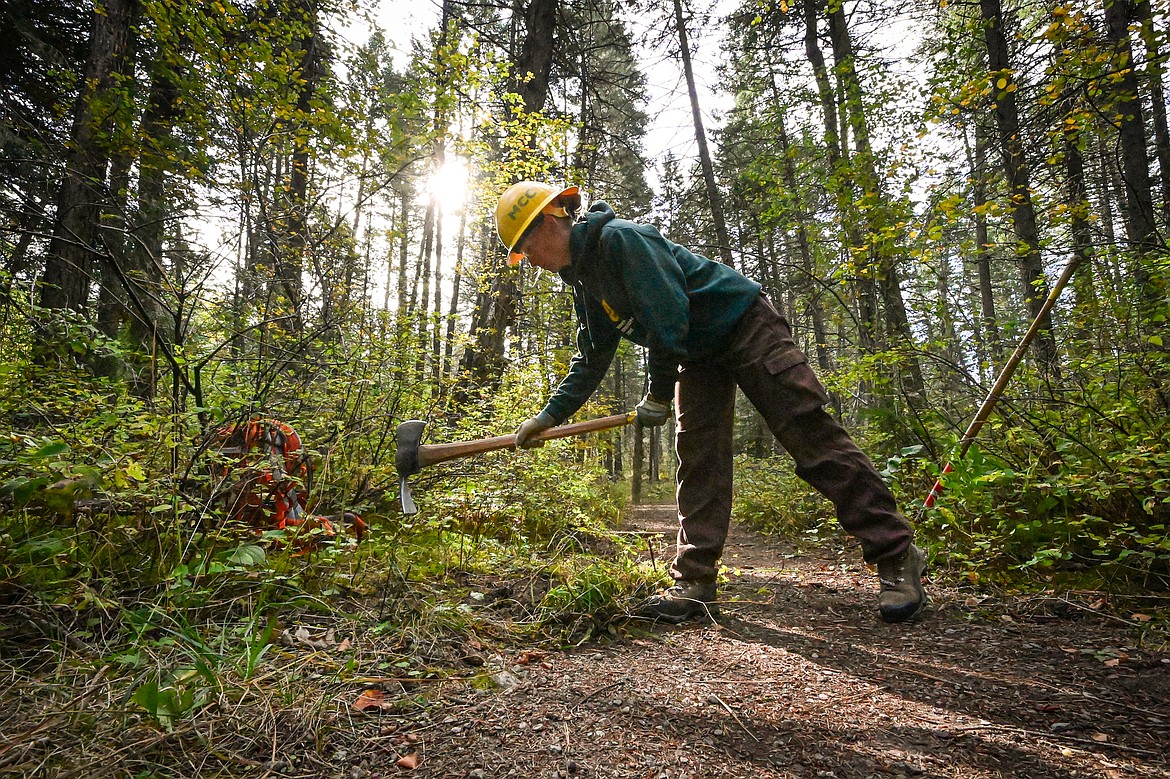
Montana Conservation Corps crew member Julia Duffie clears brush along the side of the Harry Horn Trail at the Wayfarers Unit of Flathead Lake State Park on Thursday, Sept. 24. An MCC crew was widening, leveling and making improvements to aspects of trails as part of the Park Accessibility Project, which aims to make outdoor recreation safer and more accessible for all residents, including those with disabilities. (Casey Kreider/Daily Inter Lake)
Casey Kreider
At Wayfarers Unit of Flathead Lake State Park, the whir of chainsaws was punctuated by the dull, rhythmic thud of shovels and pickaxes striking the soft earth. A company of Montana Conservation Corps members, in the worn hiking boots and faded cargo pants of the trail crew uniform, spent the week at the park’s popular Harry Horn Trail clearing brush, widening and leveling the path, removing obstacles like roots and rocks.
These trail crew members have traversed hundreds of miles of Montana’s backcountry, sawing fallen trees and reinforcing single track trails cutting through forests and mountain paths, but it’s the first time they’ve worked on a project like this. Instead, they’re reimaging these well-worn trails so that Montana’s wild spaces are accessible to people with disabilities.
This project is part of an innovative new approach: It’s the first time that a state trails initiative has collaborated extensively with people from the disability community through every stage of the planning process, and it could provide a roadmap for future projects across the state.
“It’s an opportunity that everyone in Montana should be able to have, to go out and enjoy the trails and for it to be a positive and inclusive experience,” Montana State Parks Foundation Executive Director Megan Buecking said. “Accessible trails don’t only benefit people who use wheelchairs — it helps all sorts of people get outdoors, and that helps increase stewardship over time because people become more invested in their state parks and outdoor spaces.”
The first phase of the project is to improve the existing trails system at Wayfarers, including the Harry Horn Trail, to meet a higher set of standards. The next phase of the project will focus on creating new accessible trail systems, like transforming the loose network of social trails along the waterfront and building an accessible summit trail.
“There is still a lack of accessible trails statewide,” Brenden Dalin said.
Dalin is the recreation specialist at Summit Independent Living, which developed a comprehensive accessible development plan for Wayfarers.
“Montana is so vast and so big and could really benefit from this, not just for access but for safety as well.”
As the official partner of state parks in Montana, the Montana State Parks Foundation identifies projects that are underfunded by the state and works to make those initiatives possible, including the Parks Accessibility Project.
The project is guided by the principle of “nothing about us without us,” Buecking said. The foundation adopted this philosophy several years ago when it first started to invest in accessibility projects, donating all-terrain wheelchairs and securing funding for dock upgrades.
Some of the feedback that Buecking received, though, was that if the foundation had talked to the disability community first, they would have communicated that those chairs were not the best equipment. It got Buecking thinking, and she realized it’s impossible to serve a community without considering their lived experience.
In a similar vein, federal and state standards for accessible trails establish a minimum baseline that often doesn’t reflect how people with disabilities move through the outdoors. People often assume that if a trail is wide enough for a wheelchair, that the trail is perfectly accessible, Buecking said. But for people with low vision, for example, trail width is less important than clearly defined edges so that they don’t wander off the path.
These are the aspects of trail use that seem perfectly obvious to those who have a disability, but often aren’t thought about by those who are designing and constructing the trails.
“We’re not just trying to address trail improvements for one person. We’re trying to make it as universally designed as possible,” Buecking said.
So, when it came time to draw up a framework for the foundation’s first trail accessibility improvement project, Buecking knew it would be centered around including voices from the disability community, including those who live with a disability and those who care for a loved one with a disability.
Partnering with the University of Montana Rural Institute for Inclusive Communities, the foundation conducted a Walk Move Audit in September 2025, bringing in around 20 individuals with some kind of expertise in accessibility, either having the lived experience of a disability or having a loved one with a disability.
The Walk Move Audit gathered an array of people, including those who use wheelchairs, parents of children who use mobility devices, people from the blind and low-vision community as well as people from the deaf and hard-of-hearing community.
Through these conversations, the foundation was able to identify areas where accessible trail standards could be improved to ensure trails are not only accessible but functional for people with disabilities. Summit Independent Living’s assessment showed areas where trails could be widened beyond the minimum requirements so that wheelchair users could roll alongside a family member or pass other hikers safely along a trail.
With work on the Harry Horn Trail set to be wrapped up this year, the foundation now turns to the next and more complex phase of the project: developing new trails so that people with disabilities can access new parts of the park.
Buecking is particularly excited about the idea of creating an accessible summit trail. These types of trails offer sweeping vistas but often have steeper approaches, making them unapproachable for those with disabilities.
Over the next year, the foundation will work on planning and fundraising for the project, with hopes to start work on the second phase in 2028, although Buecking said that’s not a set timeline. One of the things that Buecking has learned is that while everyone is in support of accessible development in the state parks, budgets and staff are stretched thin.
The first phase of the project was funded by a mix of private organizations and the state. Whitefish Community Foundation provided a grant to fund the audit and accessibility study, and the Weyerhaeuser Giving Fund also made a contribution. Montana Fish, Wildlife and Parks covered the cost of the Montana Conservation Corps hitch.
At Wayfarers, as the corps members chiseled away at the contours of trails that have been well-loved for decades, Dalin said several curious park visitors approached him to ask about the project.
As he explained the vision, he said they became visibly excited, telling him about the family member — a husband, a grandmother, a child — that they couldn’t wait to bring to Wayfarers to experience the forest and the lakeshore they loved so much.
The work with the pilot project at Wayfarers shows what’s possible when an array of groups come together and develop a collaborative solution. Dalin hopes it isn’t a one-off project, but rather a blueprint that will change what it means to create an accessible trail in Montana.
Reporter Elsa Ericksen can be reached at 406-758-4459 or [email protected]. If you value local journalism, pledge your support at dailyinterlake.com/support.
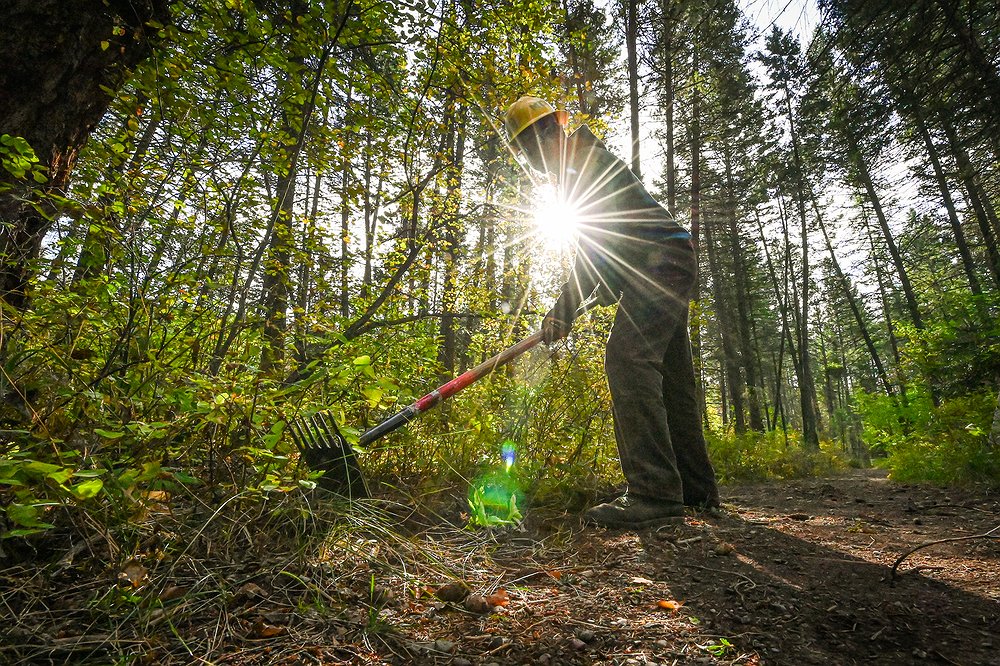 Montana Conservation Corps crew member Miguel Mora clears brush along the side of the Harry Horn Trail at the Wayfarers Unit of Flathead Lake State Park on Thursday, Sept. 24. An MCC crew was widening, leveling and making improvements to aspects of trails as part of the Park Accessibility Project, which aims to make outdoor recreation safer and more accessible for all residents, including those with disabilities. (Casey Kreider/Daily Inter Lake)
Casey Kreider
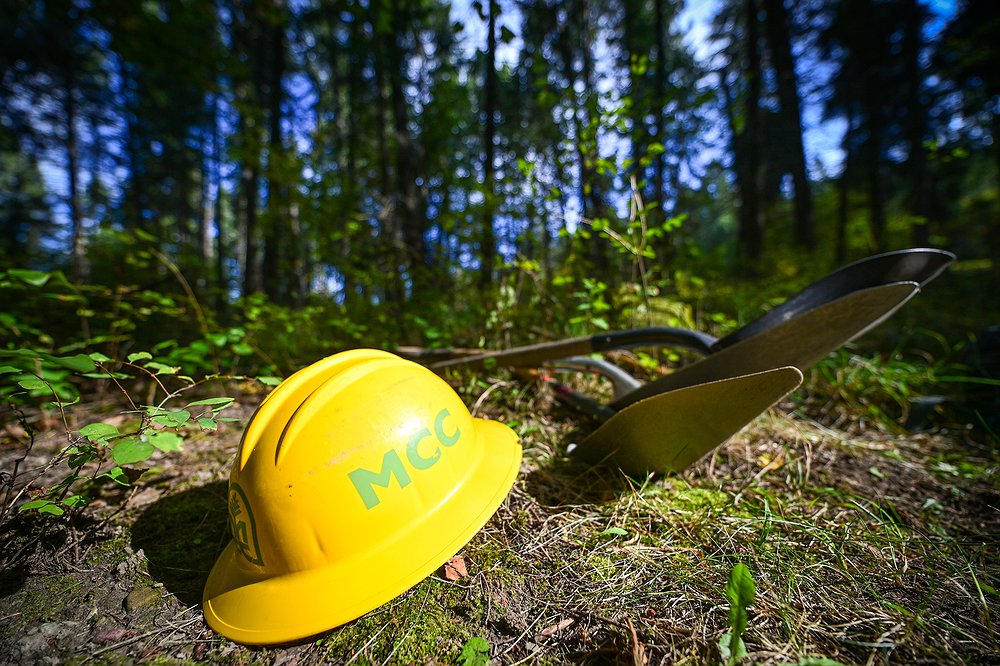 A Montana Conservation Corps helmet and tools along the Harry Horn Trail at the Wayfarers Unit of Flathead Lake State Park on Thursday, Sept. 24. An MCC crew was widening, leveling and making improvements to aspects of trails as part of the Park Accessibility Project, which aims to make outdoor recreation safer and more accessible for all residents, including those with disabilities. (Casey Kreider/Daily Inter Lake)
Casey Kreider
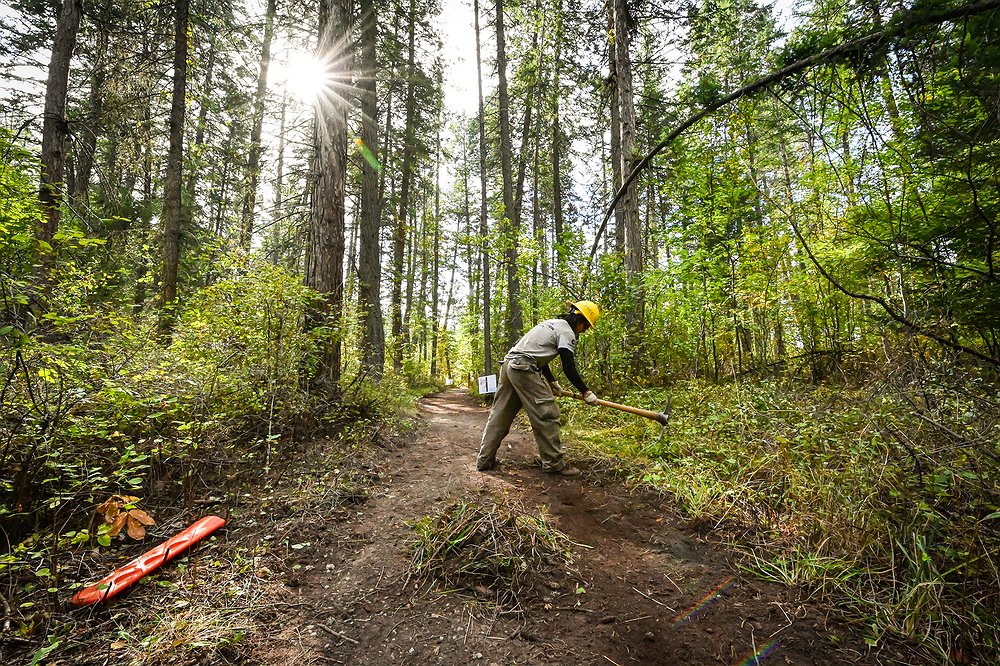 Montana Conservation Corps crew member Ryan Quan clears brush along the side of the Harry Horn Trail at the Wayfarers Unit of Flathead Lake State Park on Thursday, Sept. 24. An MCC crew was widening, leveling and making improvements to aspects of trails as part of the Park Accessibility Project, which aims to make outdoor recreation safer and more accessible for all residents, including those with disabilities. (Casey Kreider/Daily Inter Lake)
Casey Kreider
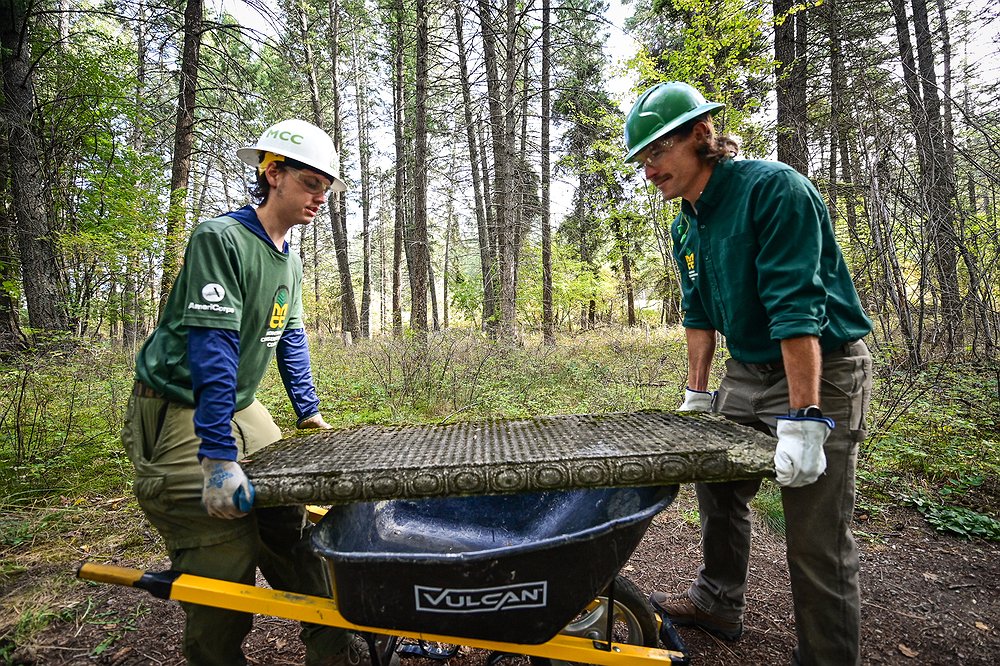 Montana Conservation Corps Regional Director Gavin Wisdom, right, and crew member Draconian Rothenberger remove the top of a cement bench from the Harry Horn Trail at the Wayfarers Unit of Flathead Lake State Park on Thursday, Sept. 24. An MCC crew was widening, leveling and making improvements to aspects of trails as part of the Park Accessibility Project, which aims to make outdoor recreation safer and more accessible for all residents, including those with disabilities. (Casey Kreider/Daily Inter Lake)
Casey Kreider
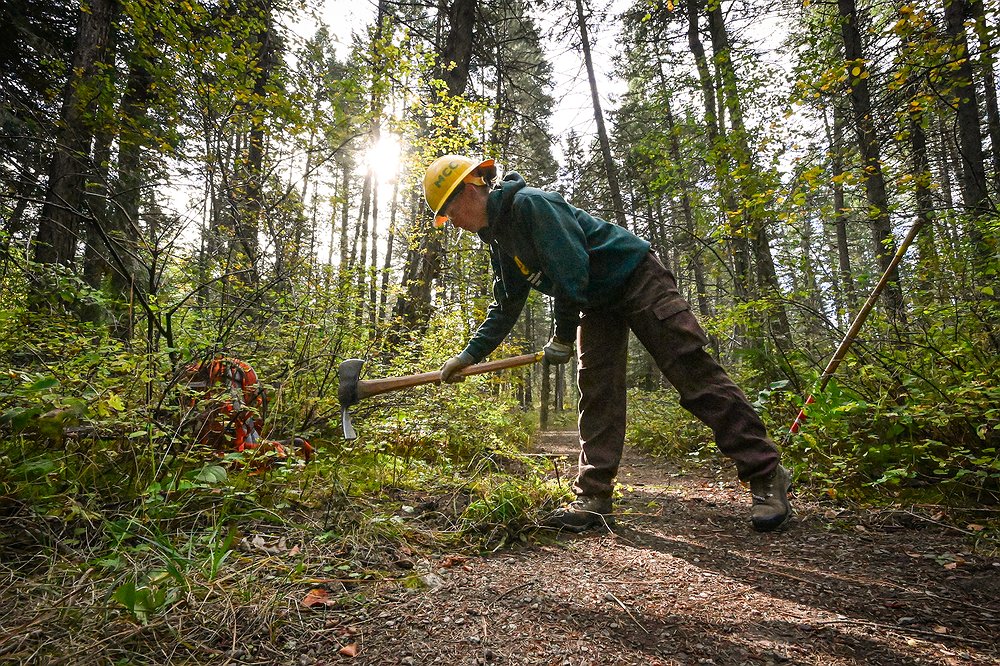 Montana Conservation Corps crew member Julia Duffie clears brush along the side of the Harry Horn Trail at the Wayfarers Unit of Flathead Lake State Park on Thursday, Sept. 24. An MCC crew was widening, leveling and making improvements to aspects of trails as part of the Park Accessibility Project, which aims to make outdoor recreation safer and more accessible for all residents, including those with disabilities. (Casey Kreider/Daily Inter Lake)
Casey Kreider
ARTICLES BY ELSA ERICKSEN
Four local teens injured in wreck; crash remains under investigation
Four Flathead Valley teens were hospitalized with life-threatening injuries after a late-night car crash in Evergreen on Sept. 19.
Four teenagers hospitalized after car crash in Evergreen
Four Flathead Valley teens were hospitalized with life-threatening injuries after a late-night car crash in Evergreen on Sept. 19.
Wayfarers collaboration redefines accessible trails in Montana
These trail crew members have traversed hundreds of miles of Montana’s backcountry, sawing fallen trees and reinforcing single track trails cutting through forests and mountain paths, but it’s the first time they’ve worked on a project like this. Instead, they’re reimaging these well-worn trails so that Montana’s wild spaces are accessible to people with disabilities.