
The target is not the disease: What plaques and numbers leave out
SETH SCHNEIDER / Health Columnist | Bonner County Daily Bee | UPDATED 1 week, 2 days AGO
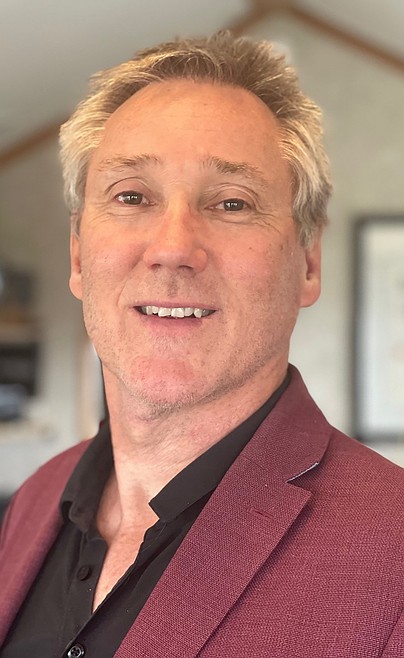
Seth Schneider
A brain scan shows amyloid plaque. An artery contains cholesterol-rich plaque. Once an abnormality can be seen, measured, and associated with disease, it becomes difficult not to stare at it. The next move feels obvious… remove the plaque, reduce the substance associated with it, and perhaps the disease will follow.
Alzheimer’s research has spent decades looking in this direction. Amyloid became one of the dominant explanations for the disease, and an enormous research world grew around it. Cholesterol became an equally powerful target in cardiovascular disease. Eventually the associations became familiar even outside medicine. Alzheimer’s meant amyloid. Heart disease meant cholesterol.
But neither substance can be understood simply as something bad that should not be there.
Cholesterol belongs to normal human biology and is used in cell membranes, hormones, bile acids, and other basic functions. Amyloid beta also comes from normal biology, and researchers have investigated physiological and potentially protective roles involving antimicrobial defense and responses to injury. Something useful, protective, or compensatory can still become part of disease when regulation, clearance, or the conditions around it change.
A plaque is therefore more interesting than a pile of unwanted material. Why did it accumulate this way? What was happening before it appeared? Its presence may matter enormously while still revealing only part of what happened to the tissue over the preceding years.
Consider someone whose memory has been declining. Sleep may have deteriorated gradually while activity decreased and metabolic health worsened. A medication was added somewhere along the way. Hearing became poorer, social contact declined, or an old injury continued to matter in ways that were never obvious. Another person can arrive at a similar diagnosis through an entirely different history.
Chronic disease repeatedly presents this problem.
Diabetes becomes identified with glucose, hypertension with the pressure measured by a cuff, fatty liver with the fat visible in the liver. Measurements are useful because they give us something definite to follow. After enough attention, however, changing the measurement can begin to feel like restoring health.
The person is harder to isolate. Better sleep may alter appetite and glucose regulation enough to make movement easier. More movement can then change circulation, mood, metabolism, and sleep itself. Food, medications, infection, work, relationships, stress, and age continue affecting one another while we try to decide which one matters most. Several conditions may develop together and change the effects of everything around them.
Science may never give us the privilege of knowing which one deserves to be called the cause.
We have no difficulty accepting this in a garden. The soil has become depleted, one area stays too wet, a tree now blocks several hours of sunlight, and pests have appeared on weakened plants. Improve the soil and it holds water differently. Prune the tree and both light and moisture change. If the garden recovers after several conditions improve, assigning the recovery to one intervention may tell us less than we imagine.
Research has good reasons for moving in the opposite direction. To learn whether something works, investigators isolate variables. A defined target can be measured, manipulated, compared, and followed, and this method has taught us an extraordinary amount. The problem begins when the isolation required for study quietly becomes the way we imagine the disease itself.
Once attention gathers around a target, knowledge gathers there too. Better tests reveal more about it. New treatments grow from earlier findings and generate still more research. The expanding evidence gives researchers more reasons to remain with the target, and each useful discovery makes another step in the same direction easier to imagine. No one needs to direct this process. It can reinforce itself naturally.
The result is not merely a simplified story for the public. Attention, money, treatment, and further investigation increasingly organize themselves around what can be measured and changed. The visible target becomes the place where more and more of our knowledge accumulates, while the biological history surrounding it remains much harder to study.
Removing the target may help. Lowering it may matter greatly. Neither tells us that we have explained why this particular person became sick. Looking for another single target farther upstream may simply restart the same search.
The more difficult possibility is that chronic illness does not always reduce to one decisive cause or one decisive correction. Several things may improve and the person may begin functioning better while we remain unable to say which change deserves the credit. Perhaps no single change does. The improvement may depend on conditions changing together just as the illness developed through conditions changing together.
By the time a plaque appears on a scan, years of biology have already passed through that tissue. What we can finally photograph and measure may be important, harmful, useful, compensatory, or several of these at different stages. It is something we can see.
The danger begins when the thing we can see becomes our explanation for everything we cannot.
Seth Schneider is a health columnist for the Bonner County Daily Bee.