
How to read the range
CHERYL SCHWEIZER | Hagadone News Network | UPDATED 3 years, 8 months AGO

Levi Kukes, second from right, and Quincy High School rangeland competition teammates, from left, Kallie Kooistra, Taylor Tangen, Angel Farias, Chloe Westra, Lilly Thompson and Caden Cameron at the District 9 competition in September.
Rod Cool/courtesy photo
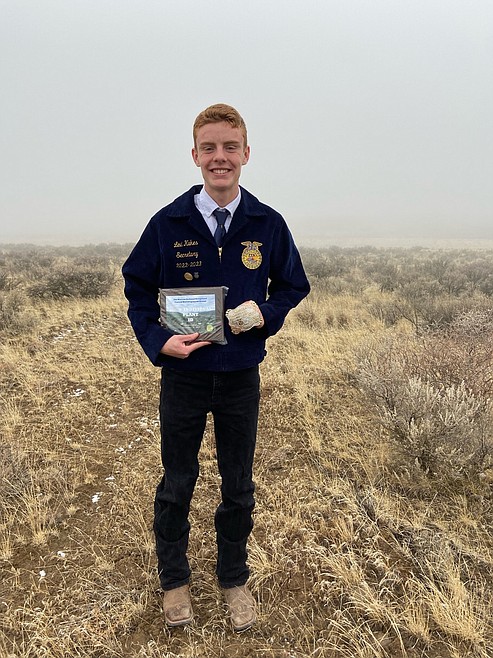
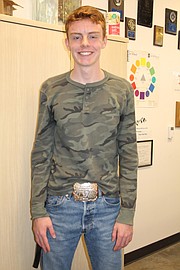
Quincy High School’s Levi Kukes displays his first-place awards in the FFA Western National Rangeland contest.
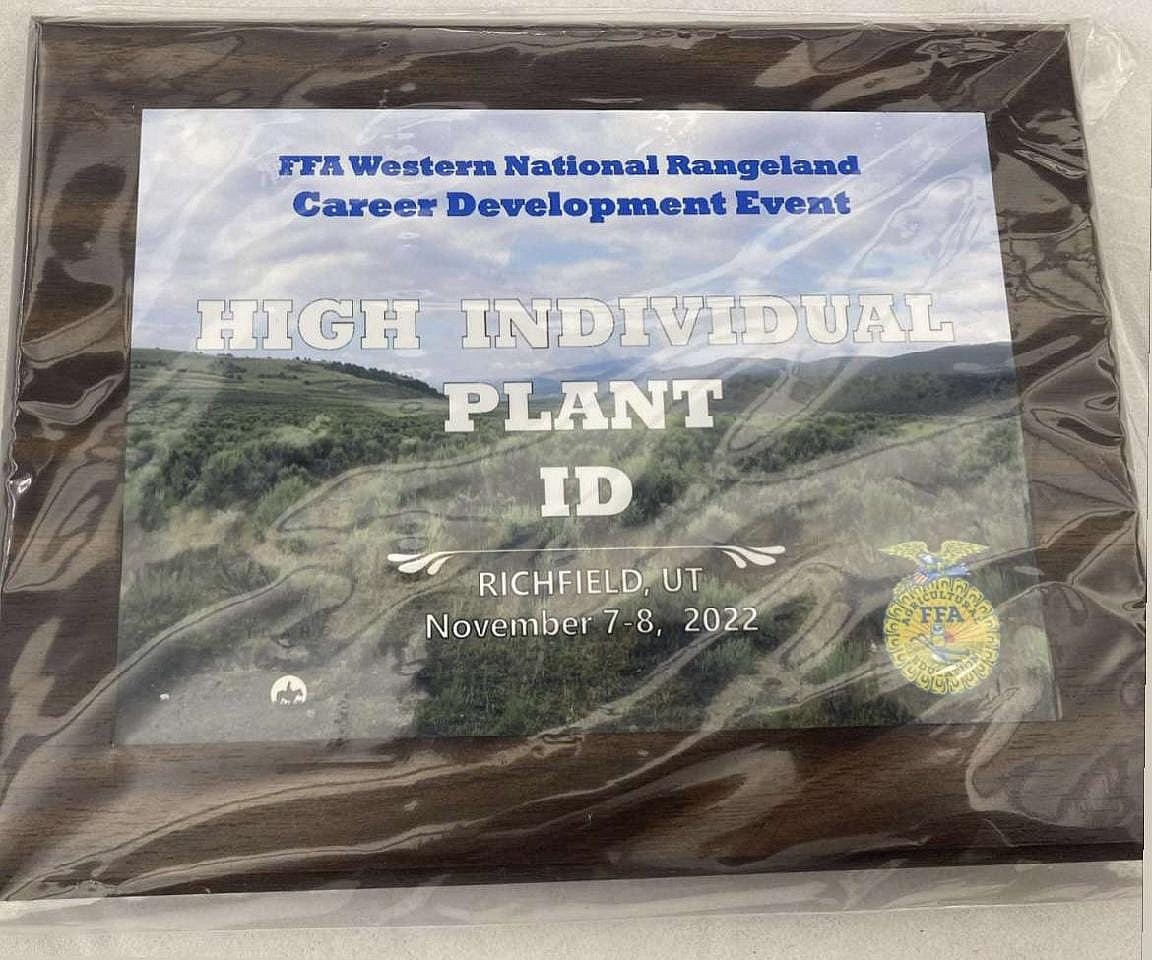
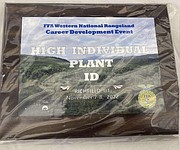
Quincy High School’s Levi Kukes also took first place in plant identification at the Western National Rangeland competition in November.
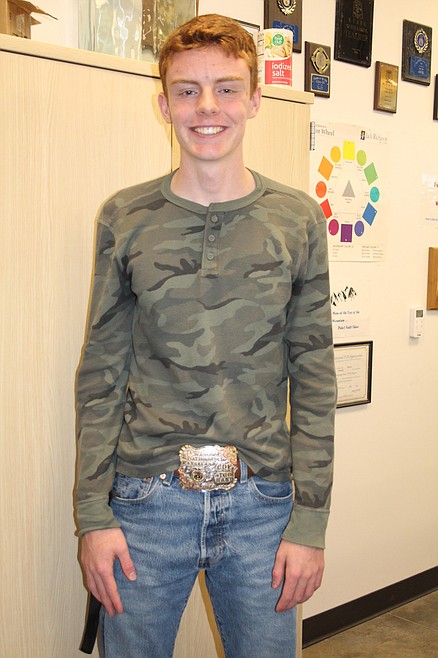
Levi Kukes said his goal is a career in range management.
Senior Reporter Cheryl Schweizer is a journalist with more than 30 years of experience serving small communities in the Pacific Northwest. She began her post-high-school education at Treasure Valley Community College and enerned her journalism degree at Oregon State University. After working for multiple publications, she has settled down at the Columbia Basin Herald and has been a staple of the newsroom for more than a decade. Schweizer’s dedication to her communities and profession has earned her the nickname “The Baroness of Bylines.” She covers a variety of beats including health, business and various municipalities. | December 27, 2022 1:51 PM
QUINCY — An experienced observer – or somebody who’s done their homework – can study a piece of rangeland and find clues to its condition.
The vegetation on a specific section of range, its distribution, the way the land slopes, the soil type – it all has something to say, at least to someone who’s done their homework.
Levi Kukes has done his homework.
Kukes, a Quincy High School junior, was the winner of the FFA Western National Rangeland competition in November, besting other students from the Pacific Northwest, Montana, Utah and Nevada. He’s also been selected to compete in a contest against students from around the world at the Society for Range Management’s annual meeting in February.
Kukes said he’s been interested in the science of the natural world all his life.
“Ever since I was young, I’ve always been really interested in biology,” he said. “It kind of started with aquariums, marine ecosystems and aquatic ecosystems in general. And it branched out into botany.”
Learning about plants sent him in an entirely different direction, he said. He joined the QHS FFA chapter, and ag teacher and FFA co-advisor Rod Cool suggested the rangeland competition. Kukes said he was skeptical at first, but the competition turned out to highlight many of the subjects that attracted him to rangeland science.
“It’s really interesting to see the interactions within an ecosystem. I’m really into botany, so I love the plant identification portion. Being able to identify the plants, identify the role that they play in the ecosystem, and then the role that they play with us. With grazing cattle, how the cattle are able to utilize it. And horses utilize it differently, too. So understanding how each little aspect interacts,” Kukes said.
He worked hard on the research, he said, which actually started at home.
“I love hunting and hiking with my dad and I love going out on the range all the time. So (that was) the thing that helped me the most,” he said. “Being able to see the different plants – I’ll bring books with me and identify the plants as we’re just hiking. And I’ll sketch them out sometimes. And by doing that, it really helps me understand what they are, where they belong in the ecosystem and what eats them,” he said.
The rangeland contest was in Utah for 2022, and contestants go out on the range and evaluate what they see.
“We look at the plants and we determine whether they are herbaceous or shrubs. Once we determine that, we can determine whether they are desirable to be grazed, and whether or not they are grazed. For the plant (identification), we’re identifying them and whether or not they’re desirable,” he said.
Armed with that information, contestants evaluate the range plot, estimating the amount of material suitable for grazing, and percent of what’s there has been grazed already.
“So we’ll look at the height (of the vegetation), we’ll look at the weight, where the weight is distributed in the plant, and then we will estimate based on that what percent has been grazed on the land,” Kukes said.
Kukes was confident that he was prepared, and pretty well prepared, he said, but he didn’t expect to take home the title.
Cool said the SRM competition requires a research paper.
“Basically it’s on the process that happened after the Cold Springs-Pearl HIll fire in 2020,” Cool said. “(Looking) at the process they went through to help mitigate some of the damage for private landowners using a public-private partnership. It’s very unique, because there’s never been anything quite like that to help with wildfire damage, on such an extensive scale.
“It’s a little bit different take – a lot of them do papers on different grazing programs and stuff like that. This one is more about helping ranchers that were affected by the fire,” Cool said.
Kukes said his career goal is to become a field biologist.
“I’m not entirely sure where I want to go with it. There are a million different ways you can go with it. They estimate it’s something like 14 jobs available for each range management graduate,” he said.
Cheryl Schweizer can be reached at [email protected].
ARTICLES BY CHERYL SCHWEIZER
Road projects on hold for Labor Day weekend
MOSES LAKE — With Labor Day weekend dead ahead, drivers will be able to move freely about the state. Most road projects are on hold for the holiday weekend. Nobody will be working on the Hansen Road overpass on Interstate 90, but the lane restrictions that are in effect will continue through the end of the project.
Cost estimates for water source alternatives given to Moses Lake City Council
Protected under the U.S. Endangered Species Act, efforts are ongoing to keep it self-sufficient
MOSES LAKE — It’s going to cost a lot of money to provide alternative water sources for the city of Moses Lake, but some of the possible alternatives will cost more than others. City officials provided the Moses Lake City Council with costs for various alternatives Tuesday.

Dryer vent cleaning is important -- but often overlooked
MOSES LAKE — Not all the maintenance a house needs is visible. Sometimes a potential problem just goes unnoticed until it causes trouble, sometimes serious trouble. But a lot of potential problems give off warning signs. Clothes dryers often do when they need a good cleaning.