
Little signs wildland firefighter hazard pay bill
CAROLINE LOBSINGER | Hagadone News Network | UPDATED 4 years, 7 months AGO
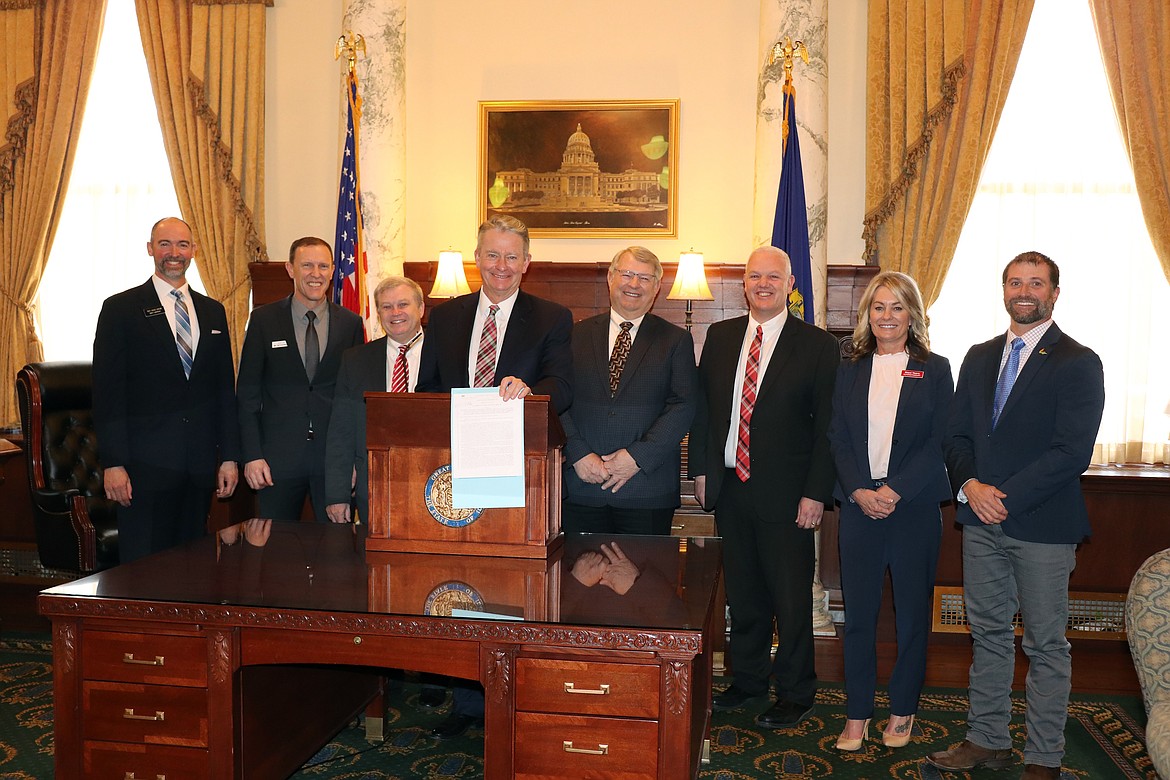
Legislators and state officials join Idaho Gov. Brad Little at the signing of House Bill 588 which authorizes wildland firefighters to receive hazard pay while working in dangerous conditions.
(Courtesy photo)
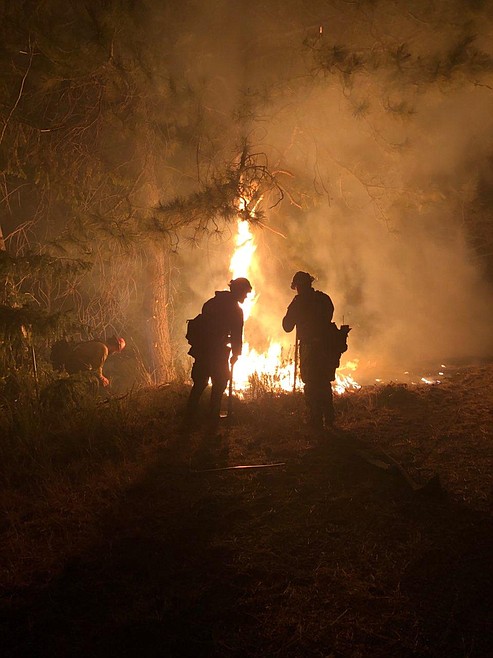
Governor Brad Little signed a bill Thursday offering hazard pay to Idaho wildland firefighters equal to 25% of their hourly rate when they are working on an uncontrolled fire or at an active fire helibase.
I grew up in the Tri-Cities, Wash., and have always loved to write. I attended the University of Washington, where I earned a double major in journalism and political science, with an area of emphasis in history. I am the fifth out of six kids — don't believe any of the stories that my siblings tell. To be able to tell others stories and take photos for a living is a dream come true — and I considered myself blessed to be a community journalist. When I am not working, I enjoy spending time with family and friends, hiking and spending time outdoors, genealogy, reading, and watching the UW Huskies and the Seattle Seahawks. I am a servant to my cat, Frankie, who yes, will eat anything and everything in sight … even wedding cookies. | March 27, 2022 1:00 AM
It was a bill long overdue, according to a pair of District 1 legislators.
Thursday, House Bill 588 was signed into law by Gov. Brad Little, opening the door for wildland firefighters to receive hazard pay while working in dangerous conditions.
Championed by Rep. Sage Dixon, R-Ponderay, in the Idaho House of Representatives and Sen. Jim Woodward, R-Sagle, in the Idaho Senate, state officials said the bill underpins a movement to modernize the Idaho Department of Lands’ wildfire management program.
In late February, the House approved the bill 49-19-2, with all local representatives with the exception of Dixon voting against it. The Senate unanimously approved the bill, 35-0, on March 21.
"Wildland firefighters in Idaho do not currently receive hazard pay," Woodward said. "Many of the states surrounding us do compensate with hazard pay [and] federally employed wildland firefighters receive hazard pay."
In fact, when federal wildland firefighters work in Idaho on fires that the IDL is in charge of fighting, Woodward said the state reimburses the federal government — and include hazard pay.
"The result is a revolving door of employees who come to work for the Department of Lands, earn their firefighter certifications, and move on to higher paying jobs," Woodward said.
The bill, which enjoyed broad support among Idaho’s policy makers, enables Idaho’s wildland firefighters to receive competitive compensation on par with their federal peers and other western states when working on an uncontrolled fire or at an active fire helibase, state officials said in a press release.
“It’s important we lead the way in recruiting and keeping well-trained wildland firefighters,” Little said. “It protects our communities, access to our forests, and our $2.4 billion forest products industry, a major driver for Idaho’s local and state economies.”
Without the hazard pay, after just two seasons — the typical timeframe to earn certification is two years, at which point we are seeing 40 percent turnover. The high turnover rate, given training requirements, is costly and potentially dangerous. Individuals seeking careers in fire often use IDL to obtain certifications and experience, then move on to obtain permanent or higher paying jobs elsewhere.
“Fighting wildland fire is inherently dangerous work,” Little said. “Since the consequence for making a mistake can be serious injury or death, retaining experienced personnel is crucial for keeping all firefighters safe.”
In a recent survey, 60% of IDL’s wildland firefighters who were not planning to say with the agency, indicated they would stay if hazard pay was provided.
“Governor Little is leading Idaho to a new era of wildfire management,” said IDL Director Dustin Miller. “This bill, coupled with IDL's budget request, increases our firefighters' salary, fills a crucial part in modernizing fire program, and strengthens our ability to suppress wildfires quickly and safely.”
Miller said enacting the legislation was a team effort between the governor, Land Board, and Dixon and Woodward as well as industry stakeholders and other legislators.
“Providing hazard pay is a recognition of the threats our wildland firefighters face while working to suppress wildfires," he said. "It is also an important tool that helps IDL become the place where wildland firefighters want to make their permanent home, rather than a just a place to receive training before moving on.”
Washington Department of Natural Resources wildland firefighters receive a starting salary of $2,892 a month, around $18.75 per hour. They receive an additional $2 per hour for emergency response duties. Idaho’s IDL wildland firefighters start at $12.55 per hour.
Firefighters work a base of 40 hours a week but are expected to be available to respond to a call anytime, any day of the week in fire danger season. They also can be sent to help in other states, away for over two weeks at a time.
Information: idl.idaho.gov
ARTICLES BY CAROLINE LOBSINGER

Wellness fair puts focus on health
The Wellness & Connection Fair is bringing together local health and wellness professionals together in Sandpoint for a day of presentations, activities and community resources.

BCSD pays share of ISBT shortfall
District opts to make lump sum payment
Boundary County School District paid $217,000 to cover its share of the Idaho School Benefit Trust's $13 million shortfall.

Deadline extended for 'Valor' stories
The Valor publication is gathering photos, military service details and personal stories from Boundary County veterans and military families. Featured profiles highlight local service members' contributions, achievements and sacrifices across generations.