
Washington wheat harvest: a promising year for farmers
NANCE BESTON | Hagadone News Network | UPDATED 1 year, 4 months AGO

Washington Grain Commison CEO Casey Chumrau said the 2024 grain growing season was a success with winter wheat having higher than average yields, summer wheat was within the 5-year average and barley crops also had higher bushels per acre than 2023.
FILE PHOTO
MOSES LAKE — As the harvest season concludes across the Pacific Northwest, the Washington wheat industry is witnessing a productive year marked by improved yields and conditions compared to 2023’s harvest.
According to the U.S. Department of Agriculture’s National Agricultural Statistics Service report, Washington’s winter wheat production for 2024 is projected at 123 million bushels, a 30% increase from 2023.
CEO of the Washington Grain Commission, Casey Chumrau provided insights on the favorable conditions that have contributed to this newfound success.
“Overall, the harvest for winter wheat has been uplifting,” said Chumrau. “We are witnessing yields of 70 bushels per acre, significantly higher than last year’s yields, which were particularly low at 54 bushels per acre.”
This year’s summer weather has bent slightly in favor of growers, with mild temperatures and timely rains helping to push yields beyond average expectations.
The recent USDA report underscores an encouraging trend within the Evergreen State. The winter wheat yield, at 70 bushels per acre, surpasses the five-year average of 66 bushels.
The state planted 1.8 million acres of winter wheat for the current growing season, maintaining the same acreage as last year, yet the reported increase in bushels harvested signals a noticeable rise in productivity.
In contrast, spring wheat yields present a more complex picture. Reports indicate that spring wheat production has been somewhat less favorable, with the average yield for 2024 estimated at 43 bushels per acre. While still an improvement from 38 bushels from last year, this year’s figures continue to lag behind winter wheat outputs.
“What we are seeing is that spring wheat did not receive the ideal conditions during its critical growth stages,” Chumrau said. “Lower planting acres and variable weather contributed to its performance.”
Drought conditions had lingered in the region leading into winter, creating a shaky foundation for the growth of both winter and spring wheat. Fortunately, the mild winter and strategic rainfall in the following months helped counter that setback for farmers.
“It was a tough start, but the weather cooperated as we moved into spring and summer,” Chumrau said.
Despite the improved yield, challenges loom as market prices struggle to keep pace with production rates.
“Prices are very low, and they are probably lower than the cost of production for most farmers,” Chumrau said.
This scenario casts a shadow over optimism surrounding robust yield forecasts. While the demand for Washington wheat has seen a slight increase, the overall market dynamics remain complicated, hindering financial profitability.
Conversely, the state’s barley crop presents another layer of complexity. According to state data, barley production saw a slight uptick despite a decrease in planted acreage. With 4.62 million bushels projected for 2024, barley yield stands at 66 bushels per acre, an increase from last year’s 53 bushels an acre.
“We are grappling with issues surrounding market limitations and peer profitability, which further complicate our economic landscape,” Chumrau said.
Eastern Washington producers have voiced concerns regarding the financial viability of these challenges, as low prices force farmers into a tight corner, jeopardizing their investment returns and overall morale.
“We’re at the mercy of the market,” Chumrau said. “Farmers have to make challenging decisions based on the current economic climate, often having to sell at lower prices than they would like.”
Looking ahead, Chumrau said she had cautious optimism about Washington’s wheat industry and ongoing efforts to navigate market barriers. Collaborative initiatives among producers aim to strengthen branding and promote local wheat.
“Our goal is to work together to create better market pathways,” she said. “With creative solutions and strong synergy among growers, we can cultivate not only high-quality crops but also sustainable markets.”
ARTICLES BY NANCE BESTON
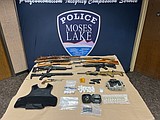
1 arrested after Highway 17 stop; detectives recover fentanyl, firearms
MOSES LAKE — The Moses Lake Street Crimes Unit conducted a traffic stop on Highway 17 near Randolph Road and executed a search warrant Friday morning as part of an ongoing narcotics investigation.
4th-year drought declaration in WA, subtle effects in the Columbia Basin
EPHRATA — Washington’s fourth straight year of drought is expected to hit some regions hard, but in Grant and Adams counties, the impacts will look different – quieter, less visible and centered underground. Statewide, the Department of Ecology issued an emergency drought declaration after a warm winter left Washington with about half its usual snowpack, raising concerns about low summer streamflows, stressed fish populations and heightened wildfire risk. Seven of the past 10 years have included drought somewhere in the state. “If you look at our mountains, the challenge we are facing is clear,” Gov. Bob Ferguson said during a press conference Wednesday. “We’re taking emergency action to protect fish, farmers and communities across Washington.”
Sleep Diagnostic Center to close after doctor’s sentencing
MOSES LAKE — The Central Washington Sleep Diagnostic Center announced it will be closing its doors effective April 30. This includes locations in Moses Lake, Spokane Valley, Brewster and Wenatchee. The announcement follows the March 25 guilty plea from Dr. Eric Edward Haeger, 57, in United States District Court to adulterating and misbranding medical devices with the intent to defraud or mislead, according to a statement from the U.S. Attorney’s Office. “The adulterations by Dr Haeger show a dangerous disregard for the safety of his patients,” Washington Attorney General Nick Brown said in a statement. “This is a win for patient safety, for protecting public dollars from fraud, and for ensuring citizens of Washington get necessary healthcare. This case exemplifies the great work our team is doing in collaboration with our federal partners to fight fraud and protect Washingtonians.”