
Treetop tech: Integrating technology into the art and science of farming discussed at WSTFA panel
CHERYL SCHWEIZER | Hagadone News Network | UPDATED 1 year, 8 months AGO
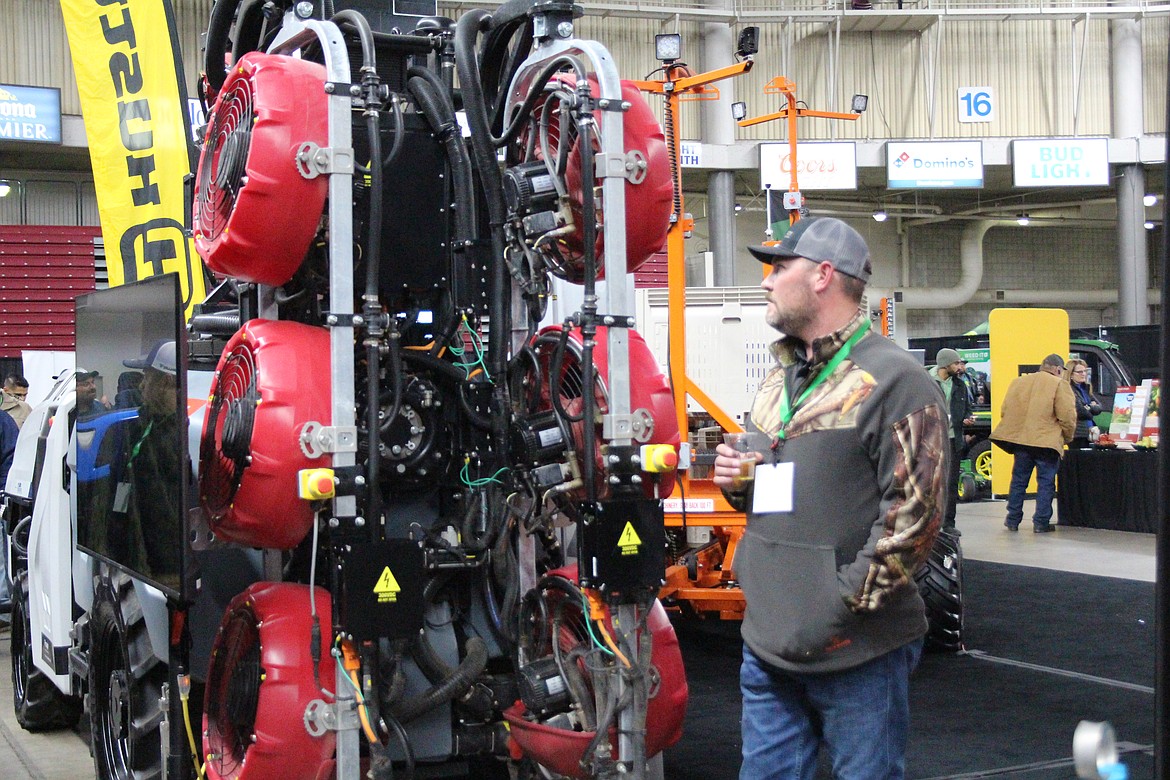
A WSTFA annual meeting attendee looks over a piece of equipment. The best way to use technology in the orchard was the subject of a panel featuring growers.
Cheryl Schweizer/Basin Business Journal
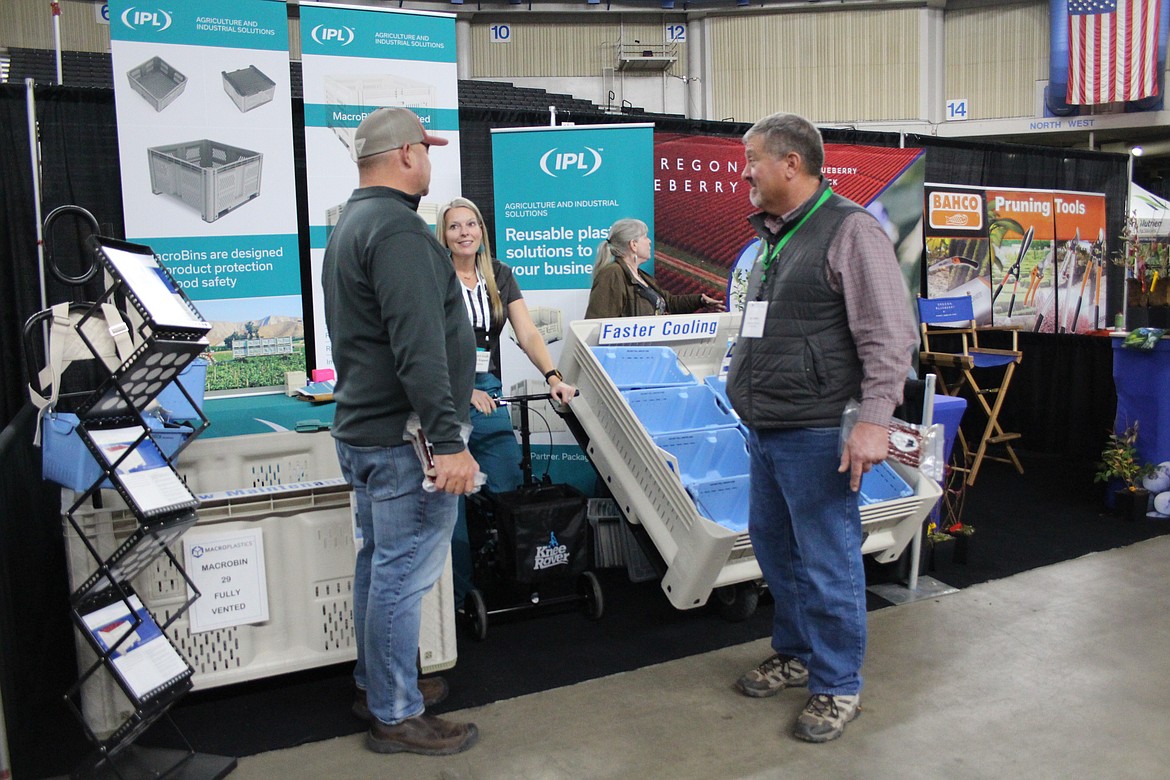
Attendees at the WSTFA annual meeting trade show talk with vendors. Getting the most out available technology was the subject of a grower panel Dec. 11.
Cheryl Schweizer/Basin Business Journal
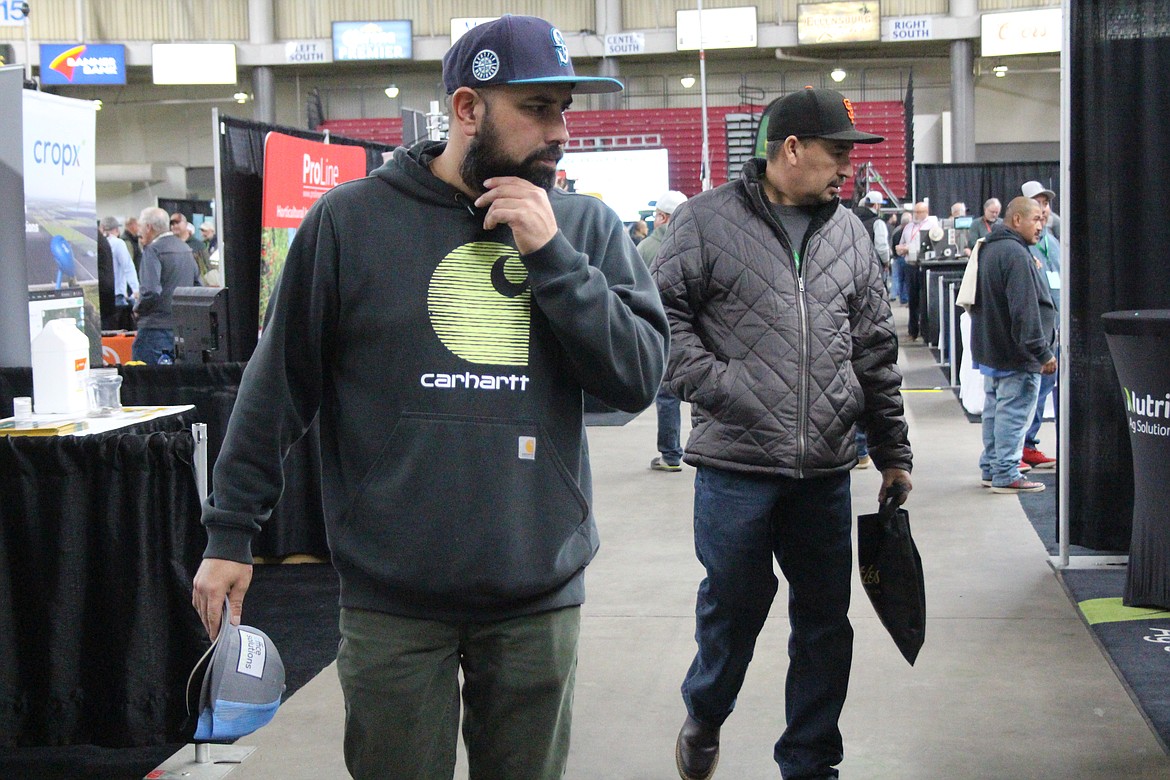
Tree fruit association annual meeting attendees peruse the many types of technology and equipment on display.
Cheryl Schweizer/Basin Business Journal
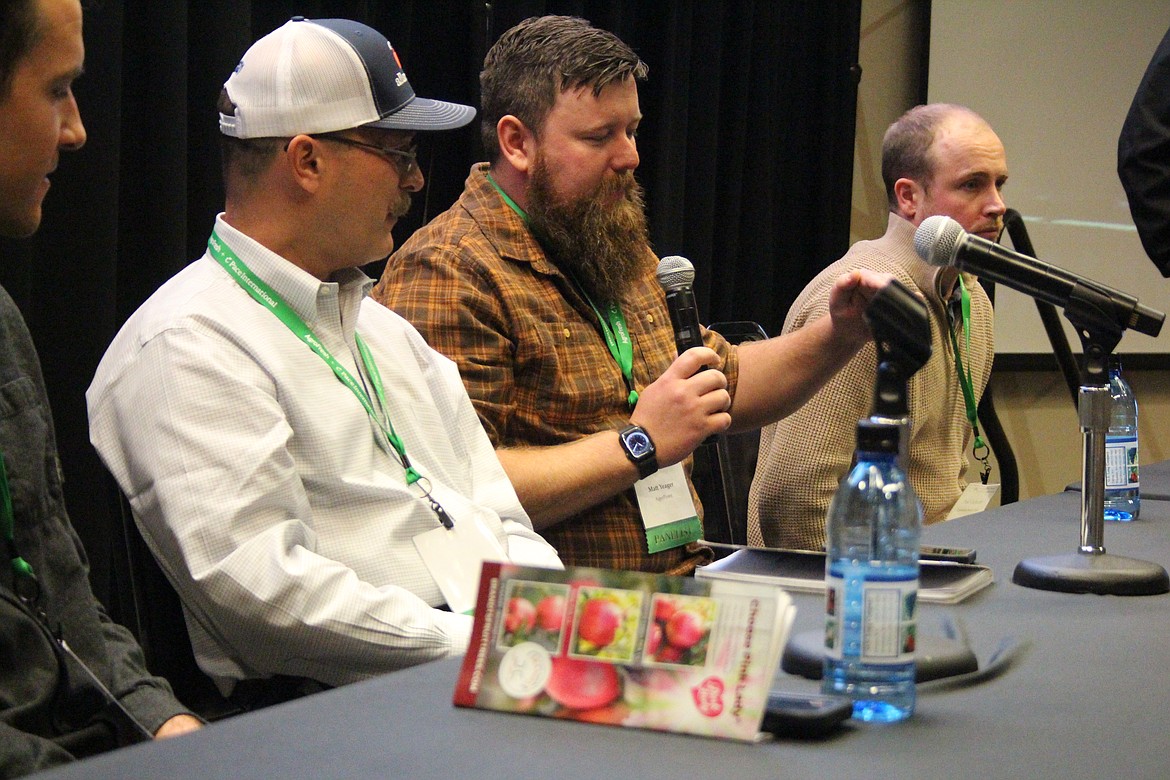
Matt Yaeger, right, makes a point during a panel on technology in the orchard at the Washington State Tree Fruit Association annual meeting Dec. 11. Panelists all have orchards, but also work in the ag business.
Cheryl Schweizer/Basin Business Journal
Senior Reporter Cheryl Schweizer is a journalist with more than 30 years of experience serving small communities in the Pacific Northwest. She began her post-high-school education at Treasure Valley Community College and enerned her journalism degree at Oregon State University. After working for multiple publications, she has settled down at the Columbia Basin Herald and has been a staple of the newsroom for more than a decade. Schweizer’s dedication to her communities and profession has earned her the nickname “The Baroness of Bylines.” She covers a variety of beats including health, business and various municipalities. | December 31, 2024 1:00 AM
YAKIMA — Growing apples, cherries, pears and stone fruit is a science, and growers can – and do – benefit from the options that technology provides. But it’s also an art, according to a panel discussion on orchards and technology at the 120th annual meeting of the Washington State Tree Fruit Association.
And while technology is an important tool, panelists said it’s only one tool and one that’s sometimes been oversold. Panelists said while technological changes hold a lot of promise, some of those promises haven’t panned out.
“I think some companies came to us with technology that they claimed was proven in some sense that actually wasn’t ready for commercial deployment,” said Paul Cathcart of Columbia Orchards. “So we ended up paying for something, expecting it to perform at a certain level, when really (the developers) were kind of just hoping it would do something, or maybe it showed potential to do that. In a lot of cases I felt we were becoming partners in research and development for them, and in fact we were paying them to be their partner in research and development.”
Panel moderator Keith Veselka of Northwest Farm Management said growers are expecting more when it comes to technology.
“We end up doing a lot of R&D, and a lot of people come into the industry and they’re going to change the way we do things,” Veselka said. “To me it’s obvious when somebody comes in and they’ve never been in an orchard or on a farm at all, because they have a loose interpretation of what they think we really need. That’s frustrating. And I would tell you those days are over. We’re not going to pay for your product for us to teach you what farming is all about; if anything, you’re going to work with us and maybe even pay us to help you develop your products.”
Farming has always been about data, and the contemporary orchards and packing sheds produce a lot of it. But technology is most useful when it takes accumulated knowledge – the art of farming – into account.
Cody Bishop of Price Cold Storage said he gets questions frequently from people trying to develop farm-focused technology.
“One of the things I always tell them is that you really need to understand and have a respect for the art, and not lose that farming is an art while you also understand the science side,” he said.
Technology can and does help in managing orchards, from water and labor to tracking production on orchard blocks – and someday soon, tracking production of individual trees. Veselka said artificial intelligence has potential to help growers manage data, and Bishop agreed. But accumulated knowledge is crucial.
“At the end of the day, the key point is that the guy who’s seen 30 seasons, or 40 or 50 seasons, has vastly more knowledge than what AI at this point is going to understand,” Bishop said.
Veselka said that experience is part of the art.
“You talk to these guys that have been doing it for a while – tremendous amount of knowledge. They walk into their (orchard) blocks, and they just know what’s going to happen,” Veselka said.
That knowledge is a resource that needs to be captured, he said. Matt Miles of Allen Brothers Fruit said growers need to build a base of knowledge, both from experience and from analysis of their operations.
The tree fruit industry is in a period where efficiency is critical, Miles said; growers need to track labor, irrigation, water conservation, spray routines, fruit once it gets to the warehouse. He used labor costs as an example.
“If you’re tracking labor on a piece of paper, that’s fine. Put it into a spreadsheet. If you’re using a spreadsheet, then you should consider a labor tracking platform. Why that is, is if you cannot see (data) easily, you’re not going to be able to use it,” Miles said.
Documentation and analysis help growers identify where the operation needs improvement.
“I think we can get complacent (because) we know how things are working but until you document (farm procedures), until you have something like that and you understand what’s going on on your farm, that in itself is going to be able to help you evaluate any of those solutions,” he said.
There’s a lot of data out there already, and growers need to figure out how to use what they’ve got now and what they’re going to get in the future.
Matt Yaeger of AgerPoint said in a later interview that there’s no such thing as too much data, but there’s too much inaccessible data. Growers have to leverage what they know to help them use all the information properly.
“Do you know the right questions to ask?” Yaeger said.
Miles said growers need to know what they’re doing now, and what they want to do in the future, to determine which technological options are actually going to help them.
“That’s the first step in the journey,” he said.
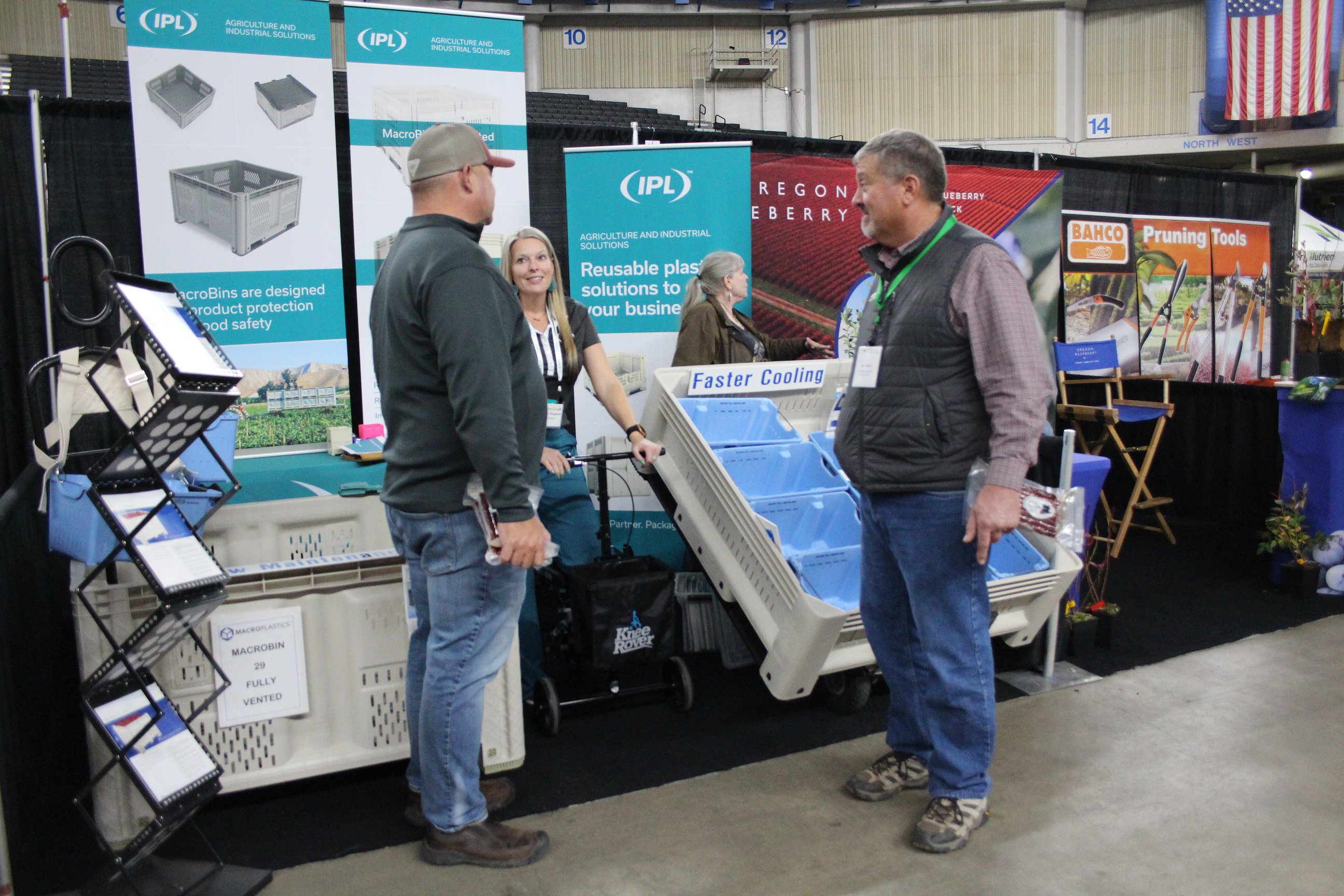 Attendees at the WSTFA annual meeting trade show talk with vendors. Getting the most out available technology was the subject of a grower panel Dec. 11.
Cheryl Schweizer/Basin Business Journal
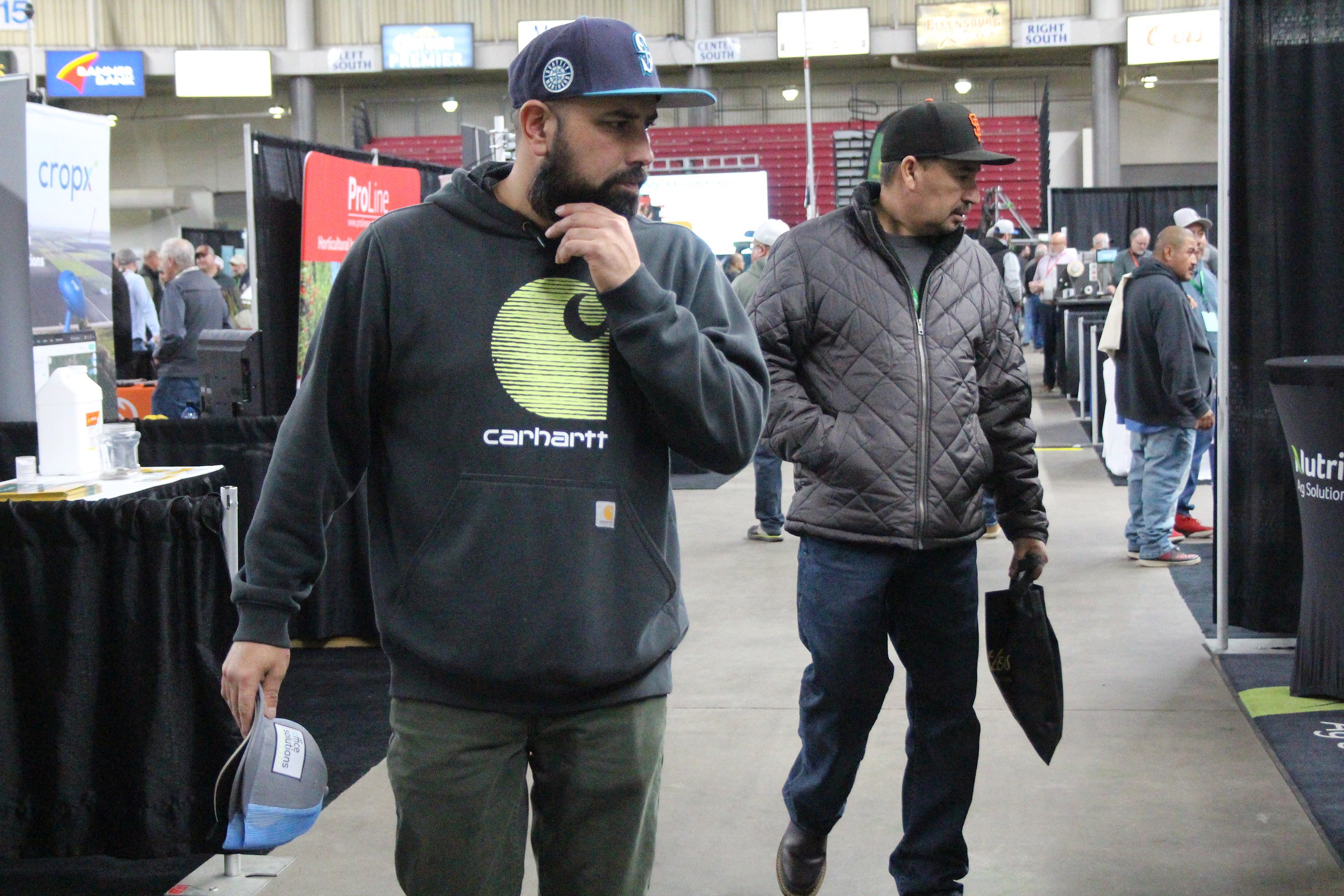 Tree fruit association annual meeting attendees peruse the many types of technology and equipment on display.
Cheryl Schweizer/Basin Business Journal
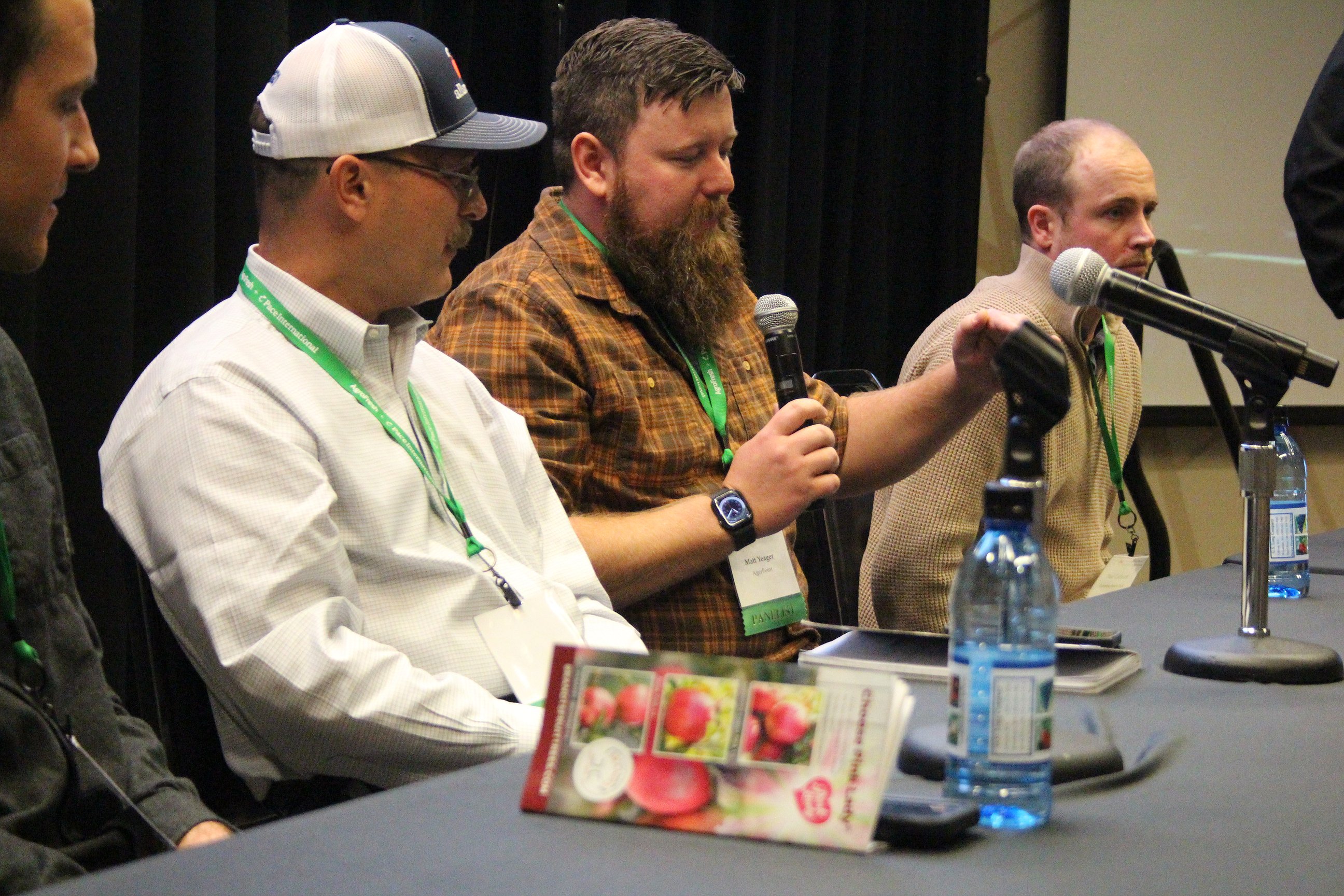 Matt Yaeger, right, makes a point during a panel on technology in the orchard at the Washington State Tree Fruit Association annual meeting Dec. 11. Panelists all have orchards, but also work in the ag business.
Cheryl Schweizer/Basin Business Journal
ARTICLES BY CHERYL SCHWEIZER
Road projects on hold for Labor Day weekend
MOSES LAKE — With Labor Day weekend dead ahead, drivers will be able to move freely about the state. Most road projects are on hold for the holiday weekend. Nobody will be working on the Hansen Road overpass on Interstate 90, but the lane restrictions that are in effect will continue through the end of the project.
Cost estimates for water source alternatives given to Moses Lake City Council
Protected under the U.S. Endangered Species Act, efforts are ongoing to keep it self-sufficient
MOSES LAKE — It’s going to cost a lot of money to provide alternative water sources for the city of Moses Lake, but some of the possible alternatives will cost more than others. City officials provided the Moses Lake City Council with costs for various alternatives Tuesday.

Dryer vent cleaning is important -- but often overlooked
MOSES LAKE — Not all the maintenance a house needs is visible. Sometimes a potential problem just goes unnoticed until it causes trouble, sometimes serious trouble. But a lot of potential problems give off warning signs. Clothes dryers often do when they need a good cleaning.