
Juggling Act: Potato conference highlights continuing challenges
CHERYL SCHWEIZER | Hagadone News Network | UPDATED 2 years, 6 months AGO
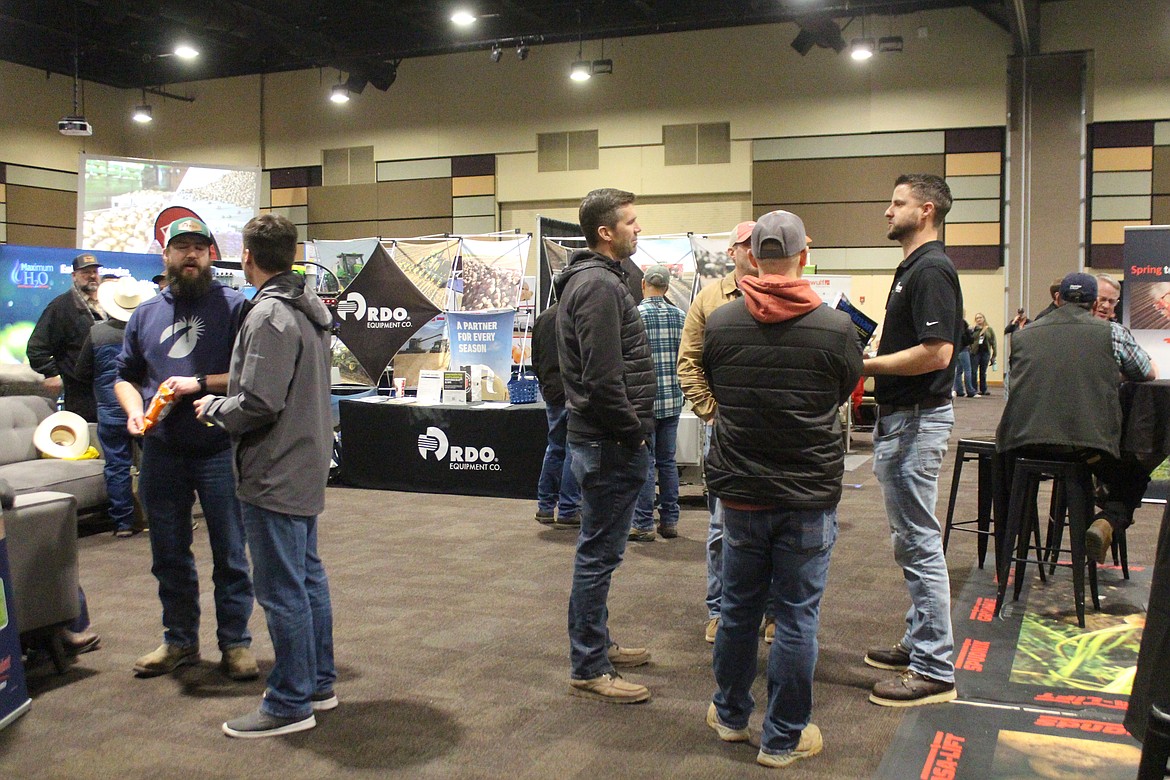
The 2024 Washington-Oregon Potato Conference drew farmers, farm employees, researchers and industry representatives to talk about the latest research and the challenges and opportunities facing the industry.
Cheryl Schweizer/Basin Business Journal
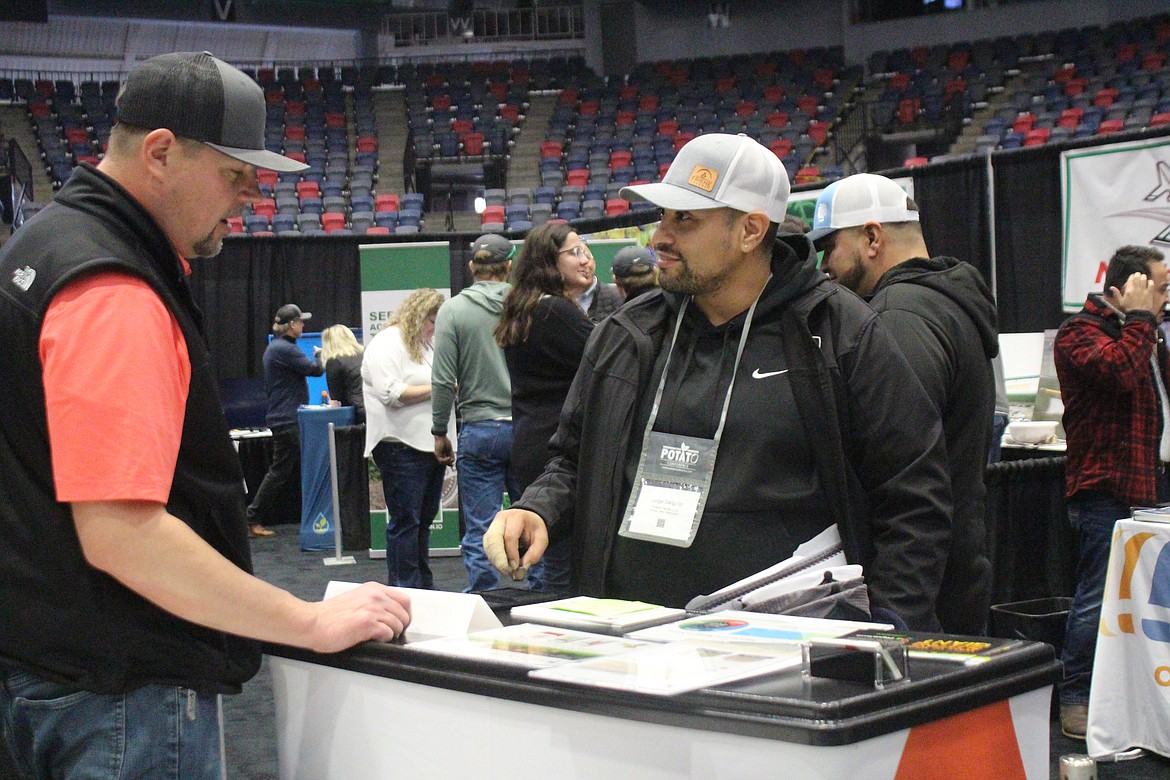
A potato conference attendee talks with a vendor.
Cheryl Schweizer/Basin Business Journal

Options for upgraded equipment drew the attention of attendees at the Washington-Oregon Potato Conference.
Cheryl Schweizer/Basin Business Journal
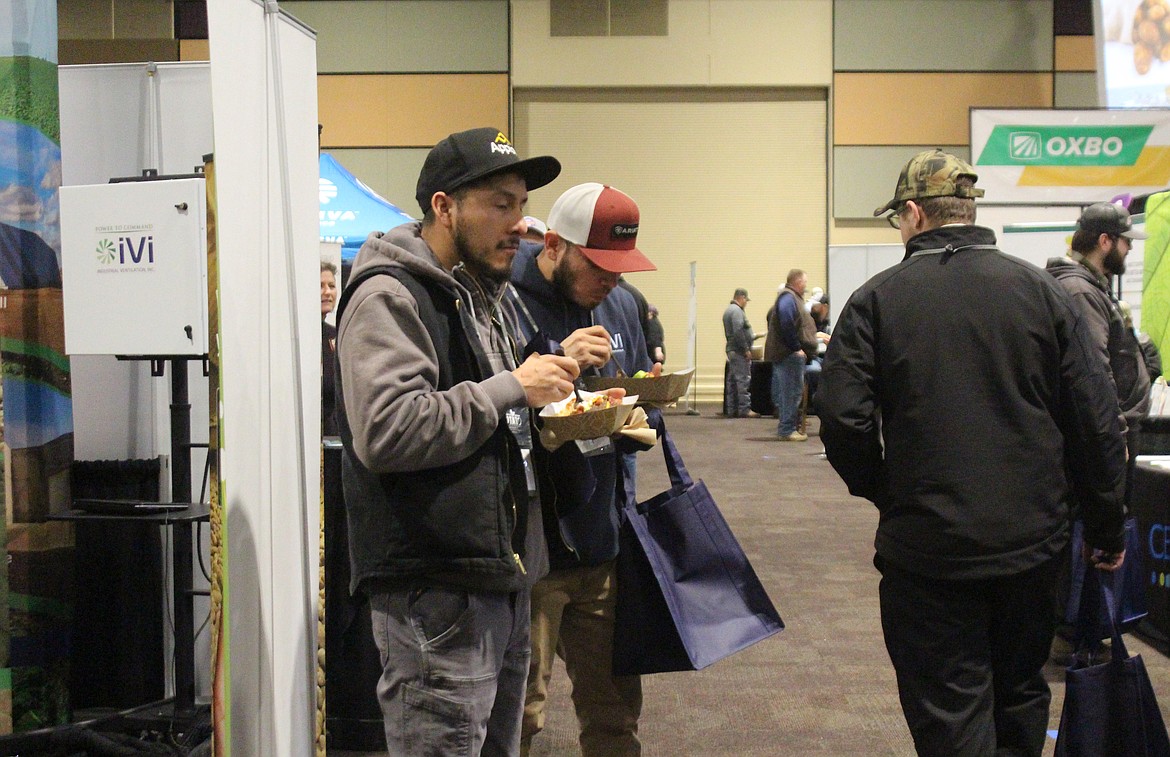
Washington-Oregon Potato Conference attendees stop for lunch from the complimentary potato bar.
Cheryl Schweizer/Basin Business Journal
Senior Reporter Cheryl Schweizer is a journalist with more than 30 years of experience serving small communities in the Pacific Northwest. She began her post-high-school education at Treasure Valley Community College and enerned her journalism degree at Oregon State University. After working for multiple publications, she has settled down at the Columbia Basin Herald and has been a staple of the newsroom for more than a decade. Schweizer’s dedication to her communities and profession has earned her the nickname “The Baroness of Bylines.” She covers a variety of beats including health, business and various municipalities. | February 27, 2024 1:00 AM
KENNEWICK — Farming is always a juggling act. Battling pests and disease, factoring in regulation, the cost of materials, labor, consumer preferences, the impact of technology – there’s a lot to think about.
For potato farmers, the juggling act includes issues they have in common with other farmers, labor and water.
“One thing that’s becoming more and more serious is labor,” said Rob Wagstaff, a member of the Oregon Potato Commission who grows potatoes for processing near Nyssa, Oregon. “It takes people to get potatoes planted and harvested.”
Technology has had an effect on potato production – one exhibitor had footage of a harvester that separated potatoes from dirt clods, rocks and other debris, work that would otherwise take at least a few workers. But Wagstaff said there are tasks technology can’t help with.
“It’s hard to automate driving that truck out in the field (and) digging those potatoes. There’s some automation you can do in your packing line, but it still takes so much help to get those potatoes planted and harvested,” Wagstaff said.
Some potato farmers use H2A programs that bring workers in for all or part of the farming season, but Wagstaff said there can be some problems with getting H2A workers promptly.
“It’s a start. I would call it a program that needs some work,” Wagstaff said.
Water is even more fundamental to farming, and irrigation projects have made the deserts of Eastern Washington and Oregon bloom. Chris Voigt, director of the Washington Potato Commission, said farmers have to start thinking about the future and how to grow potatoes while addressing possible changes in the climate.
The WSPC provides about $1 million yearly in funding for potato research, Voigt said.
“(Research projects) all are really focused on growing more (and) better quality potatoes using less resources,” he said. “Less water, less fertilizer, resistant to diseases or bugs so we don’t have to spray. And more nutritious, too.”
Water availability becomes a bigger issue with the possibility of changing snowpack conditions. Voight said not just farmers, but state officials, will have to look for ways to adapt, and that’s part of the work WSOC is doing in government affairs as well as research.
“We’ve got to figure out how to deal with that. We need to figure out how to store more water, whether it’s behind dams or reservoirs, or maybe aquifer recharge,” he said.
Farmers also fight a never-ending battle with disease and pests. Wagstaff said potato farmers across the Pacific Northwest face many of the same challenges with disease and pest infestation, and a problem that shows up in one area, eventually usually spreads throughout the region.
Jeff Baxter of Bayer Ag Sciences said in most cases, neither pests nor diseases develop immunity to pesticides.
“It really comes down to a lot of timing issues,” he said. “Nobody has a silver bullet that kills all stages – adults, juveniles, eggs. So maybe you kill all the adults, but if they laid eggs, they’re going to hatch again. You keep chasing that. So it’s all about timing and making sure you get out there.”
Some products mess with bug biology; adult bugs that have been treated with them still lay eggs, but the eggs don’t hatch, Baxter said.
“But it’s all about timing. You miss the timing, they could lay eggs and it could cause issues,” he said.
Mike Wold of Bayer said the application of those products, whether for bugs or disease, is strictly regulated.
“There are lots of limitations on what we spray, on how much residue is on the fruit or vegetables,” Wold said. “It’s highly regulated. If you put too much of the product on there, and it goes to Taiwan or another country, they’ll send it back and won’t accept your exports anymore.”
That’s one reason, said Tara Greer of Matrix Sciences, that people test soil and water, to ensure they meet the requirements.
“Especially if people are trying to sell fruits and vegetables overseas,” she said. “There are limit (quantities) that people have to meet and get tested before trying to sell overseas.”
Sarah McDowell of Matrix said testing alerts farmers to problems they need to solve.
“Troubleshooting, or cases where people get drifted on sometimes. So you can make decisions quickly, to kind of mitigate those (situations), or just out of regular compliance,” she said.
Cheryl Schweizer can be reached via email at [email protected].
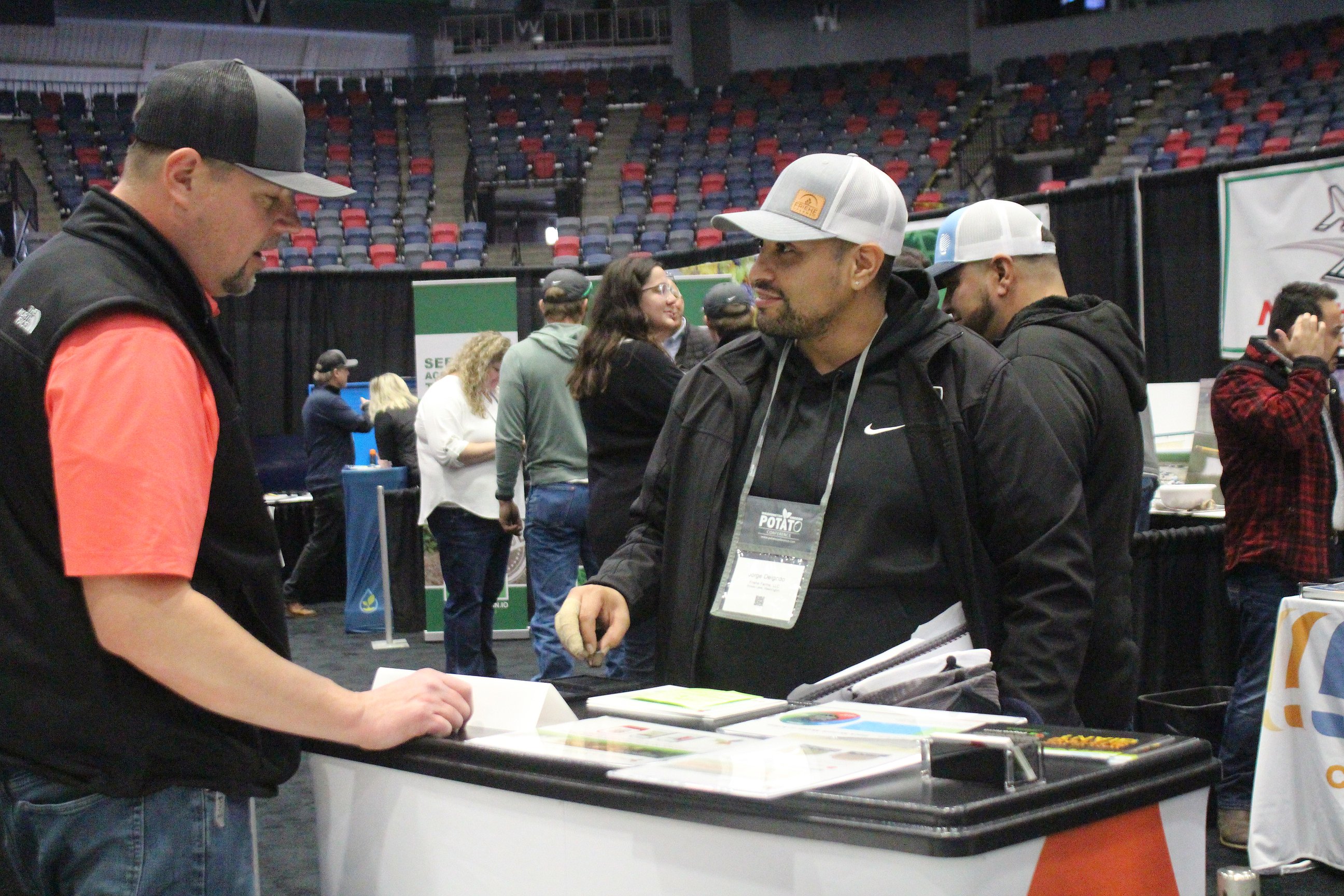 A potato conference attendee talks with a vendor.
Cheryl Schweizer/Basin Business Journal
 Options for upgraded equipment drew the attention of attendees at the Washington-Oregon Potato Conference.
Cheryl Schweizer/Basin Business Journal
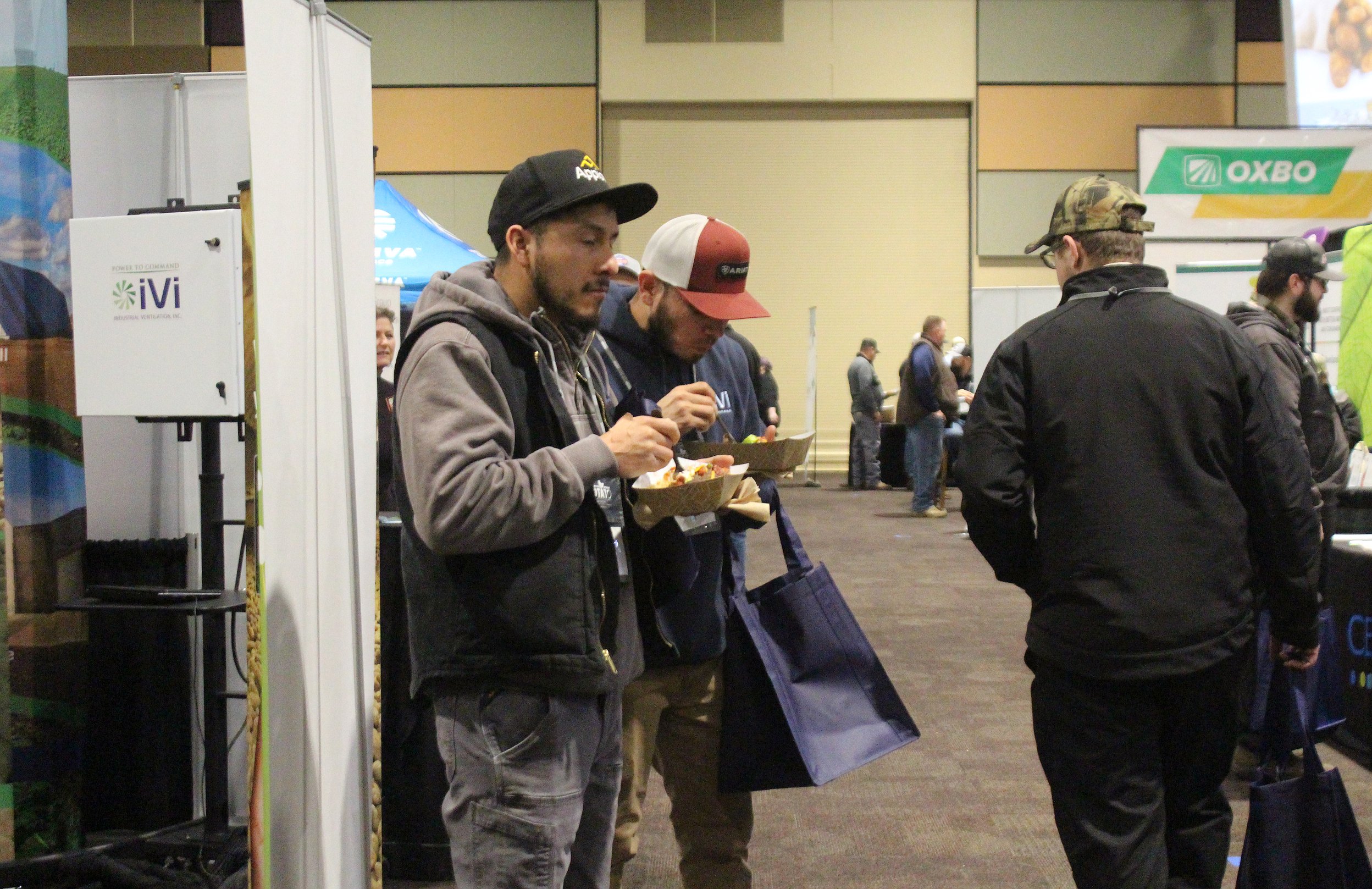 Washington-Oregon Potato Conference attendees stop for lunch from the complimentary potato bar.
Cheryl Schweizer/Basin Business Journal
ARTICLES BY CHERYL SCHWEIZER

Road projects on hold for Labor Day weekend
MOSES LAKE — With Labor Day weekend dead ahead, drivers will be able to move freely about the state. Most road projects are on hold for the holiday weekend. Nobody will be working on the Hansen Road overpass on Interstate 90, but the lane restrictions that are in effect will continue through the end of the project.
Cost estimates for water source alternatives given to Moses Lake City Council
Protected under the U.S. Endangered Species Act, efforts are ongoing to keep it self-sufficient
MOSES LAKE — It’s going to cost a lot of money to provide alternative water sources for the city of Moses Lake, but some of the possible alternatives will cost more than others. City officials provided the Moses Lake City Council with costs for various alternatives Tuesday.

Dryer vent cleaning is important -- but often overlooked
MOSES LAKE — Not all the maintenance a house needs is visible. Sometimes a potential problem just goes unnoticed until it causes trouble, sometimes serious trouble. But a lot of potential problems give off warning signs. Clothes dryers often do when they need a good cleaning.