
An inside look at J.R. Simplot Moses Lake plant
NANCE BESTON | Hagadone News Network | UPDATED 1 year, 6 months AGO
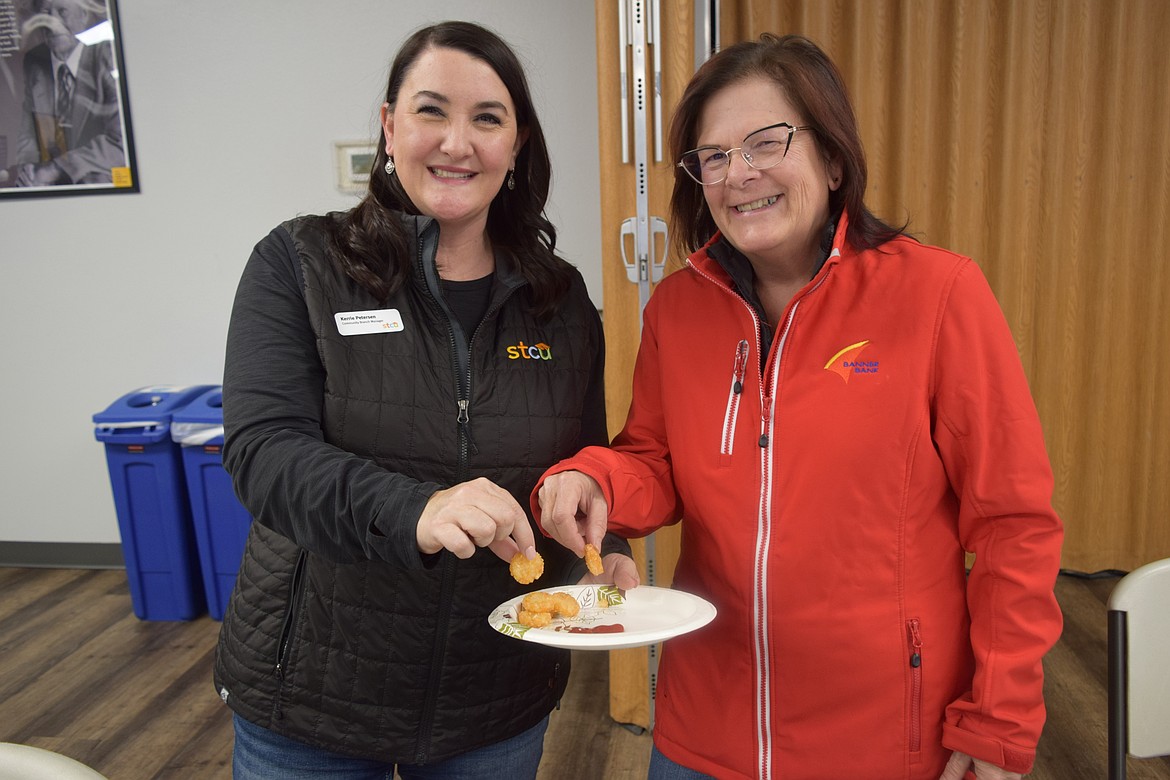
STCU Community Branch Manager Kerrie Petersen, left, and Senior Vice President at Banner Bank, Juliann Dodds eat freshly made breakfast rounds at the Simplot tour Oct. 4.
NANCE BESTON/COLUMBIA BASIN HERALD
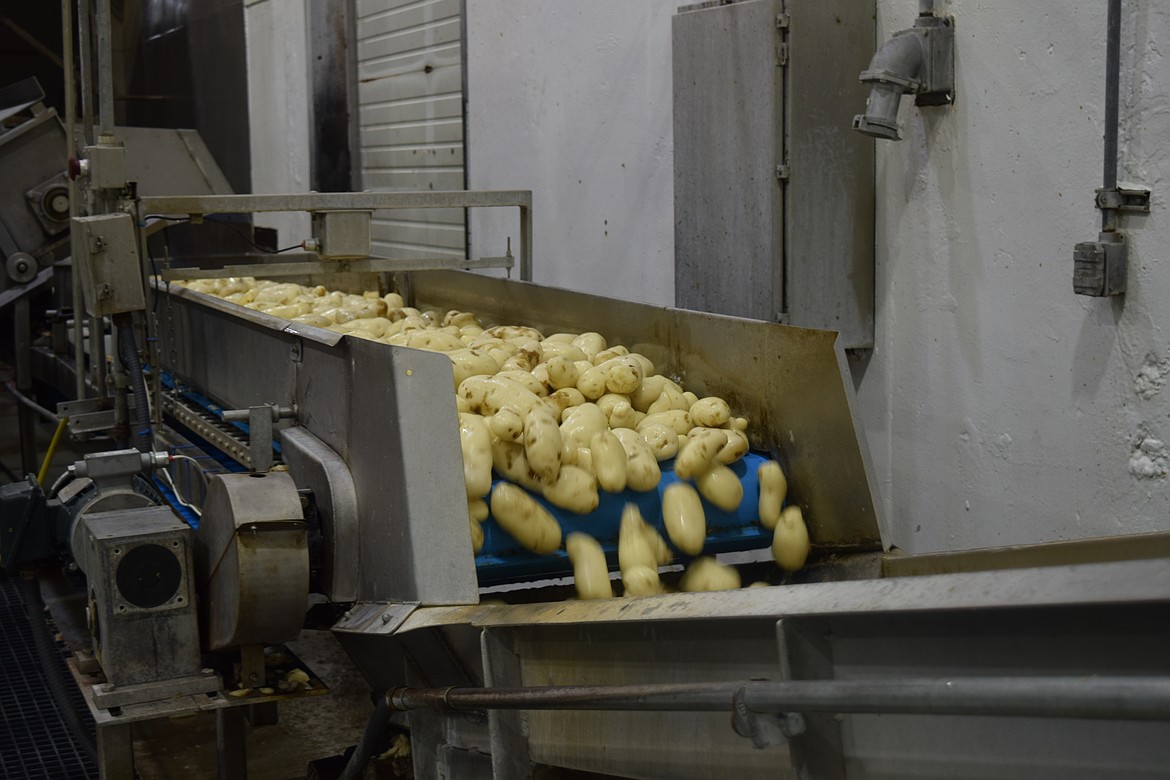
Potatoes start the process of becoming French fries and other fried goods at the J.R. Simplot factory.
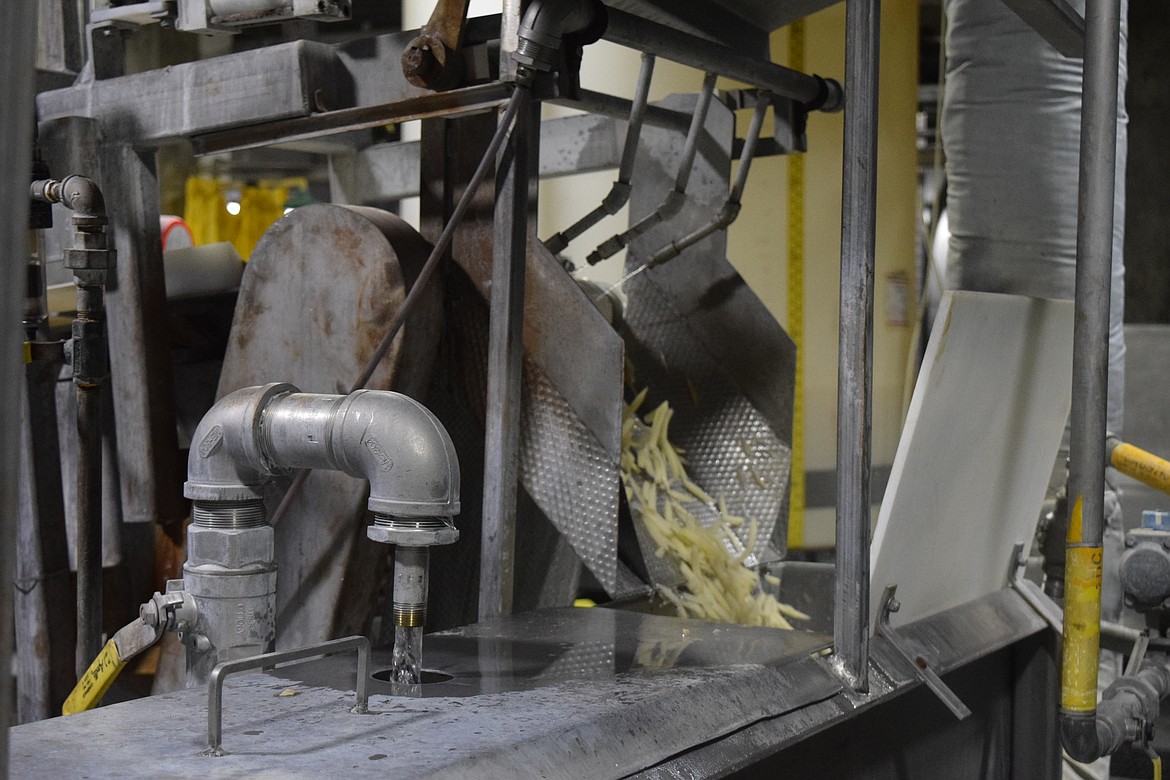
After the French fries are cut at J.R. Simplot they go through an inspection and blanching process to remove extra sugars and add in dextrose to give fries their golden color.
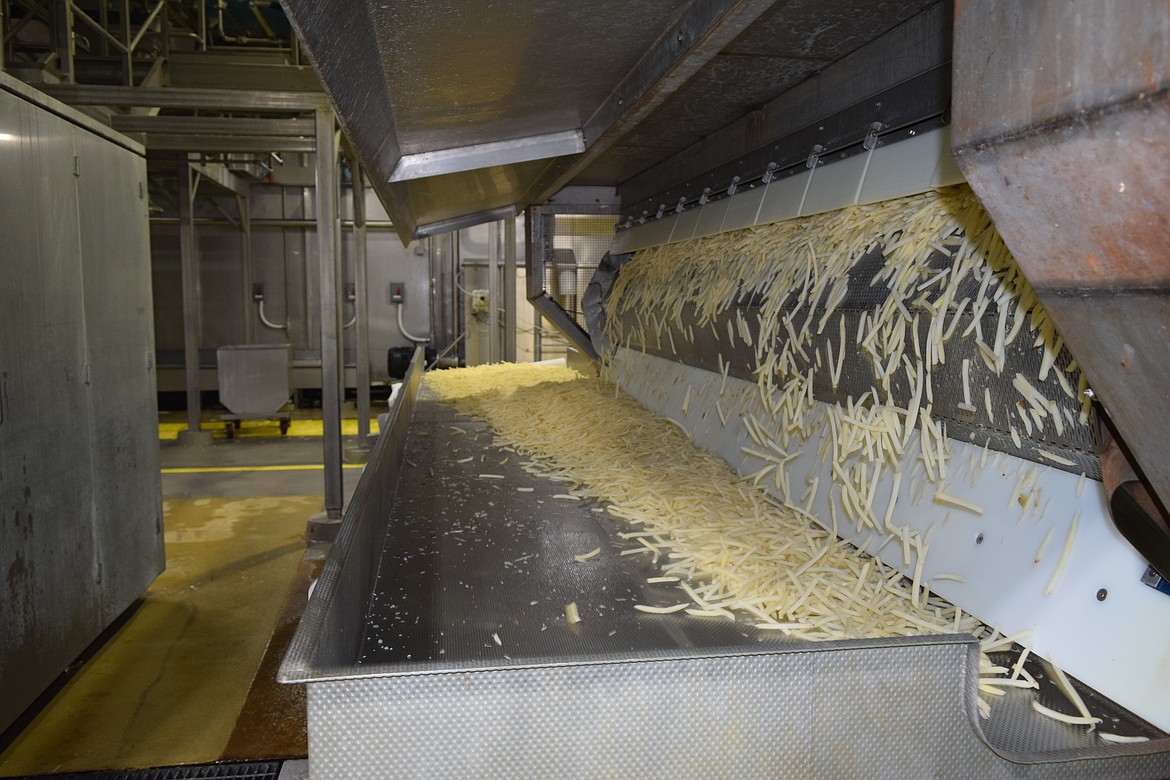
Fries tumble out of a machine at J.R. Simplot to be dried, fried, frozen then packaged.
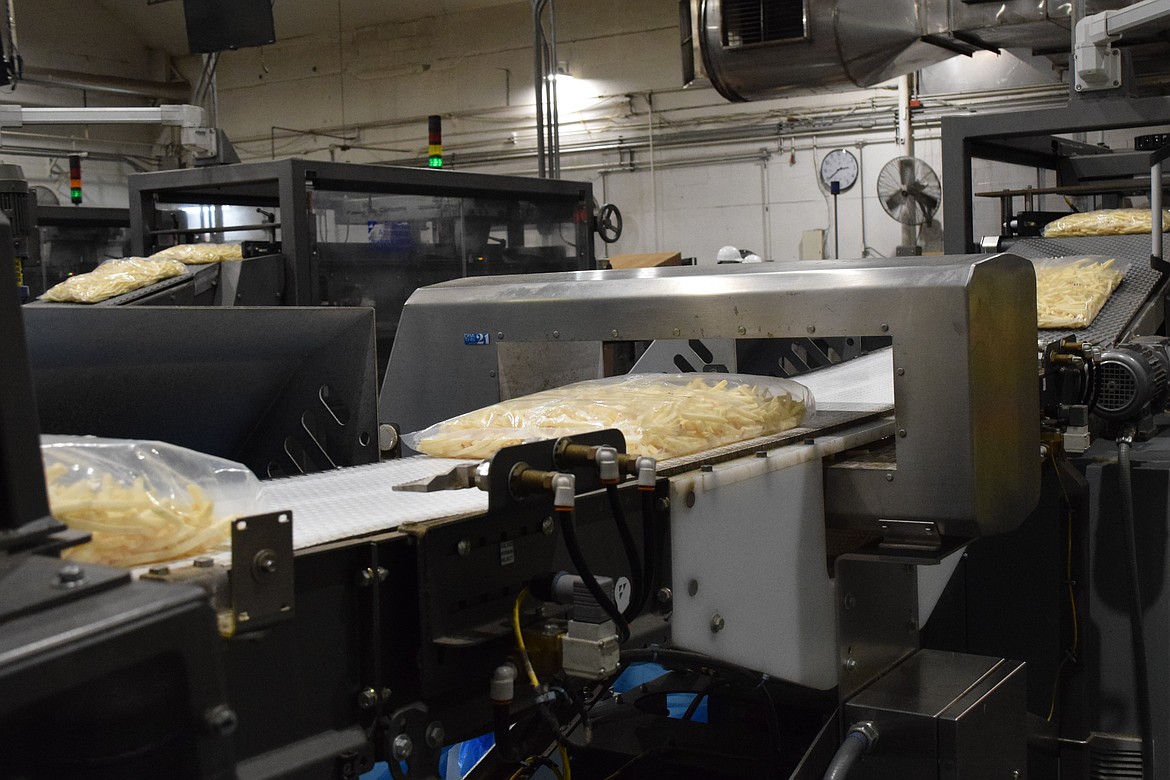
After the fries are processed at J.R. Simplot, they are packaged to be sent out to various companies across the United States and the globe.
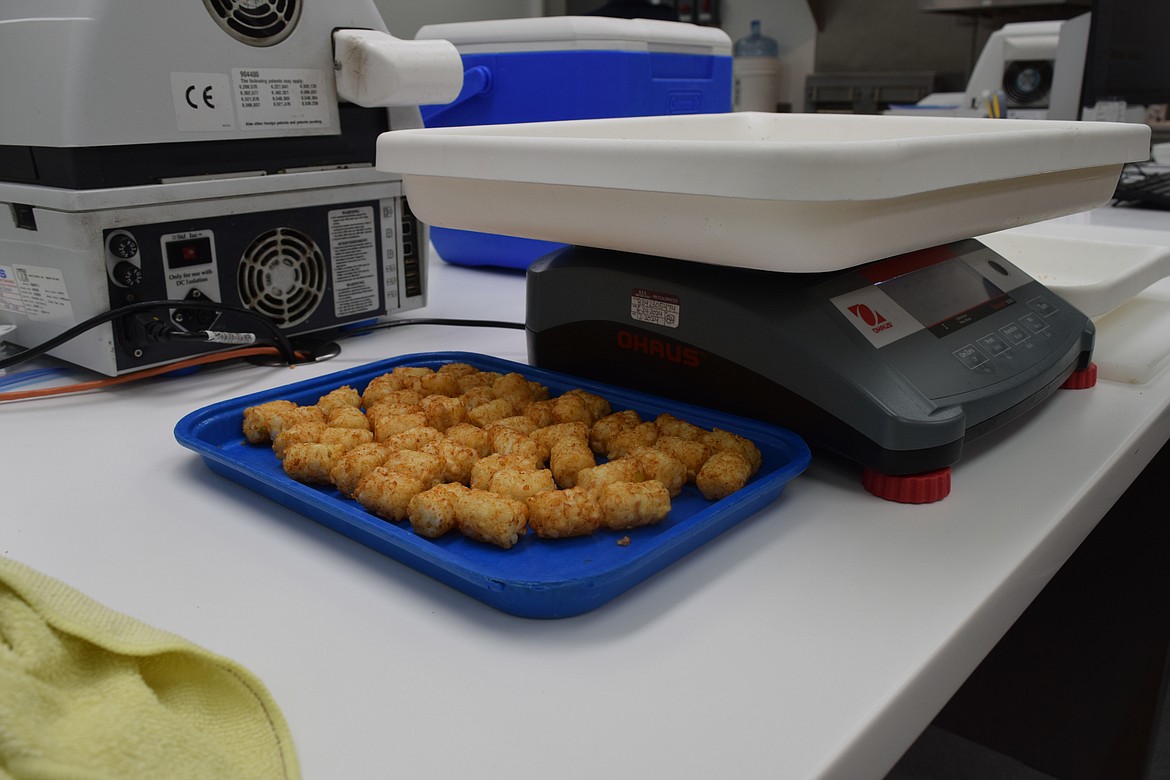
All goods are randomly sampled twice an hour for taste, color, size and quality by workers at J.R. Simplot.
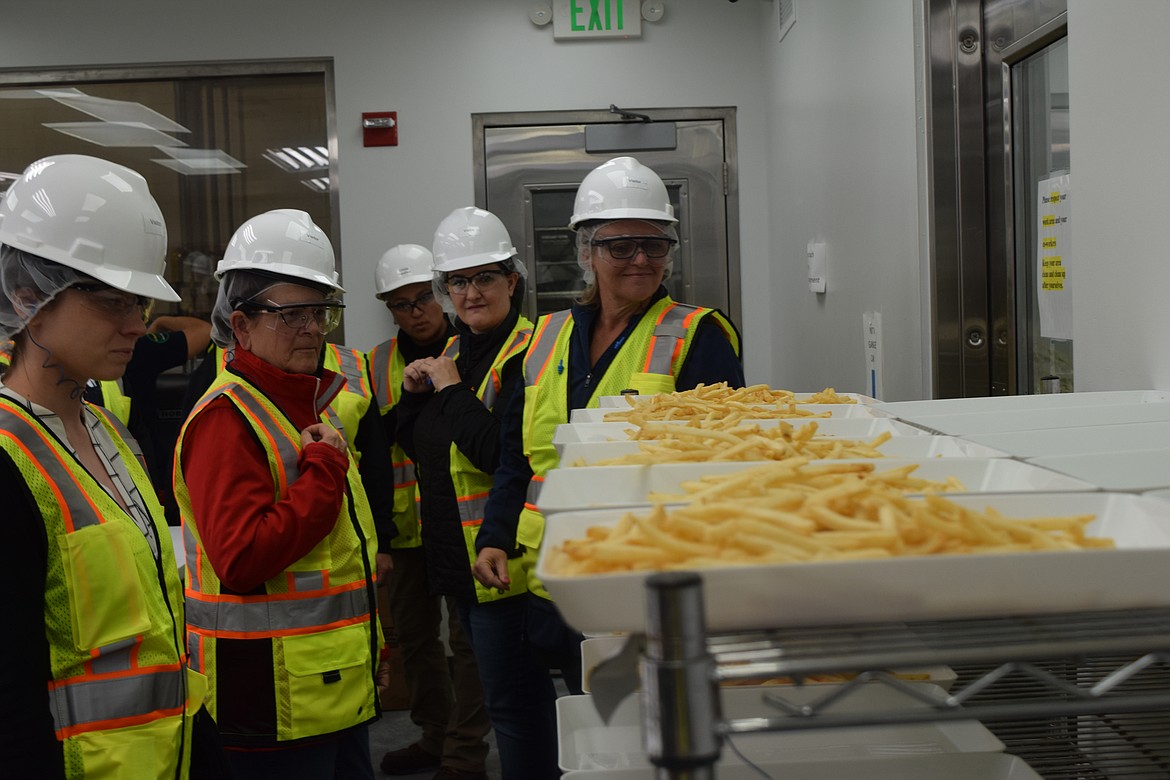
Members of the Association of Washington Business analyze the fry samples used for quality inspections during the tour Oct. 4.
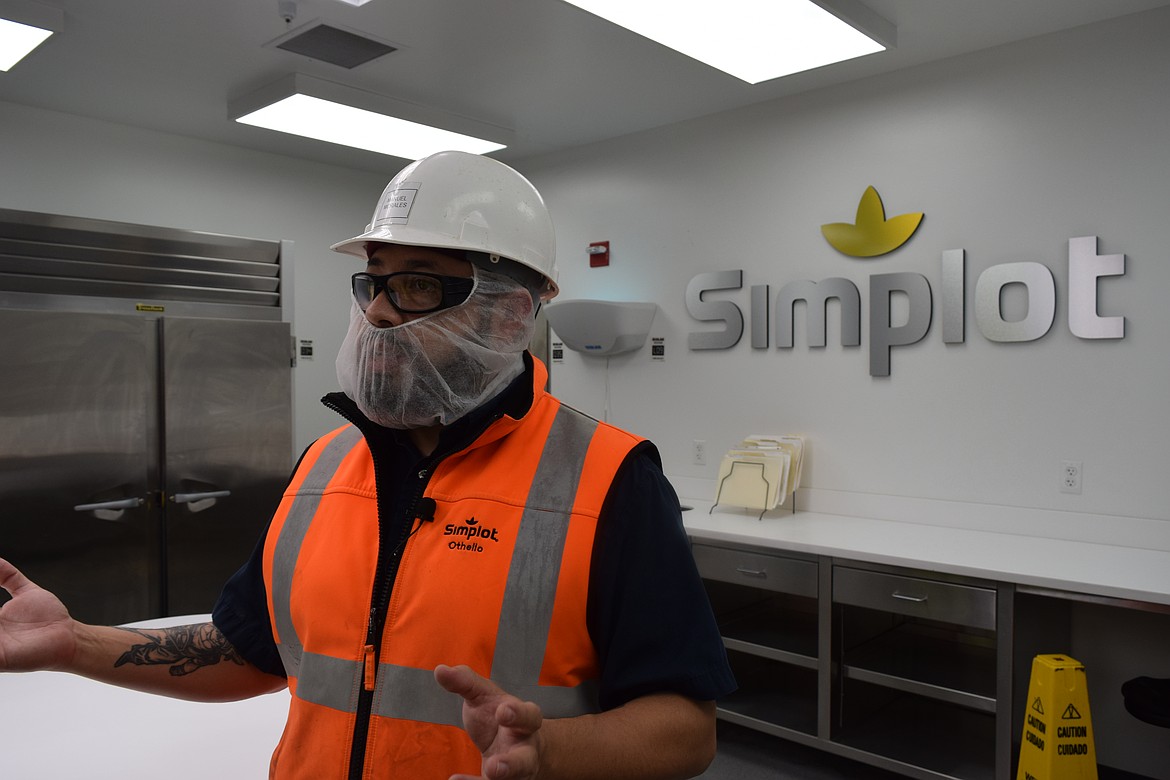
Quality Assurance Manager Manuel Morales explains that various members of the Simplot staff meet daily in this room for quality assurance. All members taste and analyze the various products to assure quality.
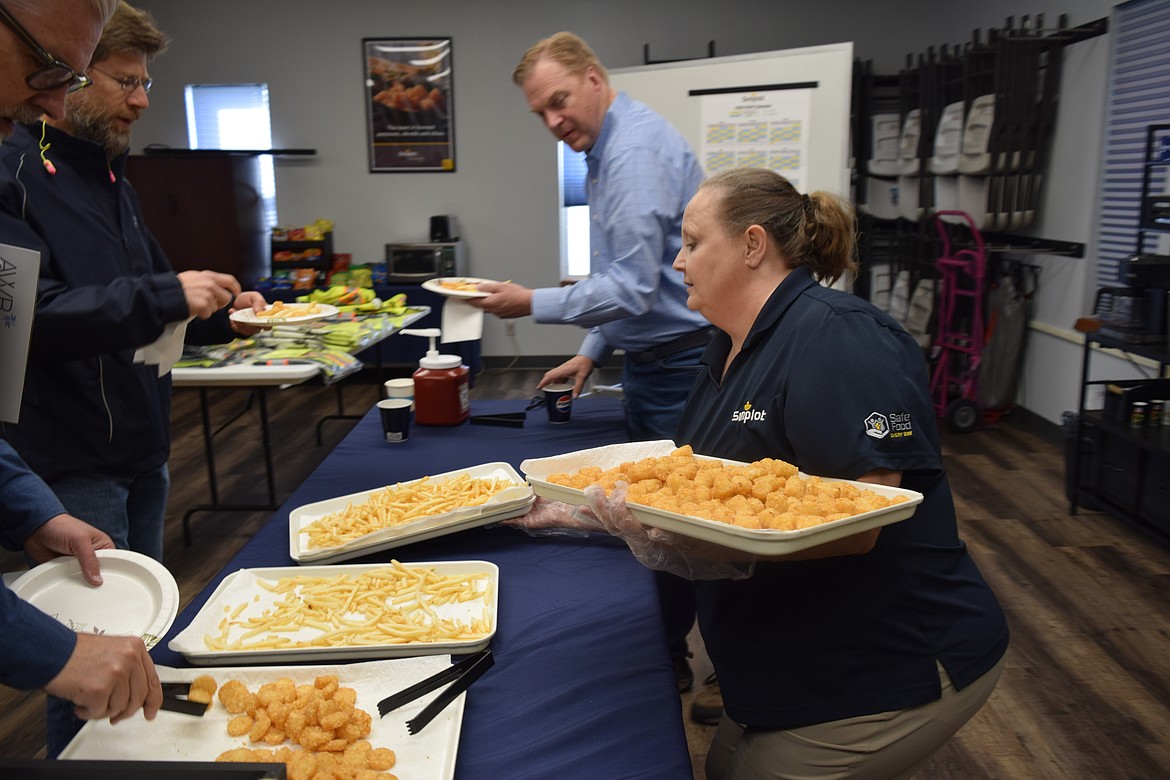
Employees of Simplot shuffle in freshly made potato goods for the Association of Washington Business bus tour group Oct. 4.
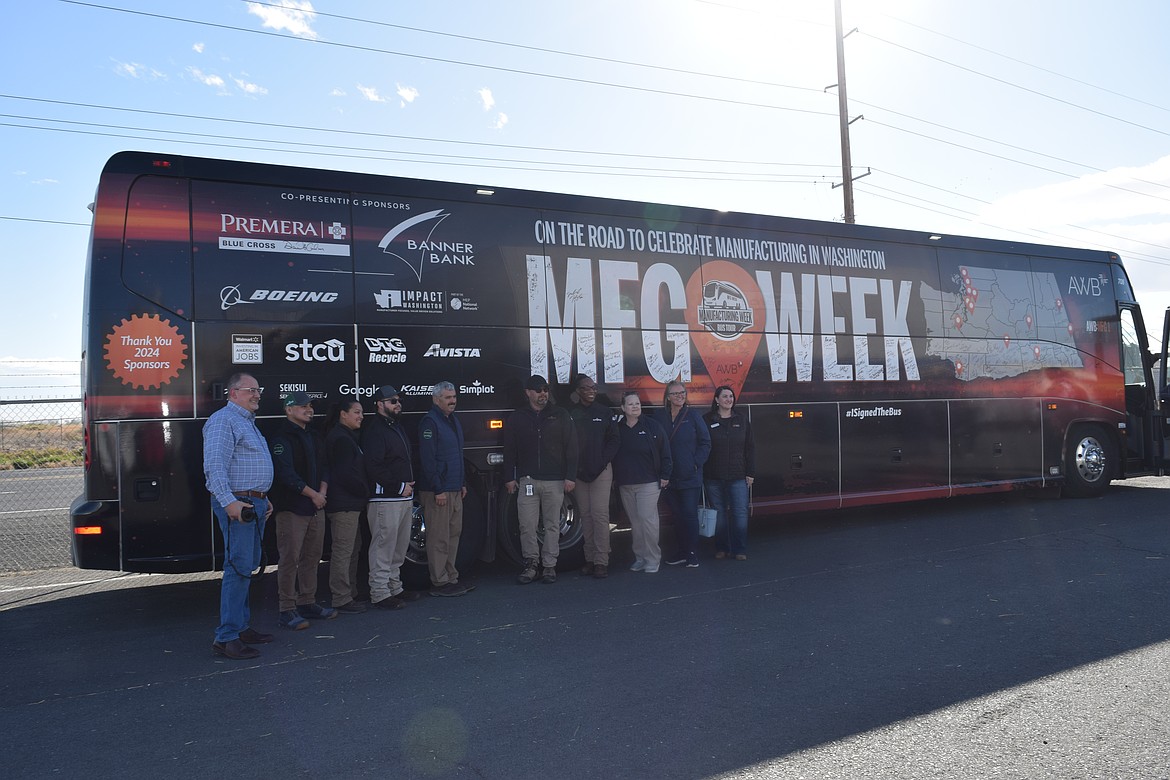
The administration at Moses Lake Simplot poses for a photo outside the Association of Washington Business’ bus which is being used for their week-long manufacturing tour.
MOSES LAKE – The Association of Washington Business stopped at the J.R. Simplot factory in Moses Lake on Friday, during day three of their eighth-annual Manufacturing Week bus tour.
“We're out here really putting a bright sunlight on the makers and creators of Washington State,” Association of Washington Business President Kris Johnson said. “So, 271,000 women and men wake up every day and go to work for a great manufacturer, just like Simplot. And so, we make best-of-class products. They need a best-of-class workforce. These are amazing careers.”
Simplot is a potato processor based in Boise, Idaho but they have a plant located in Moses Lake. The founder of Simplot invented the first commercially available frozen french fry during World War II, according to Eric Brandenburg, vice president of global manufacturing at Simplot.
“We've heard the story today about multiple generation family members being here at Simplot,” Johnson said. “It's a great chance for us to remind local people about, ‘Hey, great jobs are done here.’ You get to make a great product and then it goes across the country, for that matter, across the globe.”
Simplot produces 400 million pounds of straight-cut French fries yearly; 80% of those are exported and the other 20% goes to fast food chains such as McDonald’s, Wienerschnitzel, Whataburger, Trader Joe’s, Burger King and Taco Time. About 320 million of those pounds goes to McDonald’s alone, according to Brandenburg.
“I suspect what most people don't realize is that 80% of the products that come out of this facility right here in Moses Lake aren't consumed in the U.S.,” Johnson said. “It's set for international consumption. And so that's probably gonna surprise some folks. And then looking at where I've had breakfast many days in my life, I'm seeing the potatoes right here that I've had at McDonald's and other places.”
Simplot employs around 8,500 people worldwide at various factories. Simplot produces potatoes, vegetables, avocados, sauce, fish and more, according to Brandenburg. However, the Moses Lake plant only produces potato products such as fries, tater tots, breakfast rounds and hash browns.
“(The) Columbia Basin has this rich history of helping feed the world and make some of the best-of-class products that are out there,” Johnson said. “Sometimes I think we forget that we just are busy driving by the road and not wondering, ‘Geez, what's in that facility? Who makes it? Who might know that's there, or do I use it every day or not?’ That's why we're out doing this.”
During the tour, Quality Assurance Manager Manuel Morales explained how the potatoes are manufactured into french fries. First, the plant gets the potatoes to their receiving area. Next, the potatoes are flumed in the peeling room, which uses underground pipes and water. Then it goes through the peeling process, where the plant uses steam and pressure to remove most of the peel. Following that process, the potatoes go through several washes and foreign material processes, removing anything that is not potato.
“Actually, to make french fries, there's a lot of work into making french fries,” Morales said. “So, before I worked in this industry, I just thought, ‘OK, we're just going to cut up a French cut up a potato, and it becomes a French fry.’ But there's actually a lot more than that. There's a lot of hard work that goes into quality.”
Next, Morales explained that the potato gets cut where water and pressure are utilized to slice the potato into fries. Then the sliced potatoes go through the grading and sorting process. Any french fry that is small gets transferred into a tater tot, hash-brown or breakfast round.
“Next time anyone goes to a restaurant, they should be proud to be consuming a french fry, because there's a lot of work that goes into it,” Morales said. “So, there's a lot of employees here that kind of make it happen. So, it's almost like a magical process. It's a potato and then an hour and a half later are a french fry.”
Then they sort out anything that they consider defective, taking coloring and size into consideration, explained Morales. Following that the potatoes go through a blanching step where natural sugars are removed and they add in dextrose which gives fries the golden color.
“So, there's times of the year where potatoes have a lot more sugar, so that means we have to leach out the sugars a lot more, and that tends to cause darker product, darker potatoes, darker french fries, and also like two-tone french fries, which kind of do not look that appealing,” Morales said. “So, appearance is definitely what catches the eye at the beginning.”
Finally, the fries go through drying, frying, freezing then packaging.
“That's pretty much our process in a nutshell and that’s how we get these delicious fries,” Morales said.
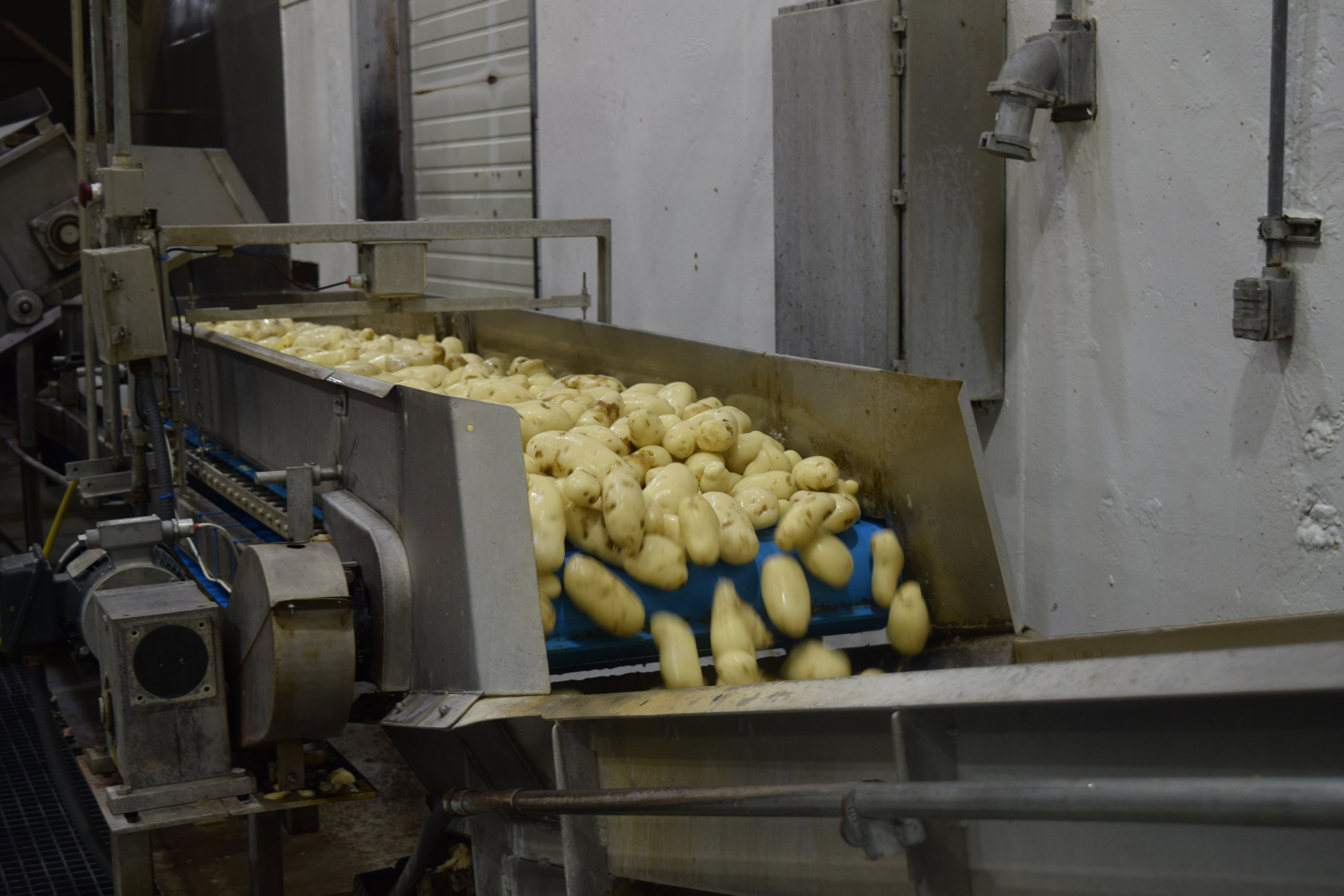 Potatoes start the process of becoming French fries and other fried goods at the J.R. Simplot factory.
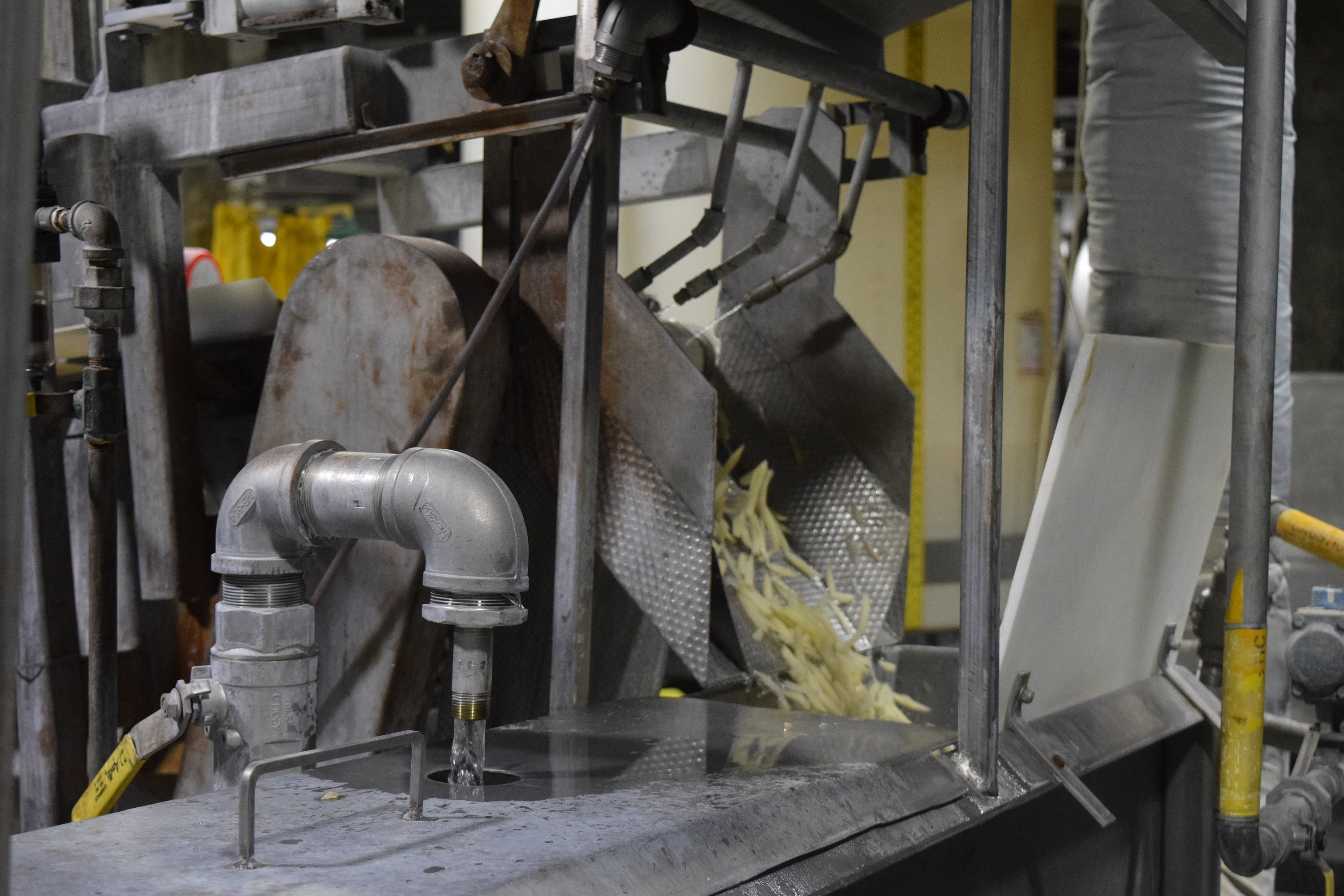 After the French fries are cut at J.R. Simplot they go through an inspection and blanching process to remove extra sugars and add in dextrose to give fries their golden color.
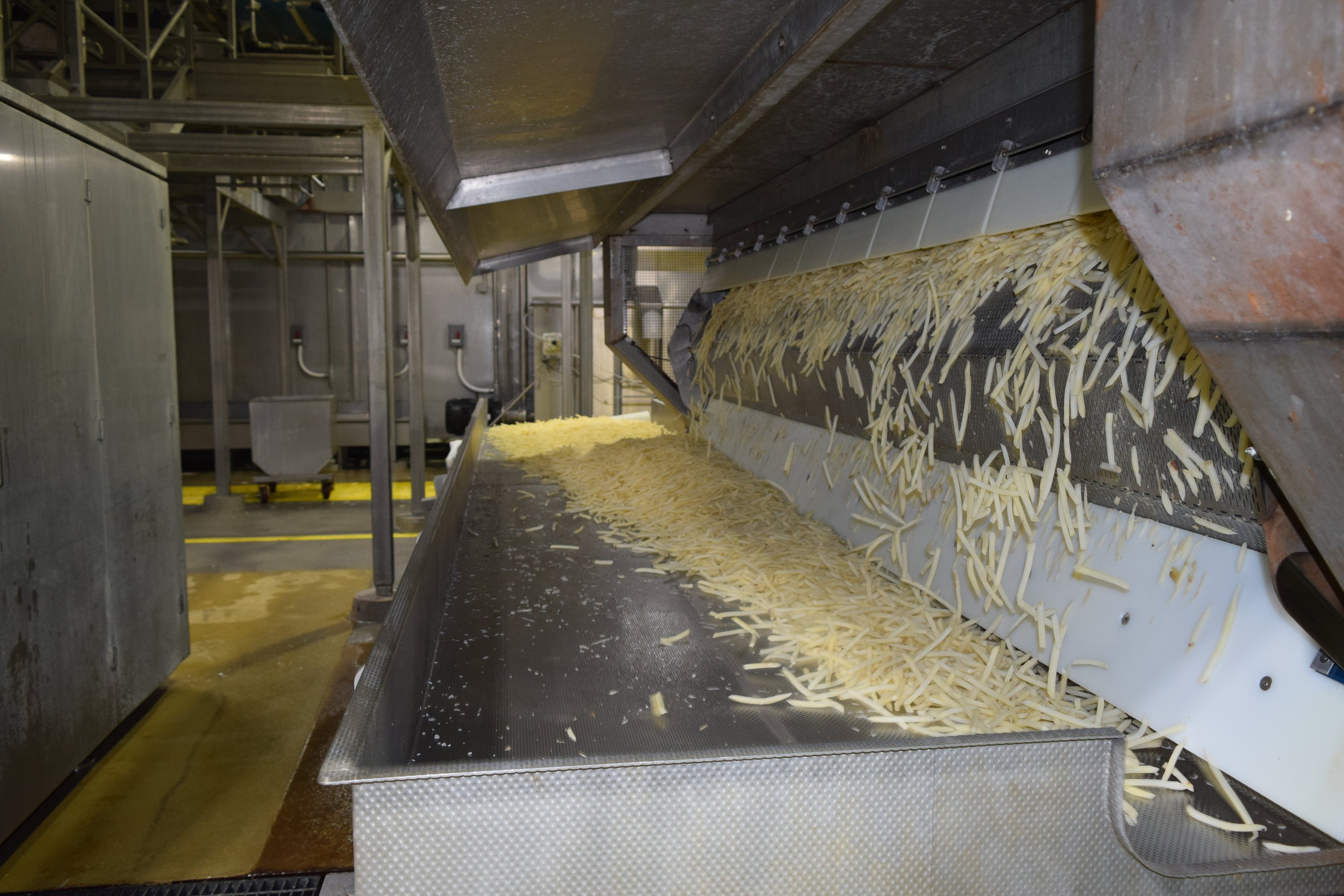 Fries tumble out of a machine at J.R. Simplot to be dried, fried, frozen then packaged.
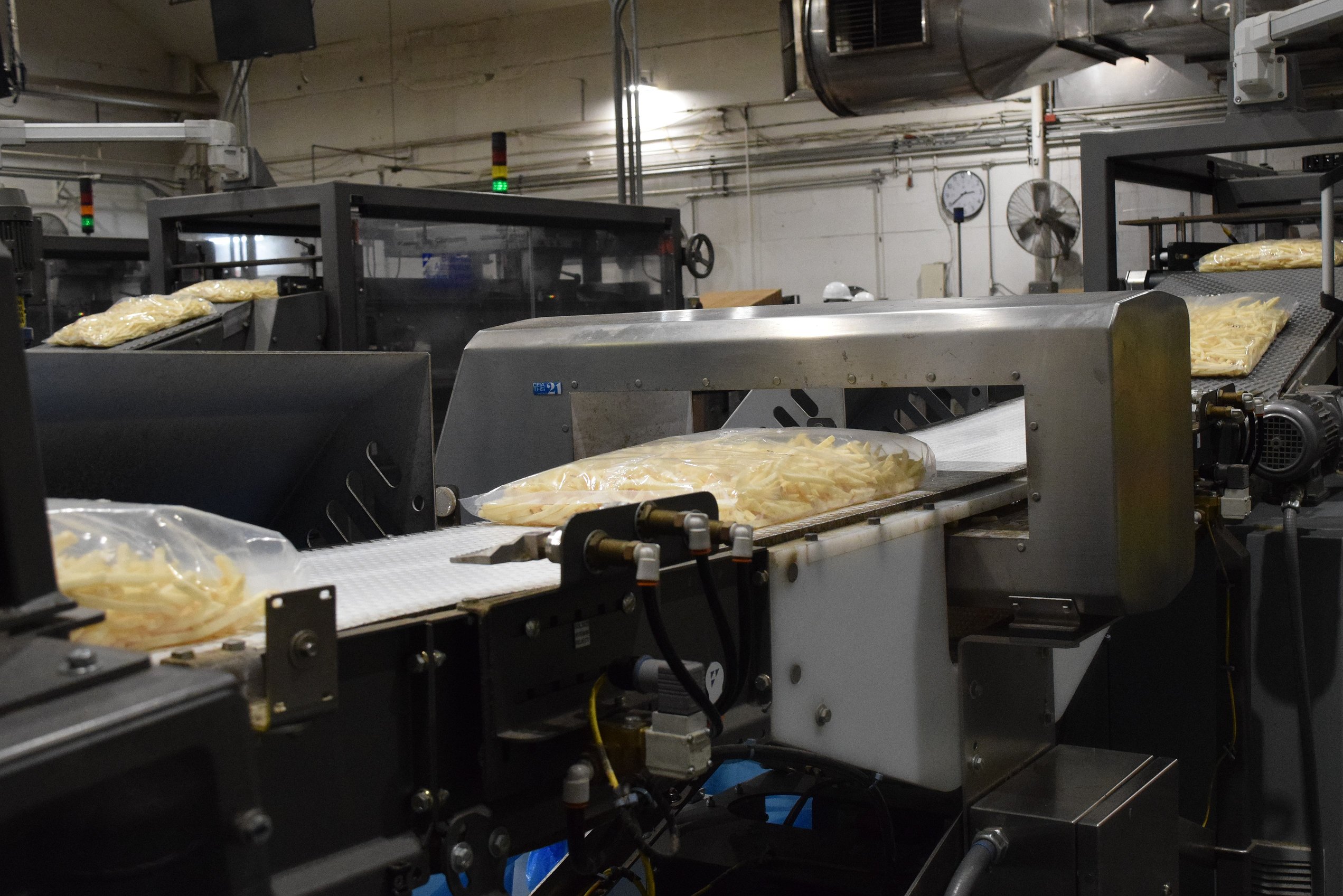 After the fries are processed at J.R. Simplot, they are packaged to be sent out to various companies across the United States and the globe.
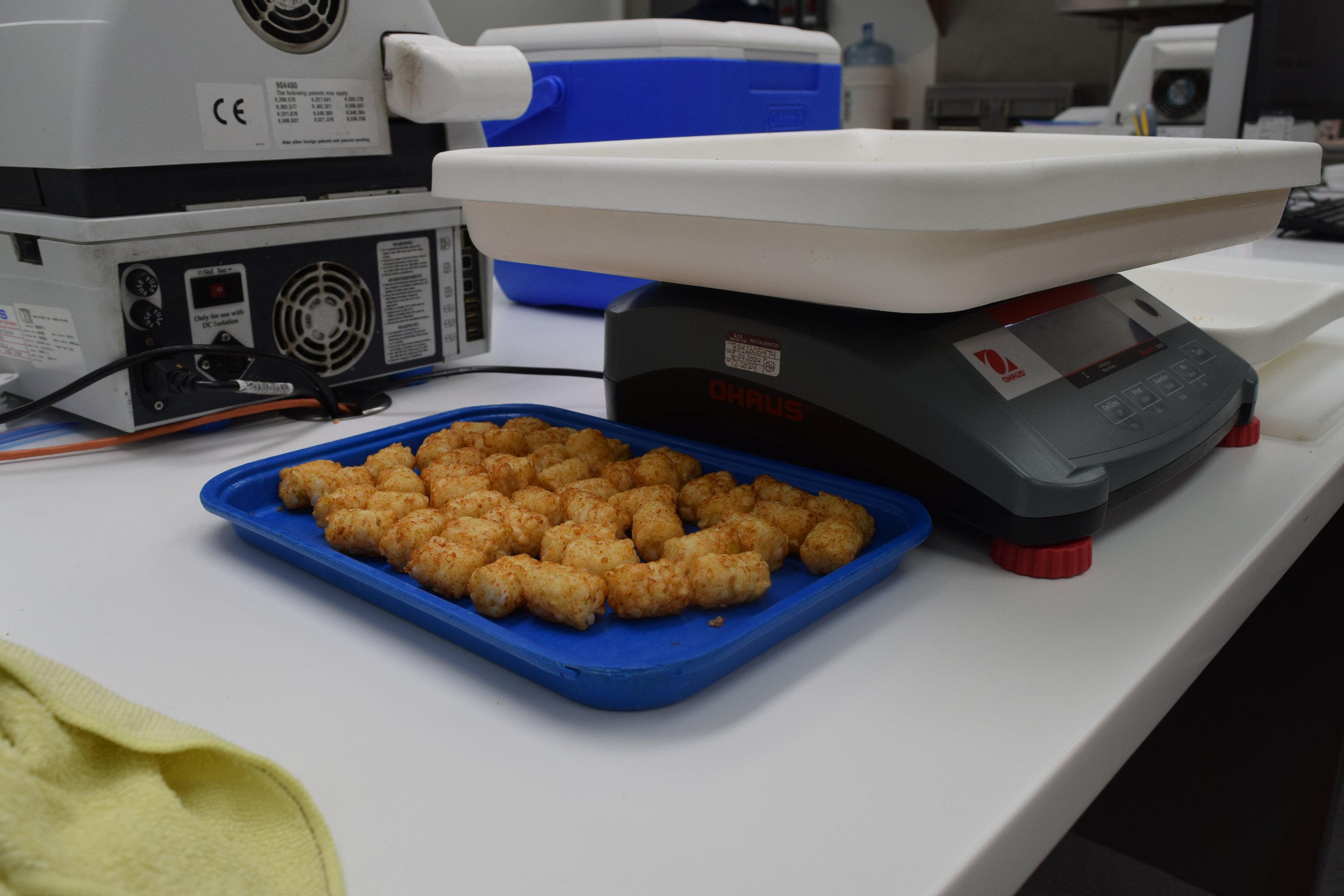 All goods are randomly sampled twice an hour for taste, color, size and quality by workers at J.R. Simplot.
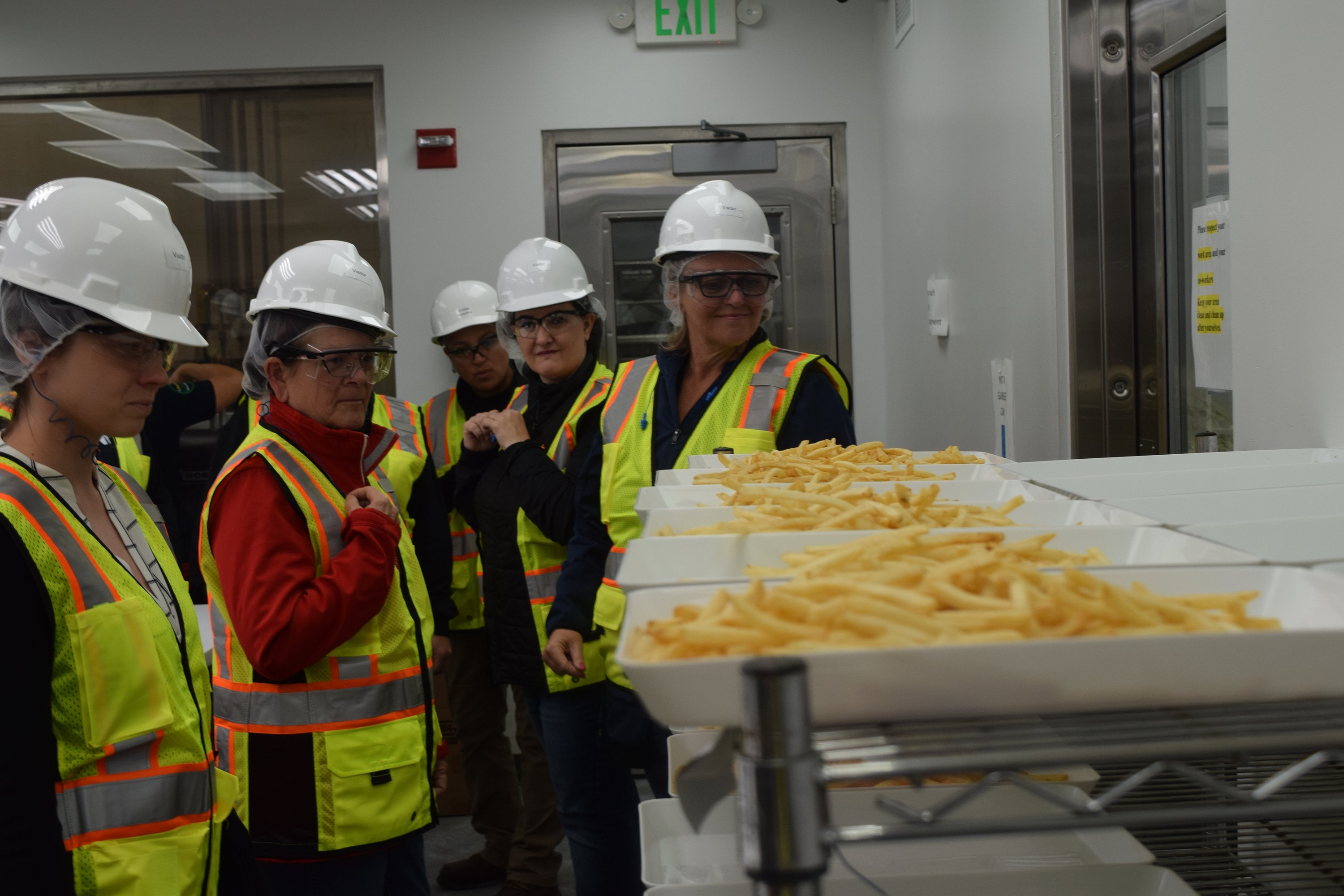 Members of the Association of Washington Business analyze the fry samples used for quality inspections during the tour Oct. 4.
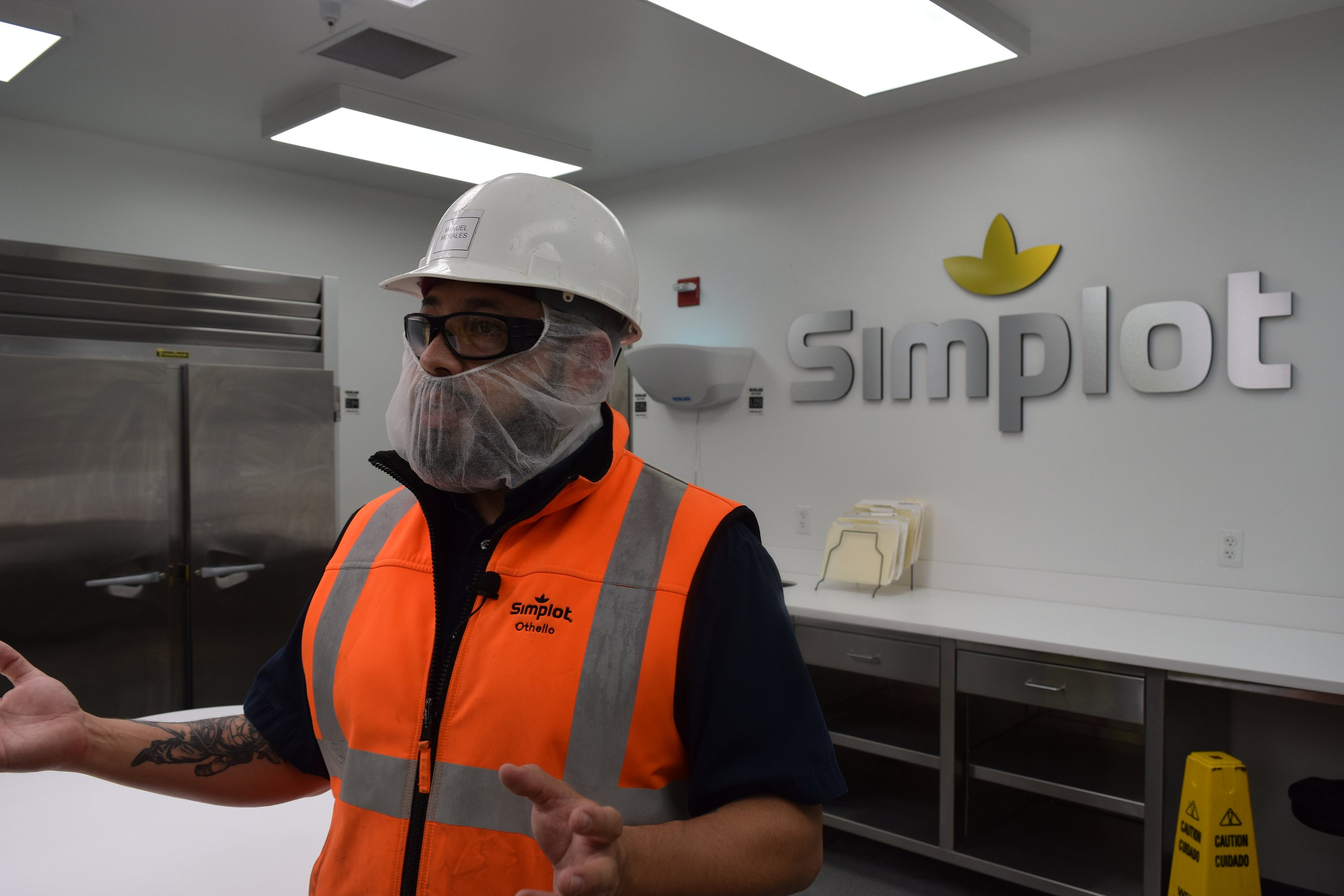 Quality Assurance Manager Manuel Morales explains that various members of the Simplot staff meet daily in this room for quality assurance. All members taste and analyze the various products to assure quality.
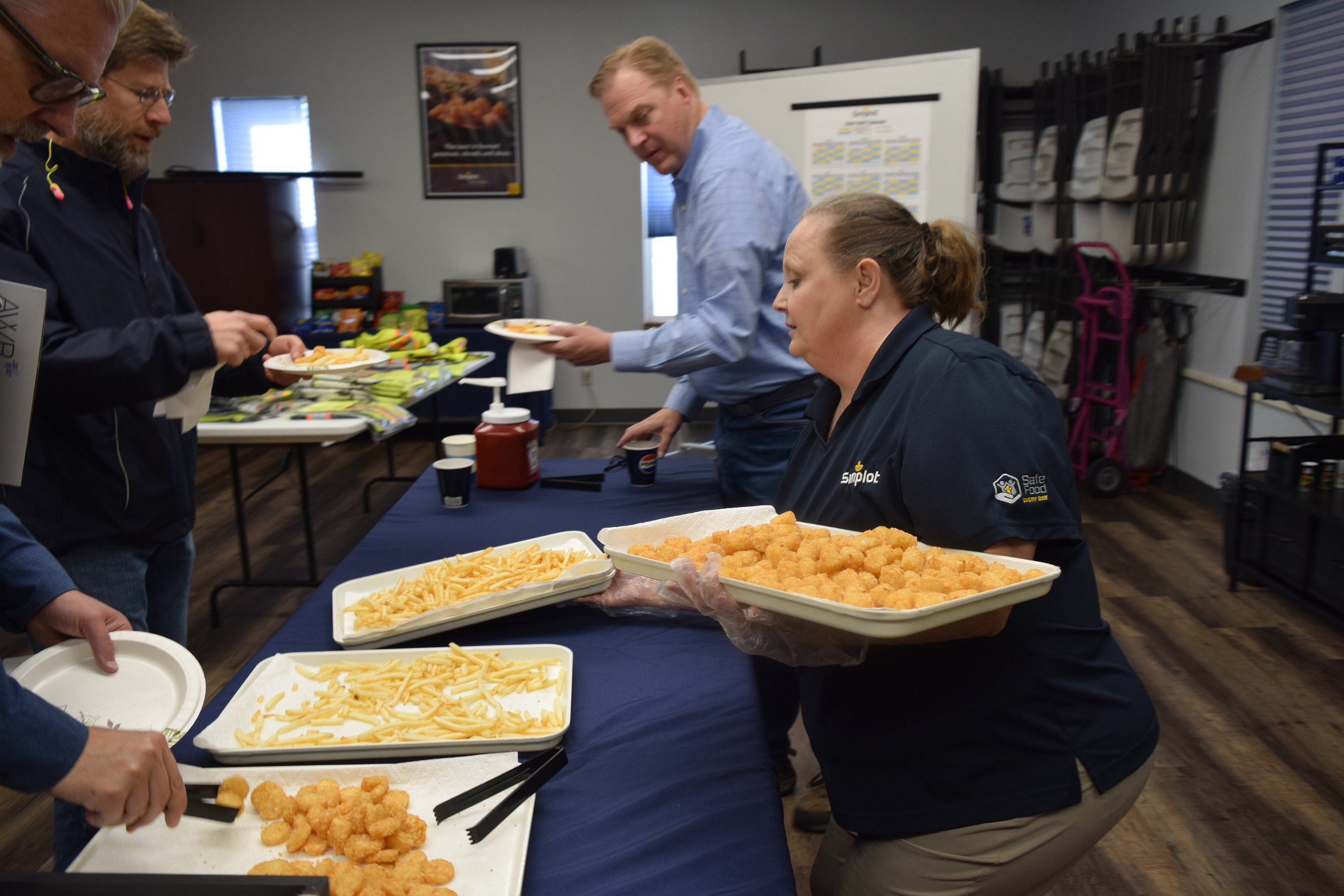 Employees of Simplot shuffle in freshly made potato goods for the Association of Washington Business bus tour group Oct. 4.
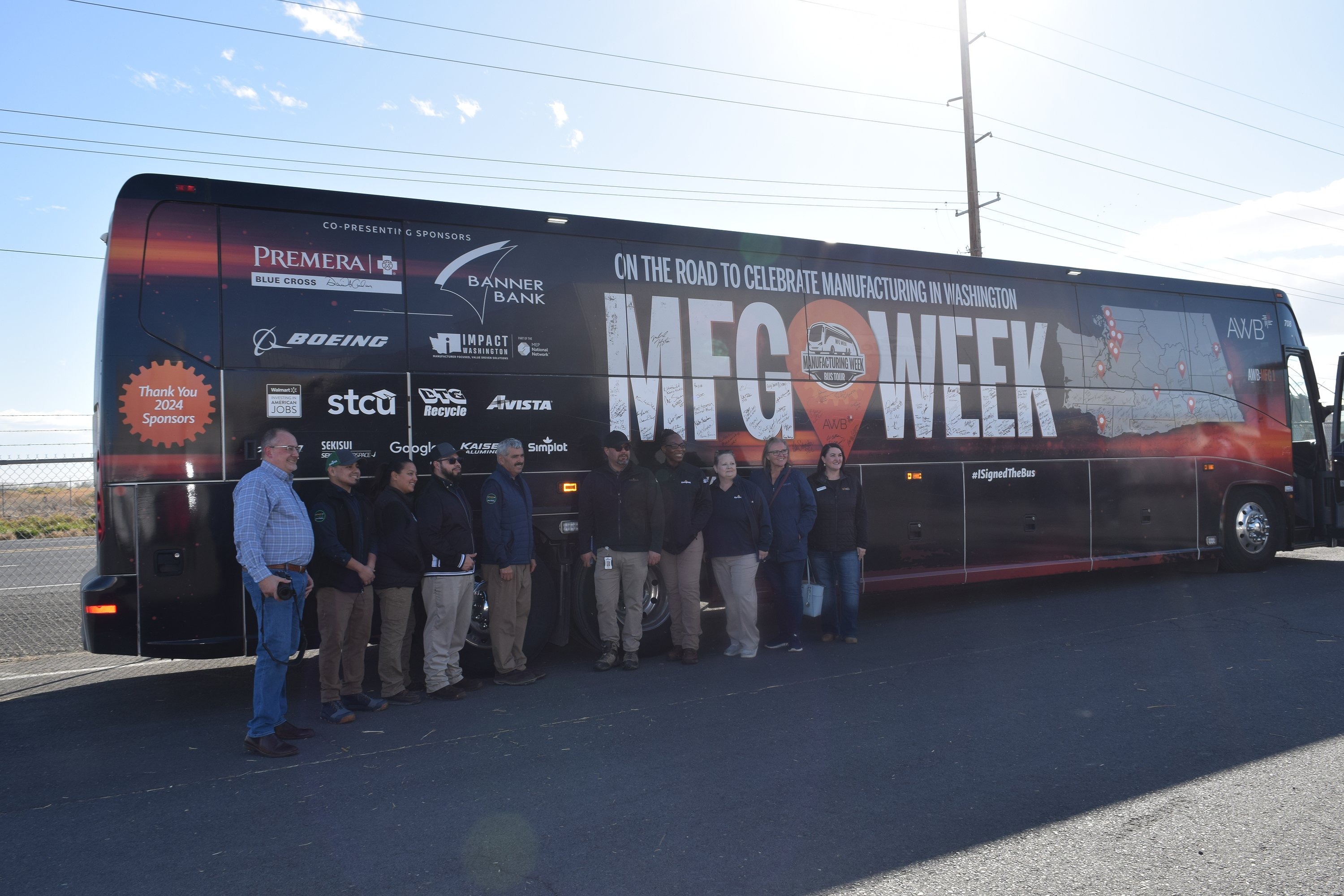 The administration at Moses Lake Simplot poses for a photo outside the Association of Washington Business’ bus which is being used for their week-long manufacturing tour.
ARTICLES BY NANCE BESTON
1 arrested after Highway 17 stop; detectives recover fentanyl, firearms
MOSES LAKE — The Moses Lake Street Crimes Unit conducted a traffic stop on Highway 17 near Randolph Road and executed a search warrant Friday morning as part of an ongoing narcotics investigation.
4th-year drought declaration in WA, subtle effects in the Columbia Basin
EPHRATA — Washington’s fourth straight year of drought is expected to hit some regions hard, but in Grant and Adams counties, the impacts will look different – quieter, less visible and centered underground. Statewide, the Department of Ecology issued an emergency drought declaration after a warm winter left Washington with about half its usual snowpack, raising concerns about low summer streamflows, stressed fish populations and heightened wildfire risk. Seven of the past 10 years have included drought somewhere in the state. “If you look at our mountains, the challenge we are facing is clear,” Gov. Bob Ferguson said during a press conference Wednesday. “We’re taking emergency action to protect fish, farmers and communities across Washington.”
Sleep Diagnostic Center to close after doctor’s sentencing
MOSES LAKE — The Central Washington Sleep Diagnostic Center announced it will be closing its doors effective April 30. This includes locations in Moses Lake, Spokane Valley, Brewster and Wenatchee. The announcement follows the March 25 guilty plea from Dr. Eric Edward Haeger, 57, in United States District Court to adulterating and misbranding medical devices with the intent to defraud or mislead, according to a statement from the U.S. Attorney’s Office. “The adulterations by Dr Haeger show a dangerous disregard for the safety of his patients,” Washington Attorney General Nick Brown said in a statement. “This is a win for patient safety, for protecting public dollars from fraud, and for ensuring citizens of Washington get necessary healthcare. This case exemplifies the great work our team is doing in collaboration with our federal partners to fight fraud and protect Washingtonians.”