
Evolution, adaptation discussed at CBDL meeting
CHERYL SCHWEIZER | Hagadone News Network | UPDATED 1 year, 10 months AGO
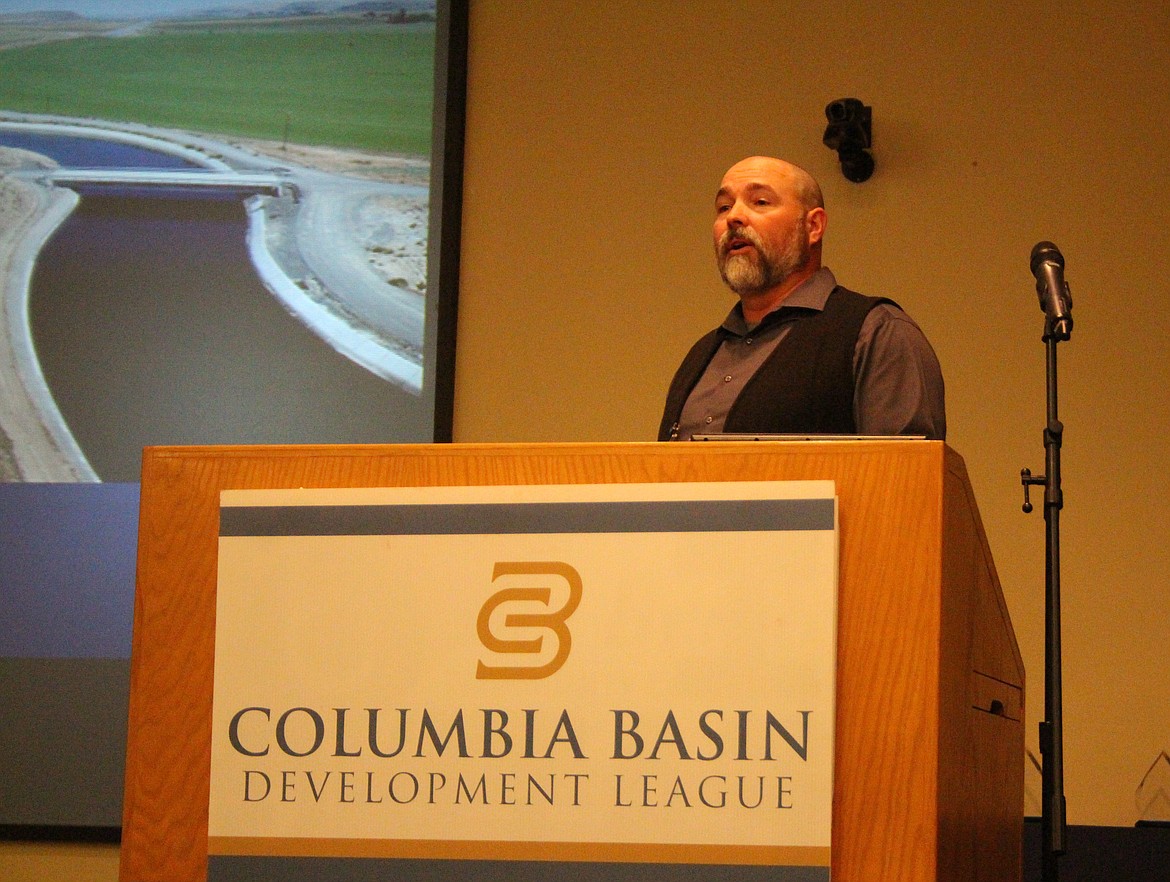
Marc Maynard, Ephrata field office manager of the Columbia Basin Project, said it’s always changing to meet changing demands.
CHERYL SCHWEIZER/COLUMBIA BASIN HERALD
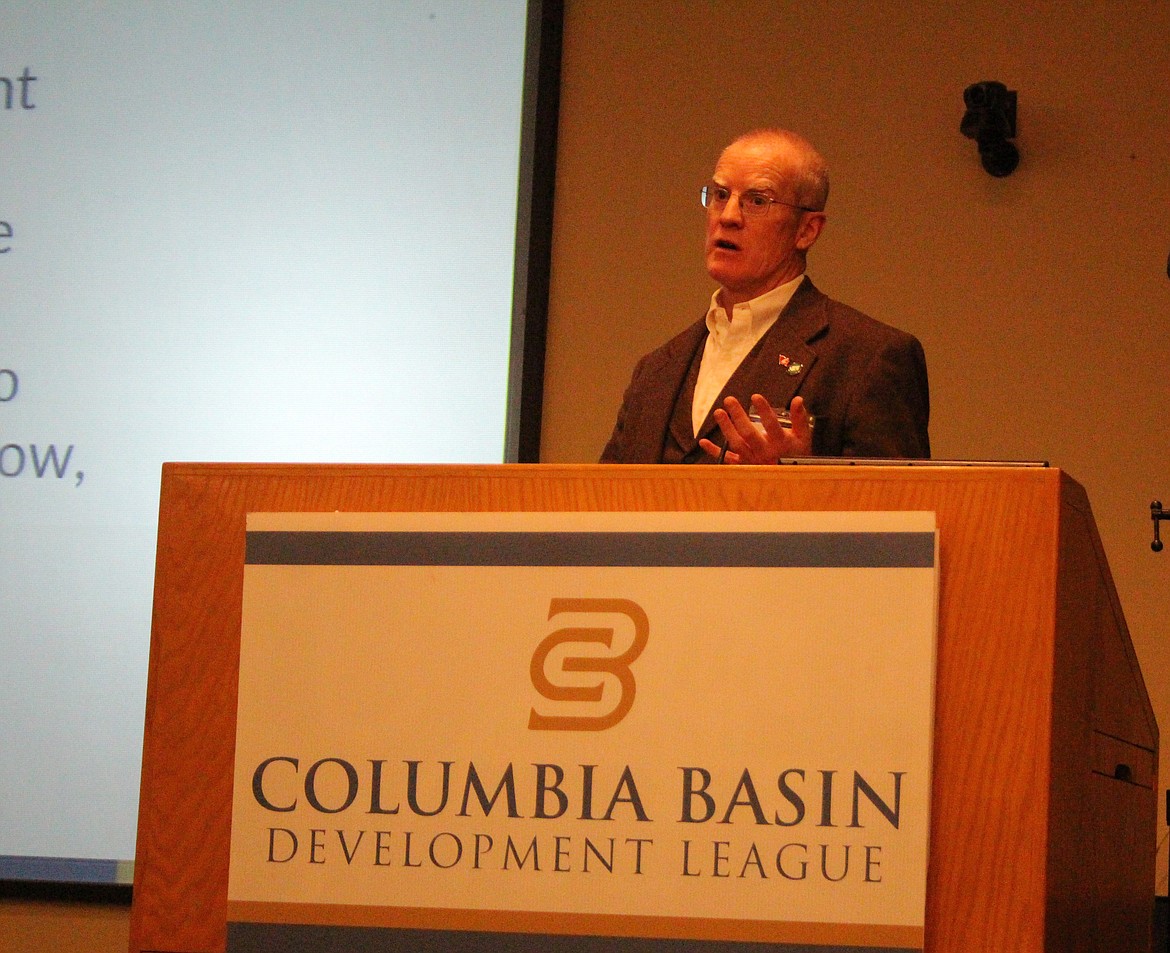
John O’Callaghan, secretary-manager of the South Columbia Basin Irrigation District, talks about upgrading Columbia Basin Project control systems during the annual meeting of the Columbia Basin Development League Tuesday.
Senior Reporter Cheryl Schweizer is a journalist with more than 30 years of experience serving small communities in the Pacific Northwest. She began her post-high-school education at Treasure Valley Community College and enerned her journalism degree at Oregon State University. After working for multiple publications, she has settled down at the Columbia Basin Herald and has been a staple of the newsroom for more than a decade. Schweizer’s dedication to her communities and profession has earned her the nickname “The Baroness of Bylines.” She covers a variety of beats including health, business and various municipalities. | October 30, 2024 3:00 AM
MOSES LAKE — Integrating and upgrading technology and how the Columbia Basin Project is evolving were the topics of discussion at a panel of irrigation district directors during the Columbia Basin Development League annual meeting Tuesday.
While it’s one big irrigation system under the management of the U.S. Bureau of Reclamation, the Columbia Basin project is split into three irrigation districts. As technology changes the way it’s used in managing the irrigation system changes, and as the irrigation system evolves the way it’s managed evolves. Speakers addressed the challenges of technological change and system evolution.
In addition, there are hundreds of miles of irrigation canals, and things can go wrong.
“Canals are made of earth in most cases, and they leak,” said Craig Simpson, secretary-manager of the East Columbia Basin Irrigation District. “It’s just part of operating a large irrigation system.”
Most of the time technology helps in managing the system, but not always. Roger Sonnichsen, secretary-manager of the Quincy-Columbia Basin Irrigation District, said technology was at the center of a 2022 overflow and washout that took out a section of Frenchman Hills Road between Quincy and Royal City.
“We had not one, but two sensors fail on the west canal, resulting in (a section of canal) overtopping,” Sonnichsen said.
John O’Callaghan, secretary-manager of the South Columbia Irrigation District, said the districts are working on a technology upgrade. The goal is to improve and expand the existing water management system.
“What it really means is remote control,” O’Callaghan said. “It lets us manage the canals remotely.”
Technology allows managers to collect more information on the canal system, and as a result, get a better understanding of what’s going on.
“The old-timers who trained me as (the technology) was coming on, they’d been running the canals for 30 years and they learned all kinds of things about the canals that they didn’t know,” O’Callaghan said. “It provides tremendous benefits to us.”
The remote management system is still usable, he said, but it’s getting old and there’s a pilot program underway to replace it. He estimated upgrading would cost an estimated $14 to $15 million, about half of which would be funded by the irrigation districts. The Bureau of Reclamation would pay the other half, he said.
The goal is to have the upgrades completed by 2027. That too will bring with it some challenges, he said.
“We have implemented new technology to operate our canals at the same time that we have old technology (operating) our canals. We’ve got to transition all that stuff, and a lot of that transition is going to have to happen, just because of the time frame, while the canals are live during the irrigation season,” O’Callaghan said. “We’re not going to be able to just do it in the winter and then not do anything during the irrigation season.”
Marc Maynard, Ephrata field office manager for the Bureau of Reclamation, said the project evolves as the needs evolve, which also brings challenges. He cited the Odessa Groundwater Replacement Project.
The decades-long project is designed to switch farmers in the Odessa area who are using wells to irrigate their crops to surface water, which would be delivered through the canal system. Maynard said that change will affect the entire system.
With more surface water being delivered, the amount of water available for other uses will decline, Maynard said. Some cities throughout the Columbia Basin are investigating the use of surface water to supplement municipal water supplies. Less water will be available for that once the Odessa project is finished, he said.
In addition, project managers will have to make some changes to the waterways used to deliver water to customers in the SCBID.
“The Columbia Basin Project is always changing, always adjusting to meet current demands,” Maynard said.
He's managed the project for seven years, he said, and some changes came as a surprise.
“I really kind of had more of a static vision, I guess, of what this project is. Having been here almost seven years now, I’ve really had an opportunity to dig and understand how things actually operate on the project and see just how dynamic it actually is. It’s always evolving.”
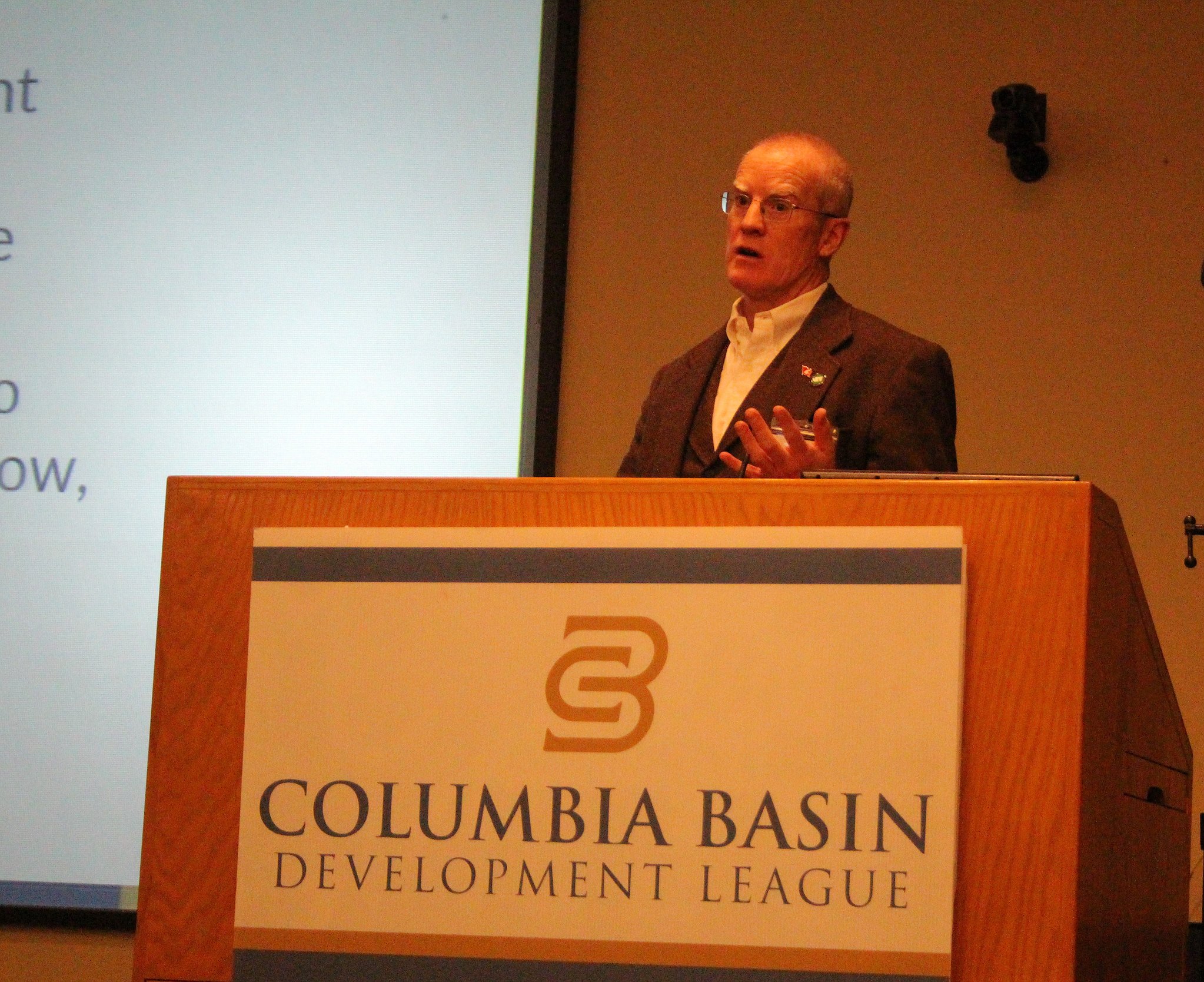 John O’Callaghan, secretary-manager of the South Columbia Basin Irrigation District, talks about upgrading Columbia Basin Project control systems during the annual meeting of the Columbia Basin Development League Tuesday.
ARTICLES BY CHERYL SCHWEIZER
Road projects on hold for Labor Day weekend
MOSES LAKE — With Labor Day weekend dead ahead, drivers will be able to move freely about the state. Most road projects are on hold for the holiday weekend. Nobody will be working on the Hansen Road overpass on Interstate 90, but the lane restrictions that are in effect will continue through the end of the project.
Cost estimates for water source alternatives given to Moses Lake City Council
Protected under the U.S. Endangered Species Act, efforts are ongoing to keep it self-sufficient
MOSES LAKE — It’s going to cost a lot of money to provide alternative water sources for the city of Moses Lake, but some of the possible alternatives will cost more than others. City officials provided the Moses Lake City Council with costs for various alternatives Tuesday.

Dryer vent cleaning is important -- but often overlooked
MOSES LAKE — Not all the maintenance a house needs is visible. Sometimes a potential problem just goes unnoticed until it causes trouble, sometimes serious trouble. But a lot of potential problems give off warning signs. Clothes dryers often do when they need a good cleaning.