
Outlaws journey to the last mountain in Whitefish snowboarder’s debut film
KELSEY EVANS | Hagadone News Network | UPDATED 4 months AGO
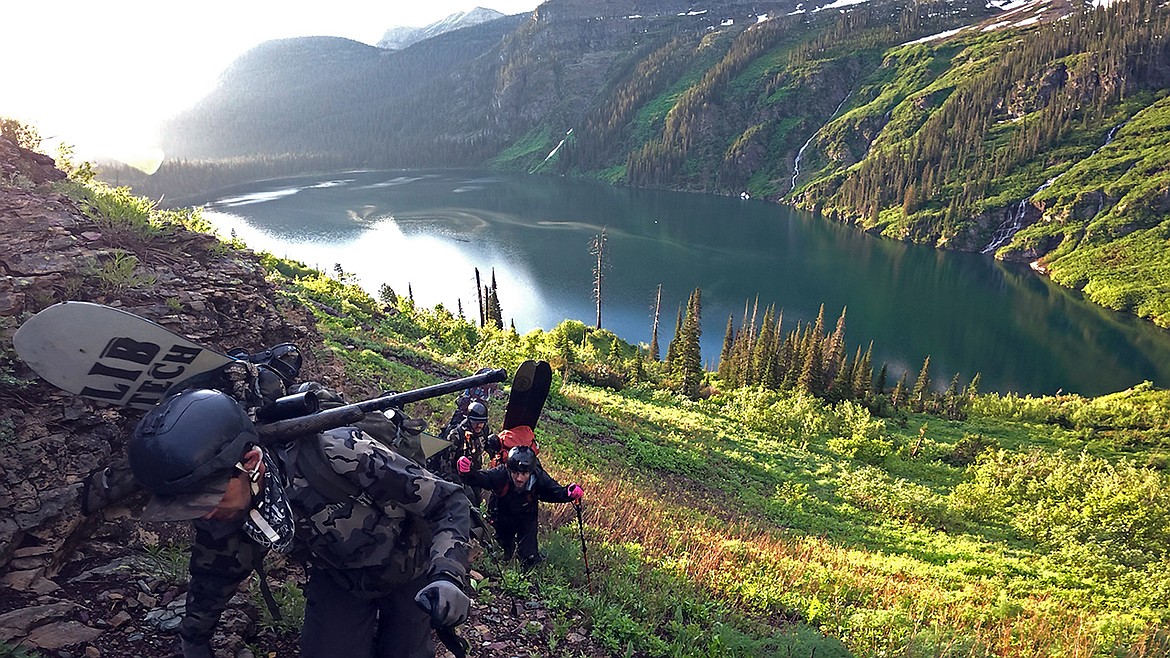
Brad Robinson, Jason Robinson and Shawn Onthank in the Swan Range while filming "Veil: In Search of the Last Mountain." (Photo by Rowdy Starling)
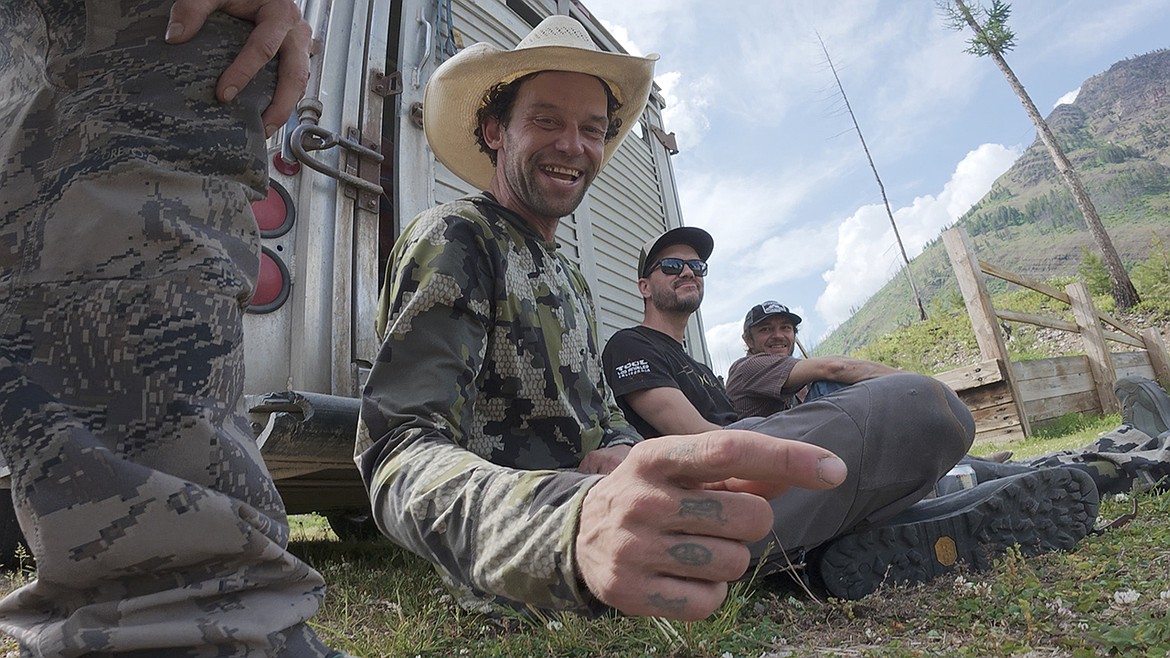
Brad Robinson, Shawn Onthank, Jason Robinson with Rowdy Starling just out of shot while filming "Veil: In Search of the Last Mountain." (Stillshot provided)
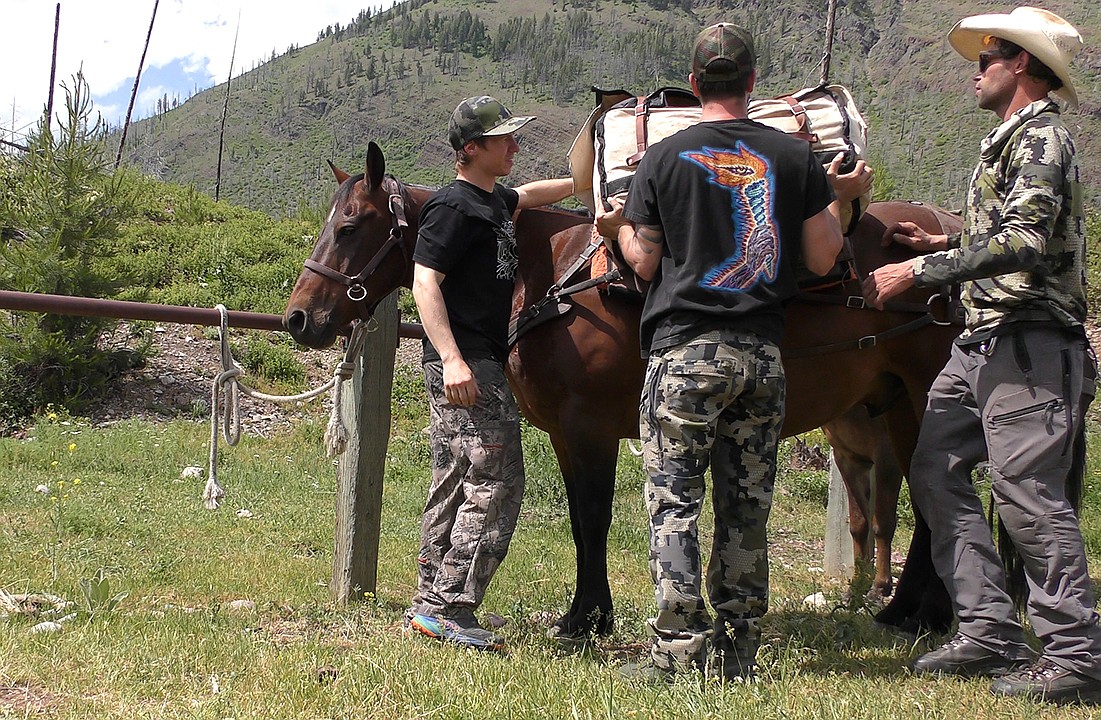
The crew while filming in the Bob Marshall Wilderness for "Veil: In Search of the Last Mountain." (Photo provided)
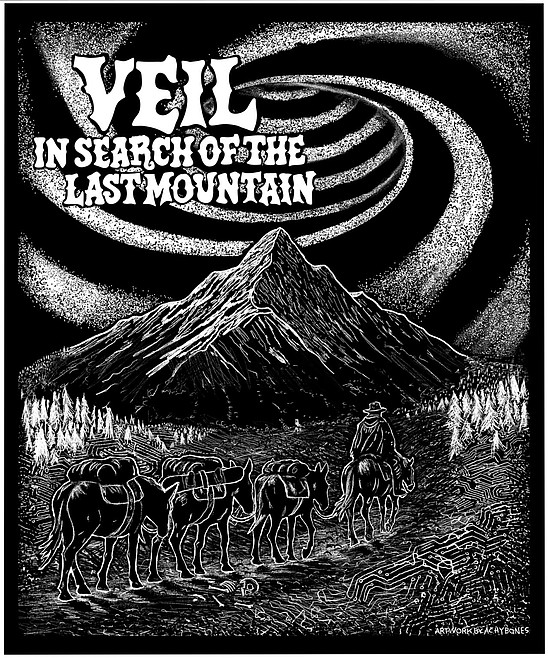
Illustration by Angus Matheson / Achey Bones Co. for "Veil: In Search of the Last Mountain."
It’s the year 2340. Public lands have long been auctioned off and natural resources over-extracted. “Veil Corps” rose, established a monopoly, and then abandoned the resorts for a digitized winter sports experience.
A guitar riff emerges and slowly ebbs into a yell.
“From beyond earth, the void has given birth.”
It was none other than The Gray Goo’s Matt Carper, Max Gargasz and Zach Ronish, a Flathead Valley psychedelic funk-rock-punk band persevering from the year 2025.
“Machine of great girth. Steel and flesh converged ... You walk into the mist, reality is ripped,” the song continues.
The drums and bass set the scene for a dystopian society, wherein a small band of outlaws is determined to rise from the mist. They dream of finding the last mountain remaining, somewhere in the depths of Northwest Montana, in a place that once harbored glaciers.
To reach the snow line, the outlaws need to re-emerge themselves in the elements, traveling on foot and boat, with snowboards and supplies strapped to their pack mule companions.
THE JOURNEY is captured in Whitefish snowboarder Jason Robinson’s debut film, “Veil: In Search of the Last Mountain,” which premiered Nov. 21 to a standing-room only crowd at the Whitefish Performing Arts Center.
The premise of the movie was conceived in January, at Blackstar Brewpub, during a showing of the film, “Alaska Glacier Camp - The Movie” by fellow snowboarder filmmakers Inaki Odriozola “Inyo” and Garrett Warnick “Worm.”
The “Glacier Camp” showing was an inspiration and a chance for Robinson and another local snowboarder, Rowdy Starling, to start saddling up their own plans for a duo film. Their shared vision revolved around a pack mule snowboard adventure.
The pack mule ponderings go back many years for Robinson, who in between being named Snowboarder Magazine’s Big Mountain Rider of the Year in 2016, and starring in Absinthe films “Dopamine” and “Eversince,” also spent a few summers working for the Forest Service in the Bob Marshall Wilderness.
Fast forward to winter 2024-25, and Robinson was injured, with a few broken ribs and a knee surgery. It was a silver lining in that it gave him some time to funnel energy into creative outlets. From conceptual ideations and writing endeavors, to acquiring video equipment and learning editing software, he started to prep for the pack mule film adventure.
Another local snowboarder, Brad Robinson, was game to bring along his mules and horses, and by summer, the film was a green light.
Both Robinsons, Starling, plus another snowboarder, Shawn Onthanks, and of course, the animals, ventured deep into the Bob Marshall in June and July, with a few extra filming days on the Great Northern and at Logan Pass in Glacier National Park.
At one point during the trip, the crew returned from a mountain in the Bob, paddled back across a lake to their camp, to find that the stock had wandered off toward the trailhead, in “search of greener grass,” Robinson said.
It was just one of the behind-the-scenes mishaps that added to the venture, in what was ultimately a film more about community, rather than dropping the biggest lines.
Without going too much into global economics, Robinson said from the surface, “it’s about big companies getting bigger, and smaller ones going away.”
That, on a “subtle level,” is about community, he said.
But if the message is subtle, the premiere was anything but.
With the shots coordinated to a live performance from The Gray Goo, and a film poster designed by local artist Angus Matheson, also known as Achey Bones Co., it was a true local effort.
“The premiere experience, in person, was just special,” Robinson said. “I was blown away by how many people showed up, and the responses after.”
The sci-fi element also aims to resonate with a wide audience.
“So much of snowboarding and filmmaking, is for a small percentage of group people who are die-hard and follow the tricks. The sci-fi element makes it a little more of a universal journey. That’s kind of the goal, maybe for people who are intermediate or just getting into it,” he said.
“If you have an idea, don’t be afraid to put it out there,” he emphasized. “Putting something out there that might seem a little odd or controversial... don’t be afraid.”
A recent bowling night at Pin and Cue included another showing. A fundraiser for the A-Rob Plant A Seed Project, an organization dedicated to teaching kids to snowboard in honor of Robinson’s brother, Aaron, the night was just one example of the film’s ripple effect.
IN TOTAL, filming took about eight days, while editing took about five months.
Now that he has his first production process under the belt, Robinson hopes to do more in the future and already has a few ideas.
“Veil: In Search of the Last Mountain” will be available to watch on YouTube on Dec. 12.
To purchase Achey Bones Co. merch see achybonesco.com, visit Stumptown Snowboards, or follow @shred_butt on Instagram for the latest happenings and pop-up shops.
Check out The Gray Goo’s recently released album, “Cabin Fever Dreams,” at thegraygoo.bandcamp.com/music or listen on Spotify or Apple Music. Their next live show is at The Remington Dec. 27.
Fellow snowboard filmmakers Worm and Inyo’s films “Glacier Camp” and “Cheechako: An Alaskan Snowboard Adventure” can also be viewed on YouTube.
Editor's note Dec. 3: Recreationists looking to film in a National Forest, Wilderness Area or a National Park should check with local agencies to determine if filming is allowed or requires a permit.
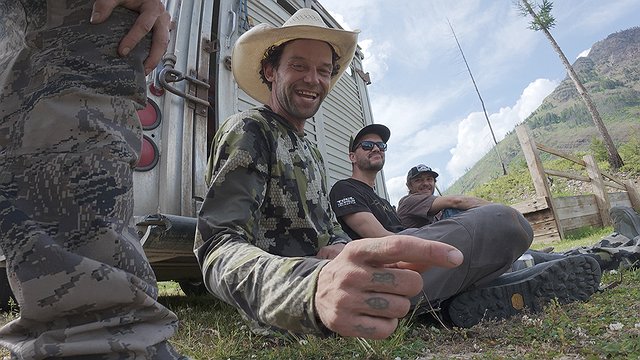 Brad Robinson, Shawn Onthank, Jason Robinson with Rowdy Starling just out of shot while filming "Veil: In Search of the Last Mountain." (Stillshot provided)
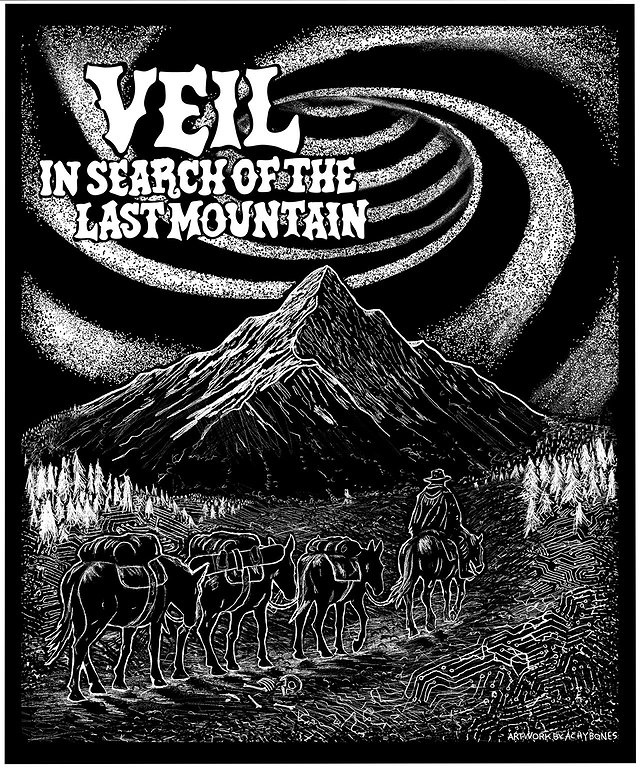 Illustration by Angus Matheson / Achey Bones Co. for "Veil: In Search of the Last Mountain."
ARTICLES BY KELSEY EVANS
Solid freshman class to bolster track and field teams past adversity
The sunny and brisk Monday afternoon was a pseudo first day of practice for the Bulldogs, who have to sharpen up quickly after spring break for this weekend’s debut meet: the ARM Invite.
Skimo North American champion hails from Big Mountain
Whitefish eighth grader Porter Shehan skinned, climbed and skied his way to a skimo North American title and a national title this season.
Casual eatery Grouchy Grizzly to open in Whitefish this summer
Whitefish’s Last Chair Kitchen and Bar, a restaurant at Lakeshore Drive and Reservoir Road, has been sold and will undergo a phased transformation, into a casual, fun-focused eatery called Grouchy Grizzly.