
Moses Lake School Board unanimously approves union contract
CHERYL SCHWEIZER | Hagadone News Network | UPDATED 3 months AGO

Michelle Musso, executive director of employee services for the Moses Lake School District, details the changes in a contract with the Moses Lake Education Association unanimously ratified by the Moses Lake School Board Wednesday.
CHERYL SCHWEIZER/COLUMBIA BASIN HERALD
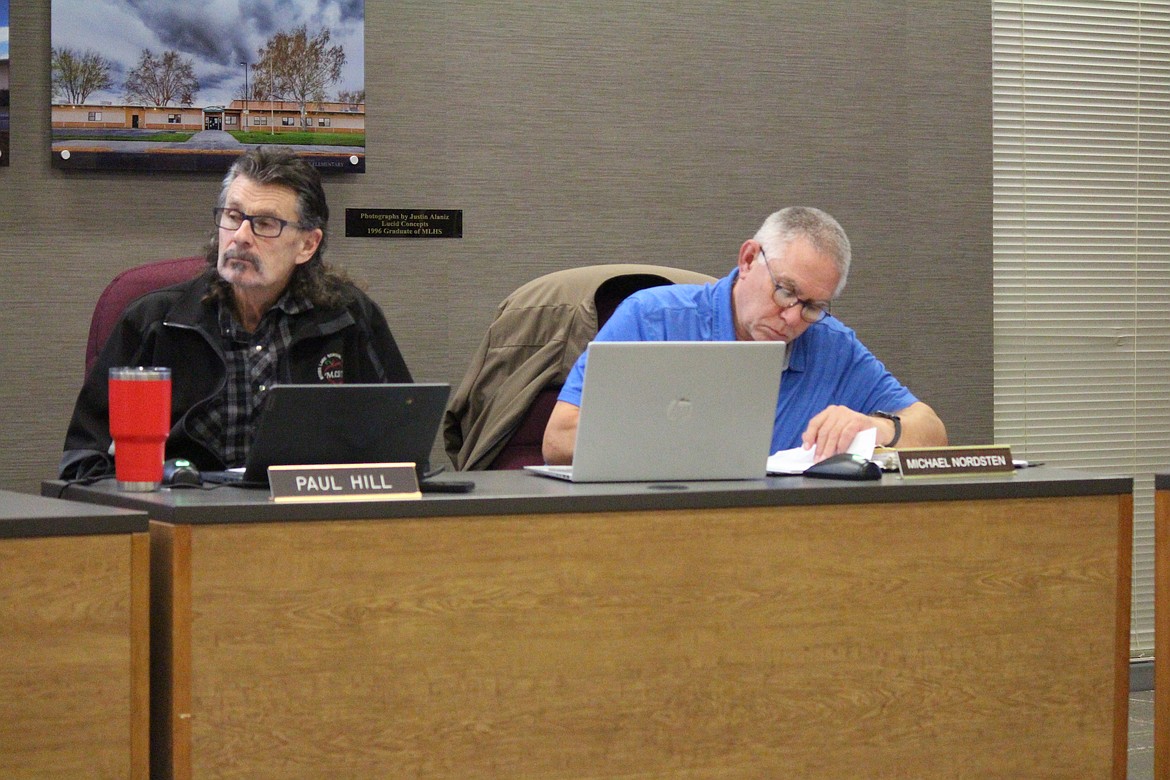
Moses Lake School Board members Paul Hill, left and Mike Nordsten, right, listen to details of the contract between the Moses Lake School District and the Moses Lake Education Association before approving the contract Wednesday.
Moses Lake School Board members Paul Hill, left and Mike Nordsten, right, listen to details of the contract between the Moses Lake School District and the Moses Lake Education Association before approving the contract Wednesday.
Senior Reporter Cheryl Schweizer is a journalist with more than 30 years of experience serving small communities in the Pacific Northwest. She began her post-high-school education at Treasure Valley Community College and enerned her journalism degree at Oregon State University. After working for multiple publications, she has settled down at the Columbia Basin Herald and has been a staple of the newsroom for more than a decade. Schweizer’s dedication to her communities and profession has earned her the nickname “The Baroness of Bylines.” She covers a variety of beats including health, business and various municipalities. | December 10, 2025 8:05 PM
MOSES LAKE — After lengthy negotiations and a five-day strike, Moses Lake School Board members approved a new three-year agreement between the Moses Lake School District and the Moses Lake Education Association on Wednesday. Board members approved the contract on a roll-call vote.
“That’s unanimous,” said Board Chair Kirryn Jensen as the small crowd applauded.
The MLEA ratified the contract Tuesday. The school board vote follows negotiations that, said board member Paul Hill, started exactly six months previously. The new contract replaces one that ended after the 2023-24 school year. For 2024-25 teachers worked under a one-year contract following rejection by voters of a district educational programs and operations levy proposal in spring 2024.
District Superintendent Carol Lewis expressed her thanks to the MLSD employees and board members who made up the district’s bargaining team.
“I’m grateful that we have reached a place where our kids are back in school. We have negotiated a fair contract, and it falls within the budget that we have planned for this school year,” Lewis said.
Heather Whittall, MLEA president, said Tuesday that union members were satisfied with the contract, but plan to keep working to add back 30 minutes to the elementary school schedule. The reduction followed the failure of the levy, and was not restored at the beginning of the 2025-26 school year.
“We will continue our ongoing efforts on every other front to advocate for immediate restoration of the elementary school day and programs,” she wrote in a statement released after the vote. “Restoring the elementary day is critical for this community, and we will work alongside parents and families to push for our elementary students to regain minutes and programs, preferably by the start of next semester.”
“There were a few areas of cost and a couple of areas of savings,” Musso said. “For the 2025-26 school year, we’re going to see a $2.3 million increase in district costs, which overall we have budgeted. Some of that will come out of our fund balance to make that happen. But overall, we are prepared for that.”
District costs will increase slightly each year, Musso said, due to cost-of-living increases built into the contract.
Money and time for continuing education for teachers were one of the points of contention. Musso said the total number of paid hours teachers were allotted for continuing education was reduced, but that teachers will get additional money they can spend on continuing education opportunities.
“This year (teachers) will get $500, and the next years, they’ll get $1,000 each year,” Musso said. “If they choose to go to another training or another professional development, whatever travel (is needed), registration, books, anything like that, that will be reimbursable.”
Previously teachers could apply for continuing education funds, which were distributed through a lottery. The lottery system has been discontinued.
The district will continue to pay teachers for one day spent on teacher training, which in the MLSD is broken into two half-days.
“We have to do three (training days). The state only provides enough money for two,” Musso said.
Teachers will receive $300 to buy classroom supplies, which was increased from $150. The district also provides money to special education departments to help their students. That was increased to $45 per student, up from $35 per student. Musso estimated that it would raise the cost of that program by about $16,000 this school year.
The contract also includes provisions on meetings outside of the workday. Under the previous contract teachers could be required to attend up to three meetings each week, in addition to a staff meeting. Now it has been cut to two meetings.
“That would be things like (individual education plan) meetings, committee meetings, things like that,” Musso said. “If they last more than 30 minutes after the end of the day, or they (had) more than three meetings, they would get paid for those meetings. Now we’ve moved that from three to two.”
She estimated the maximum potential cost to the district would be about $750,000.
“That’s the budget capacity consideration, and not necessarily what will actually be spent, because not everybody is going to attend group meetings every week,” she said.
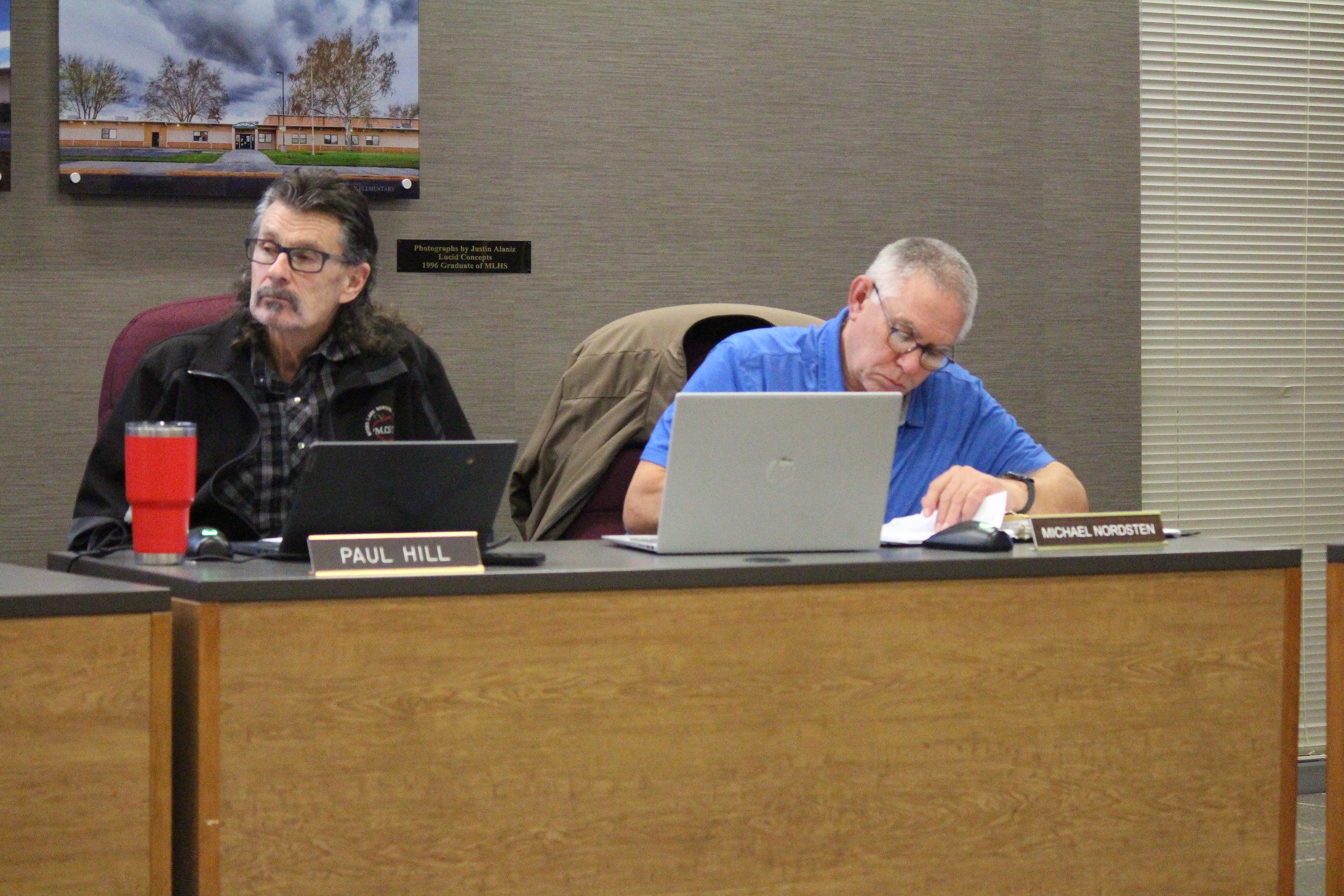 Moses Lake School Board members Paul Hill, left and Mike Nordsten, right, listen to details of the contract between the Moses Lake School District and the Moses Lake Education Association before approving the contract Wednesday.
ARTICLES BY CHERYL SCHWEIZER

Hansen Road bridge construction to begin late June, early July
MOSES LAKE — Demolition of the Hansen Road overpass will begin in late June or early July. Chris Keifenheim, North Central Region administrator for the Washington State Department of Transportation, said DOT officials will be monitoring the Hiawatha Road overpass to ensure it stays open during construction.

State Senator Judy Warnick announces retirement
MOSES LAKE — State Sen. Judy Warnick, R-Moses Lake, has announced her retirement from the Washington Legislature at the end of her term in January 2027. Warnick represents the 13th District and has been in the Senate since 2015. “Serving the people of the 13th Legislative District has been the greatest honor of my professional life,” Warnick wrote in a press release issued Wednesday. “I am incredibly proud of what we have accomplished together to protect our water rights, support our small businesses and empower the next generation of leaders.”

Registration open for hunter safety classes
OTHELLO — The Adams County Sheriff’s Office, in partnership with the Washington Department of Fish and Wildlife, is sponsoring one-day classes for people needing field training to complete their hunter safety courses. Classes are scheduled for March 21 and April 18, with the potential for more classes later in the year.