
Options for responding to challenging times at annual WSTFA meeting
CHERYL SCHWEIZER | Hagadone News Network | UPDATED 3 months AGO
Senior Reporter Cheryl Schweizer is a journalist with more than 30 years of experience serving small communities in the Pacific Northwest. She began her post-high-school education at Treasure Valley Community College and enerned her journalism degree at Oregon State University. After working for multiple publications, she has settled down at the Columbia Basin Herald and has been a staple of the newsroom for more than a decade. Schweizer’s dedication to her communities and profession has earned her the nickname “The Baroness of Bylines.” She covers a variety of beats including health, business and various municipalities. | December 10, 2025 5:17 PM
WENATCHEE — The last couple of years have been a bumpy ride in the orchard, and it didn’t matter if it was an apple, cherry or pear orchard. Organizers of the annual meeting of the Washington State Tree Fruit Association asked its speakers and panelists to talk about where the industry has been and where it’s going.
It was the 121st annual meeting, so the industry had been through profitable years and lean years before. Industry veteran Welcome Sauer said the process of adjustment hurts, but that growers have always made the adjustment.
“I think we’ll see some pain in the short term,” Sauer said. “We’ll see some replacement of old, less productive orchards that produce a lower percentage of fruit in the money zone being replaced, either by bare land or by orchards that have access to high-quality new genetics.”
Inflation had the same impact on tree fruit production as it did on other industries, substantially increasing costs. At the same time, said John Botts of Chelan Fresh, prices paid for the fruit — and ultimately the returns to growers — were not keeping pace.
“We’re in a crisis. There’s no doubt,” said Michael Doerr, an entomologist who works for Wilbur-Ellis.
At least in the case of apples, the outlook might not be quite so challenging as first anticipated. Sauer said the original estimate was for a crop of 140 million 40-pound boxes, which would’ve been a challenge to sell. But West Mathison of Stemilt Growers said Monday updated estimates are for a 2025 crop of about 130 million 40-pound boxes.
While it’s a bumpy road right now, Doerr said, Washington growers have worked their way out of similar crises. He cited the market collapse of 1999-2000.
“What came out of that is this new era in horticulture production. We really had to look closely at what was going on in our market, and how (we were) going to compete globally. What came out of that was this incredible 20-year run in horticulture, where we were market shapers in this industry. We led the world in this industry,” Doerr said.
Washington growers did that by adapting to the conditions they confronted, he said, and growers need to think about how they’re going to do that again.
“What I try to say in times of crisis is that you need to surround yourself with subject matter experts. When you build your team, and you’re sitting around this time of the year, and you look across the table, is that the team that can lead you to win in a global market? And this is a global market,” Doerr said.
That will mean a lot of rethinking, maybe some orchards coming out – and maybe, said Mac Riggan of Chelan Fresh, some growers getting out of the industry entirely.
“We need to be able to reshape what the industry looks like. We need to be able to lead the change. And so that’s what we’re trying to build, that team that can do that,” Doerr said.
Everybody who works in the tree fruit industry, in or out of the orchard, has a role to play, he said.
“I’ve tried to tell folks, ‘Let’s stay prepared. Let’s work on our operational efficiency.’ And that goes throughout the entire value chain. That’s not just a grower’s responsibility. It’s the responsibility (of companies) in retail, and it’s our manufacturing partners’ responsibility, too,” Doerr said. “We all need to look at how we can improve that efficiency and stay prepared, because when this market turns, it’s going to turn quickly, and you’re going to have to be able to capture that turn right away.”
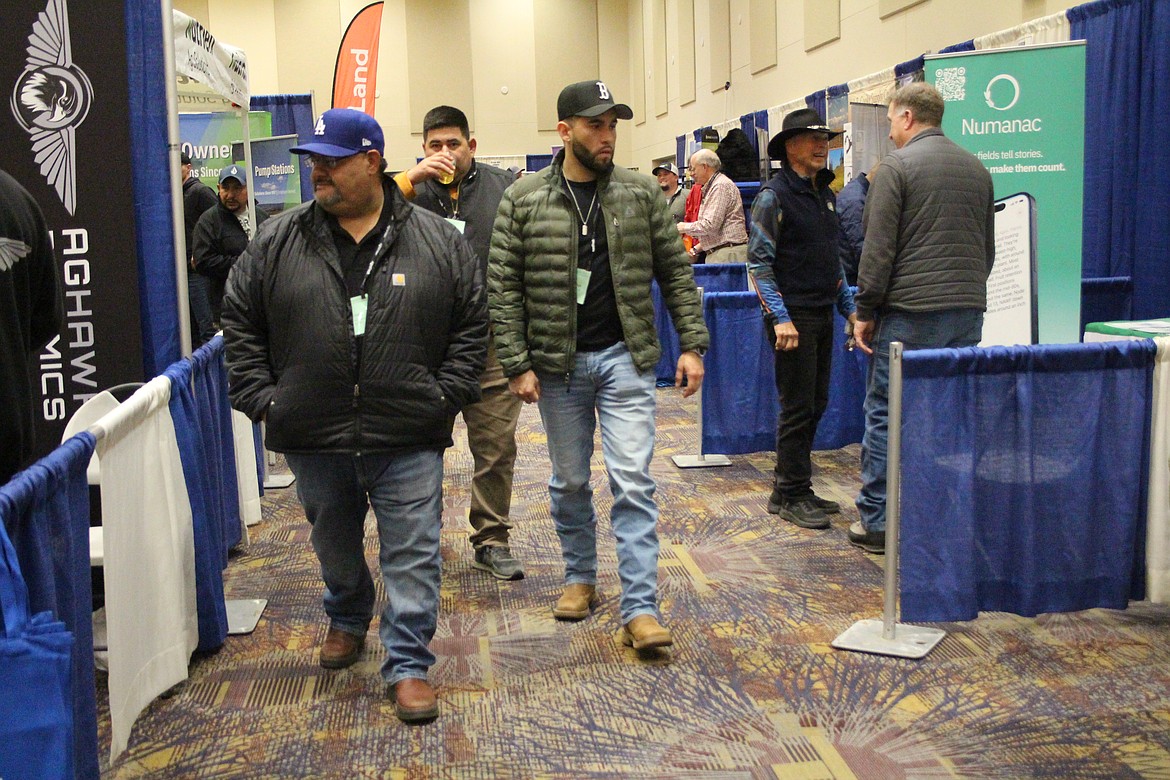
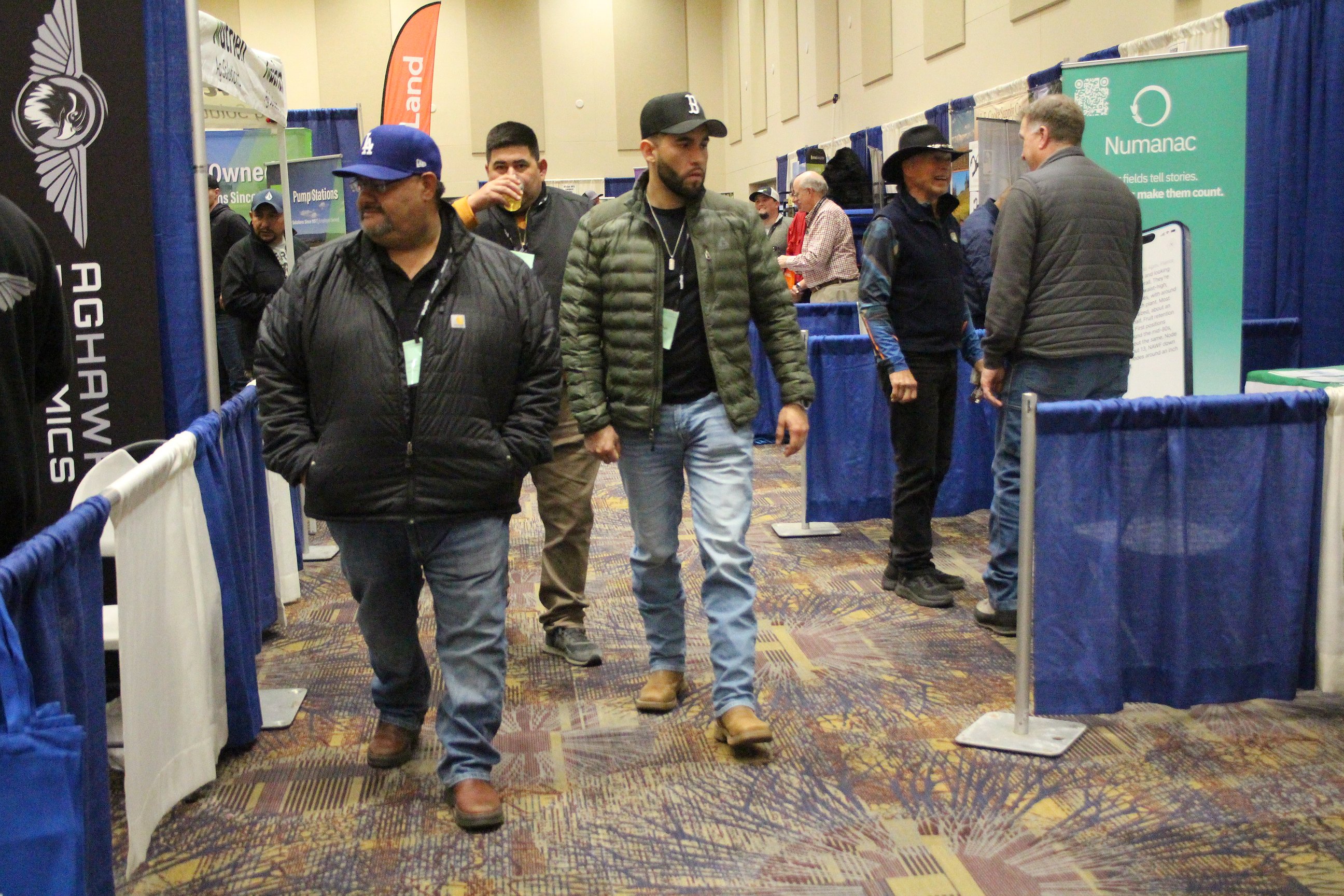 Attendees at the Washington State Tree Fruit Association annual meeting check out the products and services on display.
ARTICLES BY CHERYL SCHWEIZER
Hansen Road bridge construction to begin late June, early July
MOSES LAKE — Demolition of the Hansen Road overpass will begin in late June or early July. Chris Keifenheim, North Central Region administrator for the Washington State Department of Transportation, said DOT officials will be monitoring the Hiawatha Road overpass to ensure it stays open during construction.
State Senator Judy Warnick announces retirement
MOSES LAKE — State Sen. Judy Warnick, R-Moses Lake, has announced her retirement from the Washington Legislature at the end of her term in January 2027. Warnick represents the 13th District and has been in the Senate since 2015. “Serving the people of the 13th Legislative District has been the greatest honor of my professional life,” Warnick wrote in a press release issued Wednesday. “I am incredibly proud of what we have accomplished together to protect our water rights, support our small businesses and empower the next generation of leaders.”
Registration open for hunter safety classes
OTHELLO — The Adams County Sheriff’s Office, in partnership with the Washington Department of Fish and Wildlife, is sponsoring one-day classes for people needing field training to complete their hunter safety courses. Classes are scheduled for March 21 and April 18, with the potential for more classes later in the year.