Snowpack declines in dry January
BILL BULEY | Hagadone News Network | UPDATED 1 year, 8 months AGO
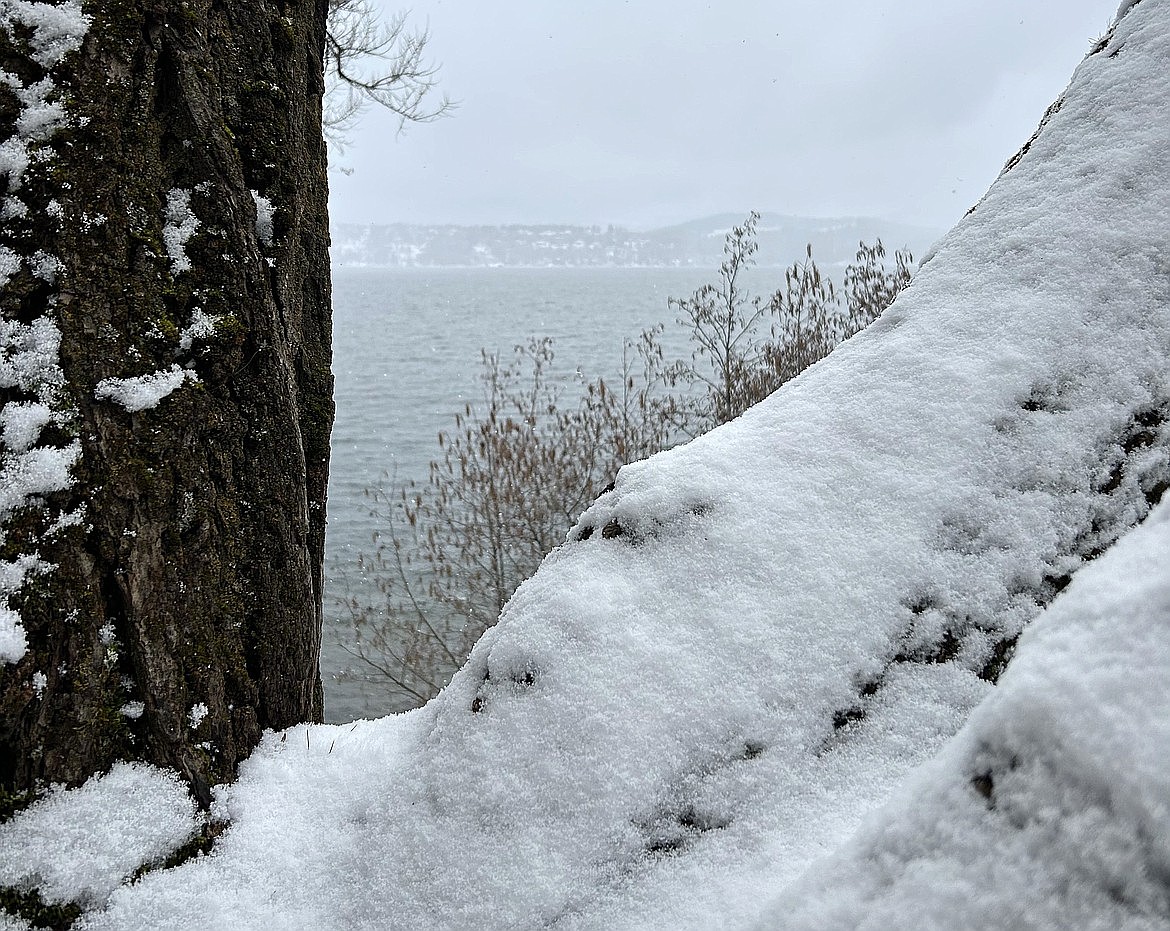
Idaho is back in drought territory, according to the Natural Resources Conservation Service's latest Water Supply Outlook Report, snowpack percentages compared to normal decreased significantly during January.
Courtesy photo
Bill Buley covers the city of Coeur d'Alene for the Coeur d’Alene Press. He has worked here since January 2020, after spending seven years on Kauai as editor-in-chief of The Garden Island newspaper. He enjoys running. | February 9, 2025 1:00 AM
Idaho is back in drought territory.
According to the Natural Resources Conservation Service's February Water Supply Outlook Report, "Mother Nature took the term ‘dry January’ a little too literally."
The report said that after about Jan. 8, very little precipitation fell in Idaho until the last day of the month. During January, snowpack percentages compared to normal decreased significantly.
Currently, 79% of Idaho lands are abnormally dry or are in drought, the report said. Drought conditions improved last month in western Idaho in response to the high snowpack percentages at the beginning of January. Drought conditions worsened in Shoshone, Lemhi, Custer, Butte and Blaine counties due to lack of precipitation in those areas.
“Thanks to an abnormally dry January, snowpack percentages compared to normal decreased significantly," said Erin Whorton, water supply specialist for NRCS Idaho. “As of Feb. 1, basin-wide snowpack percentages range from 68 to 119%. This means that snow drought conditions developed in the Wood, Lost, Upper Snake, Bear, Salmon, Clearwater and Coeur d’Alene-St. Joe basins during January.”
Whorton said that in terms of total water year precipitation, conditions are driest in the Wood and Lost basins (62% to 76%) and wettest along the southern border of Idaho (82 to 97%).
"Fortunately, at report time, significant snowfall is occurring across the state. Hopefully, these storms will alleviate snow drought conditions," she said.
January was notably dry with only 37% to 68% of normal precipitation falling during the month, the report said. Most of that precipitation occurred in the first week of January before a high-pressure system settled in over Idaho for the rest of the month.
"The Panhandle basins were the driest during the month; they received less than 40% of their normal precipitation," the report said.
The rest of the state received about 50% to 70% of normal precipitation.
The persistent dry conditions lowered streamflow forecasts by 5% to 20% from last month’s forecasts. Stream flow forecasts in the Panhandle range from 71% in the Coeur d’Alene-St. Joe Basin to 84% in the Pend Oreille-Kootenai.
But the snowy start to February gave hope the snowpack situation could swing back to the positive.
The seasonal outlook predicts cooler and wetter conditions across central and North Idaho this winter.
"We should see the snowpack continue to rebound as well as higher forecasted streamflow volumes next month," the report said.
ARTICLES BY BILL BULEY
Kootenai County named American World War II Heritage City
Kootenai County named American World War II Heritage City
Where History Still Salutes: Kootenai County Named WWII Heritage City

Monday Night Dinner finale on Saturday
Schluter says it will be a gathering of laughs and love a day after he gets hitched