
Lessons from WSU Smart Orchard discussed at annual tree fruit meeting
CHERYL SCHWEIZER | Hagadone News Network | UPDATED 1 year, 8 months AGO
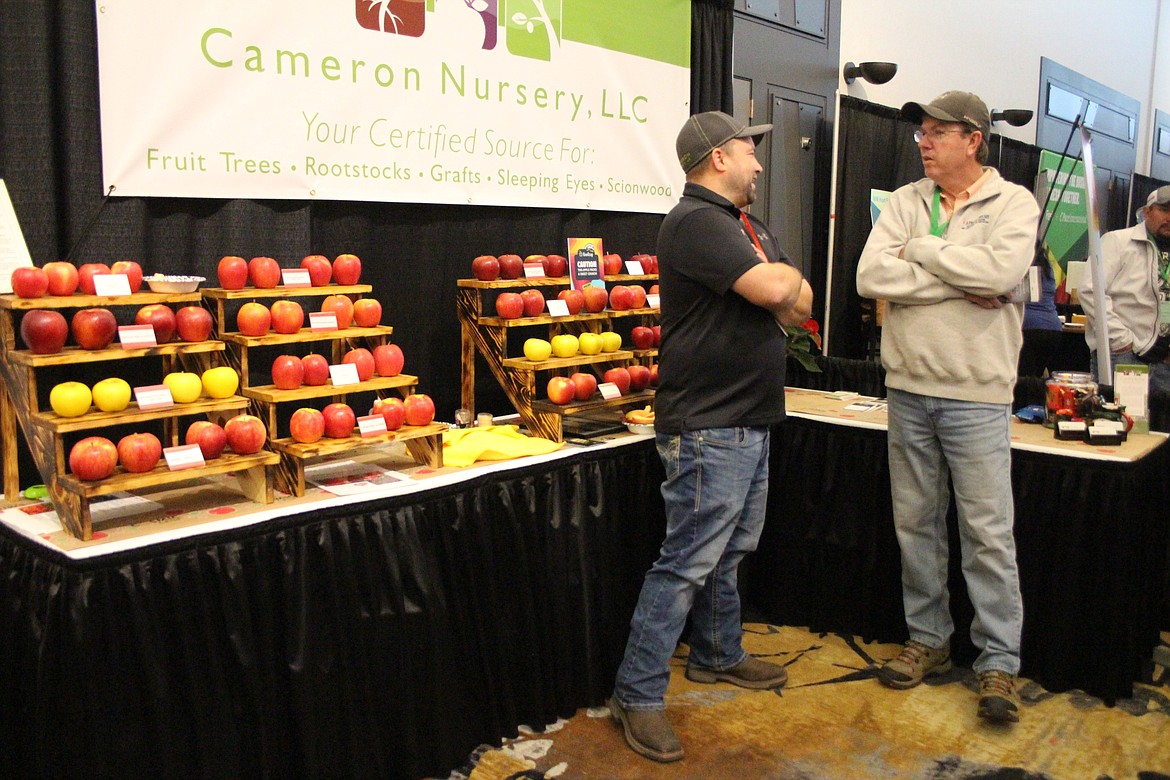
Jacob Hafner of Cameron Nursery talks to an attendee at the WSTFA annual meeting.
Cheryl Schweizer/Basin Business Journal
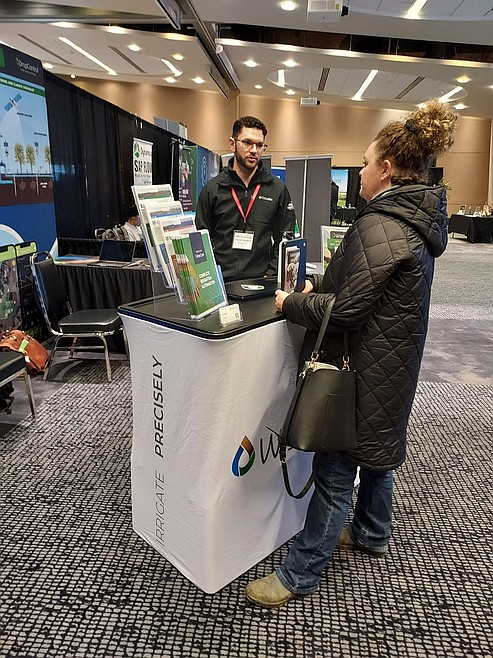
Darryl Hadlich of Wiseconn Engineering talks with a customer at the company booth at the Washington State Tree Fruit Association annual meeting Dec. 11.
Cheryl Schweizer/Basin Business Journal
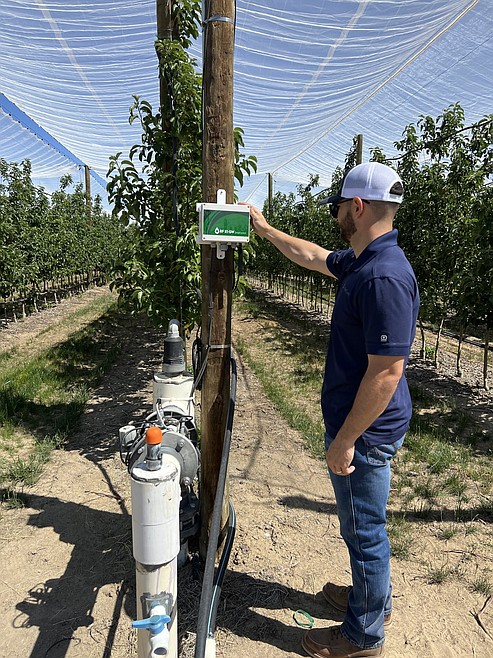
A participant sets irrigation controls in the test orchard, called the Smart Orchard, under study by Washington State University. Lessons from the orchard were the subject of a discussion Dec. 11 at the Washington State Tree Fruit Association annual meeting.
Cheryl Schweizer/Basin Business Journal
Senior Reporter Cheryl Schweizer is a journalist with more than 30 years of experience serving small communities in the Pacific Northwest. She began her post-high-school education at Treasure Valley Community College and enerned her journalism degree at Oregon State University. After working for multiple publications, she has settled down at the Columbia Basin Herald and has been a staple of the newsroom for more than a decade. Schweizer’s dedication to her communities and profession has earned her the nickname “The Baroness of Bylines.” She covers a variety of beats including health, business and various municipalities. | January 3, 2025 1:00 AM
YAKIMA — The orchard business is a bumpy ride at the best of times, and the last couple of years – well, it’s been tough. Jacob Hafer, sales director for Cameron Nursery, Eltopia, said labor and supply costs have increased. A lot.
“The cost of inputs has gone through the roof,” Hafer said.
Growers haven’t been so lucky.
“Everything has increased except the return to the grower,” he said.
In light of challenging times, industry consultant Craig Belfield said growers are going to have to take a hard look at their operations.
“We’re in a situation (where) we have to start working leaner. Leaner and smarter,” Belfield said.
Belfield, a consultant for Terrantic, Seattle, was one of the speakers discussing technology and its impact in the orchard Dec. 11 during the 120th annual meeting of the Washington State Tree Fruit Association. Industry groups are looking at ways to increase sales, he said, the subject of a Dec. 10 session.
“There was a lot of information on what we need to do to improve our marketing. That would be the easy fix, if we could get more money for our fruit and get better returns, but in the meantime, we’re going to have to optimize what we’re doing on the farm,” Belfield said. “We’ve got to minimize and eliminate the mistakes.”
Technology has revolutionized apple, cherry and pear production several times in the history of Washington’s tree fruit industry, from the arrival of tractors to computerized systems that track everything from equipment to inventory. But Paul Cathcart, Columbia Orchards, said during a panel discussion on orchard technology that innovation sometimes has been oversold, and growers have been purchasing systems that weren’t really ready for deployment.
So – what’s the best way to use technology and innovation to maximize efficiency, avoid technological blind alleys and increase grower returns? Discussing sprayers, Washington State University Professor Gwen Hoheisel said growers have to decide what level of technology they’re comfortable with and go from there.
“If you’re nervous about getting into automated flying drones, start with a (spray) rate controller,” Hoheisel said.
A rate controller helps adjust for orchard terrain and other factors.
Washington State has started its own orchard block to test some of the potential technologies and determine how they can work together to increase efficiency and reduce expenses. The “Smart Orchard” is operated in conjunction with a lot of private companies, with the goal of finding ways to use the technology to greatest advantage.
The Smart Orchard project includes companies that recommend an irrigation schedule, and other companies that implement it. Darryl Hadlich of Wiseconn Engineering, which manufactures hardware and software for automated irrigation, said growers can choose as much or as little autonomy as they want.
Systems can be set up so that the grower or orchard employees monitor and schedule irrigation. An alternative method allows growers to set parameters for system operation; Hadlich used the example of cooling an orchard on hot days. The cooling system can be set to come on automatically at a given temperature.
However the grower chooses to manage it, an irrigation system requires data to work properly, he said.
“It’s extremely important to make sure that if you’re doing irrigation automation, you also have the ability to tie in the soil moisture probe (or) any type of sensor (used) to make those agronomic decisions and apply that to your irrigation schedule,” he said.
A good warning system is also important, Hadlich said.
“Always ask about the capabilities of the alarms, the alerts,” he said. “I talk about an alarm as a sensor reading plus an action.”
Technology is an investment, and John Rowlet of Nelson Irrigation said growers should think about how, and how quickly, that investment is going to pay them back. Rowlet said one of the advantages of automation is that it reduces the amount of time spent in the orchard.
“It gets irrigators off of four-wheelers and on their phones,” he said.
Automation requires data – a lot of it – and there are a lot of companies making different versions of the same systems. Alejandra Alvarez of Swan Systems said growers want to make sure all those systems can work with each other.
“We all have endless pieces of information coming at us and being able to house all of that information on one platform and communicate it internally and externally is really important,” she said. “We need to have a way to communicate that data and make actionable decisions off of that.”
The most effective technology will help growers run their orchards efficiently, she said.
“The theme of all this is time and money,” she said.
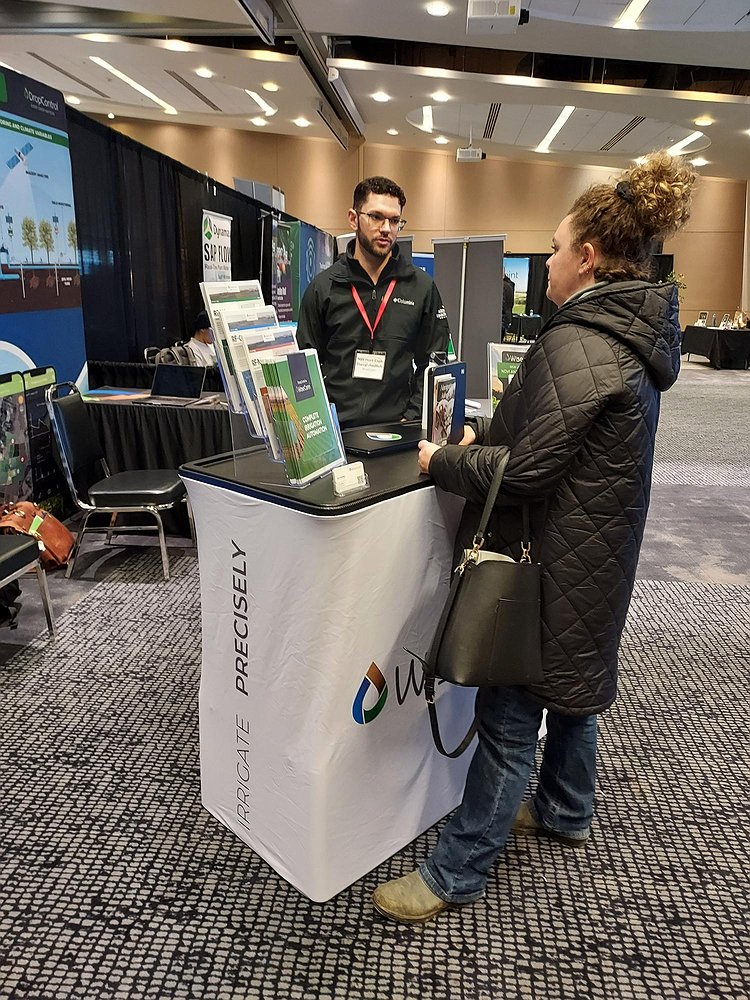 Darryl Hadlich of Wiseconn Engineering talks with a customer at the company booth at the Washington State Tree Fruit Association annual meeting Dec. 11.
Cheryl Schweizer/Basin Business Journal
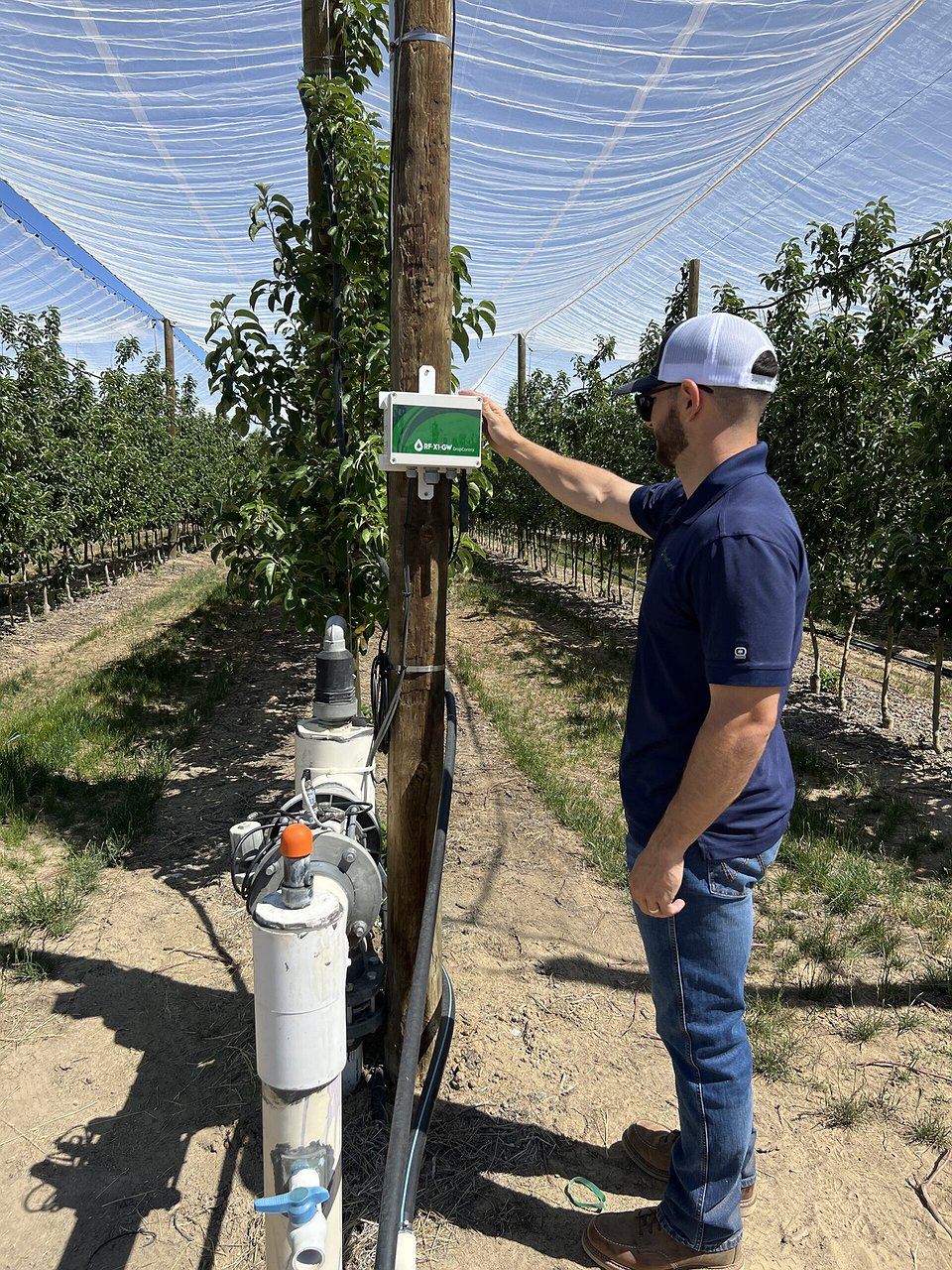 A participant sets irrigation controls in the test orchard, called the Smart Orchard, under study by Washington State University. Lessons from the orchard were the subject of a discussion Dec. 11 at the Washington State Tree Fruit Association annual meeting.
Cheryl Schweizer/Basin Business Journal
ARTICLES BY CHERYL SCHWEIZER
Road projects on hold for Labor Day weekend
MOSES LAKE — With Labor Day weekend dead ahead, drivers will be able to move freely about the state. Most road projects are on hold for the holiday weekend. Nobody will be working on the Hansen Road overpass on Interstate 90, but the lane restrictions that are in effect will continue through the end of the project.
Cost estimates for water source alternatives given to Moses Lake City Council
Protected under the U.S. Endangered Species Act, efforts are ongoing to keep it self-sufficient
MOSES LAKE — It’s going to cost a lot of money to provide alternative water sources for the city of Moses Lake, but some of the possible alternatives will cost more than others. City officials provided the Moses Lake City Council with costs for various alternatives Tuesday.

Dryer vent cleaning is important -- but often overlooked
MOSES LAKE — Not all the maintenance a house needs is visible. Sometimes a potential problem just goes unnoticed until it causes trouble, sometimes serious trouble. But a lot of potential problems give off warning signs. Clothes dryers often do when they need a good cleaning.