
Dent, Franz say bipartisan support led to progress in WA wildfire response
R. HANS MILLER | Hagadone News Network | UPDATED 8 months, 2 weeks AGO
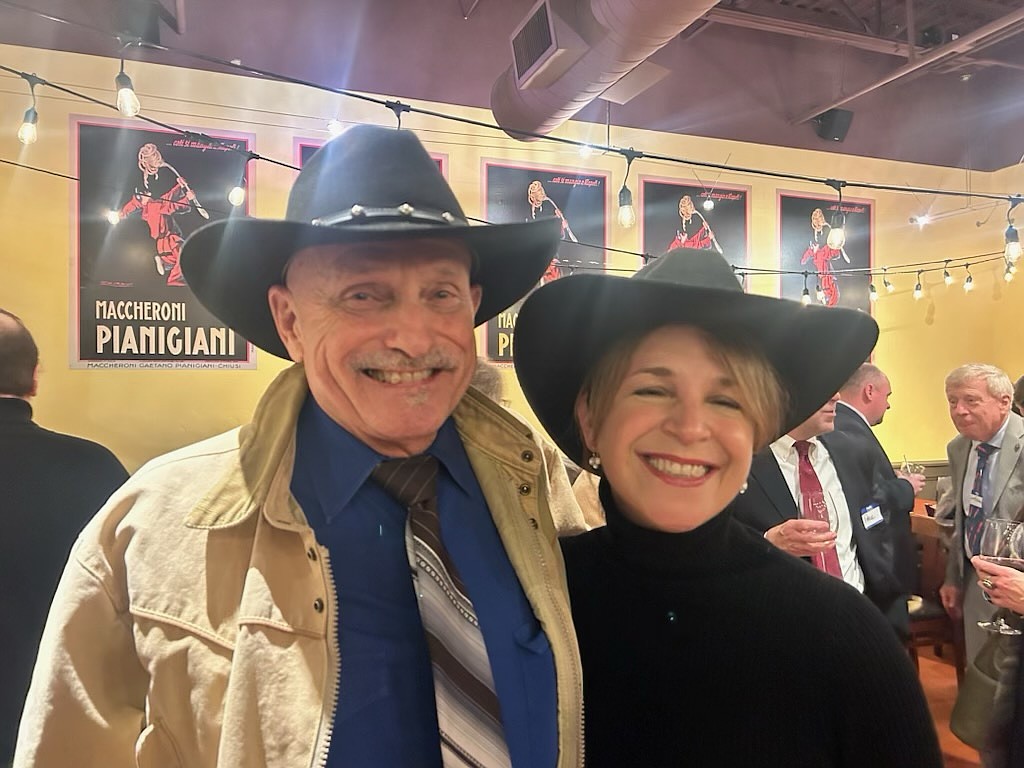
Washington State Representative Tom Dent, R-Moses Lake, with former Washington Lands Commissioner Hilary Franz at an event. After a chance meeting while Franz, a Democrat, was running for land commissioner, the two found common ground in their goal of improving Washington’s response to wildfires. Since then, they feel their partnership is an example of why bipartisan efforts are vital to meet the needs of the state’s residents.
COURTESY PHOTO/TOM DENT
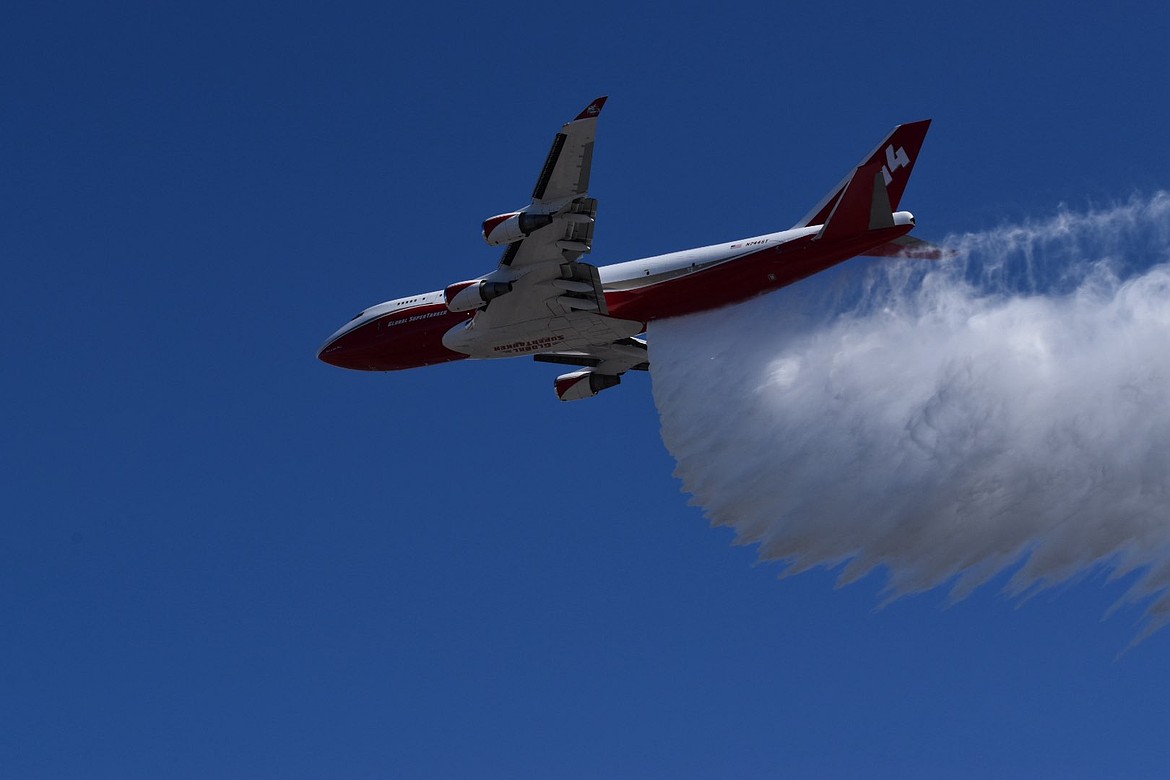
The Global Supertanker, an aircraft capable of carrying 20,000 gallons of water to fight wildfires, drops its payload near the Grant County International Airport. While the project was eventually closed down and the plane converted for another purpose, Washington Rep. Tom Dent and former Lands Commissioner Hilary Franz said they hope such aircraft are eventually available despite the economic factors associated with them.
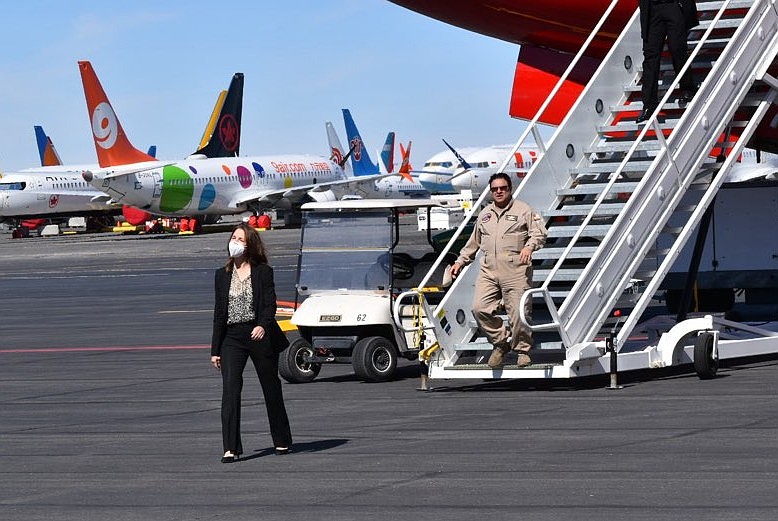
Former Lands Commissioner Hilary Franz exits the Global Supertanker after joining a flight in Moses Lake. Franz said she believes taking care of issues like wildfires and natural disasters will require bipartisan effort not just in Washington, but nationwide.
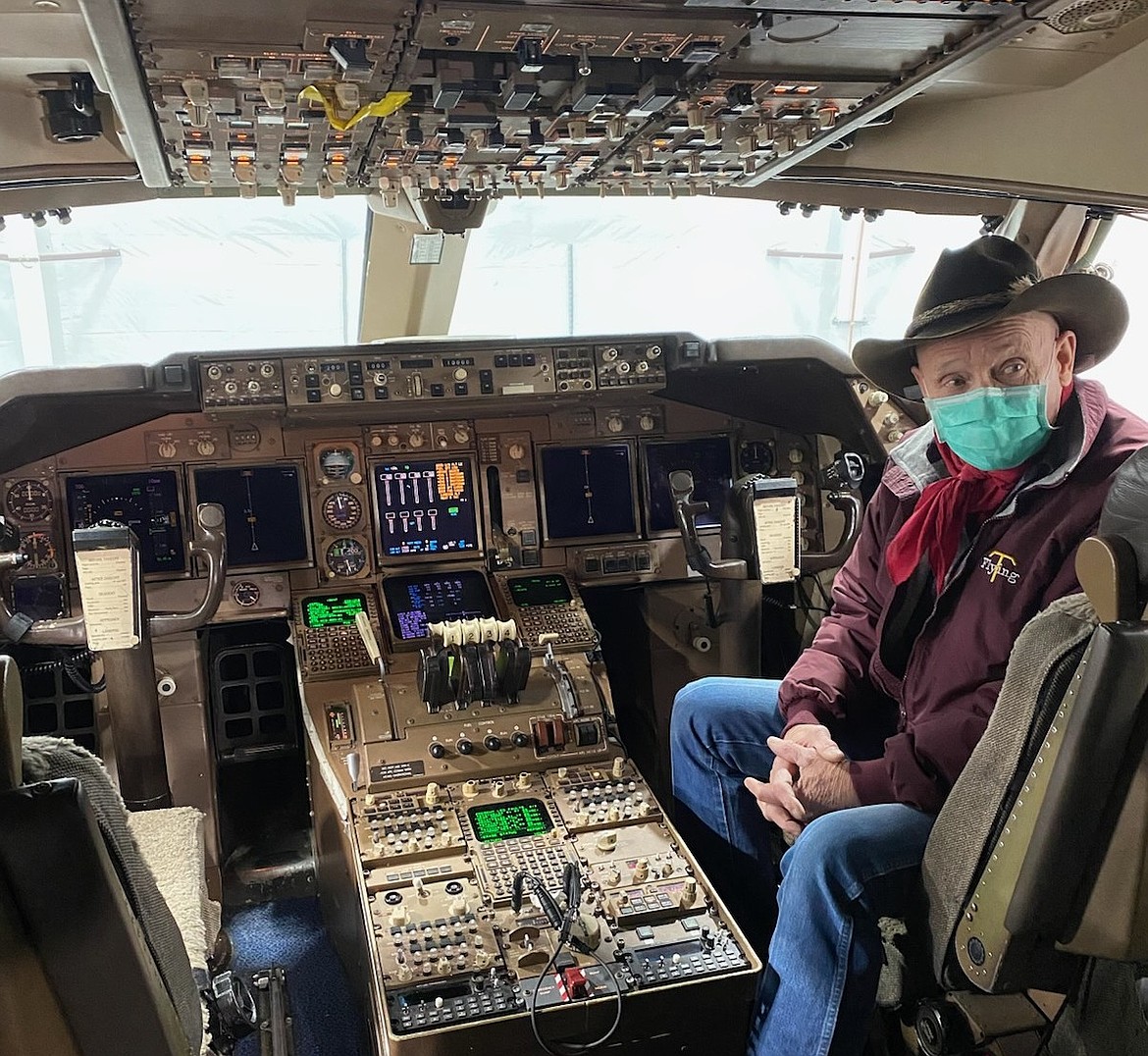
State Rep. Tom Dent sits in the cockpit of the Global Supertanker. Dent said he believes Hilary Franz’s desire to reach across the political aisle and work with experts to find real wildfire mitigating solutions was a large part of why the state’s situation has improved since she was first elected. Dent is a pilot himself and Franz has said his expertise was helpful to have during her tenure as Lands Commissioner.
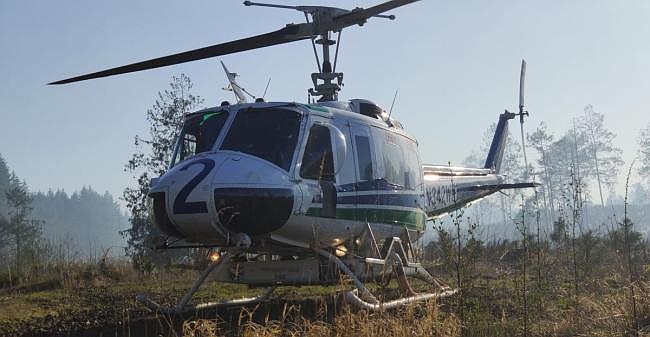
A Washington Department of Natural Resources Huey rigged for wildland firefighting. By increasing its fleet to ten of these aircraft from eight, adding a pair of airplanes, adding drones and setting up exclusive use contracts with companies that operate firefighting aircraft, DNR has improved its ability to respond to fires over the last decade.
Managing Editor Rob Miller is a 4-year U.S. Army veteran who grew up in Western Montana in a community about the size of Soap Lake. An honors graduate of Texas State University, he enjoys spending time with his wife, Brandee, and their three dogs, Draco, Pepper and Cinnamon. He has one son, William. During his free time, he enjoys photography, video games, reading and working on the house he and his wife bought in Ephrata. He is passionate about the First Amendment and educating communities. | July 14, 2025 3:45 AM
MOSES LAKE – Getting anything done in politics takes solid relationships and the ability to reach across political divides, regardless of how partisan the overall conversation is. Former Washington Lands Commissioner Hilary Franz, a Democrat, and local State Rep. Tom Dent, a Republican, and their successes in advancing wildfire management are a prime example of that, they say.
“Everything, from what I learned and how quickly we were able to make the changes and get results, is based on relationships,” Franz said in a late June interview. “It’s based on valuing other people’s opinions and their experience and their expertise.”
Key Relationship
Dent, who lives in Moses Lake, agreed and explained that he first met Franz when she was campaigning for the Department of Natural Resources top seat in 2016. He and State Sen. Judy Warnick, R-Moses Lake, had gone to an event at Balanced Rock, near the small town of Roslyn, about an hour and a half west of Moses Lake.
“Unbeknownst to me, a lady who had just won the primary for DNR Lands Commissioner was there, and I didn’t know who she was. I didn’t know what she looked like, and we were asked to go up on the rock and say some words. (Sen. Warnick) and I went up on the rock and said some words that nobody remembered after we got back down the hill, I’m sure,” Dent said. “But walking back down the hill ... this little woman walks up to me, and she introduces (herself), ‘I’m Hilary Franz and I’m running for lands commissioner.’”
This was shortly after Dent’s office had produced a wildfire report with recommendations on wildfires in Washington, and Franz asked to discuss the issue on the spot.
“So, we went down to Roslyn and had lunch and sat in, I think it was the Roslyn cafe, as I recall. And, we sat there for like, the next two hours at least, and talked about my views on wildfire, initial attack, and how we should handle some of this stuff,” Dent recalled.
Franz said she wanted to meet again if she won the election, and Dent said he felt sure at the time that she would. She’d already “crushed” her opponent in the primary results. He wasn’t sure about whether or not she’d follow up to sit down with him, a Republican, as she said.
The pair met in Ellensburg the day after Franz won the election and began working together to improve Washington’s response to wildfire pretty much immediately, though, he said.
Progress
When Franz first came into office in 2016, DNR had eight Vietnam War-era Hueys and only 40 full-time firefighters to manage the 5.6 million acres it is directly responsible for, along with its responsibility to fight wildfires on all wildland areas in the state, Franz said. Contracts with companies that operate additional firefighting aircraft didn’t have superiority clauses in them that required them to prioritize fires that DNR needed aid with. That slowed or eliminated the response from those companies. Further, relationships with local firefighting agencies were strained at best when she was first sworn in.
“We did not have great relationships with our local fire districts before I came in,” she said. “I had been traveling the state as part of the election ... and so I walked into fire halls trying to learn more, like, ‘What are the issues? Why? What’s not working? How do we do better,’ and they’re like, ‘We don’t even have a great relationship with DNR,’ and that coordination and collaboration was clearly not at the level it needed to be.”
After extensive exploration and discussions with Dent, firefighters, agencies from other states, and Olympia politicians from both parties, Franz issued several directives upon taking office. She streamlined communication between local fire agencies and DNR so that state assets could be deployed in a timely manner. That time improvement was vital, she said, because small fires can grow quickly when local fire districts don’t have the state support, like aircraft, they need to knock a fire down quickly.
“Sometimes, I even heard it was days,” Franz said. “Days. So, (a fire) has now burned tens of thousands of acres and the fire chief is like, ‘We could have knocked it down in that first hour, if we had somebody respond.”
In addition to directives for people to focus on improving the response, Franz said she and Dent were also able to get some bills together that got traction.
House Bill 1498 streamlined the process of dispatching DNR firefighting assets, she said. Calls were routed more directly to DNR rather than going through a long chain through an outdated state mobilization plan. HB 1168 paid for those improvements, among others, by establishing the Wildfire Response, Forest Restoration, and Community Resilience Account, which is allocated $125 million each biennium for the first four – eight years total – since 2021. While the allocation has been adjusted each year based on the state’s budgetary needs, the requirement to fund it remains in place.
HB 1168 also provides options to sue the Wildfire Response fund for grants to local firefighting agencies to purchase necessary equipment to get wildfires in check quickly. It also provided funding for more than 100 new DNR firefighters, new fixed-wing aircraft, upgrades to the helicopter fleet, heat-detecting technology to identify fires more quickly and funding for wildland management efforts such as prescribed burns and forest thinning.
Both HB 1498 and HB 1168 passed unanimously through the Washington Legislature.
Dent was also able to get HB 1048 passed in 2023, which established a pilot project for Rangeland Fire Protection Associations, which work to better coordinate local and state responses to wildfires. While the bill passed, the project has yet to be funded through the state’s budget, but Dent said he will continue to work toward its implementation.
Franz’s tenure at DNR ended in January after she had opted to run first for governor, then for Congress last year, looking to elevate her efforts on fire and wildland management to another level, among other issues. However, she said she’s happy with the results of her efforts and is proud of what she, Dent and their partners in Olympia were able to accomplish.
Washington now has ten upgraded Hueys now, compared to the eight in its fleet when Franz first walked into the land commissioner’s office. Franz said the bulk of the contracts for firefighting aircraft now have a superiority clause and are available as soon as DNR asks for them. Further, full-time firefighting staff has more than doubled and the department has two of its own fixed-wing aircraft to deploy as needed.
Franz said the department now also stages aircraft throughout the state during fire season to ensure they can respond quickly when wildfires occur.
All in all, she said she’s proud of the work she’s been able to do by forging partnerships on both sides of the aisle and throughout the state. Something that can be demonstrated by the reduction in acreage burned.
In 2015, Washington saw about 1.14 million acres burn in wildfires. Last year, a bit over 300,000 acres burned, up from a year prior, with 165,000 acres burning in 2023 and even fewer – 140,000 acres – in 2022.
Future thoughts
The first half of 2025 has been hard to predict in a lot of ways as President Donald Trump’s administration works to reorganize and streamline various government agencies, including the U.S. Forest Service. About 3,500 staff have been cut from USFS this year, with roughly 360 of those in Washington and Oregon, but Franz and Dent said they’re still encouraged by some of what they’ve seen. Especially after Trump signed Executive Order 1430,8 which directs the USFS and Department of the Interior to merge their wildfire management programs within 90 days of the EO’s signing June 12.
Several of the items in the order are in line with what Washington has already put in place through bipartisan efforts, Dent and Franz said.
The full order may be found at https://bit.ly/EO14308.
Dent echoed Franz’s support for the order and said he hopes it will provide better support not just in Washington but nationally.
“I have never understood why we don’t have a federal program where we have a pool of aircraft,” Dent, himself a longtime pilot, said. “We should have every freaking fire aircraft in the world on call right there where we could reach out and we could start working together as a team.”
Setting up exclusive use contracts and having a flexible national firefighting air fleet, among other solutions, is something he’s hoping the order leads to.
“As a country, I believe, if we’re going to win some of this stuff, we’ve got to be able to put these (air firefighting companies) on the exclusive use contract to support them so they stay in business,” he said.
Franz does have some concerns about cuts to the Federal Emergency Management Agency and the National Weather Service, which help respond to or predict emergencies like wildfires. Those cuts are concerning, she said, given Washington’s fire history and the fact that it has five live volcanoes, fault lines and Coastal Washington is susceptible to tsunamis, though the state’s been lucky not to have had issues with the latter risks for some time. A tsunami puts a projected 85,000 people at risk, she said.
“FEMA is absolutely an agency that we need to be investing in, and you think about the natural disasters I just talked about, but every state has them,” she said.
Franz said she gets concerned whenever there are cuts to the Forest Service. She worked with the agency for a long time and she’s worried that the reductions will reduce expertise in the agency. Incident command expertise alone can take as long as three decades to develop in an individual. She hopes those experts will find roles in the new firefighting group the order establishes.
However, she also feels it's important not to rely on federal agencies too much when it comes to firefighting. She believes the Evergreen State should stand on its own as much as possible, which is what working with Dent and others helped her work toward as the lands commissioner.
Dent said he hopes efficiency comes as a result of the reorganizations the Trump administration is working on. He just wishes Governor Bob Ferguson would speak with Trump about the issues they might be able to agree on.
“I’m hopeful that we can – well – I'd dearly love to have 30 minutes with Trump right now talking about important stuff, you know, and I understand his method of negotiation,” Dent said. “But, I’m really disappointed in our new governor that I sat and talked to him about how important (wildfire management) was, and we didn’t – and we cut the budget. It’s like, ‘No. That doesn’t make sense.’”
Franz said her time in elected office is over. She plans to still advocate in Olympia and elsewhere for strong fire management programs, but she’s ready to return to private life. She hopes she can continue to work with people on both sides of the aisle as she does, because it will be bipartisan efforts that make a real difference.
“Republicans all believe that I am a Republican in the closet, and then I’m going to come out someday. The Democrats, they all believe I am a Republican. So, I joke that I’m just sort of this human being that wants to deliver results like Tom, right, and the party politics is what slows us down,” Franz joked.
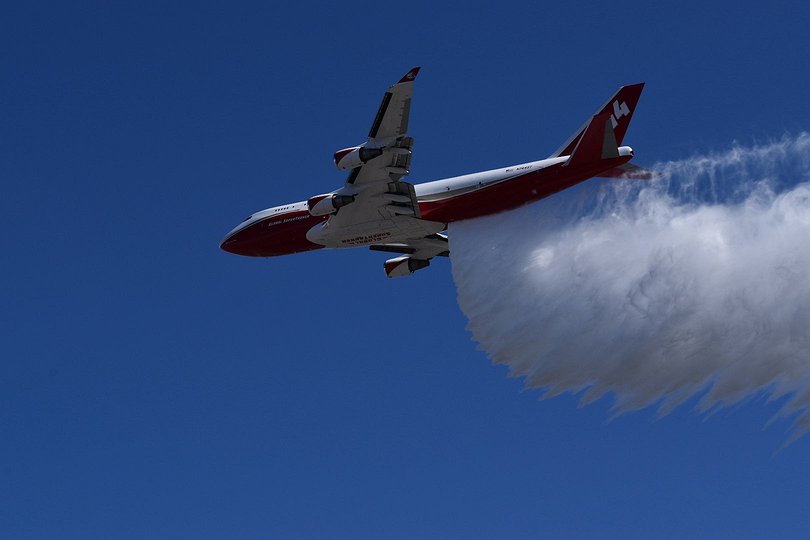 The Global Supertanker, an aircraft capable of carrying 20,000 gallons of water to fight wildfires, drops its payload near the Grant County International Airport. While the project was eventually closed down and the plane converted for another purpose, Washington Rep. Tom Dent and former Lands Commissioner Hilary Franz said they hope such aircraft are eventually available despite the economic factors associated with them.
 Former Lands Commissioner Hilary Franz exits the Global Supertanker after joining a flight in Moses Lake. Franz said she believes taking care of issues like wildfires and natural disasters will require bipartisan effort not just in Washington, but nationwide.
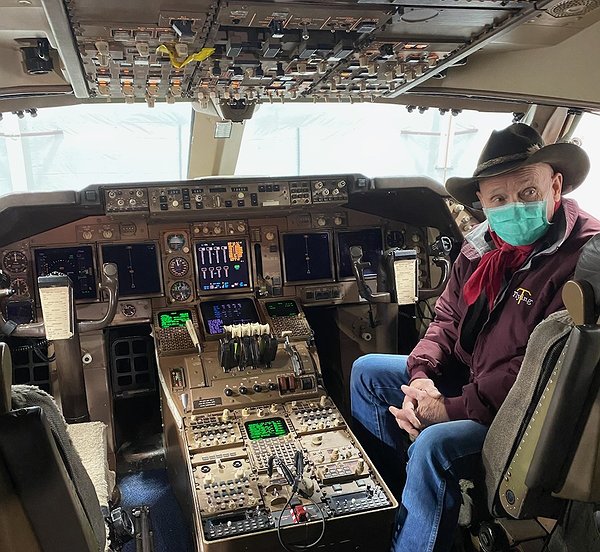 State Rep. Tom Dent sits in the cockpit of the Global Supertanker. Dent said he believes Hilary Franz’s desire to reach across the political aisle and work with experts to find real wildfire mitigating solutions was a large part of why the state’s situation has improved since she was first elected. Dent is a pilot himself and Franz has said his expertise was helpful to have during her tenure as Lands Commissioner.
 A Washington Department of Natural Resources Huey rigged for wildland firefighting. By increasing its fleet to ten of these aircraft from eight, adding a pair of airplanes, adding drones and setting up exclusive use contracts with companies that operate firefighting aircraft, DNR has improved its ability to respond to fires over the last decade.
ARTICLES BY R. HANS MILLER
Court cases in March 2025 shooting death of Moses Lake teen moving forward
EPHRATA — Jose D. Beltran Rodriguez, 21, of Moses Lake, and Matthew Gabriel Valdez, 19, also of Moses Lake, remain in custody at the Grant County jail after being arrested in connection with a March 21, 2025, drive-by shooting in Moses Lake.

Sentencing hearing set in 2022 Moses Lake murder case
EPHRATA — Juan Gastelum, the suspect in the March 2022 killing of Yanira Cedillos, changed his plea from not guilty to guilty on March 3. He is now scheduled for an April 28 sentencing hearing. According to court documentation, Gastelum, 32, of Hermiston, Ore., pleaded guilty to Murder in the Second Degree with Sexual Motivation. The minimum sentence Gastelum may receive under the law is two years in prison, but the maximum is life imprisonment and up to a $50,000 fine. However, the sentencing hearing is under Special Set Sentencing, an option under Washington state law which allows adjustments to sentencing if a suspect pleads guilty.

Court case in Nov. 2025 Moses Lake shooting moving forward
EPHRATA — The trial into the shooting of a 23 year old Moses Lake man is progressing through Grant County Superior Court. Darwin Nahun Tejada Martinez, 29, of Seattle is on trial facing a single charge of Assault in the First Degree after investigators say he shot the victim in a Nov. 25, 2025, incident.