
Small fairs rely on volunteers to thrive
JOEL MARTIN | Hagadone News Network | UPDATED 1 year, 2 months AGO

Volunteers set up exhibits for last year’s Columbia County Fair in Dayton.
COURTESY PHOTO/COLUMBIA COUNTY FAIR
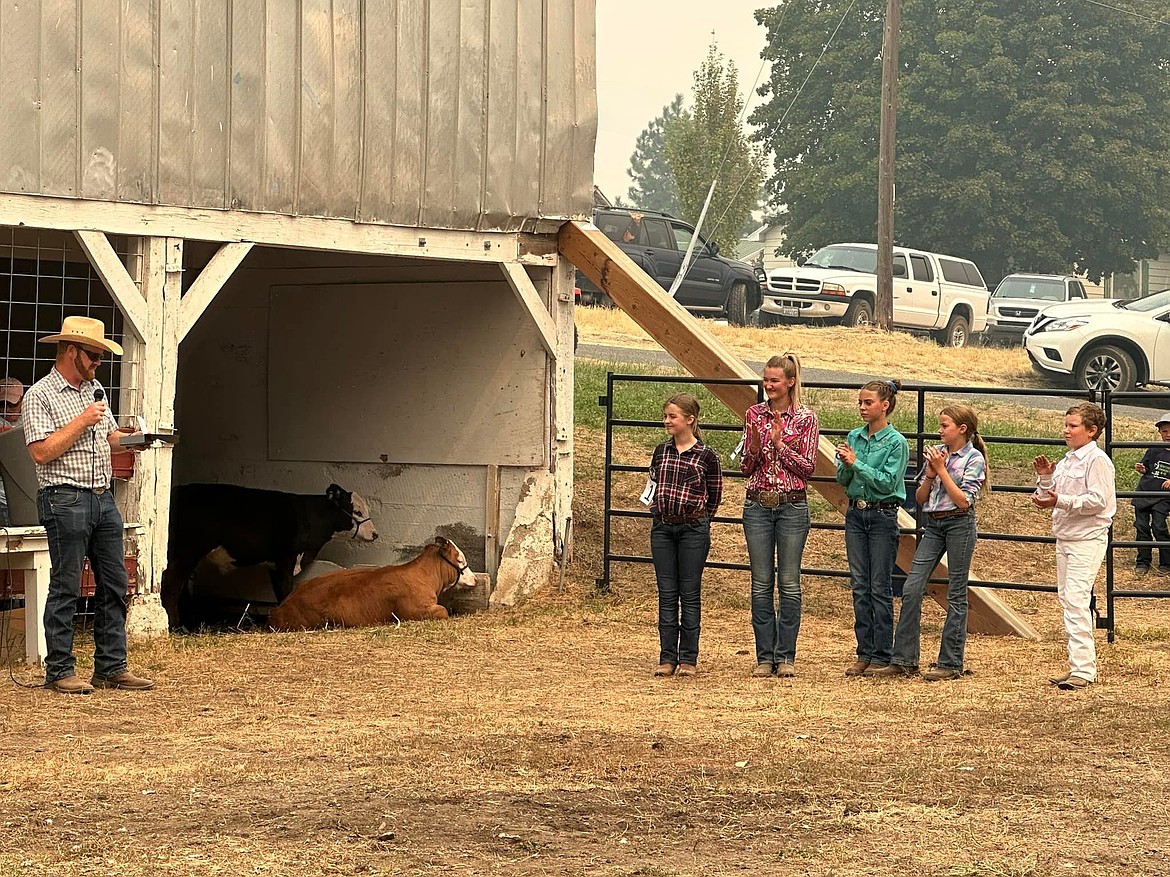
Everybody who makes the Hunters Community Fair happen, from the building superintendents to the judges to the cleanup crews, is an unpaid volunteer.
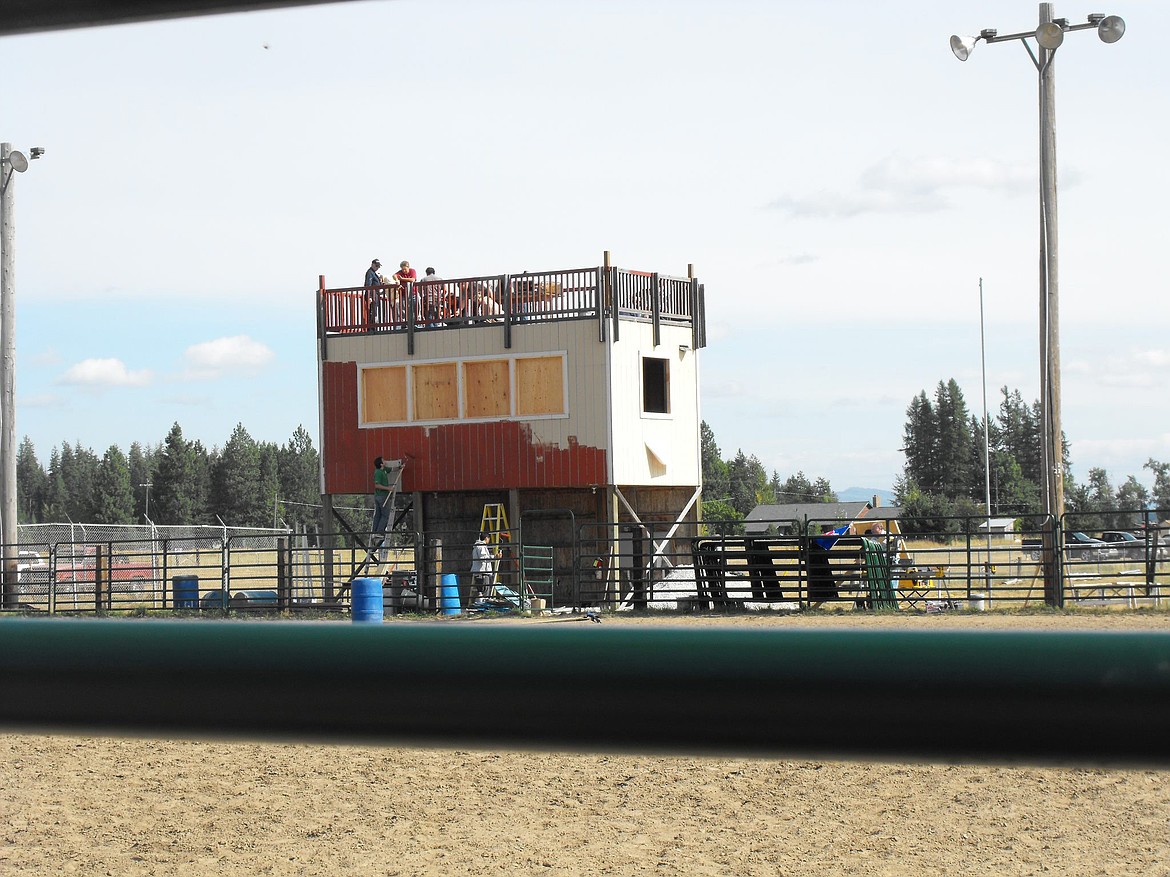
The Clayton Community Fairgrounds was built in 2006 from the ground up entirely by volunteers, who continue to make improvements every year.
Joel Martin has been with the Columbia Basin Herald for more than 25 years in a variety of roles and is the most-tenured employee in the building. Martin is a married father of eight and enjoys spending time with his children and his wife, Christina. He is passionate about the paper’s mission of informing the people of the Columbia Basin because he knows it is important to record the history of the communities the publication serves. | July 29, 2025 12:05 AM
MOSES LAKE — There are more than 70 state, county and community fairs in Washington, and most of them would grind to a halt without a dedicated army of volunteers.
“We have a fantastic group of people,” said Dwayne Strong, who heads up the board of the Clayton Community Fair about 23 miles north of Spokane. “There's folks that we don't see much of them most of the year, but when thit comes time for their area, they're Johnny on the spot.”
“We have a fairly steady crew,” said Allison Cornwall, president of the board of the Hunters Community Fair in southwestern Stevens County. “Some of the ladies have been around (for a long time). One of them, she was a royalty princess and now she volunteers and she’s probably been around for 50 years working on the fair.”
The Columbia County Fair in Dayton has about 100 volunteers who pitch in to make the fair happen, Board President Mike Johnson said. There’s no formal recruiting process, he said; they bring themselves in.
“It's hard to put a number on volunteers, because so many of the parents are so active,” he said. “We've got superintendents (and) official-type volunteer positions, but there's vastly more volunteers that show up to help set up and do all that kind of stuff. And you've got your 4-H people and your FFA people and your Kiwanis people, Lions Club people that all do booths as well. It adds up.”
Having an efficient fair board is an asset when it comes to putting on affair, Johnson said. When he became president in 2015, meetings often were little more than two-hour-plus arguments where each member had their own agenda. A state audit around that time forced the board to make some changes to its financial practices, and Johnson used that opportunity to streamline the meetings.
“It used to take us (about) two months to set up the fair with a hodgepodge of volunteers that were really overworked,” he said. “We take about three weeks now to set it up, and three weeks to tear it down.”
Even during those dysfunctional years, the fair still came together, Jonson said, because parents of children who were exhibiting stepped up and did what the board wouldn’t or couldn’t.
“They would bring in their own sound systems, where sound systems were needed,” he said. “They’d bring in their own fence posts where fence posts were needed. They’d bring in their own feed where feed was needed. They'd bring in their own bedding when bedding was needed. They would do all the those kinds of things that were getting missed because they care.”
The volunteers tend to apportion their own tasks, all three presidents said. Some take on a building or a department as superintendent, some simply step up and help with whatever their children are involved in.
“It kind of varies,” Cornwall said. “In some areas we are definitely struggling to get volunteers to do some of the activities. For instance, we do bingo in the afternoons for a couple of hours, and (it’s) a little bit harder (to find) somebody to sit down and yell out bingo numbers. But then there's other people that it's all I can do to fight them off from helping.”
When it comes to cleanup, fair organizers sometimes have to get a little creative and even spend some money. Columbia County Fair contracts with nearby Walla Walla Penitentiary to supply janitorial work, Johnson said. Hunters isn’t near a prison, but did have another source of labor.
“The local football team does all our garbage, and we donate to them an amount of money so they can go to camp,” Cornwall said.
The Clayton Community Fair not only relies on volunteers to operate it, but many of those same volunteers built it from the ground up. Formerly known as the Deer Park Community Fair, it had to move suddenly in November 2005 when the lease ran out on the fairgrounds in the middle of Deer Park, and the city sold the land it was on to another entity. The fair got a portion of the proceeds from that sale and looked for a new home, which they found about five miles north just across the county line in Clayton.
“The PUD sewer was right next to the property and PUD water was across the highway and the railroad tracks, so that was our single biggest expense, bringing the water under the railroad tracks and the highway,” Strong said. “We had two buildings with just dirt floors and lots of portable awnings and tents. And a lot of dust.”
Despite that, they pulled it off, Strong said. The first Clayton Community Fair was held in 2006, and the rodeo, which serves as a fundraiser for the fair returned the next year. The new location was just across the county line, which had another advantage, Strong said.
“In Deer Park, the health codes were such that the Dairywomen could not serve ice cream out of their little wagon because it didn’t meet the health standards for Spokane County, but in Stevens County it was fine,” he said.
The Clayton County Fairgrounds is still evolving, Strong said. Last year the volunteers replaced the wooden bleachers with aluminum, and this year they’ll expand electrical service for the rodeo and add solar-powered lights in the parking lot.
Beyond the organized volunteers, small fairs benefit from local people who simply contribute what they can, informally.
“We have the local vet who volunteers his time to do the vet check in the morning before the animals show up,” Cornwall said. “We partner with the school a lot; they let us use their facilities. The lunch is served out in the cafeteria and we use their restrooms. The horses show on the football field.”
The school district also lends its facilities for printing the fair guidebook, Cornwall said.
“If you go to some of these print shops, it becomes very expensive for a little fair to spend $500, $600 to print books,” she said. “The school just charges us … what it costs them for paper and stuff and that helps it become a little bit more affordable. It really takes a village.”
Fair volunteerism tends to be a multi-generational thing, Johnson said. Parents do it for their children, who do it for their children in turn.
“You look back to your youth and (you) always had good memories of the fair and how that was a good experience and want to make sure that the next generation has that same experience,” he said. “I think that that's kind of the driving force behind how an all-volunteer fair gets put together, because nobody's paid to do it.”
“Everybody gets paid the same, a hearty handshake and a heartfelt thank-you,” Strong said. What’s worth the most is when one of the kids at the fair comes up, gives you a big hug and says ‘Thank you.’”
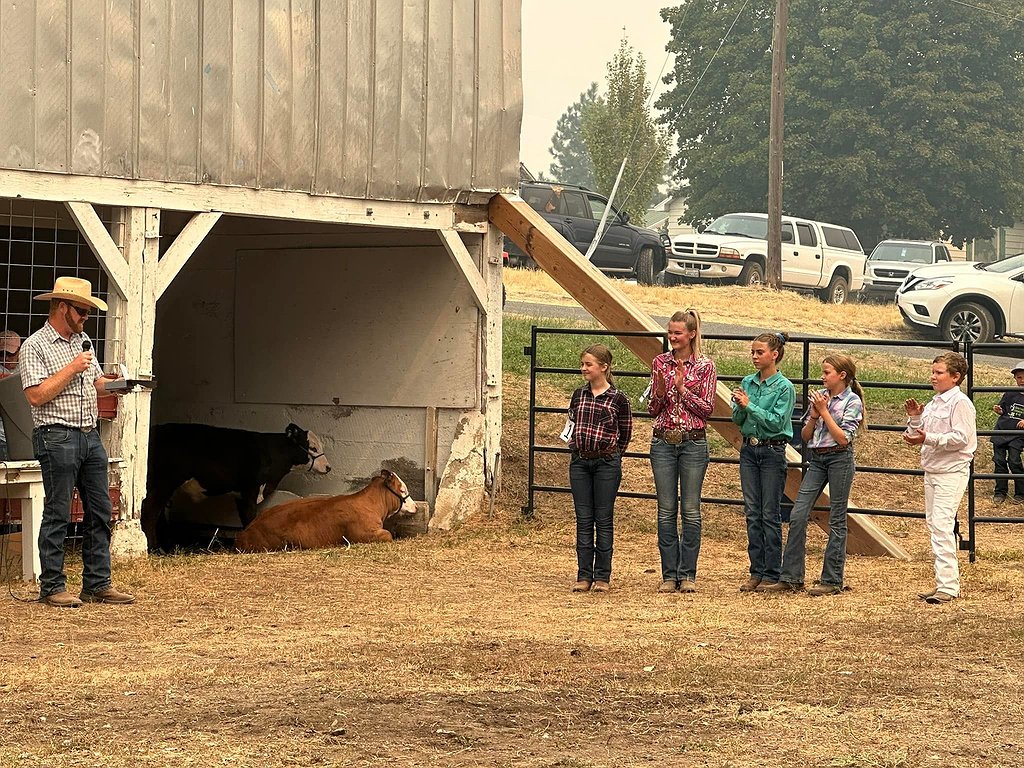 Everybody who makes the Hunters Community Fair happen, from the building superintendents to the judges to the cleanup crews, is an unpaid volunteer.
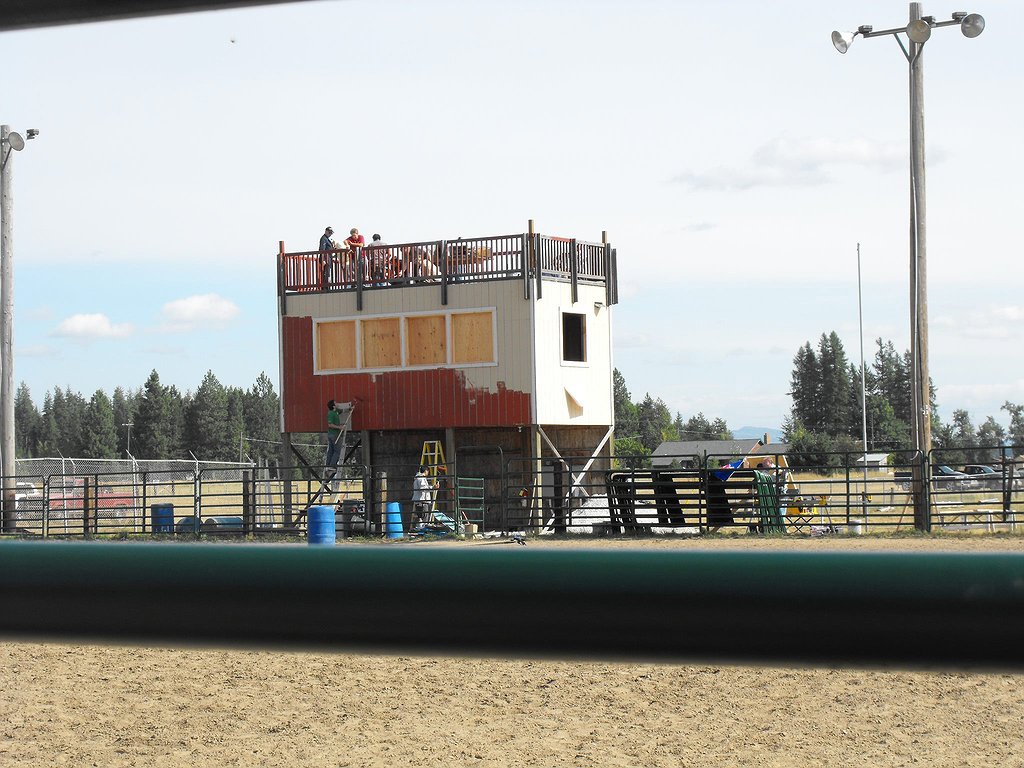 The Clayton Community Fairgrounds was built in 2006 from the ground up entirely by volunteers, who continue to make improvements every year.
ARTICLES BY JOEL MARTIN

Endless battle
Noxious Weed Control Board works to keep invasive plants under control
MOSES LAKE — Some of the nastiest plants in Grant County were the topic of a class led by Jay Johnson, a consultant with the Grant County Noxious Weed Control Board, Tuesday. The Noxious Weed Control Board, as its name would suggest, is tasked with keeping weeds under control in Grant County. That’s not a small job; the board’s website lists 129 species of noxious weeds that are found around Grant County. A noxious weed is defined as an invasive, non-native plant that threatens agricultural crops, local ecosystems or fish and wildlife habitat, according to the Noxious Weed Control Board. Washington state law requires that these weeds be identified and their spread kept to a minimum, if not completely eradicated. “We’re one of those agencies a lot of people don’t really understand,” Johnson said. “We’re a county office and … our funding is tax-based assessment. When you get your tax bill and you look down at all the expenses that you pay for, there we are.”

BASIN EVENTS: Oct. 16-24
COLUMBIA BASIN — Whether you feel like shopping, crafting, learning or seeing a show, there’s something happening for you this week in the Basin. Oct. 16 ‘My Family (Mi Familia)’ screening Spanning three generations, “My Family (Mi Familia)” is a heartfelt drama that follows the Sánchez family as they build their lives in East Los Angeles. Through love, hardship, triumph, and sacrifice, the film explores the immigrant experience, the strength of family bonds, and the traditions that connect one generation to the next. Lowrider show and taco truck before the screening. Sponsored by Columbia Basin Allied Arts, EDUBS C/S and the Moses Lake Creative District. $12 per person. Doors open at 6 p.m., film begins at 7 p.m. at the Moses Lake Civic Center Auditorium, 401 S. Balsam St. Tickets and info: www.cba-arts.org.

Moses Lake author encourages women to look beyond church culture norms
MOSES LAKE — A Moses Lake author’s book, “A Christian Woman Striving to Live Her Faith in a Man-Controlled World,” takes aim at the role to which many churches relegate the female half of their congregations. “It’s to encourage women in the faith,” Linda Curran said. “A lot of churches say, ‘Teach Sunday school, do this, do that, but don’t (evangelize.)’" In her book, Curran recounts a time when she moved to a new community and joined a church there. She was surprised to learn that, as a new female member, she had been automatically assigned church cleaning duties. When she questioned it, she wrote, she was met with condescension and her objections were brushed aside. In other churches, she said, women who were capable of teaching were relegated to “women’s ministry.”