
CWU building new geothermal plant, academic complex
NANCE BESTON | Hagadone News Network | UPDATED 4 months, 2 weeks AGO
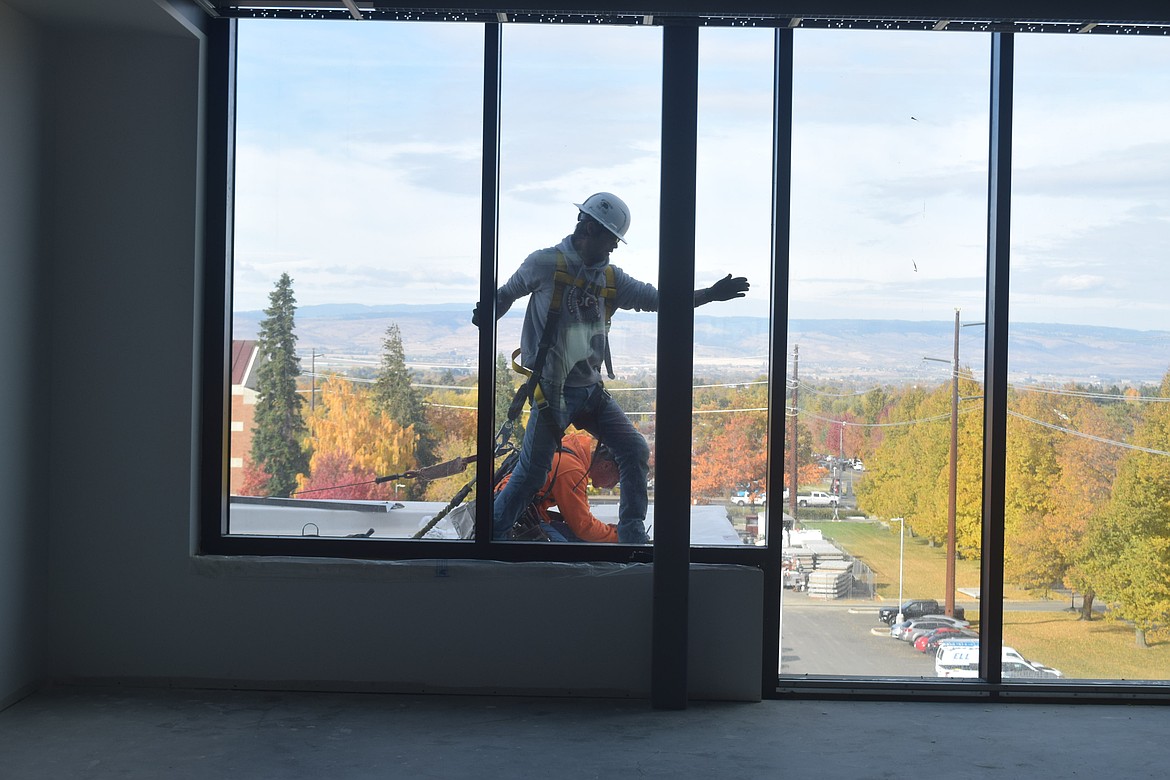
People work on the external part of the new North Academic Complex at Central Washington University. The university is building a new academic building which will replace two aging buildings. The university is also working on a Geothermal power plant which will provide the electricity to this building and several others on campus.
NANCE BESTON/BASIN BUSINESS JOURNAL
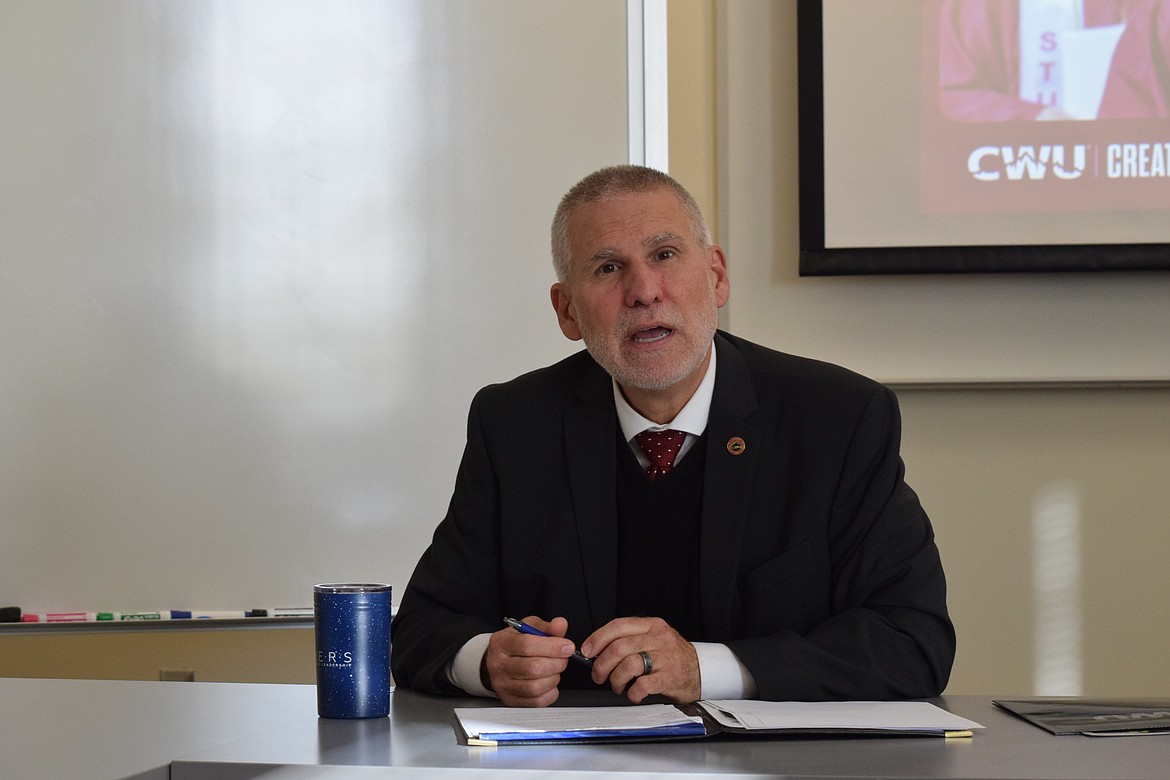
Jim Wolpert, president of Central Washington University.
NANCE BESTON/BASIN BUSINESS JOURNAL
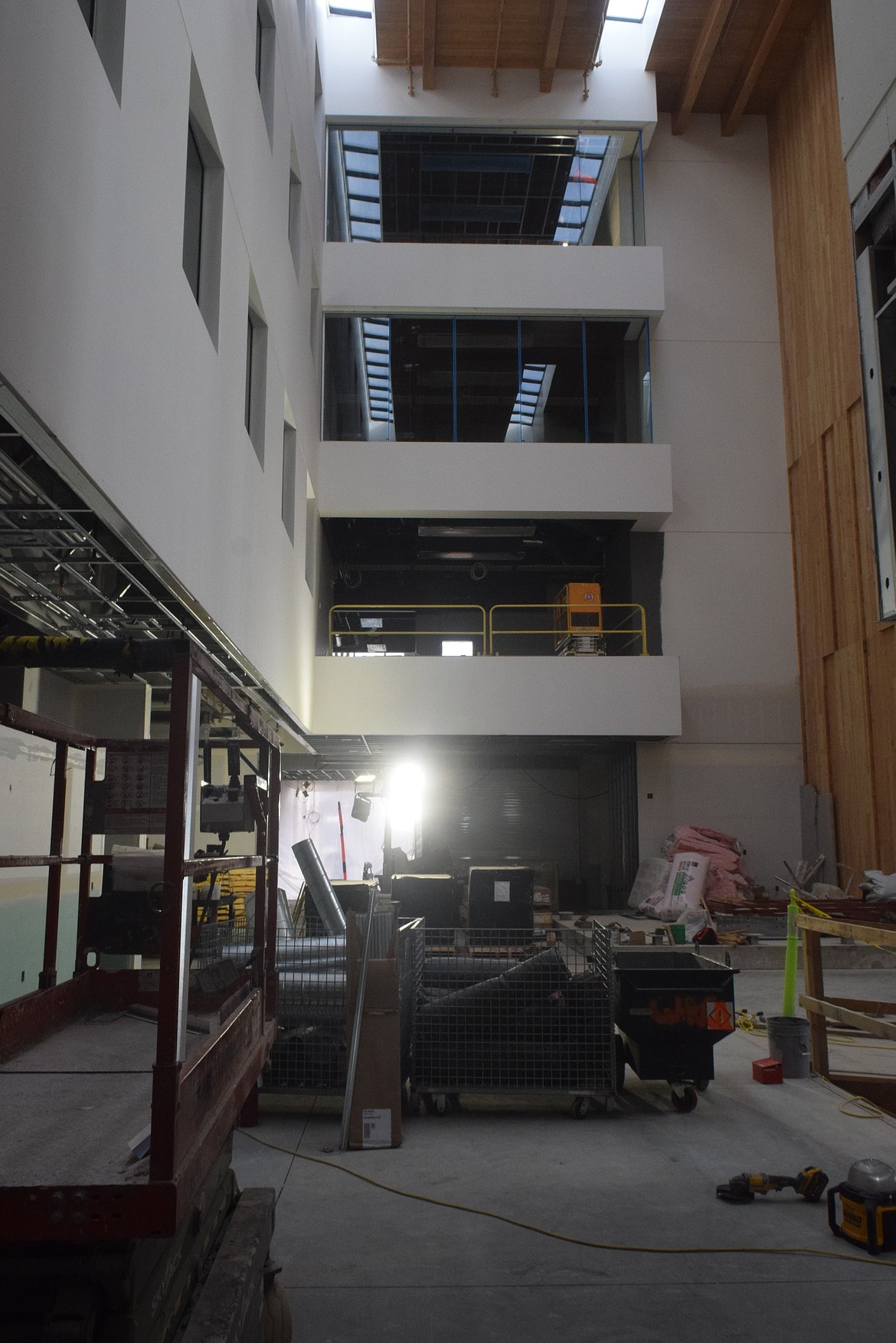
The North Academic Complex and Geothermal center are both works in progress with plans to be in progress by early 2026.
NANCE BESTON/BASIN BUSINESS JOURNAL
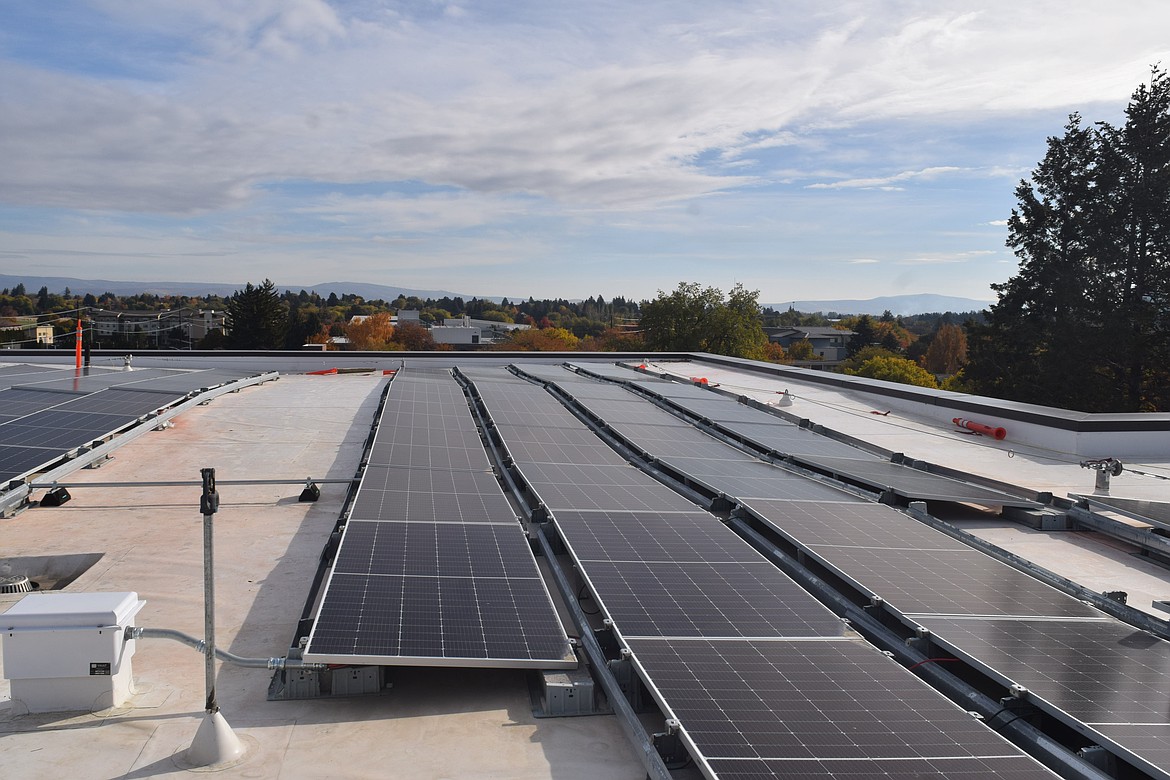
On top of the new Academic Complex are solar panels, which will help provide electricity during warmer months.
NANCE BESTON/BASIN BUSINESS JOURNAL
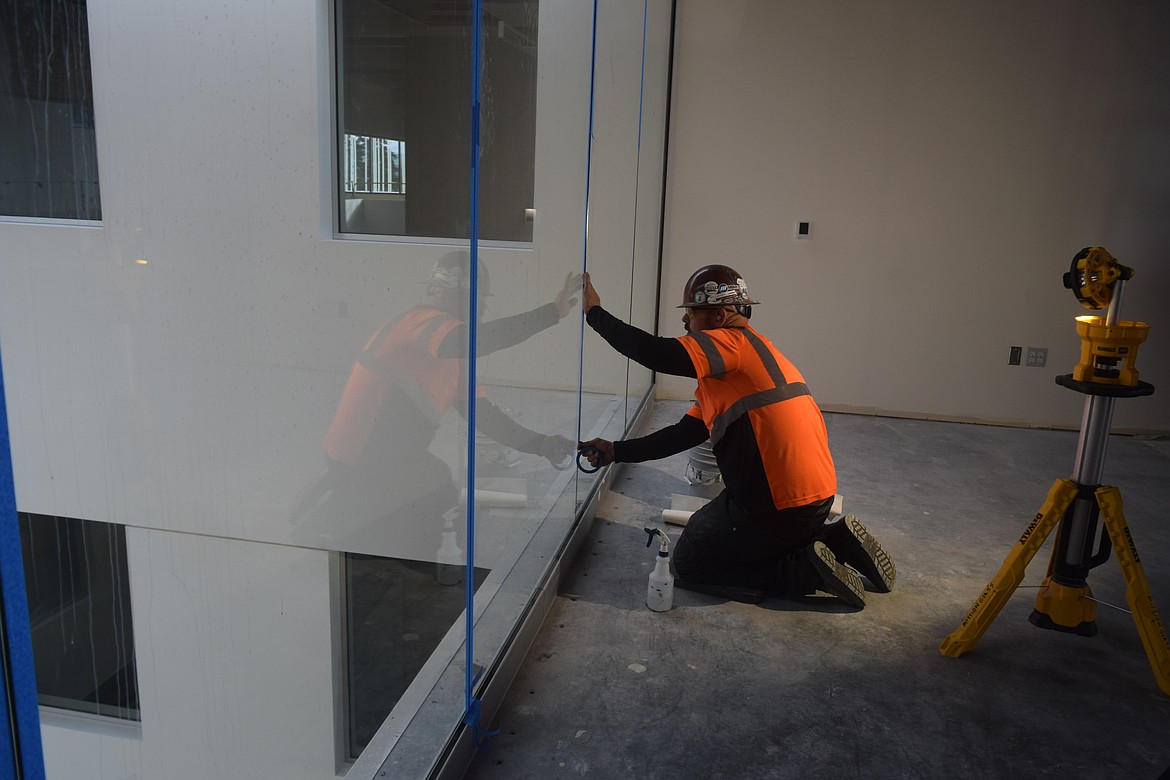
A worker applies tape to the external part of the new North Academic Complex at Central Washington University.
NANCE BESTON/BASIN BUSINESS JOURNAL
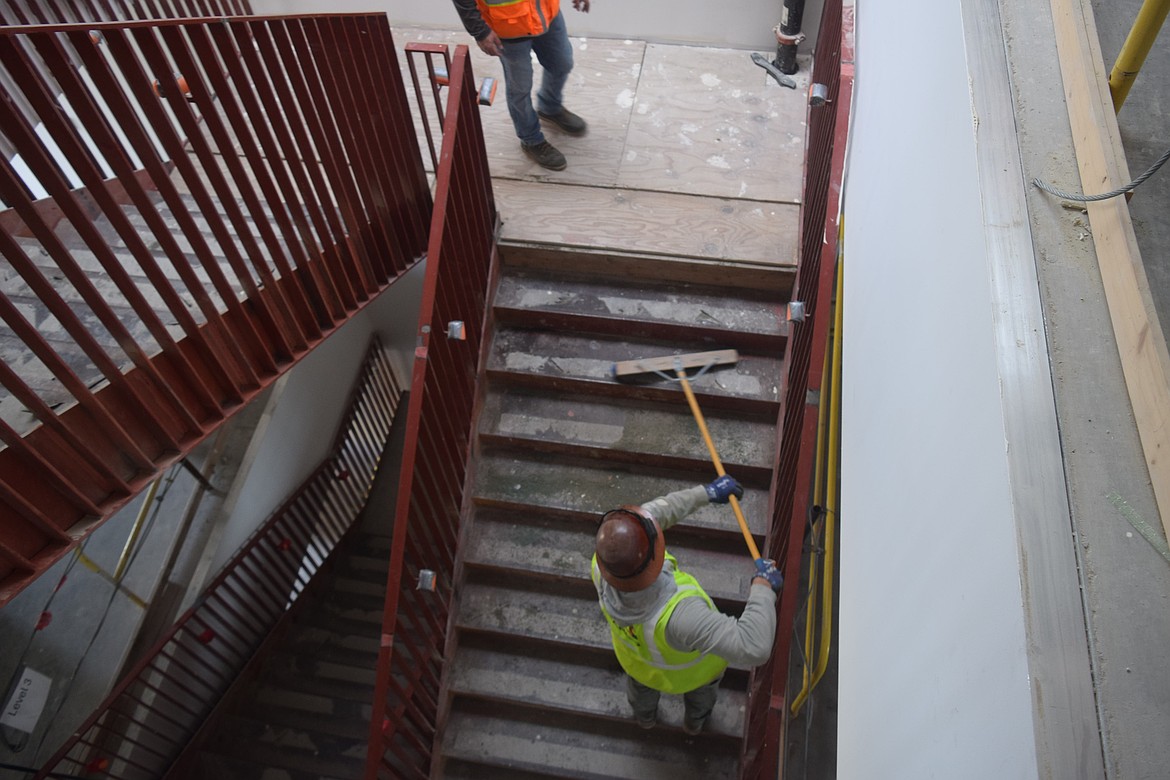
A construction worker sweeps the stairs of the in progress North Academic Complex.
NANCE BESTON/BASIN BUSINESS JOURNAL
ELLENSBURG — Central Washington University is making strides in its sustainability efforts with the development of the GeoEco Center and North Academic Complex, a project aimed at reducing campus-wide greenhouse gas emissions by 45% by 2030 and achieving net-zero carbon emissions by 2050.
The construction of the Academic Complex, currently underway, is set to replace two aging academic buildings that were built in the 1970s and are deemed energy-inefficient. CWU’s commitment to forward-thinking geothermal technology represents a pivotal shift in its approach to campus energy use.
“We are excited about the GeoEco Center’s potential to not only provide efficient heating and cooling for our campus but also to position CWU as a leader in sustainability,” said Jim Wolpert, president of Central Washington University. “This project is not just an investment in infrastructure but also an investment in our planet’s future.”
The GeoEco Center will utilize an open-loop ground source heat pump system, which is designed to provide heating and cooling for over half a million square feet of campus infrastructure. The geothermal plant is expected to come online by early 2026, serving as a cornerstone for CWU’s initiative to decarbonize its district energy system over the next 15 years.
“Approximately 60% of our greenhouse gas emissions come from natural gas used for heating campus buildings,” Wolpert said. “By implementing this geothermal technology, we are taking a proactive step to significantly reduce those emissions.”
The geothermal system will include several critical components, such as an injection well, extraction well, a six-pipe heat pump, and a groundwater heat exchanger. This system is designed to ensure no contamination of groundwater while efficiently utilizing it as an energy exchanger. The extraction well will pull groundwater from the Ellensburg aquifer approximately 800 to 1,000 feet below the Earth’s surface, with the injection well reintroducing the water back into the aquifer.
“We are committed to investing in technologies that not only meet our operational needs but also align with broader environmental goals,” said Wolpert. “The GeoEco Center is an exemplary model of how educational institutions can utilize innovative technology to foster sustainability while serving their communities.”
The development isn’t just a technical advancement; it also incorporates educational elements designed to engage students, faculty, staff, and the local community. The GeoEco Center will feature a solar array and an educational dashboard that demonstrates the system’s functionality and mechanics, thereby providing a valuable learning opportunity.
“By integrating educational components, we hope to inspire our students to engage with sustainable practices,” said Delano Palmer, Director of Capital Planning and Projects at CWU. “This project is not only about reducing our carbon footprint but also about cultivating a mindset of sustainability among future generations.”
In addition to its environmental impact, the GeoEco Center will also promote a significant reduction of around 33,000 metric tons of carbon emissions over the next 50 years, aligning with CWU’s environmental goals.
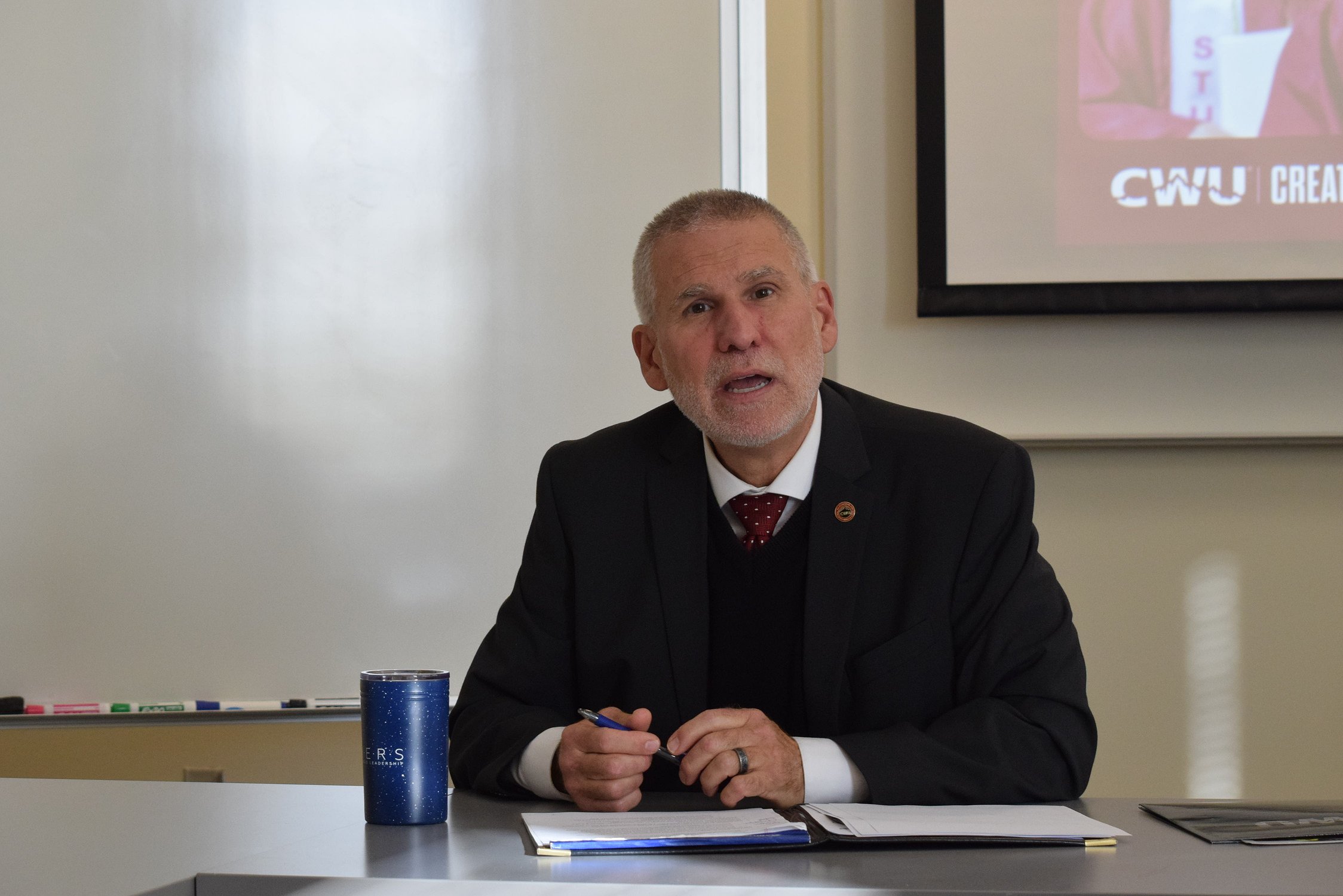 Jim Wolpert, president of Central Washington University.
NANCE BESTON/BASIN BUSINESS JOURNAL
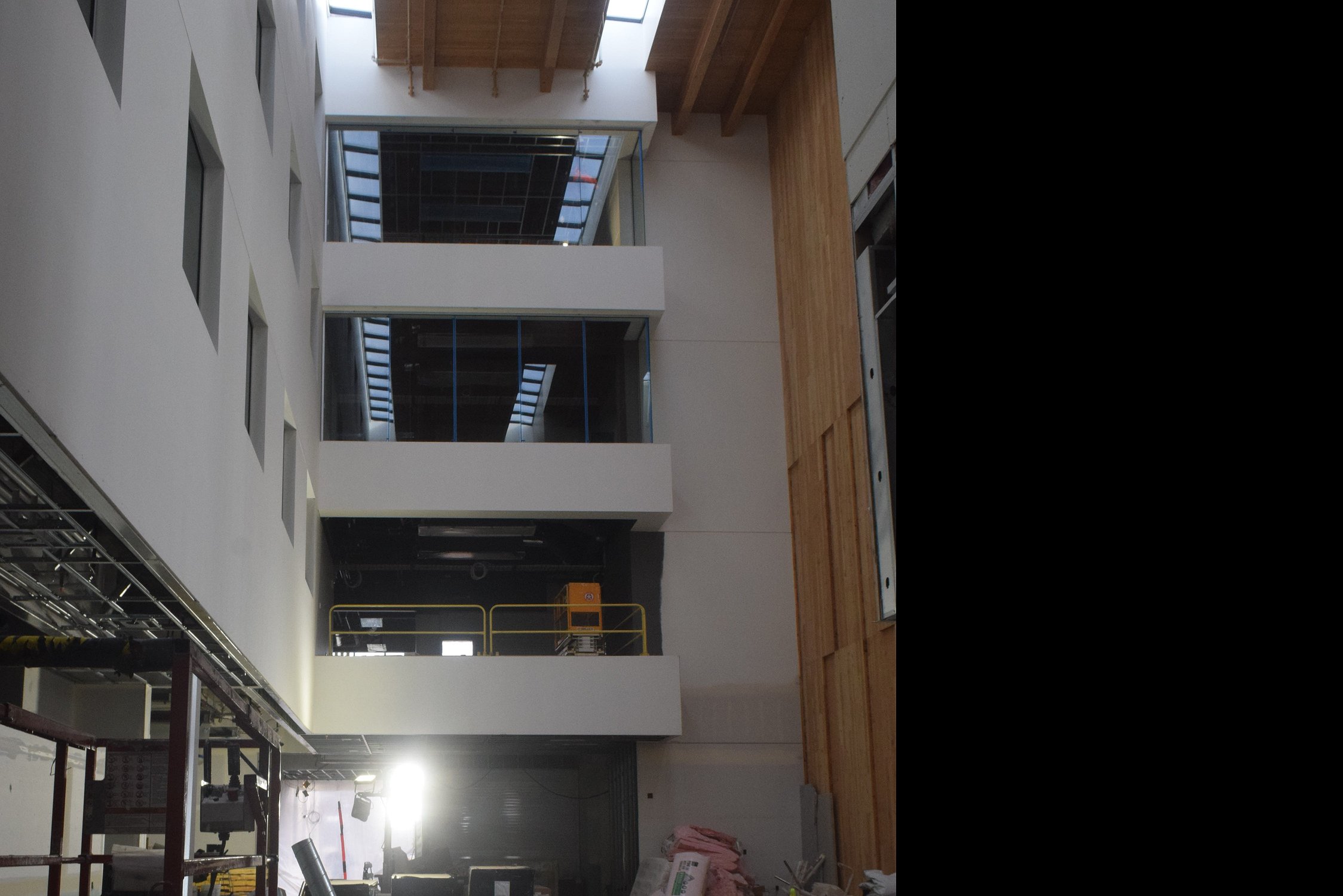 The North Academic Complex and Geothermal center are both works in progress with plans to be in progress by early 2026.
NANCE BESTON/BASIN BUSINESS JOURNAL
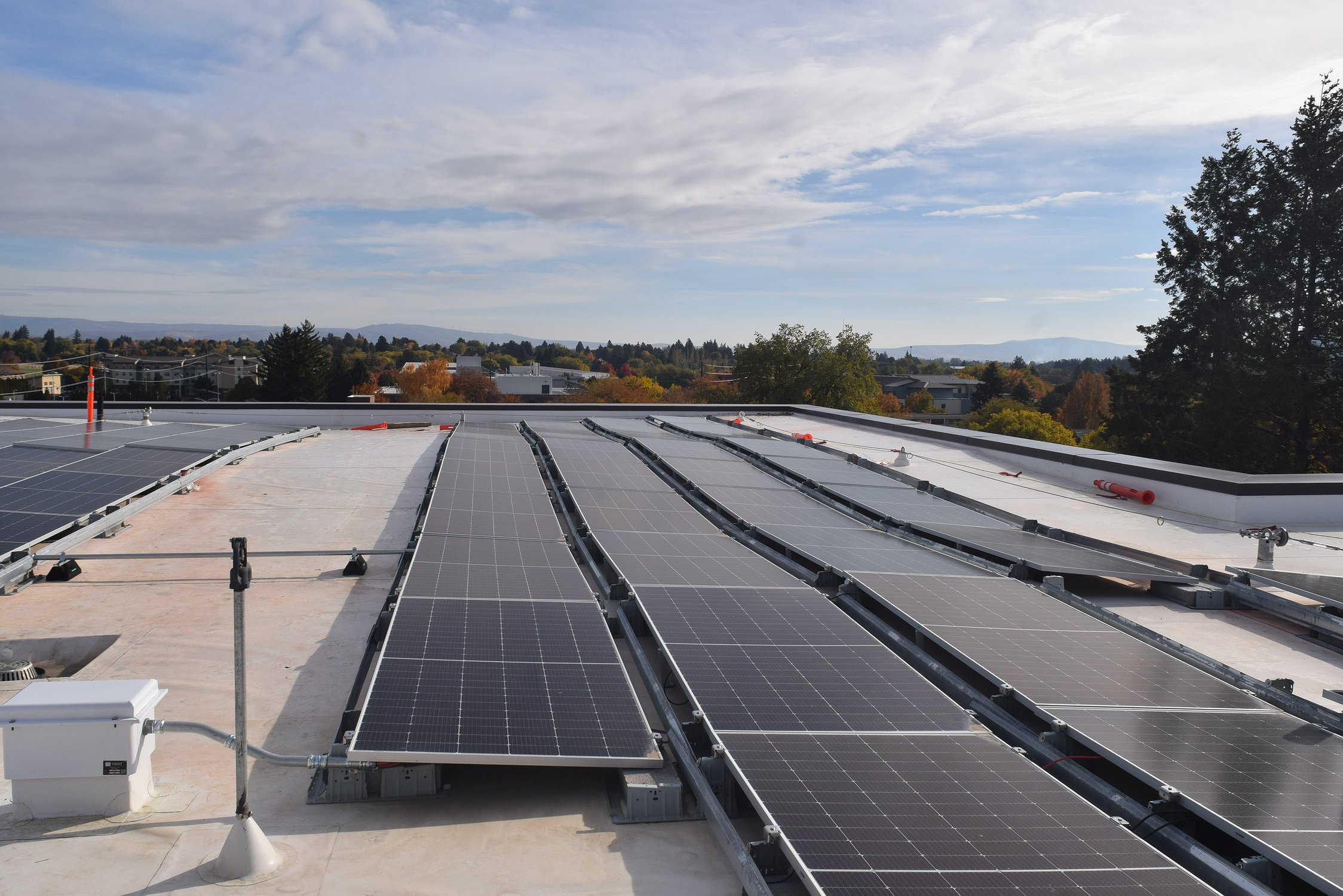 On top of the new Academic Complex are solar panels, which will help provide electricity during warmer months.
NANCE BESTON/BASIN BUSINESS JOURNAL
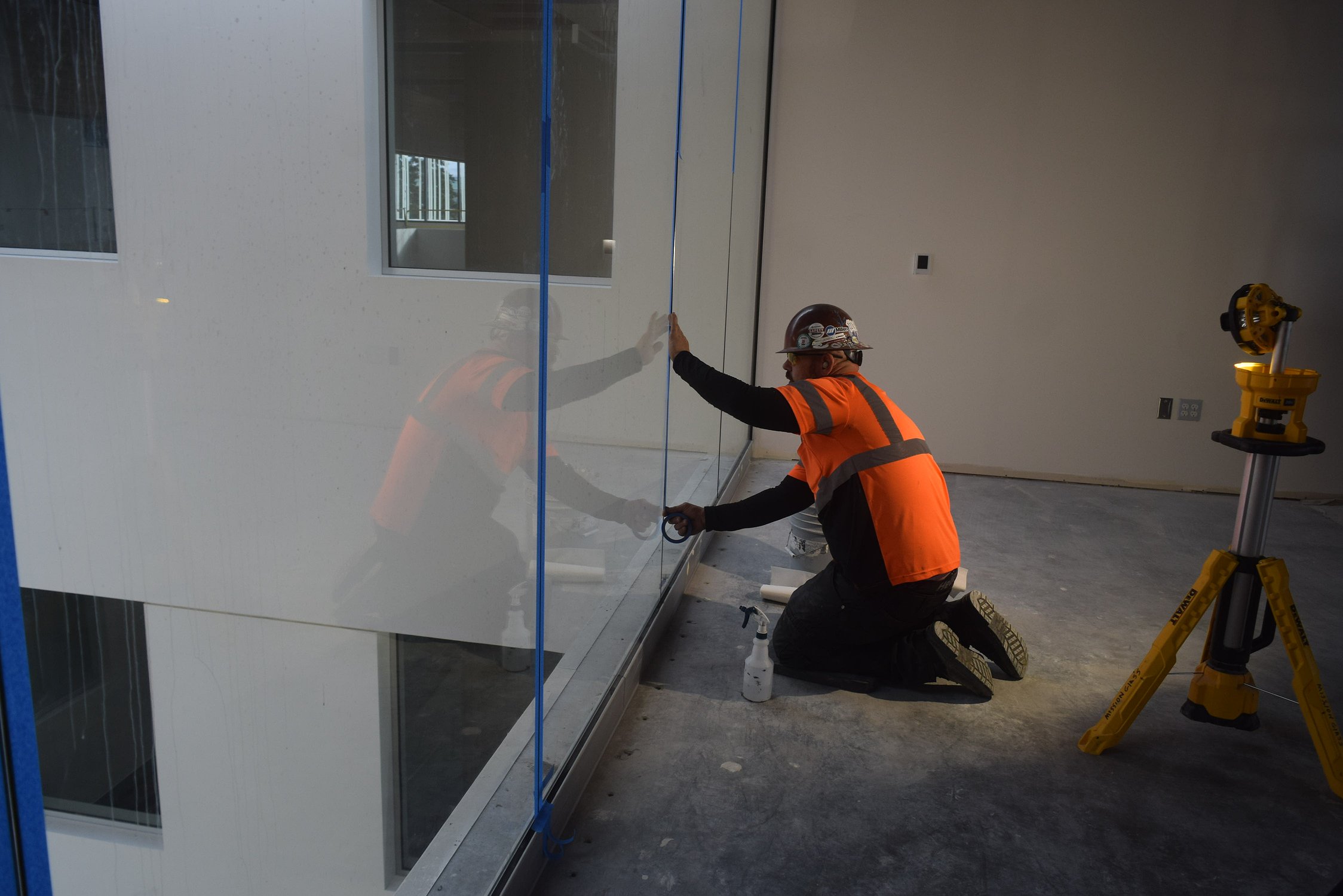 A worker applies tape to the external part of the new North Academic Complex at Central Washington University.
NANCE BESTON/BASIN BUSINESS JOURNAL
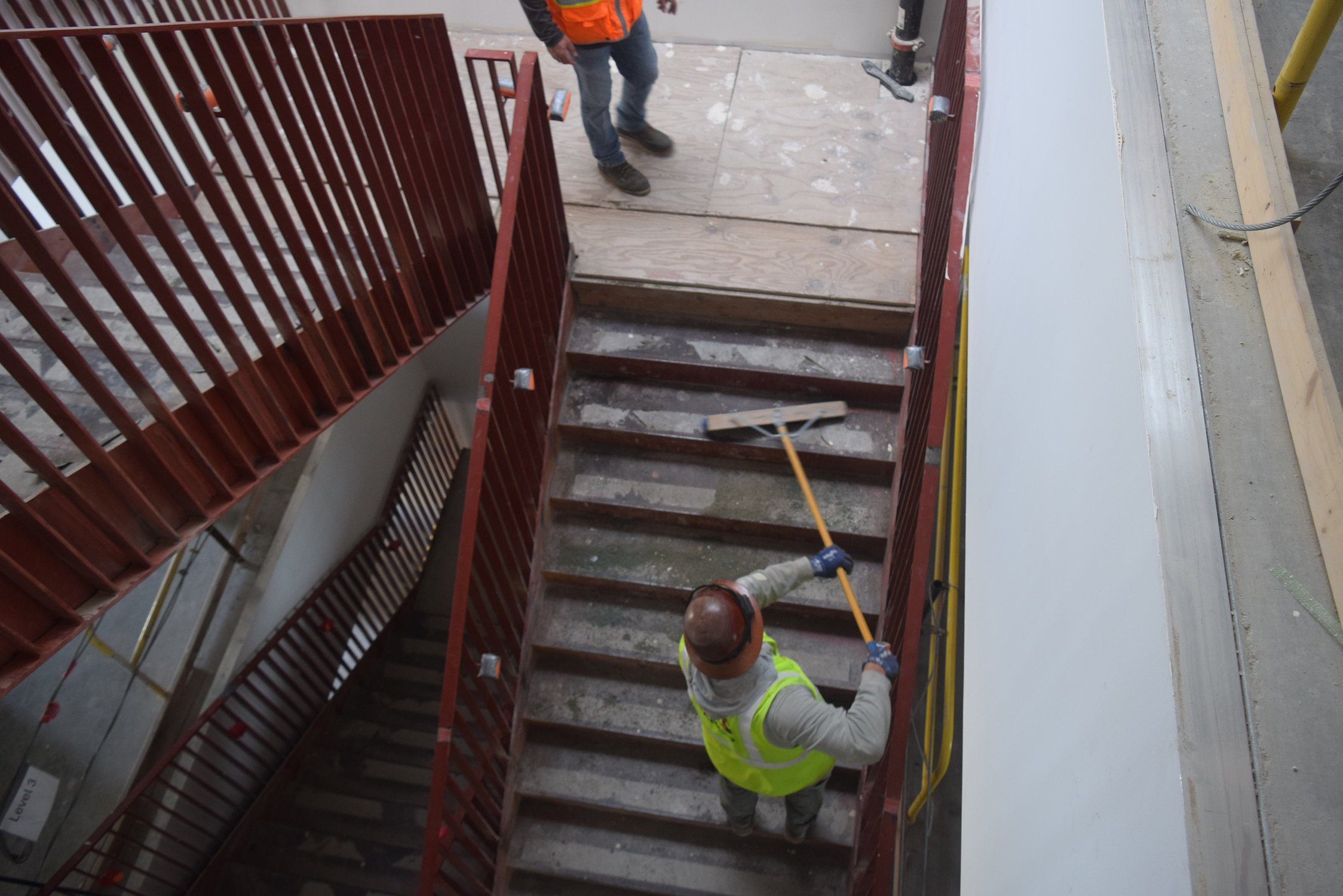 A construction worker sweeps the stairs of the in progress North Academic Complex.
NANCE BESTON/BASIN BUSINESS JOURNAL
ARTICLES BY NANCE BESTON
1 arrested after Highway 17 stop; detectives recover fentanyl, firearms
MOSES LAKE — The Moses Lake Street Crimes Unit conducted a traffic stop on Highway 17 near Randolph Road and executed a search warrant Friday morning as part of an ongoing narcotics investigation.
4th-year drought declaration in WA, subtle effects in the Columbia Basin
EPHRATA — Washington’s fourth straight year of drought is expected to hit some regions hard, but in Grant and Adams counties, the impacts will look different – quieter, less visible and centered underground. Statewide, the Department of Ecology issued an emergency drought declaration after a warm winter left Washington with about half its usual snowpack, raising concerns about low summer streamflows, stressed fish populations and heightened wildfire risk. Seven of the past 10 years have included drought somewhere in the state. “If you look at our mountains, the challenge we are facing is clear,” Gov. Bob Ferguson said during a press conference Wednesday. “We’re taking emergency action to protect fish, farmers and communities across Washington.”
Sleep Diagnostic Center to close after doctor’s sentencing
MOSES LAKE — The Central Washington Sleep Diagnostic Center announced it will be closing its doors effective April 30. This includes locations in Moses Lake, Spokane Valley, Brewster and Wenatchee. The announcement follows the March 25 guilty plea from Dr. Eric Edward Haeger, 57, in United States District Court to adulterating and misbranding medical devices with the intent to defraud or mislead, according to a statement from the U.S. Attorney’s Office. “The adulterations by Dr Haeger show a dangerous disregard for the safety of his patients,” Washington Attorney General Nick Brown said in a statement. “This is a win for patient safety, for protecting public dollars from fraud, and for ensuring citizens of Washington get necessary healthcare. This case exemplifies the great work our team is doing in collaboration with our federal partners to fight fraud and protect Washingtonians.”