
Massive Ronan mural evokes tribal culture, local scenery
BERL TISKUS | Hagadone News Network | UPDATED 1 year, 1 month AGO
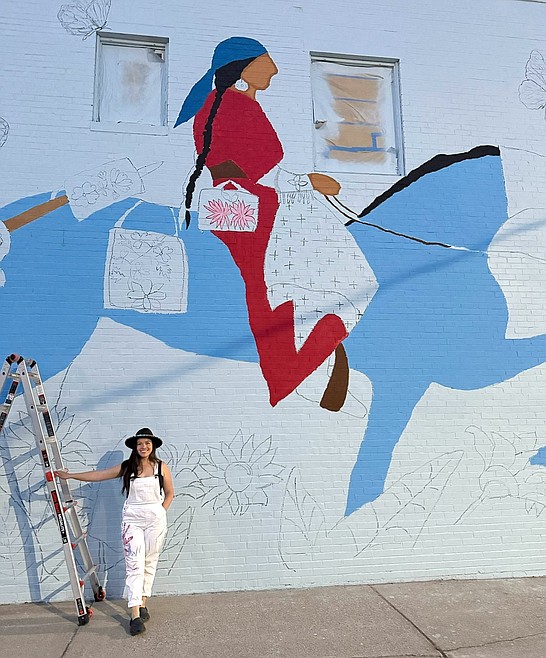
Aspen Decker, poised to work on her painting of "Big Blue," on the wall of the former Mission Mountain Enterprises building in Ronan. Aspen and her husband, Cameron, collaborated on half of the 120-foot mural, while Cheyenne Renee painted the other half. (Courtesy photo)
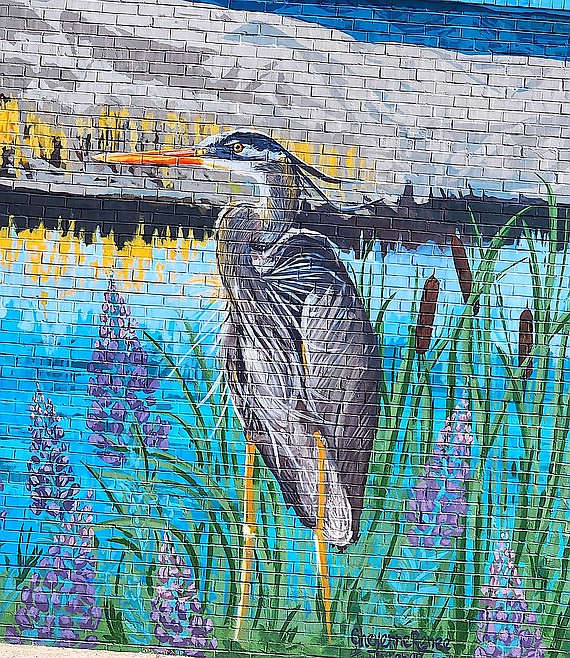
Cheyenne Renee's painting of a blue heron shows the bird in detail on the mural on 4th Ave. SW in Ronan. (Berl Tiskus/Leader)
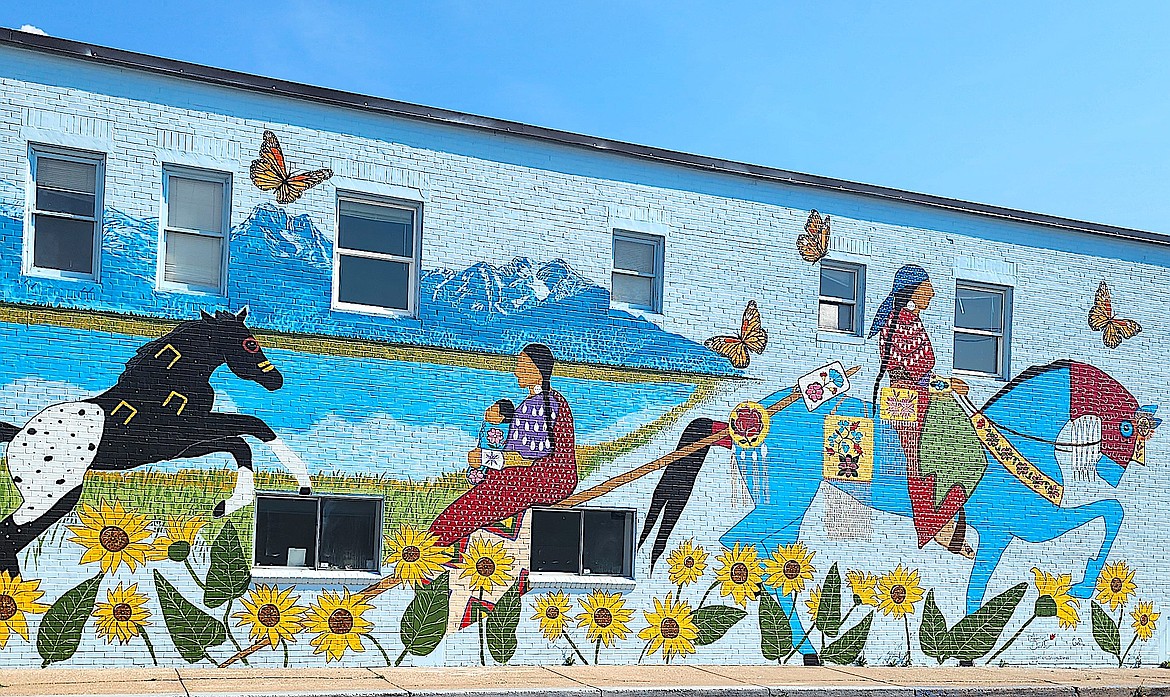
Adding to Cheyenne Renee's mural, Aspen and Cameron Decker brought Salish culture with horses, Indian women, beadwork, and horse regalia as well as native plants and ponds found near Ronan. (Berl Tiskus/Leader)
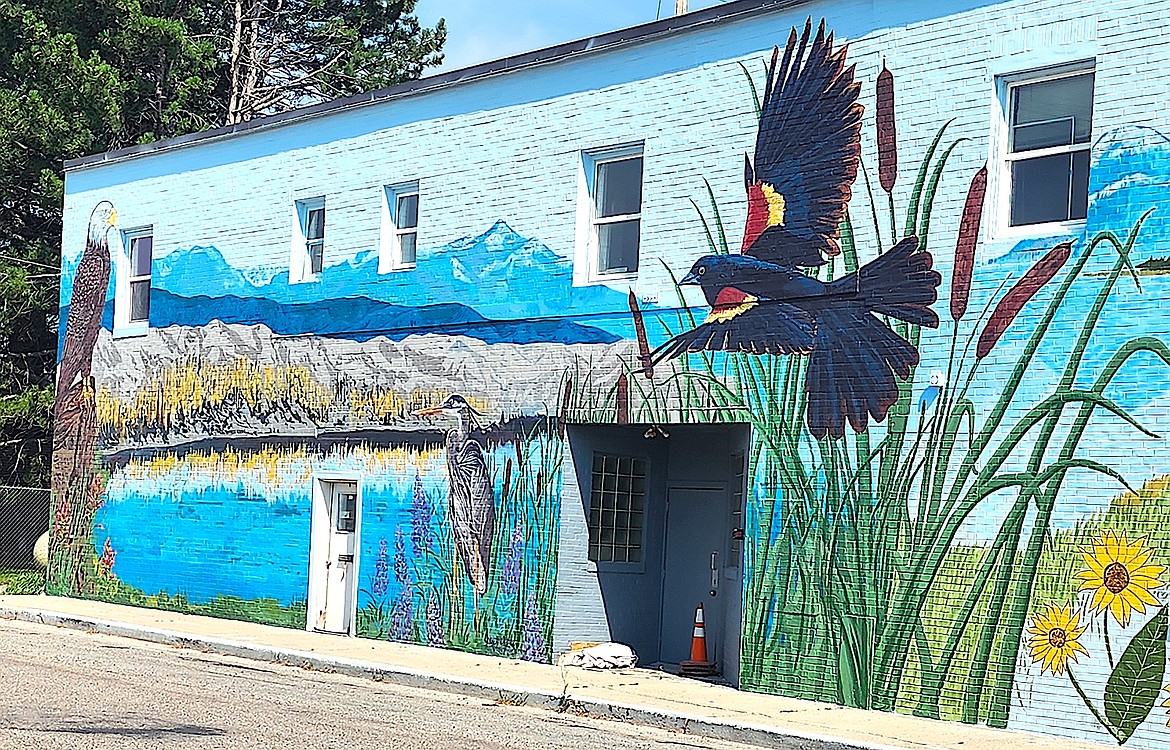
A mural painted by Cheyenne Renee highlights Ronan's birds, native flowers, and the Mission Mountains. (Berl Tiskus/Leader)
Reporter Berl Tiskus joined the Lake County Leader team in early March 2023, and covers Ronan City Council, schools, ag and business. Berl grew up on a ranch in Wyoming and earned a degree in English education from MSU-Billings and a degree in elementary education from the University of Montana. Since moving to Polson three decades ago, she’s worked as a substitute teacher, a reporter for the Valley Journal and a secretary for Lake County Extension. | September 4, 2025 12:00 AM
A massive 120-foot-long mural with a red-winged blackbird as big as a quarter horse, wetlands, a blue heron, the Mission Mountains and a golden eagle fills half of the brick wall reaching from the corner of Main Street in Ronan down 4th Ave. S.W. to the alley. The other half reflects Salish and Kootenai culture.
Half was painted by Cheyenne Renee, a muralist from Virginia, who has been traveling the United States since April of 2022 and painting murals in small towns, one in each state. It’s her goal to paint a mural in 50 small towns across all 50 states by the end of 2025, specifically small towns that “value scenic beauty and small businesses,” according to her website (cheyennereneearts.com). Ronan was number 22 on her list, and she dipped the last paintbrush there on June 15.
Since the wall is so gargantuan, this mural became a collaboration with local artists Aspen and Cameron Decker. Aspen is a member of the Confederated Salish and Kootenai Tribes, and Cameron is a Dine tribal member and CSKT descendant.
While Renee’s portion emphasizes birds and natural beauty, the Deckers added notes of Salish and Kootenai culture with a giant blue horse and Indian women in elk-tooth dresses, one riding “Big Blue” and the other holding her baby as they ride in a travois. Native beadwork and horse regalia, ponds, seasons, native plants, and the Mission Mountains also grace the wall.
“We wanted to do a piece that was representative of our area, our Salish place name for Ronan, Ocqʔétkw,” Aspen said, which means “Where the water comes out.”
They included bitterroot and balsam root, native plants important to Salish culture, and Cameron painted the Missions with snow on them.
Renee’s part of the mural included the Flathead River, which is very important in tribal culture, and also native plants as well as birds.
“I was really connected to what we were making,” Cameron said, since he grew up on Eisenhower Street and attended K. William Harvey Elementary.
Aspen paints ledger art on maps from the 1800s and created a piece several months ago that the Deckers used as an inspiration.
The mural took “a solid three weeks,” Cameron said, not counting the two weeks they spent beforehand, working digitally on the composition and communicating with Renee, since the muralists had different styles.
As far as paint goes, Cameron said, “We’re talking gallons.”
All the paint came from Ace Hardware in Ronan, whose staff “was wonderful” about mixing all the paint colors. When the mural was finished, Cameron and Aspen coated the artwork with the highest grade of mural varnish. The building’s owner, Eric Huffine, had primed the wall so it was ready for the muralists.
It’s the largest piece the Deckers have done, and Aspen said when she was painting the beadwork she would go across the street to see how it looked, then go back and make the beads larger. The Deckers worked long hours, sometimes until 2 a.m. to finish the project.
Aspen enjoyed adding color to the beadwork designs and regalia, “especially towards the end of the painting, seeing the result of all the hard work.
“It was fun to go work on the almost finished piece,” Cameron said, “just enhance, enhance.”
After working in a studio, Cameron liked engaging with people who passed by to see the work in progress.
“Almost everybody was really supportive,” he said. “We got lots of honks, and people stopping by.”
All three muralists expressed appreciation to the Ronan Chamber of Commerce and Mission West Community Development, who collaborated on funding for the immense work of art.
“It restores our indigenous presence here on our homeland,” Aspen said. “It’s a statement piece.”
The colors – golden arrow leaf balsam root, the blackbird’s wing, the Indian Paintbrush, the blue horse, the regalia and beadwork — are vivid. It’s a treat for the eyes, a tribute to local culture and scenery, and a draw for Ronan.
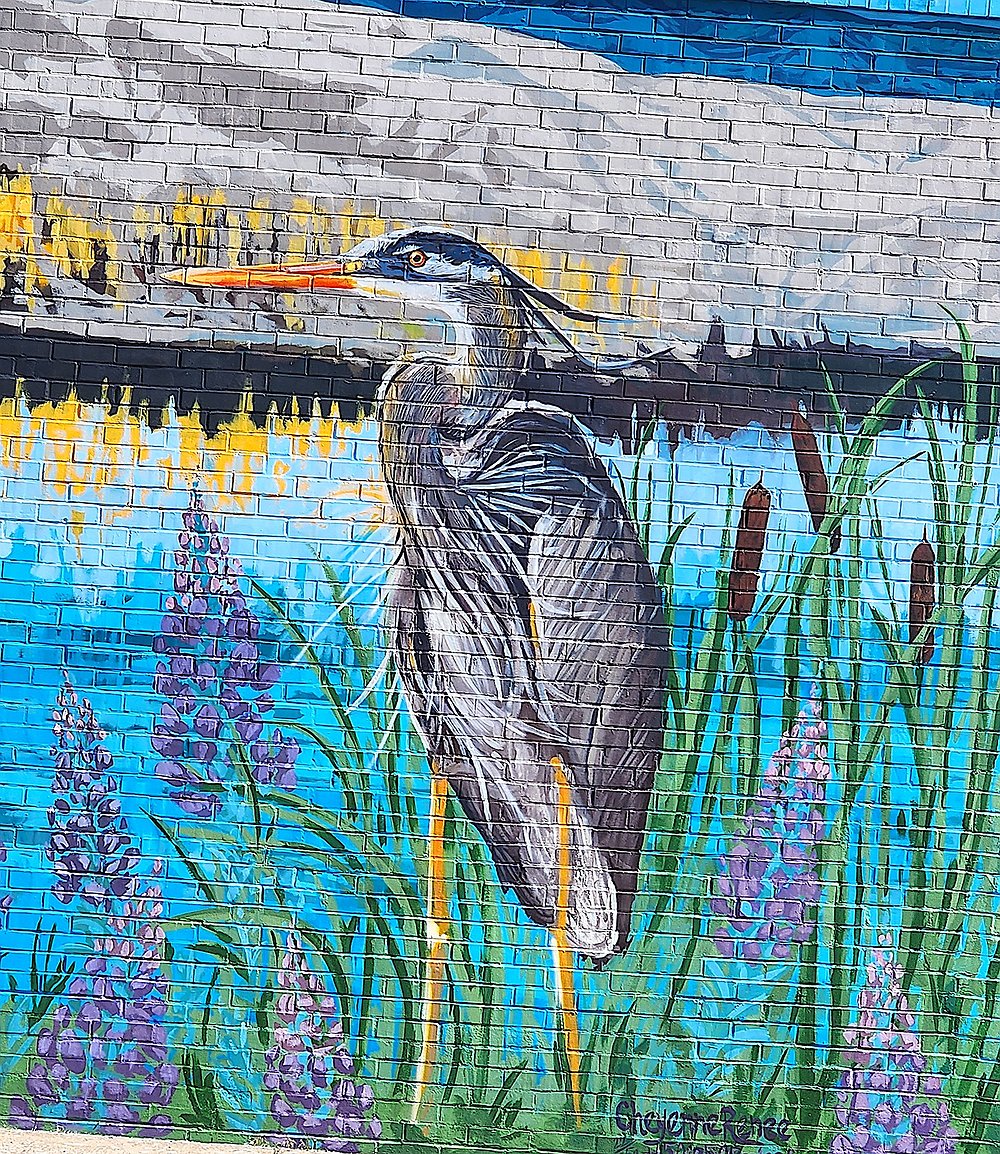 Cheyenne Renee's painting of a blue heron shows the bird in detail on the mural on 4th Ave. SW in Ronan. (Berl Tiskus/Leader)
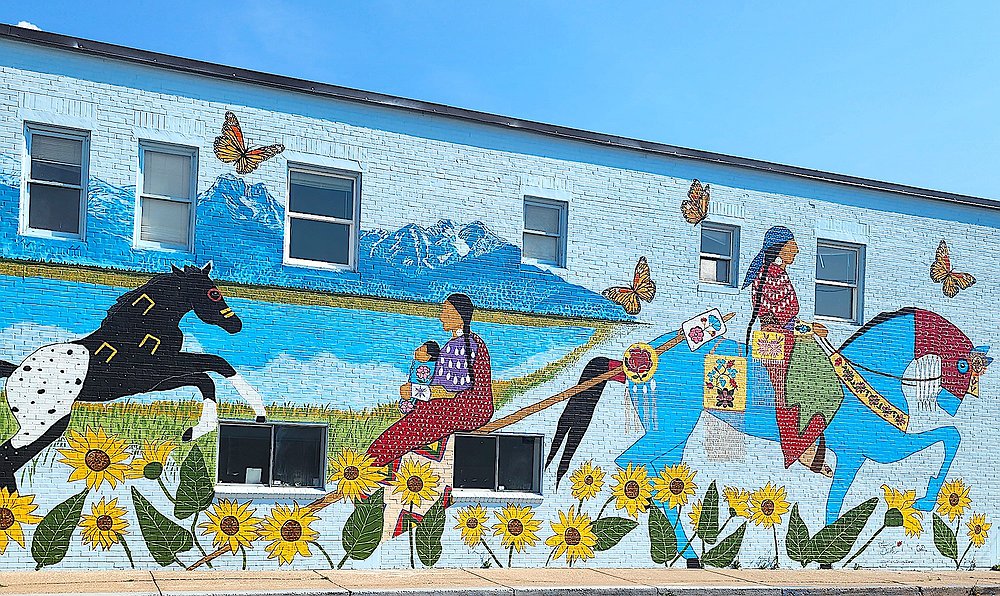 Adding to Cheyenne Renee's mural, Aspen and Cameron Decker brought Salish culture with horses, Indian women, beadwork, and horse regalia as well as native plants and ponds found near Ronan. (Berl Tiskus/Leader)
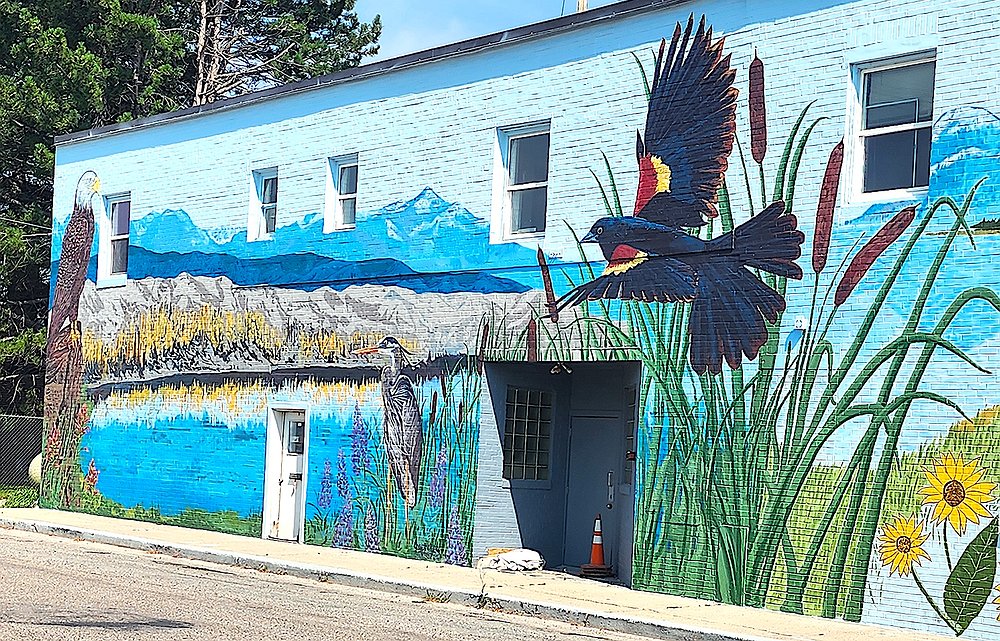 A mural painted by Cheyenne Renee highlights Ronan's birds, native flowers, and the Mission Mountains. (Berl Tiskus/Leader)
ARTICLES BY BERL TISKUS
NRA Finals rodeo brings cowboys and cowgirls to town
The Northern Rodeo Association Finals are on this weekend, Oct. 22-24, at the Majestic Valley Arena in Kalispell. Rodeos start at 6:30 p.m. each night with the doors opening at 5:45 p.m.
Ronan City Council hires grant manager for Friends of the Children project, continues wastewater project work
At the business-packed Ronan City Council meeting Oct. 14, Ronan city attorney Clif Hayden reviewed the Friends of the Children grant administration contract, project administration plan, interlock agreement, and the city’s contract with the Montana Department of Commerce, taking questions from council members as he went through the documentation.
Mission Valley barrel racers compete in Great Falls
More than 280 barrel racers converged at Montana ExpoPark in Great Falls from Oct. 2-4 for the state finals of the Montana Barrel Horse Association, including several Mission Valley riders.