Historic Burke mine featured in new book
JOSH McDONALD | Hagadone News Network | UPDATED 11 months, 1 week AGO
JOSH McDONALD
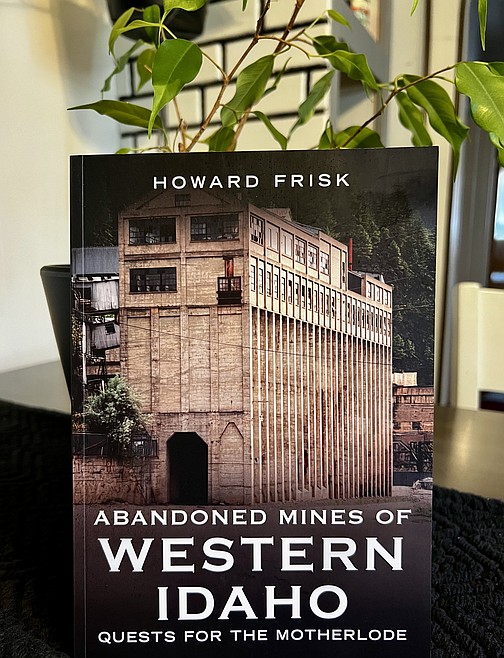
Howard Frisk’s newest book, "Abandoned Mines of Western Idaho," brings Idaho’s mining past to life, featuring sites like the towering remains of the Hecla Mine in Burke. The book is part of Frisk’s six-title series exploring ghost towns, abandoned mines and historical landmarks across the Pacific Northwest.
Among the sites featured, the Hecla-Star Mine stood out to Frisk.
“Of all the abandoned mines I visited, the Hecla Mine in Burke was the most impressive,” Frisk said. “Standing in front of the massive concrete storage bin was a humbling experience.”
Frisk believes the Hecla-Star Mine’s iconic storage bin is the largest remaining mining structure in Idaho, making it a natural choice for the book’s cover.
“The Hecla Mine now stands as a monument to the legacy of Idaho’s miners,” he said. “Monuments need to be appreciated, and I hoped my book could assist with that.”
Unlike many of Idaho’s historic mining structures, which have deteriorated or disappeared, the Hecla-Star Mine remains largely intact.
“There are roughly a dozen buildings and structures still standing, making it by far the largest group of remains that I found,” Frisk said. “It produced over 1 million tons of lead, 160 million ounces of silver, and 200 thousand tons of zinc.”
Frisk relied on a mix of personal photography and contributions from others to illustrate the book.
“Whenever possible, I drove to these sites and took the photographs myself,” he said.
For the Hecla Mine, which is on private property, Frisk obtained permission to use online images, including drone photography.
While the book’s title refers to western Idaho, some readers may be surprised to see the Panhandle included. Frisk explained that he divided the state based on the prevalence and accessibility of sites.
“Using Stanley as the basis for dividing Idaho into eastern and western regions worked,” he said. “The Panhandle is on the west side of the Stanley dividing line.”
Like many before him, Frisk’s fascination with Idaho’s mining history began with gold.
“Everyone has heard of the California Gold Rush and the Klondike, but I did not know that there were a series of gold rushes in Idaho,” he said.
His research uncovered historical photographs that he juxtaposed with modern images taken from the same vantage points.
When asked about his favorite part of the book, Frisk pointed to the chapter about the Hecla-Star Mine. Highlighting many of the details that make it so unique.
“The underground workings of the Hecla Mine extended for approximately 60 miles, with shafts as deep as 9,000 feet,” he said. “This made the Hecla Mine the deepest mine in North America.”
Frisk hopes readers will come away with a deeper appreciation for the miners who shaped Idaho’s history, a quality he refers to as historical empathy.
“Historical empathy means having these feelings for those who pioneered the American West and endured hardships that none of us will ever know,” he said. “I think that readers who experience historical empathy for Idaho’s miners may better appreciate the lives of comfort that most of us enjoy today.”
ARTICLES BY JOSH MCDONALD

Dobson Pass Road closed as crews battle Dudley Fire
Dudley Fire continues to grow