
Passing the baton
JOEL MARTIN | Hagadone News Network | UPDATED 6 months, 1 week AGO
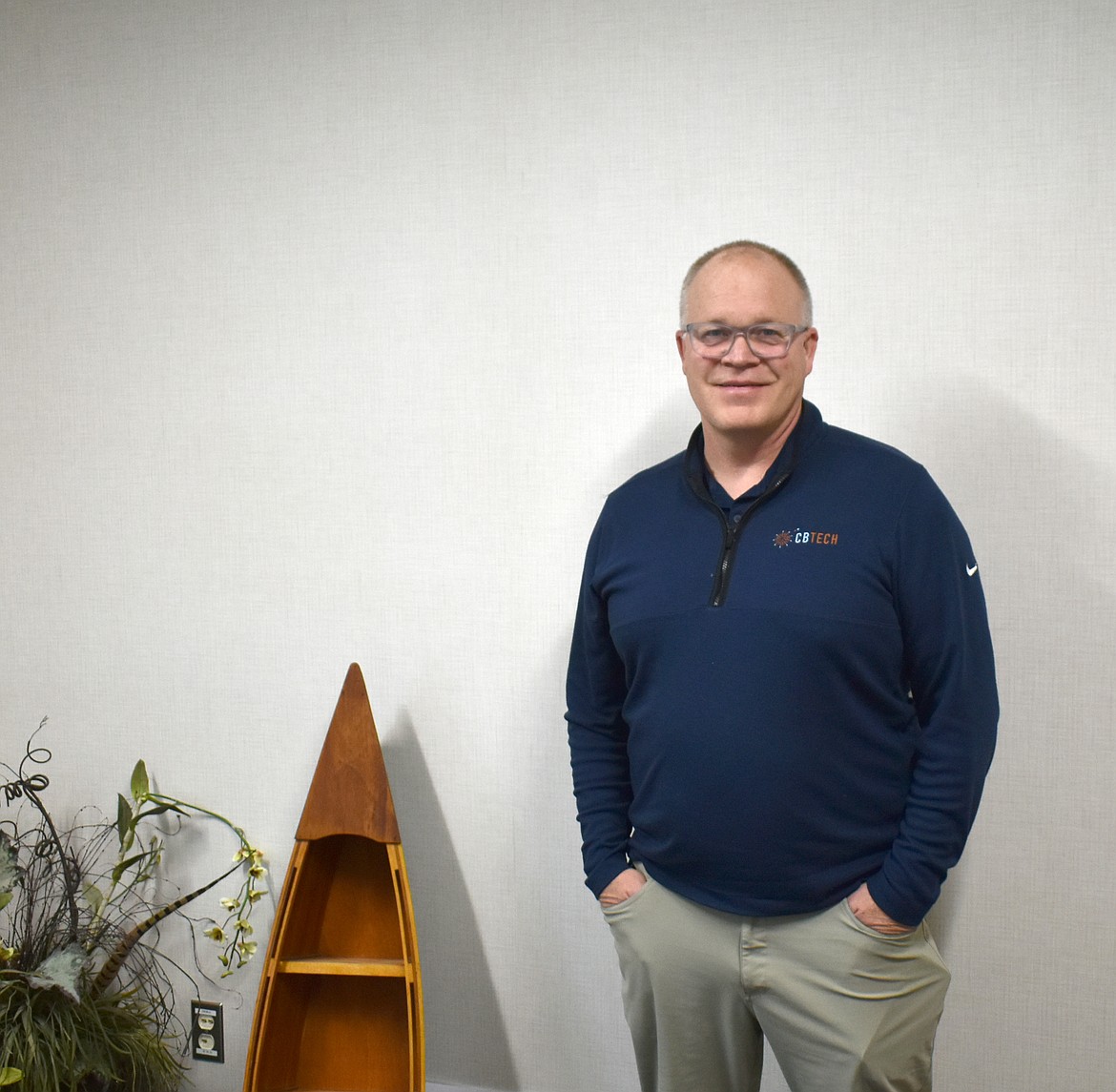
Dean of Students Chad Utter will take over next year as director of the Columbia Basin Technical Skills Center.
JOEL MARTIN/COLUMBIA BASIN HERALD
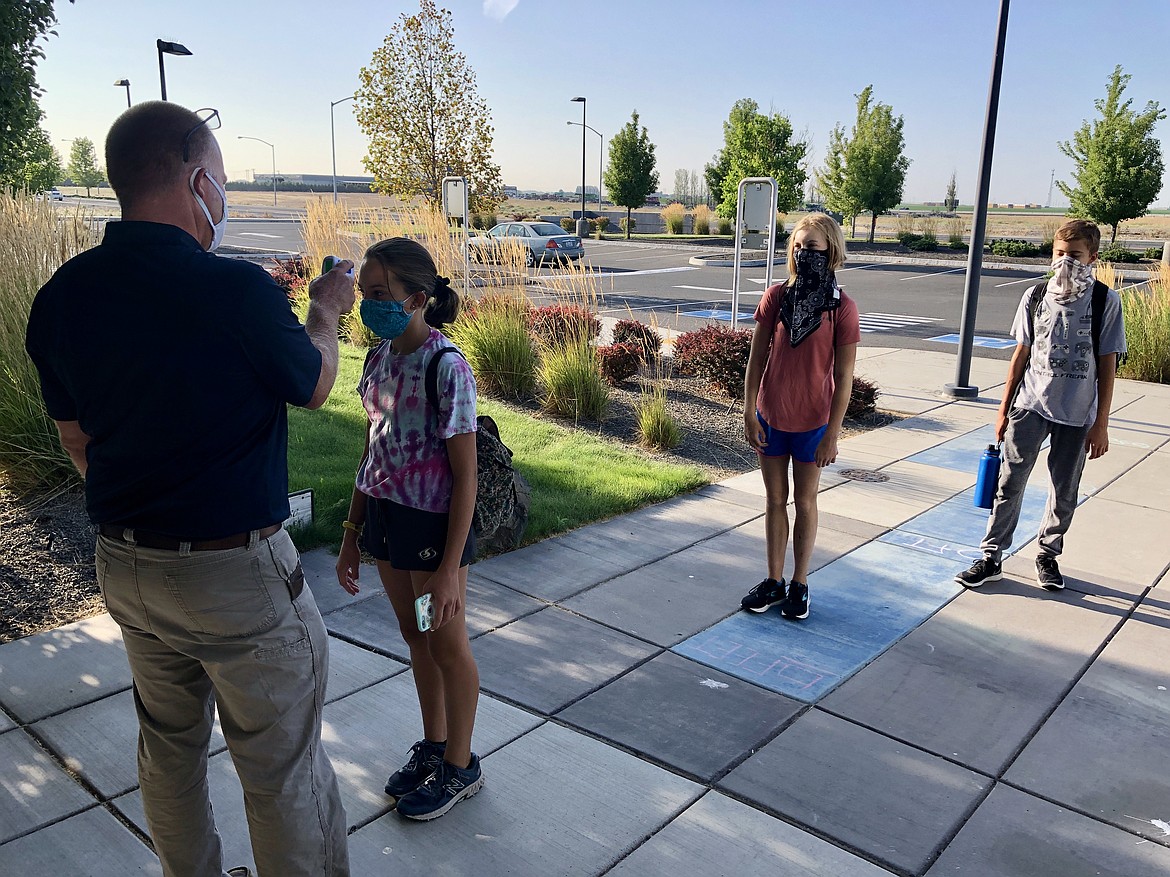
Chad Utter takes students’ temperatures as they prepare to start summer classes at the Columbia Basin Technical Skills Center in 2020. Utter has been with the skills center since its inception and is now poised to become the second director of the school.
Joel Martin has been with the Columbia Basin Herald for more than 25 years in a variety of roles and is the most-tenured employee in the building. Martin is a married father of eight and enjoys spending time with his children and his wife, Christina. He is passionate about the paper’s mission of informing the people of the Columbia Basin because he knows it is important to record the history of the communities the publication serves. | April 7, 2026 3:25 AM
MOSES LAKE — It’s official: Chad Utter will take over as director of the Columbia Basin Technical Skills Center.
“When we were funded for this skill center, he was the first one I went and told,” said outgoing Director Christine Armstrong. “Because I knew down the road, I wanted him to be the assistant.”
Utter has been with the Columbia Basin Technical Skills Center since its opening in 2014, first as an ag teacher, then transitioning into full-time administration as the dean of students.
Utter grew up on a farm and ranch in Eureka, Montana, a town of about 1,400 just a few miles from the Canadian border, he said. His dad was a school guidance counselor, and Utter decided early on that he wanted either to farm or to teach. He made up his mind when he was looking at degree programs at Montana State University in Bozeman.
“When I went to college, I found out there was a thing called agriculture education,” Utter said. “I was thinking either education or agriculture; I’d never even heard about agriculture education. We didn’t have it in our school.”
After graduation, he taught ag for a year in the small town of Manhattan, just outside of Bozeman, and then for four years in Shepherd, Montana. His first year at Shepherd he taught shop and driver’s ed, then the school decided it wanted an ag program. The school was located right next to a feedlot, he said.
“It was nasty in the fall, when it started getting cold and the flies started coming inside,” Utter said.
Utter’s wife worked for the Bureau of Reclamation, he said, and when she was offered a position at the Ephrata office, they packed up and moved to the Basin. Moses Lake was actually four hours nearer to Eureka than Shepherd was, he said, despite being two states away. That made it easier to go home to see his parents, he said.
“One of the big drivers for us coming here was we were getting closer to home,” Utter said. “We had two little kids at the time.”
Utter started out teaching ag at Moses Lake High School, he said. He went back to school for his administration credentials in 2009 but held off leaving the classroom for a few years.
“I knew that CBTECH was coming, and I would want to move (there) if the opportunity arose,” he said.
He split his time for several years between teaching and serving as dean of students, he said, and then took on the admin role full-time when enrollment grew and Armstrong needed the help.
As dean of students, Utter handles enrollment, recruiting, attendance and discipline – on the rare occasions when it’s needed.
“We have good kids at CBTECH,” he said. “There’s not a lot of discipline problems … The culture in this building is (such) that kids are excited to be here. They show up and they like what they’re doing.”
The majority of teachers at CBTECH came from the industries they teach, Utter said; he’s almost the last faculty member who actually went to school originally to teach.
“Dave Ruffin was a police officer for 30 years, and retired as chief of police,” he said. “Our fire instructors, one is a retired firemen, the other an active (firefighter) … Dave Oliver was a welder for 35 years in the industry before he ever got into teaching.”
The automotive, culinary and medical programs are all taught by professionals in those fields who earned their teaching credentials later as well.
“Legit people who have been successful, and they come here and they just love it because they’re giving back,” Utter said. “They’re teaching what they love to do. That shows in the kids, too. That passion, you can’t fake it. The kids … know that the people who are teaching them are passionate about what they’re doing.”
One of the challenges he’ll face in his tenure, he said, is the fact that so many of his teachers are either retired from their fields or getting ready to.
“There’s a lot of them at the tail end of their careers,” he said. “They had a career before they got into this, and how long do they want to do it? So the challenge is to make sure that you replace them with the same quality of people that you’ve got right now.”
That’s not a very daunting challenge, Utter added.
“There’s a lot of interest in working here,” he said. “The reputation is that this is a great place to work. School district pay is more than fair and the schedule is pretty darn good, and we have great kids. It’s a lot easier to show up and teach kids when you know they want to be there learning.”
There are some things Utter would like to add to CBTECH’s academics, he said, but the physical limitations of the building make expansion difficult. The cosmetology, auto technology and flight technology programs are already housed off-campus, he said, because there’s just not enough room at the main building. If the space problem could be solved, he said, he’d love to see electrical and diesel mechanics programs start up.
For the most part, however, Utter said he plans to stay the course that Armstrong set. That’s not difficult, he said, because he was alongside her every step of the way getting CBTECH started.
“There’s not going to be any sweeping changes,” he said. “The model that we’ve got works. I was part of building that model. The way we recruit, the way we register, the culture of the building. All I’ve got to do is not screw that up.”
“We challenge each other,” Armstrong said. “As they said, iron sharpens iron. It’s been wonderful. I couldn’t be more pleased to have him replacing me. I think it’s going to be fantastic.”
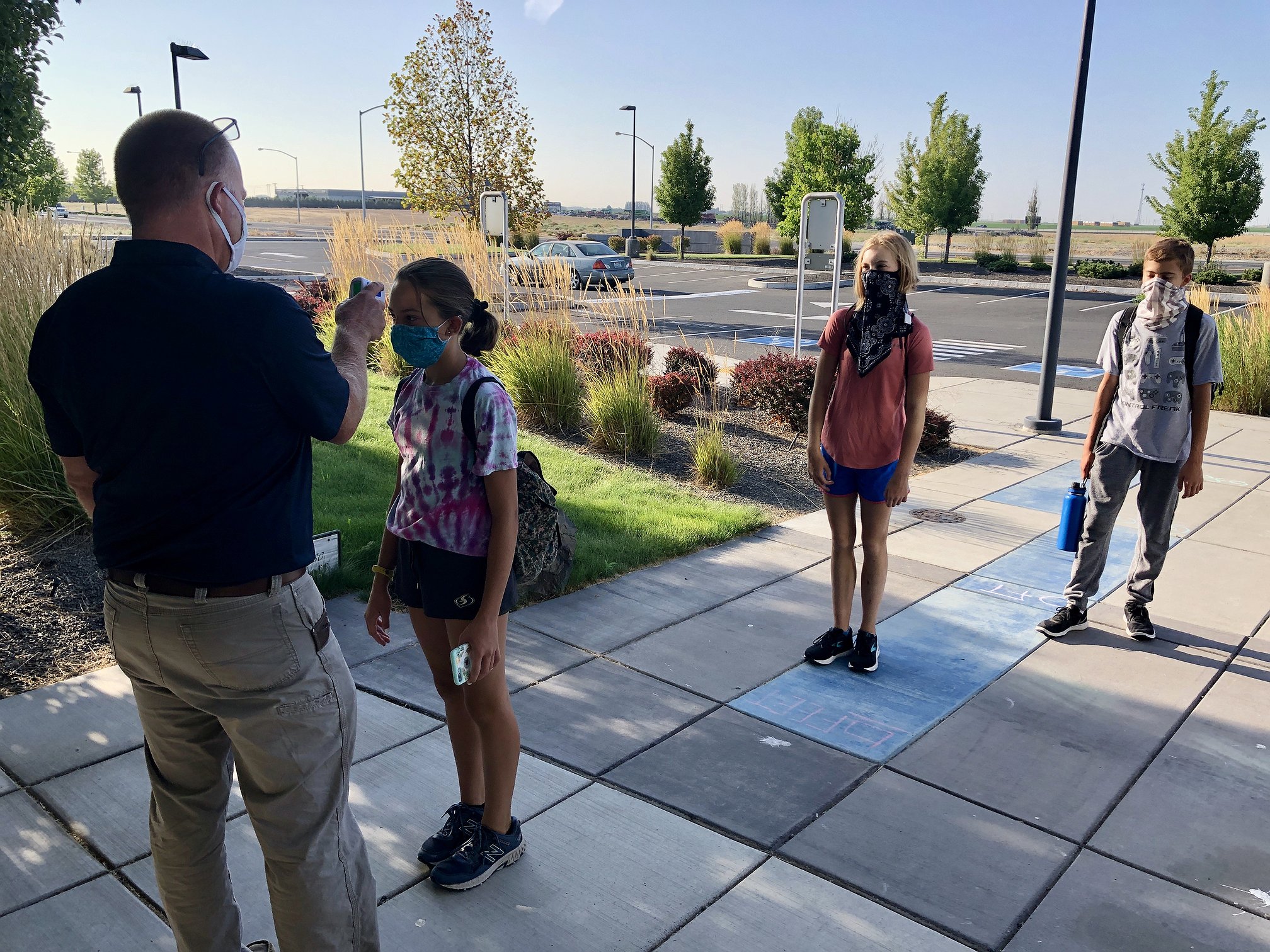 Chad Utter takes students’ temperatures as they prepare to start summer classes at the Columbia Basin Technical Skills Center in 2020. Utter has been with the skills center since its inception and is now poised to become the second director of the school.
ARTICLES BY JOEL MARTIN
Endless battle
Noxious Weed Control Board works to keep invasive plants under control
MOSES LAKE — Some of the nastiest plants in Grant County were the topic of a class led by Jay Johnson, a consultant with the Grant County Noxious Weed Control Board, Tuesday. The Noxious Weed Control Board, as its name would suggest, is tasked with keeping weeds under control in Grant County. That’s not a small job; the board’s website lists 129 species of noxious weeds that are found around Grant County. A noxious weed is defined as an invasive, non-native plant that threatens agricultural crops, local ecosystems or fish and wildlife habitat, according to the Noxious Weed Control Board. Washington state law requires that these weeds be identified and their spread kept to a minimum, if not completely eradicated. “We’re one of those agencies a lot of people don’t really understand,” Johnson said. “We’re a county office and … our funding is tax-based assessment. When you get your tax bill and you look down at all the expenses that you pay for, there we are.”

BASIN EVENTS: Oct. 16-24
COLUMBIA BASIN — Whether you feel like shopping, crafting, learning or seeing a show, there’s something happening for you this week in the Basin. Oct. 16 ‘My Family (Mi Familia)’ screening Spanning three generations, “My Family (Mi Familia)” is a heartfelt drama that follows the Sánchez family as they build their lives in East Los Angeles. Through love, hardship, triumph, and sacrifice, the film explores the immigrant experience, the strength of family bonds, and the traditions that connect one generation to the next. Lowrider show and taco truck before the screening. Sponsored by Columbia Basin Allied Arts, EDUBS C/S and the Moses Lake Creative District. $12 per person. Doors open at 6 p.m., film begins at 7 p.m. at the Moses Lake Civic Center Auditorium, 401 S. Balsam St. Tickets and info: www.cba-arts.org.
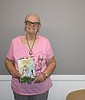
Moses Lake author encourages women to look beyond church culture norms
MOSES LAKE — A Moses Lake author’s book, “A Christian Woman Striving to Live Her Faith in a Man-Controlled World,” takes aim at the role to which many churches relegate the female half of their congregations. “It’s to encourage women in the faith,” Linda Curran said. “A lot of churches say, ‘Teach Sunday school, do this, do that, but don’t (evangelize.)’" In her book, Curran recounts a time when she moved to a new community and joined a church there. She was surprised to learn that, as a new female member, she had been automatically assigned church cleaning duties. When she questioned it, she wrote, she was met with condescension and her objections were brushed aside. In other churches, she said, women who were capable of teaching were relegated to “women’s ministry.”