
Federal court denies efforts to loosen Lake Koocanusa selenium standards
HAILEY SMALLEY | Hagadone News Network | UPDATED 6 months, 1 week AGO
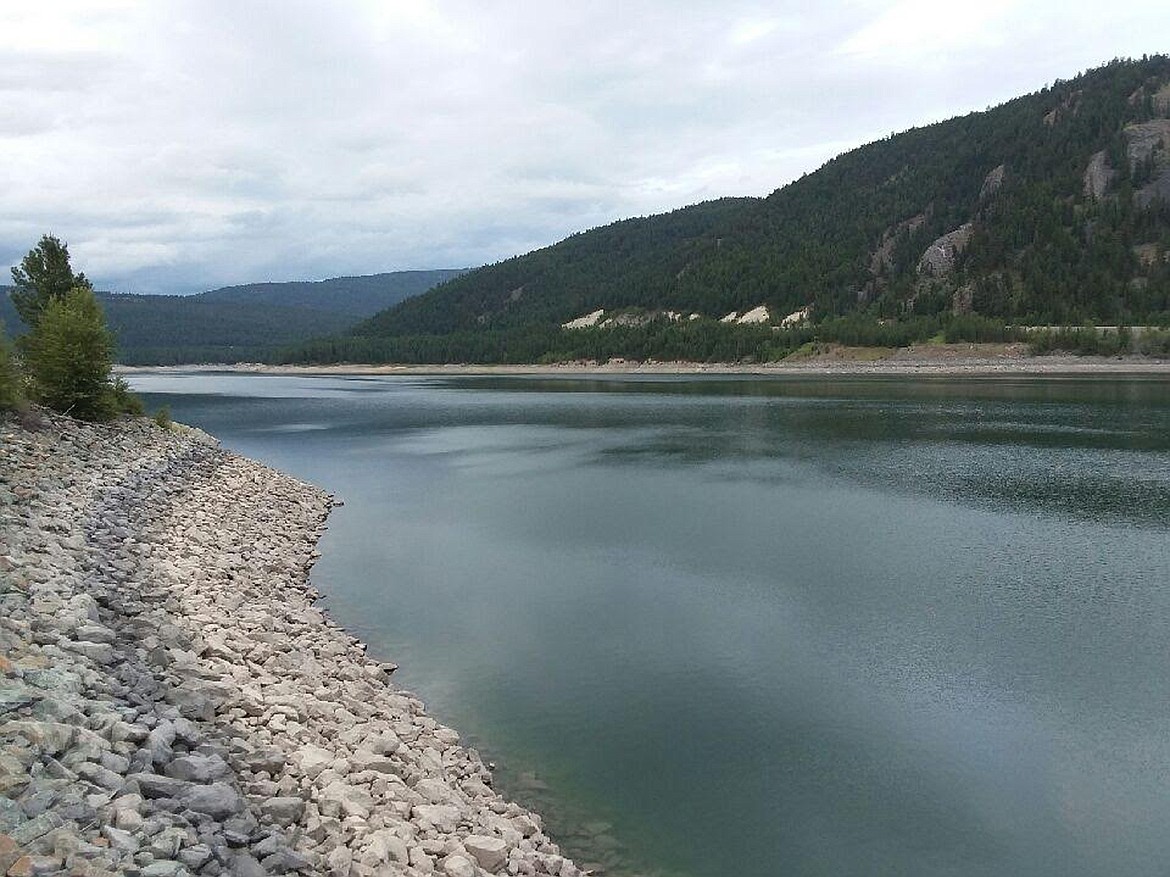
LAKE KOOCANUSA
Lincoln County’s bid to loosen the selenium standard on Lake Koocanusa was blocked in federal court in Missoula this week.
The April 9 ruling upholds the lake-specific standard of 0.8 micrograms of selenium per liter of water that the state Board of Environmental Review approved in 2020, despite objections from the Lincoln County Board of Commissioners, British Columbia-based coal interests and the board itself.
While stricter than the national standard of 1.5 micrograms of selenium per liter set by the Environmental Protection Agency, Judge Kathy Seeley wrote that the Lake Koocanusa standard was “fully supported by credible evidence.”
“We’re happy to see that the court made the right decision by protecting Montana’s waters from upstream Canadian coal mine pollution,” said Derf Johnson, deputy director for the Montana Environmental Information Center, a plaintiff in the case. “Montana’s water quality standards for selenium are based in science. Not only do they protect our water quality, but they also protect wildlife and the outdoor recreation economy that depends on clean water.”
While selenium is considered an essential nutrient, large amounts of the metalloid can lead to neurological and reproductive defects in fish. In humans, excess levels of selenium can cause gastrointestinal distress, organ failure and, in rare cases, death.
Studies have traced elevated levels of selenium in Lake Koocanusa to metallurgical coal mines in British Columbia operated by Elk Valley Resources. Rainwater and runoff flush selenium from the mines’ waste rock into nearby streams, and the metalloid is then carried downstream, first to the Elk River and then to Lake Koocanusa.
The Board of Environmental Review adopted the 0.8 microgram per liter standard for Lake Koocanusa in 2020 after samples taken from the eggs and ovaries of several fish showed potentially dangerous levels of selenium. At the time, testing showed an average concentration of about 1 microgram of selenium per liter.
Both the Lincoln County Board of Commissioners and Elk Valley Resources, under its former name Teck Coal Limited, filed petitions to invalidate the site-specific standard in 2021, arguing it was more stringent than federal guidelines.
The Board of Environmental Review appeared inclined to grant the request and even issued an order in April 2022 directing the state to start over in the rulemaking process for the selenium standard. But the groups quickly encountered another hurdle.
In the 16 months since the Lake Koocanusa selenium standard was set, state lawmakers had passed legislation transferring most of the Board of Environmental Review’s rulemaking authority to the Montana Department of Environmental Quality. The state agency promptly filed suit to overturn the April 2022 order.
That lawsuit was later consolidated with a similar suit brought by environmental nonprofits Montana Environmental Information Center, Clark Fork Coalition, Idaho Conservation League and Idaho Rivers United. The Lincoln County Board of Commissioners and Elk Valley Resources were named as defendants along with the Board of Environmental Review.
“There is no genuine issue of material fact, and the legal issue is clear,” wrote Seeley in her summary judgement on the case. “The Legislature’s statutory change in rulemaking authority effective July 1, 2021, negated any rulemaking action by the Board of Environmental Review after that date. The April 2022 Order is a rulemaking action. The Board of Environmental Review did not have the authority to engage in rulemaking.”
The finding comes as Elk Valley Resources pursues expansions to one of its five mining operations in British Columbia. If approved, the project would expand the mine's footprint by 3,000 acres and excavate about 3 billion cubic meters of waste rock.
Conservationists, tribal nations and some local residents have voiced opposition to the project, arguing it will exacerbate ongoing water quality issues throughout the Kootenai River Basin.
The Lincoln County Board of Commissioners, meanwhile, submitted a second petition to the Montana Department of Environmental Quality in 2025, once again requesting the that the state raise the selenium standard on Lake Koocanusa to 1.5 micrograms per liter.
“[The selenium standard] puts a handcuff on us,” Lincoln County Commissioner Noel Duram told attendees at an Aug. 13, 2025, meeting reviewing the petition. “It doesn’t put a handcuff on anybody else.”
The state environmental agency found the county failed to “provide sufficient evidence” for the request.
ARTICLES BY HAILEY SMALLEY

Trump stumps for Flint in Kalispell as Election Day nears
President Donald Trump, wearing a dark suit, red tie and red USA cap, ambled into the Majestic Valley Arena to the raucous roar of a crowd.

Flathead National Forest greenlights Swan Valley timber project
A 2,307-acre timber project is now under way in the Swan Valley.
Flathead National Forest greenlights Swan Valley timber project
A 2,307-acre timber project is now under way in the Swan Valley.