
Nationally recognized water rescue classes taught in Alberton
MONTE TURNER | Hagadone News Network | UPDATED 5 months, 3 weeks AGO
With decades of combined experience, the Whitewater Rescue Institute, located outside Alberton along the Clark Fork River, has built a reputation for delivering some of the highest-quality technical rescue training available.
Students and organizations travel from around the world not only to earn certifications, but to gain real-world, life-saving skills they are likely to rely on at some point in their lives.
Whitewater Rescue Institute's instructors bring a wide range of professional experience to the program. Their backgrounds include work as river guides, U.S. Coast Guard licensed boat captains, military members, search and rescue personnel, firefighters, paramedics, National Outdoor Leadership School instructors, climbing guides, emergency medical responders and ski patrollers.
In addition to technical rescue, the team also has extensive, firsthand experience in environmental spill response, ensuring training remains as practical and realistic as possible.
Sam Johnston, a manager of Montana River Guides and a WRI instructor, recently helped lead a class of about 30 students. While Montana River Guides focuses primarily on commercial guiding and rowing instruction by running daily trips through the Alberton Gorge and on the Blackfoot River, WRI has grown into a broader training operation.
“And the WRI, also started by my dad, Mike Johnston, that has evolved into something else. We are mainly teaching swift water rescue classes, rope rescue classes, ice rescue classes, and then we do industrial spill response. So, we work with the railroad when product is spilled into rivers, we are hired to respond and help with cleanup or run safety,” he explained.
Participants in WRI courses come from a wide variety of professional and recreational backgrounds. Some organizations, such as Copper Mountain Ore in Alaska, sends new guides each year for training.
“We have Frenchtown Fire, Missoula Rural Fire. A bunch of fire and Search and Rescue teams come to us from all around the state and from Idaho and Washington for their certification. And then fishing guides who have boats on the Salmon (River in Idaho), on the Clark Fork here, the Blackfoot and the commercial runs in our area. A lot of guides come to us for their swift water rescue training and sometimes our guide school as well,” he explained.
The institute itself has deep roots in the region. When asked about its origins, Johnston said, “In 1993 he (his dad, Mike Johnston) started the rafting company and the WRI in the late 90’s, I think 1997. He taught classes alone in Lolo. We purchased this property in the early 2000’s and it’s been going for over 30 years.”
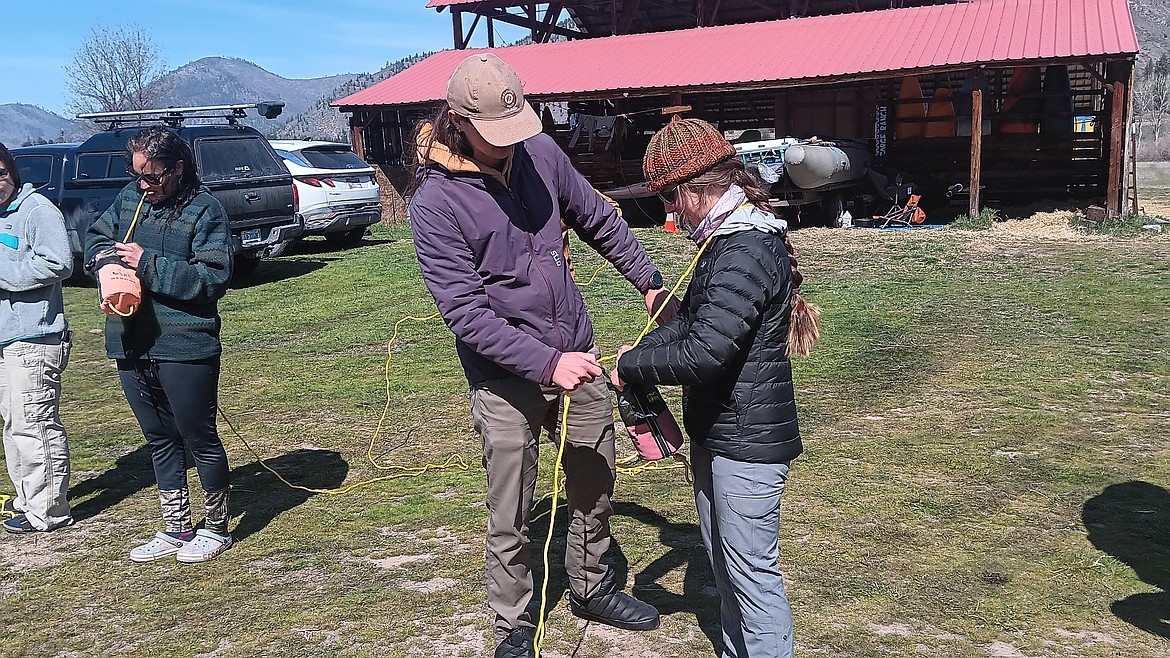
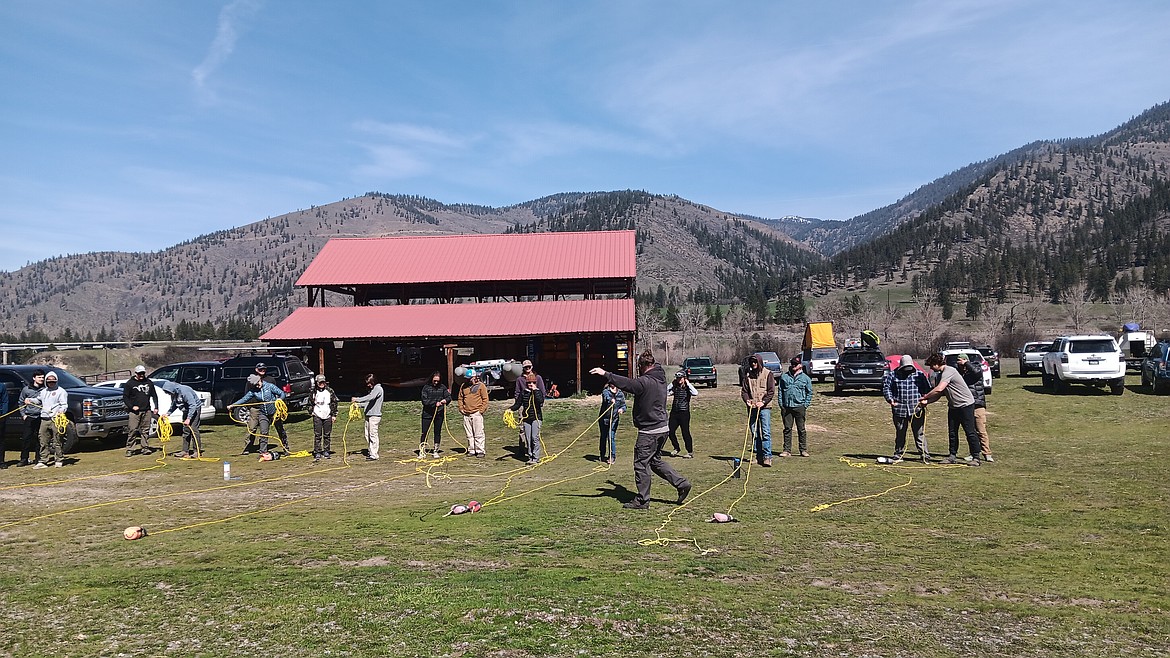
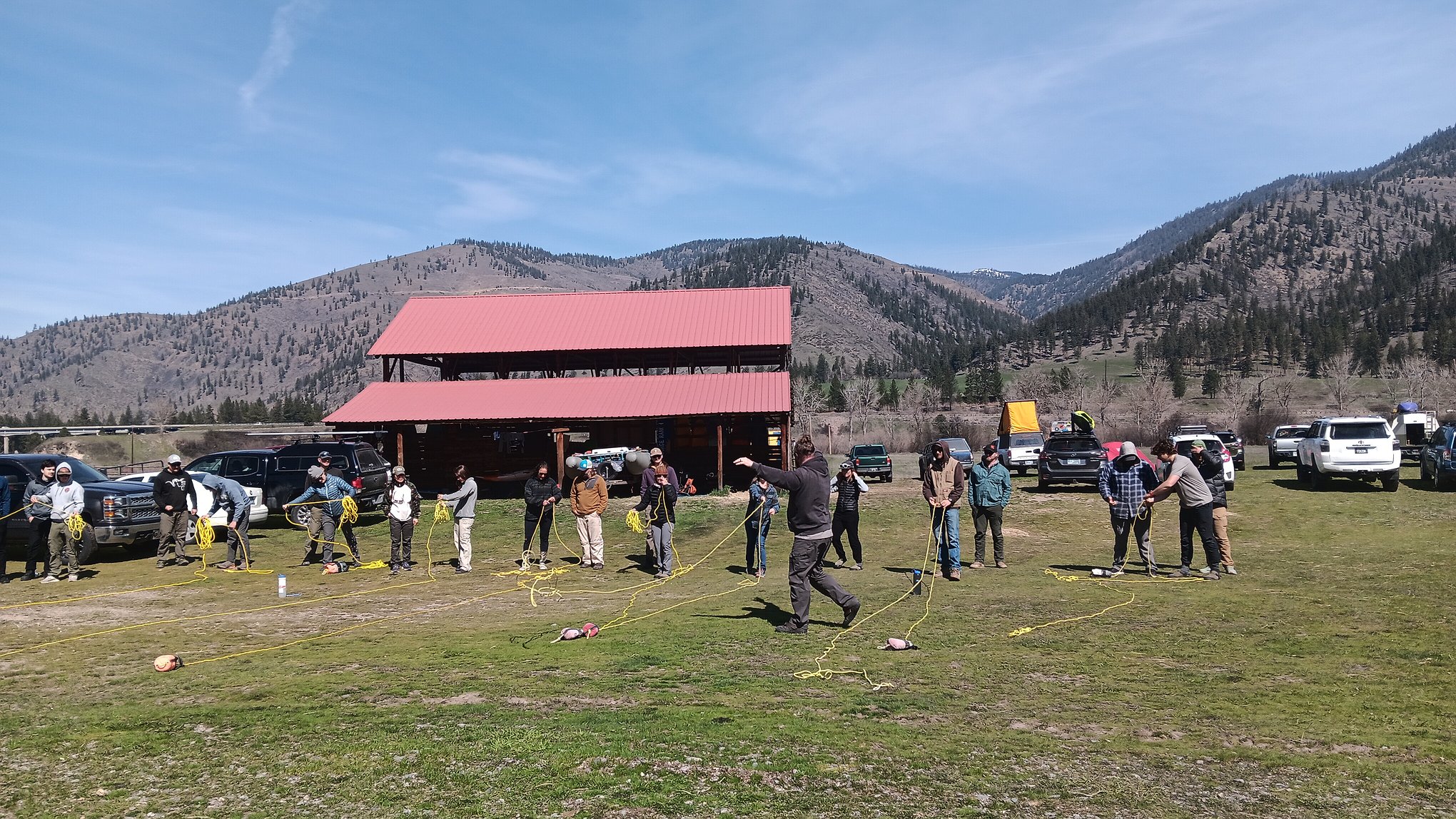
Today, WRI operates from its training headquarters at 138 Big Bend Lane in Alberton, offering swift water rescue courses nearly every weekend, along with additional weekday sessions held in other locations. The recent three-day course began with classroom instruction and dry-land practice, including rope-throwing techniques.
Soon after, students suited up in wetsuits or drysuits and moved into the Clark Fork River to apply those skills in realistic rescue scenarios. Throw bags, typically containing about 55 feet of rope, are used to reach victims in moving water. While rope types vary slightly in stretch, instructors emphasize that in an emergency, rescuers must rely on whatever equipment is available and focus on technique, such as “leading” a floating victim rather than throwing behind them. Tossing enough rope is extremely important as you usually only get one chance before scrambling downriver if you missed the initial opportunity.
Cory Davis, a native of Polson and a longtime instructor with WRI, guided students through these foundational skills. A former river guide of 16 years, Davis has spent the past decade teaching full-time.
“We start with training in the classroom, then we take that knowledge out into the field and we build on each component of the acronym HERETHROGO. Help, or Hello. Can you swim to me? Then, Reach. Can I Reach you? Can you Reach me? And then Throw or Row before we actually go into the water to get a victim. This spells out all of those words: Help, Reach, Throw, Row before we Go, which is referred to through the entire class.”
The acronym represents a structured approach designed to minimize risk to rescuers.
“We’re the number one priority, then our team is number two and the victim is last,” Davis explained. “Once this is understood and basic techniques have been taught in the field, we take it to the river and start swimming and practicing the throw bag method of getting a rope to them up though the HERETHROGO hierarchy whether it’s a tethered or non-tethered swim where they go out and bring the victim to shore.”
As the course progresses, students face increasingly complex, scenario-based exercises that simulate real rescue situations. For Mike Johnston, the program’s founder, the people who attend are just as important as the curriculum itself.
“We just the love the type of people who take these classes,” he said. “And we learn a lot from them because many have a fair amount of experience. The portion that is really meaningful is that they are fun enough and enthusiastic enough to want jump into a whitewater river and swim to learn how to rescue themselves or somebody else, but they are also smart and careful enough to want to get training so they’re more prepared if something does happen. And they are better able to prevent accidents from happening.”
Students echoed that sentiment during a lunch break between sessions. Allison Hucomb, who works for the Bureau of Land Management in Missoula, said her motivation for attending was both personal and practical. She has associates that have taken river rescue classes before and feels it’s now her responsibility to understand techniques.
“We are out here to learn and support them if things go south on the river. Personally, I’ve been extremely lucky and have even put myself in risky situations and I’ve always come out OK. But it’s always important to learn more about what can go wrong.”
Her classmate, Cam McMahon of HGA Design Build in Bozeman, emphasized the value of preparation.
“We come from a group of a lot of experienced boaters and when you do things cautiously, you don’t see many accidents and you don’t want the first time you do see a rescue situation to be on the water, if possible. Having practiced with these experts here, is a great way to make sure you feel comfortable when it happens in the real world in other conditions.”
For others, certification and career advancement were key factors. Thuy Tran, originally from Louisiana and now working for the Park Service in Choteau, is preparing for a new role in Glacier National Park.
“I’ve been a river ranger for the last three years and we’ve always had our own in-house training, but I’ve never gotten a real certification. I’m going up to Glacier where I’ll be a preventive search and rescue ranger doing backcountry and river patrols. This wasn’t a required certification but I figured I should probably get one,” she said with a laugh.
Dylan Favorite of Sandpoint, Idaho, described himself as a “lifestyle athlete” and attended the course for swift water recertification, a requirement for guides in the Gem State. Others were there simply to build confidence.
Shannon Vaughan, who works for the Forest Service, had never taken a formal water safety course before.
“I really enjoy recreating on the rivers around Missoula. We have a 14-foot raft and my husband likes to fish and I like to row,” she said. “I am hoping to garner some confidence to start rowing the (Alberton) Gorge.”
For more information about training opportunities, visit www.whitewaterrescue.com.
ARTICLES BY MONTE TURNER
West End Fire to turn up the heat with chili cookoff fundraiser
What better place to enjoy a bowl of full-blown, mega-scorching-hot chili than at a fire station stocked with wildfire equipment, fire extinguishers and a building full of professionally trained firefighters, EMTs and Quick Response personnel?
Senior center cooks up hot dishes with a side social fun
There’s something about a good home-cooked meal that can bring people through the door, and at the Superior Senior Citizens Center, head cook Jessica Williams seems to have figured out the recipe.
Montana-Idaho border reconfigured after survey retraces original state lines
The Bureau of Land Management has completed its official resurvey of the Montana-Idaho boundary near Lookout Pass, going back to the original survey monuments and retracing the line that was established more than 120 years ago.