
Unique partnership in wildlife urban interface
JULIE ENGLER | Hagadone News Network | UPDATED 6 months, 1 week AGO
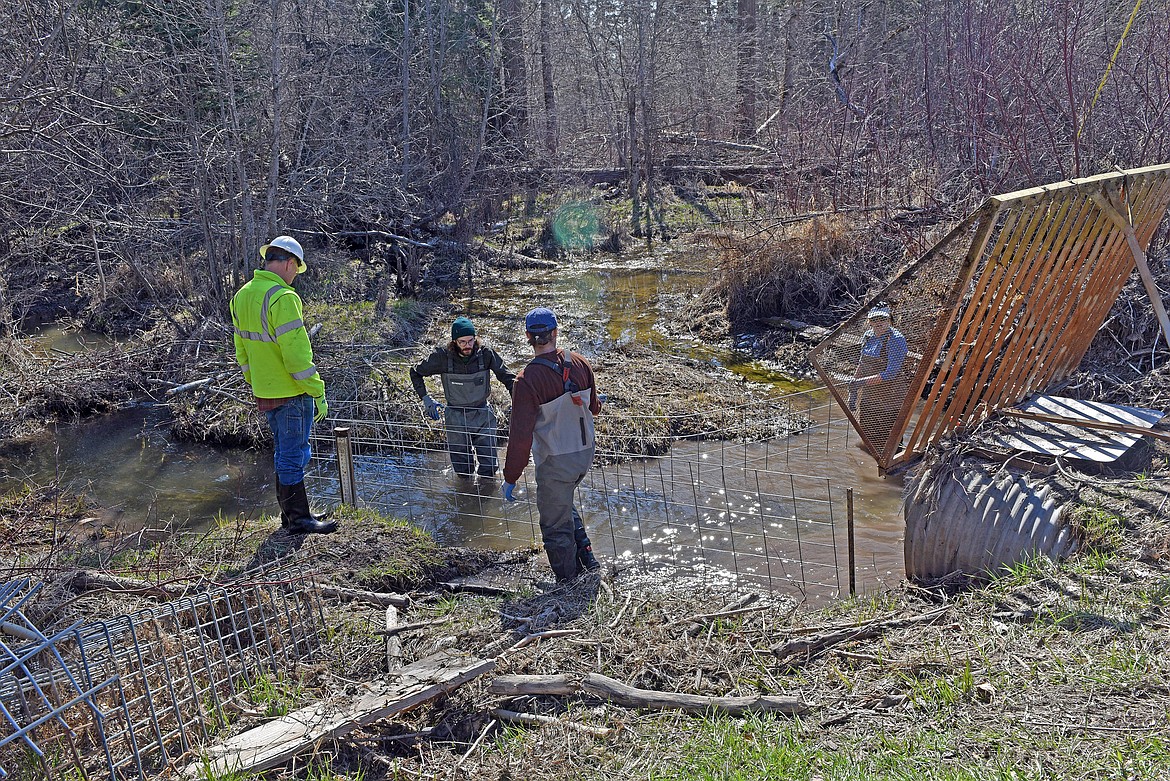
The team dry fit the fence during its construction last week on Viking Creek. (Julie Engler/Whitefish Pilot)
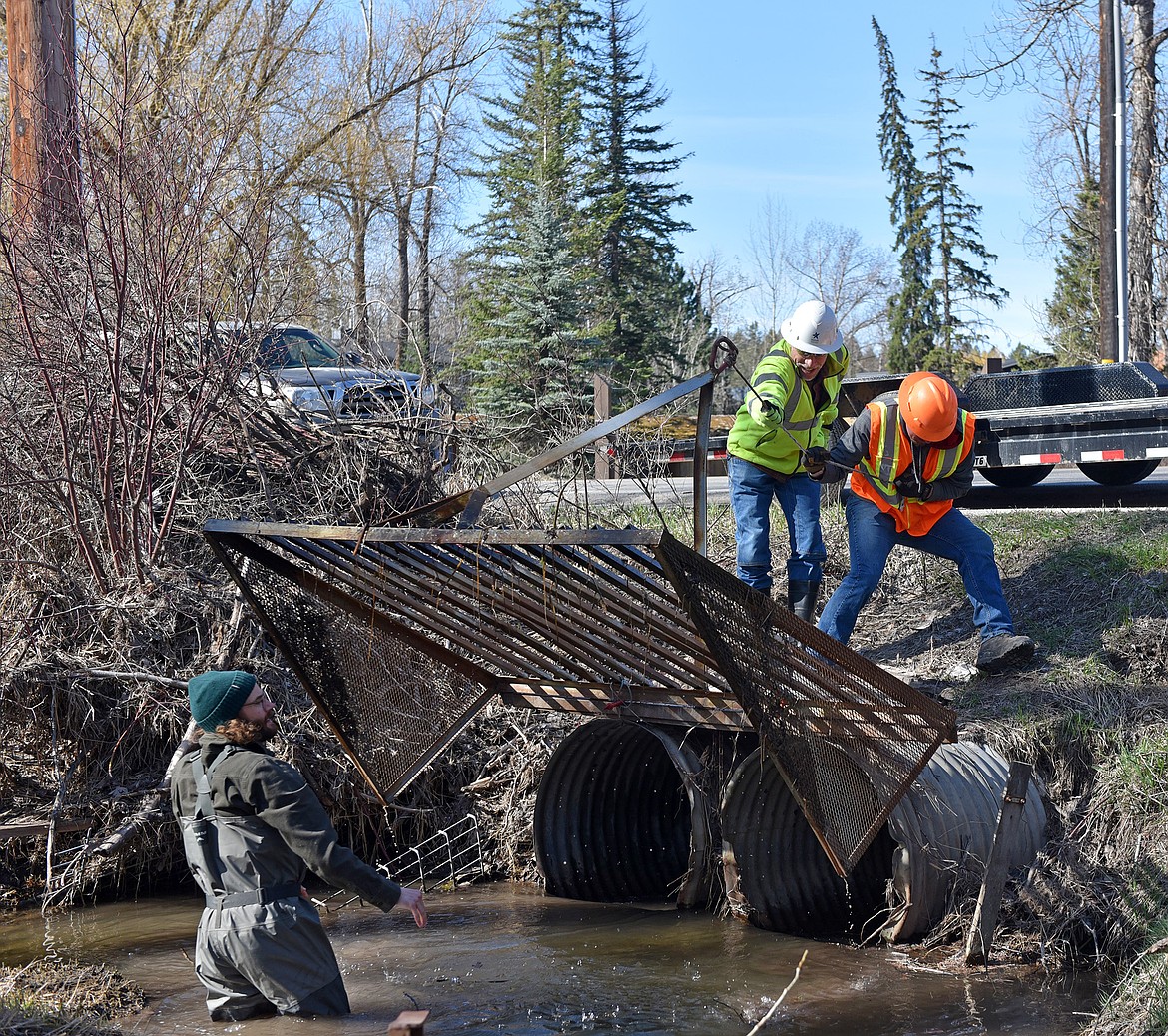
The heavy metal grate over the culvert was lifted so the new exclusionary fence could be put in place. (Julie Engler/Whitefish Pilot)
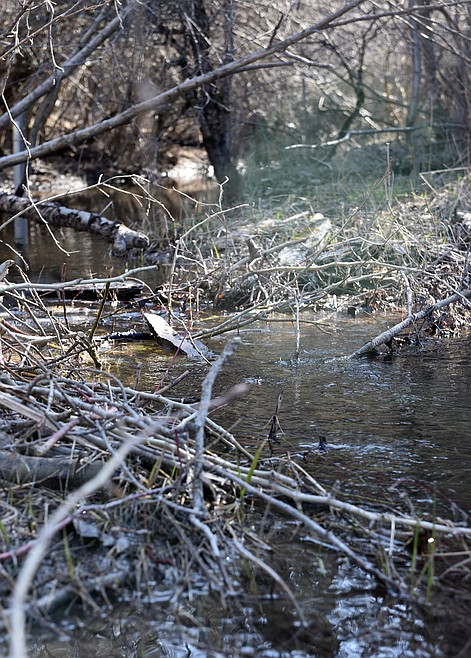
Viking Creek runs clear and cold along Wisconsin Avenue. (Julie Engler/Whitefish Pilot)
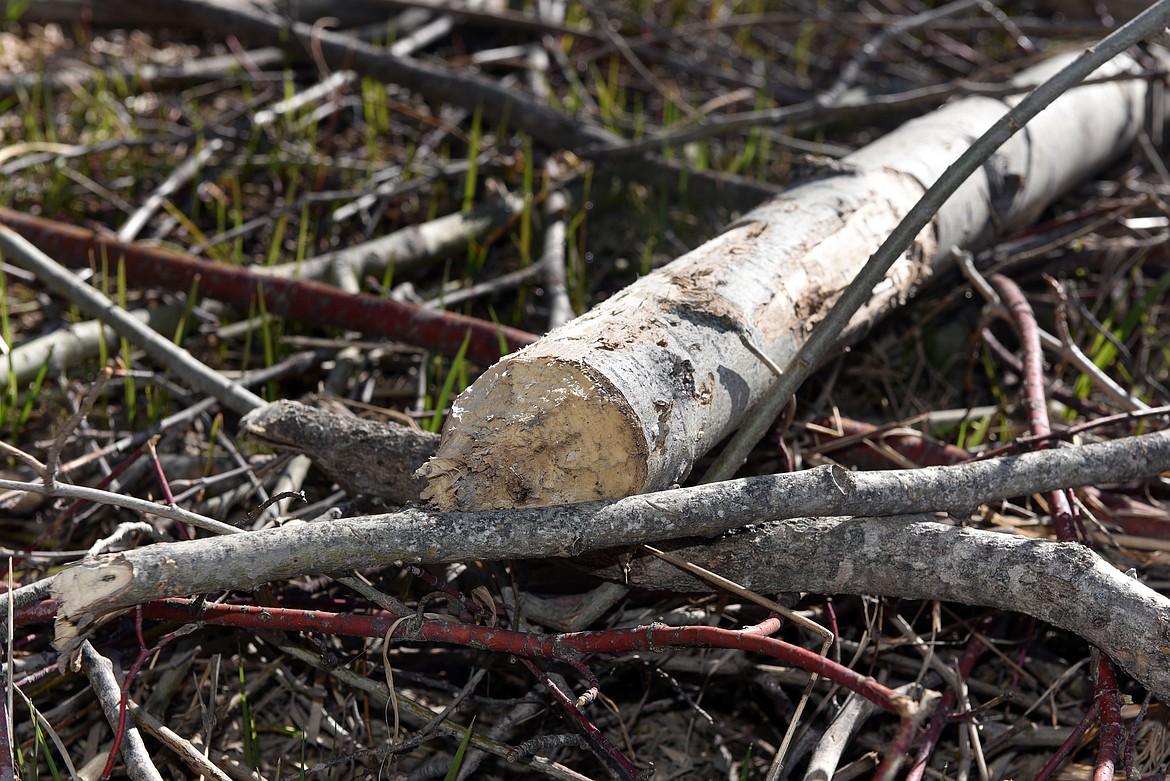
This gnawed trunk is evidence of beaver activity in Viking Creek. (Julie Engler/Whitefish Pilot)
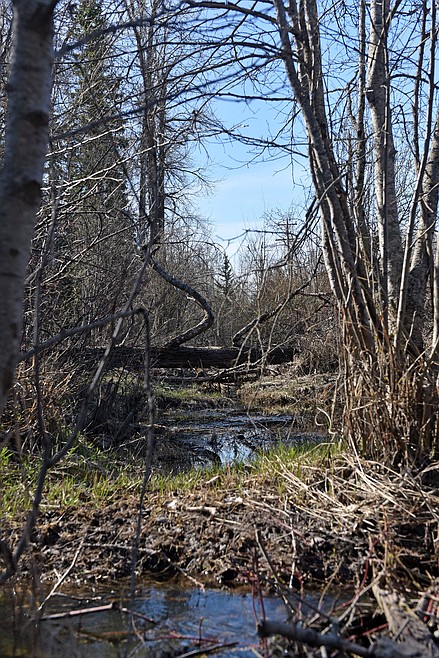
Viking creek on April 10, 2026. (Julie Engler/Whitefish Pilot)
Julie Engler covers Whitefish City Hall and writes community features for the Whitefish Pilot. She earned master's degrees in fine arts and education from the University of Montana. She can be reached at [email protected] or 406-882-3505. | April 15, 2026 1:05 AM
Three agencies, two nonprofits and one government department, joined forces to address an ongoing flooding problem near a busy road and pedestrian path in Whitefish last week.
An eight-man team from the Montana Department of Transportation was no match for a pair of beavers who continuously dammed up the double culvert on Viking Creek beneath Wisconsin Avenue last fall.
Colten Scholler, the Whitefish section supervisor for the Department of Transportation, said his crew cleaned debris from the grate and culvert near The Lodge at Whitefish Lake every day, including weekends, for a month.
“We'd come here in the mid-morning, and this whole thing would be underwater overnight,” he said, pointing out a long stretch of the bike path. “They are crazy fast workers.”
A solution to the constantly clogged culvert was put in place Friday when Elissa Chott and Tanner Clegg from National Wildlife Federation’s Beaver Conflict Resolution Team worked with representatives from the Department of Transportation and the Whitefish Lake Institute to install an exclusion fence.
“An exclusion fence is a device, called a flow device, that sits in the stream that discourages beavers from damming at the inlet of culverts,” Clegg said, adding that beavers find the flowing water at the culvert an attractive place to build dams.
"With a relatively small amount of energy, beavers can put a few sticks here and cause a big flood which is great for the beavers, but for folks at MDOT that have to maintain road infrastructure and keep these culverts clear, it's a pretty big headache,” Clegg said.
Since repeatedly unplugging culverts is costly, the National Wildlife Federation works with private landowners as well as public entities like county and state road departments to install durable conflict resolution systems. The agency works to reduce beaver conflicts via nonlethal methods whenever possible.
Clegg said the federation is also interested in encouraging beavers to be in areas where they can do their work in an ecologically beneficial way.
“Beavers are very important ecological engineers,” he said. “Through damming streams like this, they create a host of benefits for a lot of other wildlife.”
Eric Parker, Whitefish Lake Institute program coordinator, said beavers are also important for drought resilience, as they slow runoff and improve groundwater storage.
The team, including WLI limnologist, Cassie Roberts, and MDOT district environmental engineer, Michael Ivanoff, built the exclusion fence on site with cattle panels held together with hog rings. The larger grid cattle panels allow fish to pass through. The fence is designed with a floor to prevent the beavers from tunneling beneath the structure.
Clegg said the fence requires minimal maintenance and should last up to 10 years.
Reporter Julie Engler can be reached at 406-862-3505 or [email protected]. If you value local journalism, pledge your support at whitefishpilot.com/support.
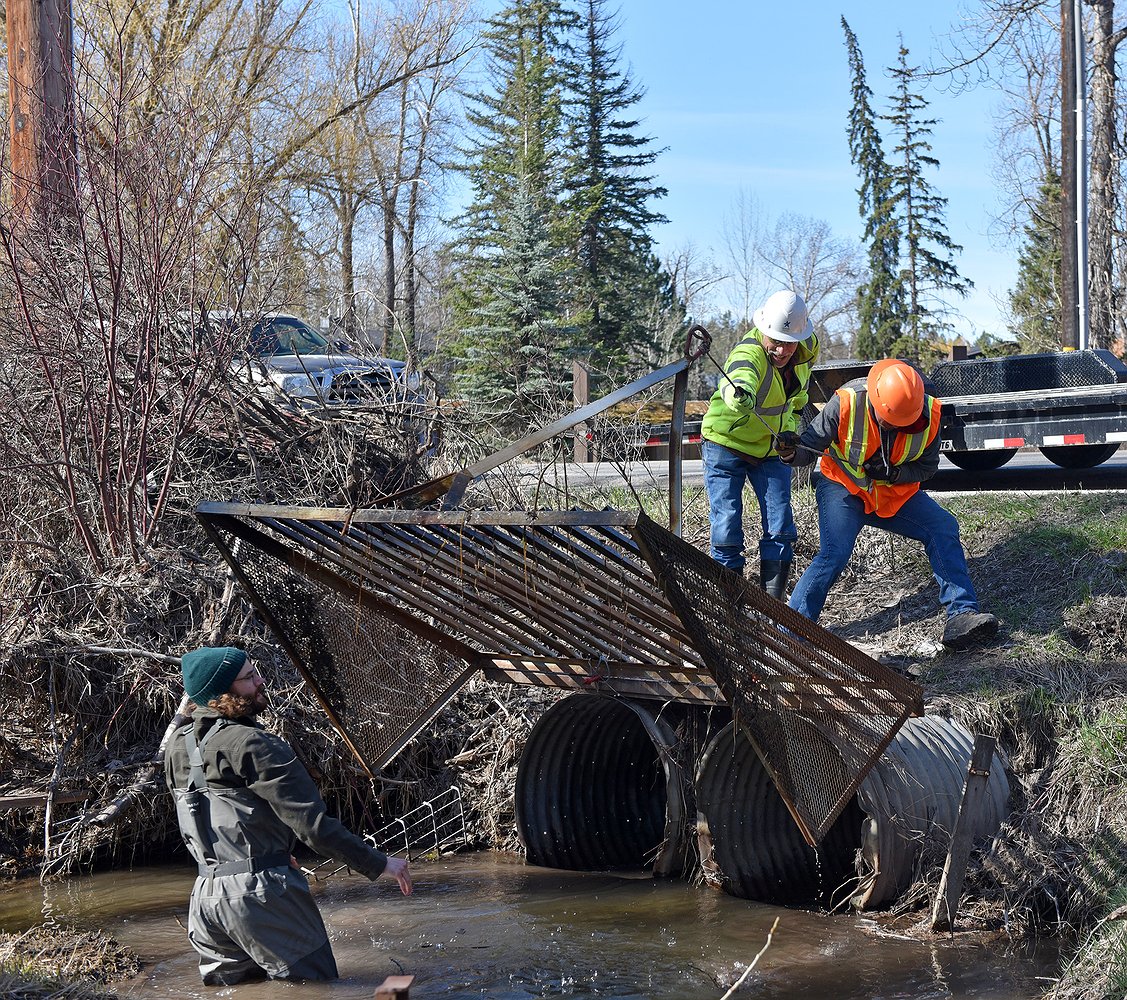 The heavy metal grate over the culvert was lifted so the new exclusion fence could be put in place. (Julie Engler/Whitefish Pilot)
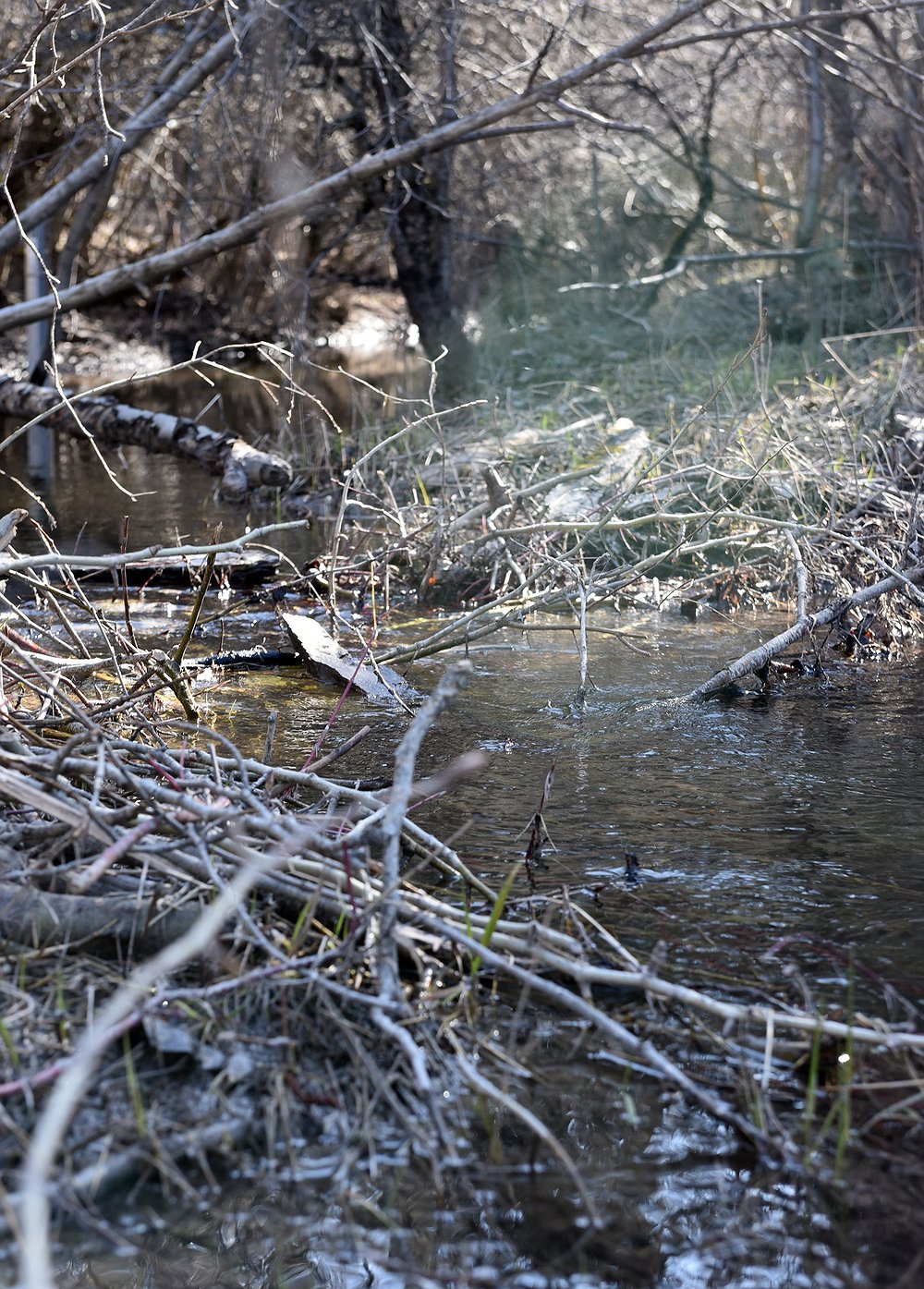 Viking Creek runs clear and cold along Wisconsin Avenue. (Julie Engler/Whitefish Pilot)
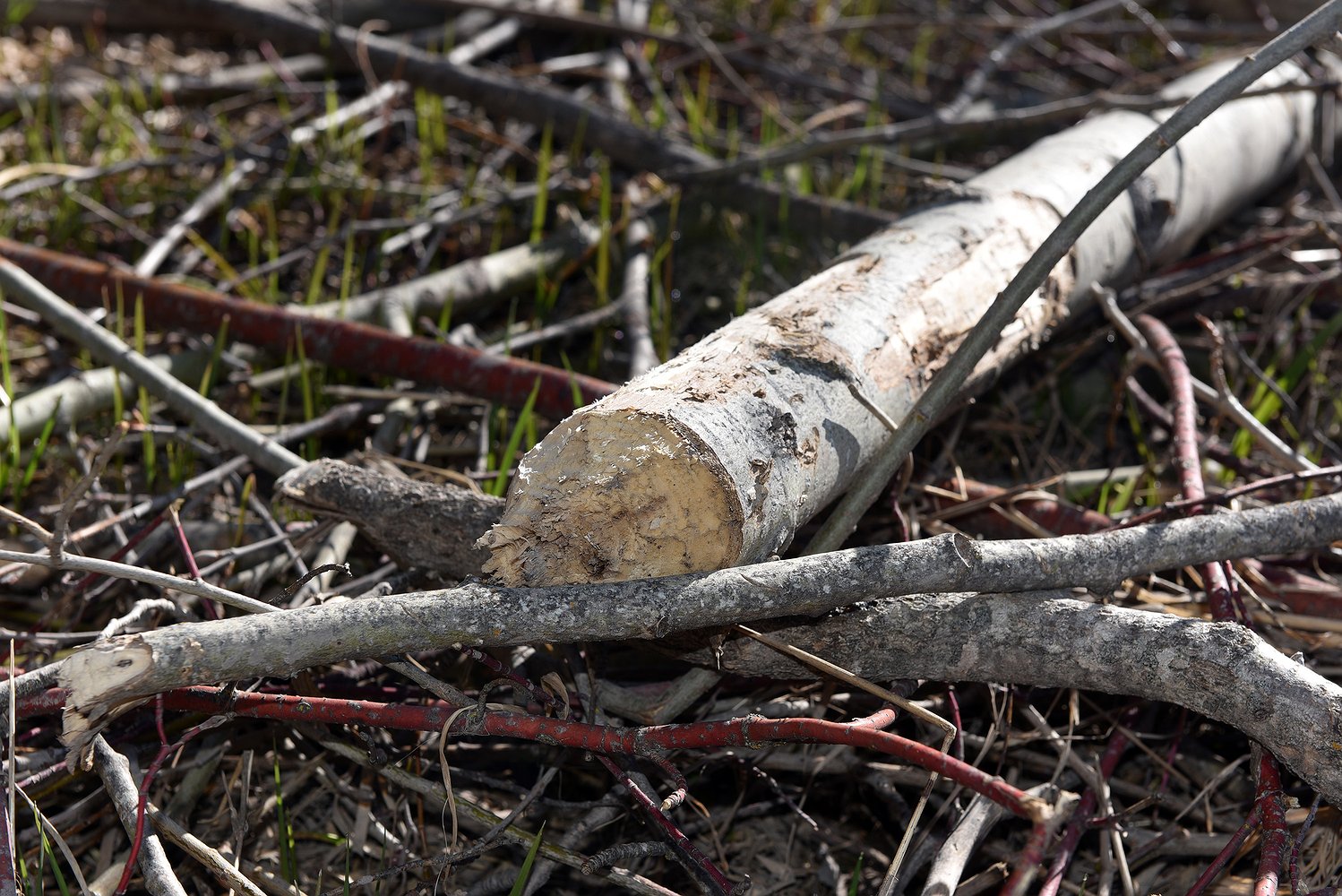 This gnawed trunk is evidence of beaver activity in Viking Creek. (Julie Engler/Whitefish Pilot)
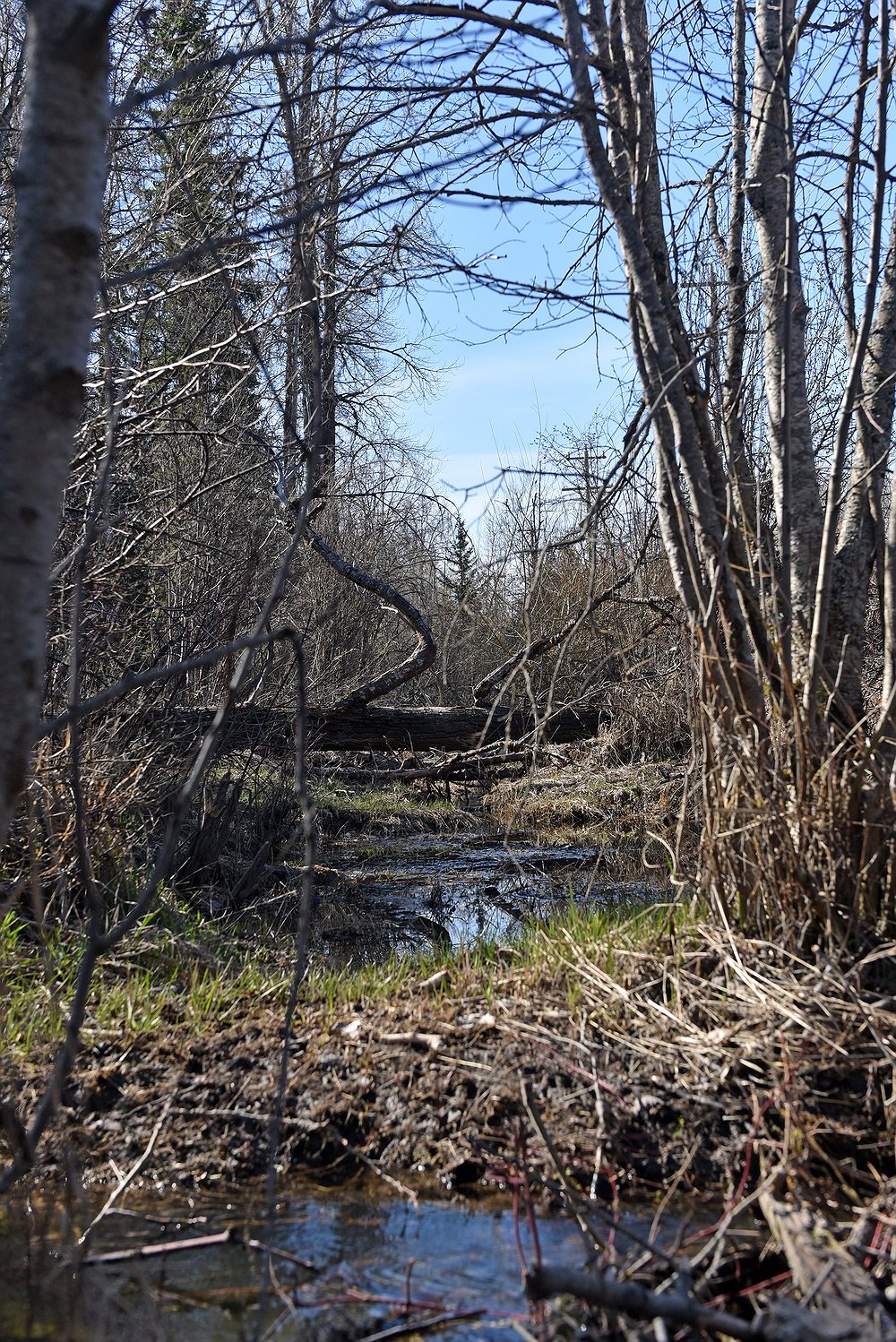 Viking creek on April 10, 2026. (Julie Engler/Whitefish Pilot)
ARTICLES BY JULIE ENGLER
Photo: Water tank rises in Whitefish
The tank for the Whitefish south water tower was hoisted on Thursday, Oct. 8.

Whitefish soccer teams advance to state semifinal round
Whitefish soccer continued its winning ways in the quarterfinals of the Class A playoffs at home Saturday.

O’Shaughnessy Center gets upgrades and design refresh
Recent upgrades to the O'Shaughnessy Center have increased the building’s energy efficiency and prepared the nearly 30-year-old facility to serve the needs of the growing community into the future.