
Osprey monitoring project takes flight in Northwest Montana
HAILEY SMALLEY | Hagadone News Network | UPDATED 6 months, 1 week AGO
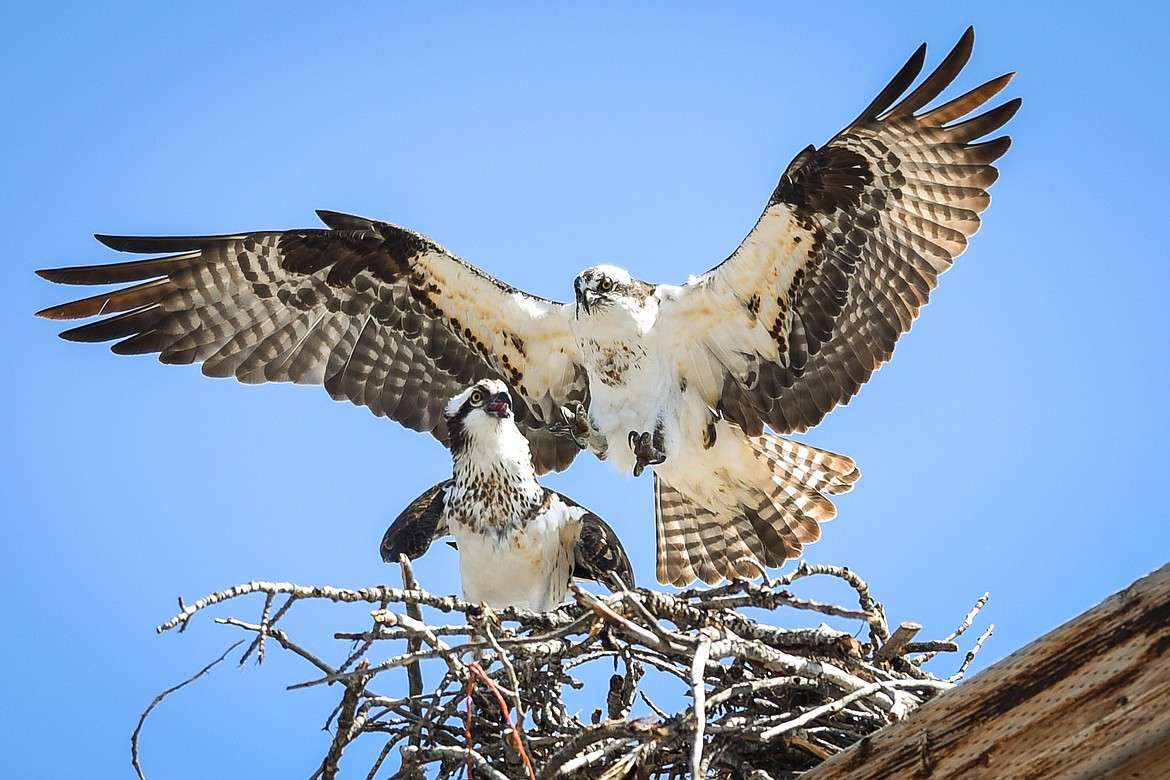
A pair of ospreys nest above the Flathead River on Wednesday, April 21. (Casey Kreider/Daily Inter Lake)
Casey Kreider
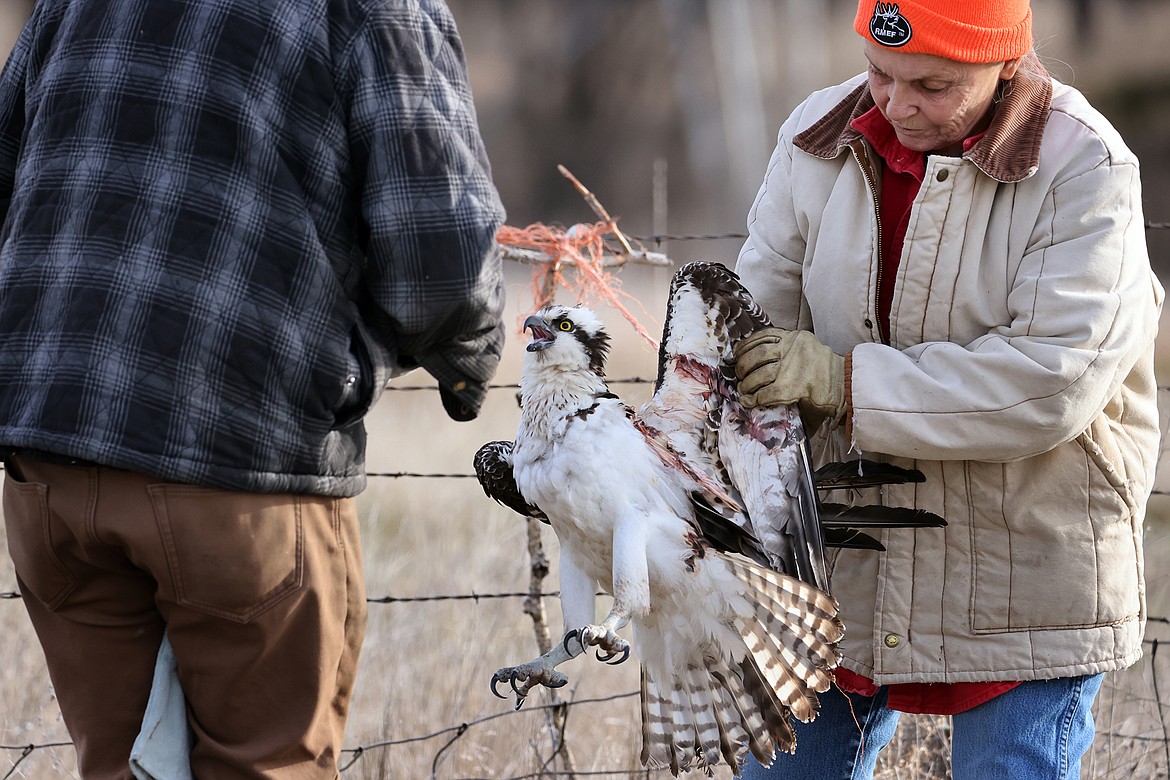
Beth and Bob Watne work to untangle and osprey that is trapped in bailing twine on a fence in Kalispell on Monday. The bird was taken to the Wild Wings Recovery Center for treatment. (Jeremy Weber/Daily Inter Lake)
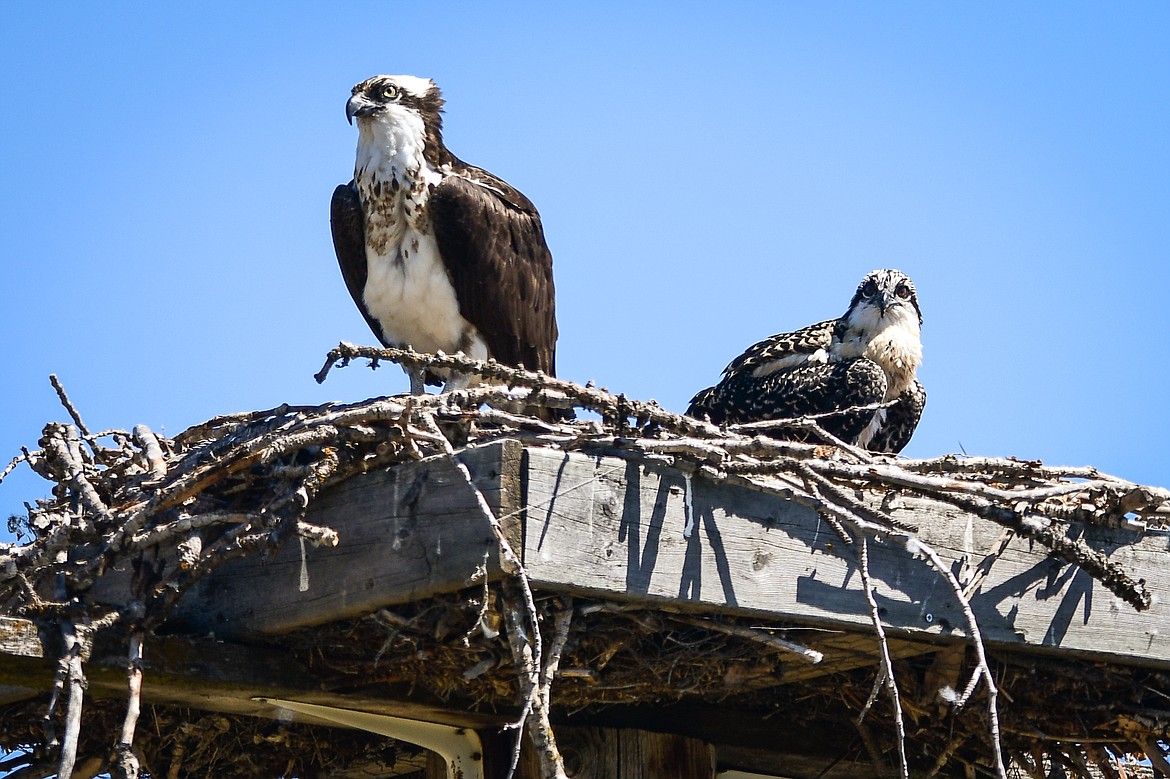
Osprey mates occupy a platform nest along Lower Valley Road. (Casey Kreider/Daily Inter Lake)
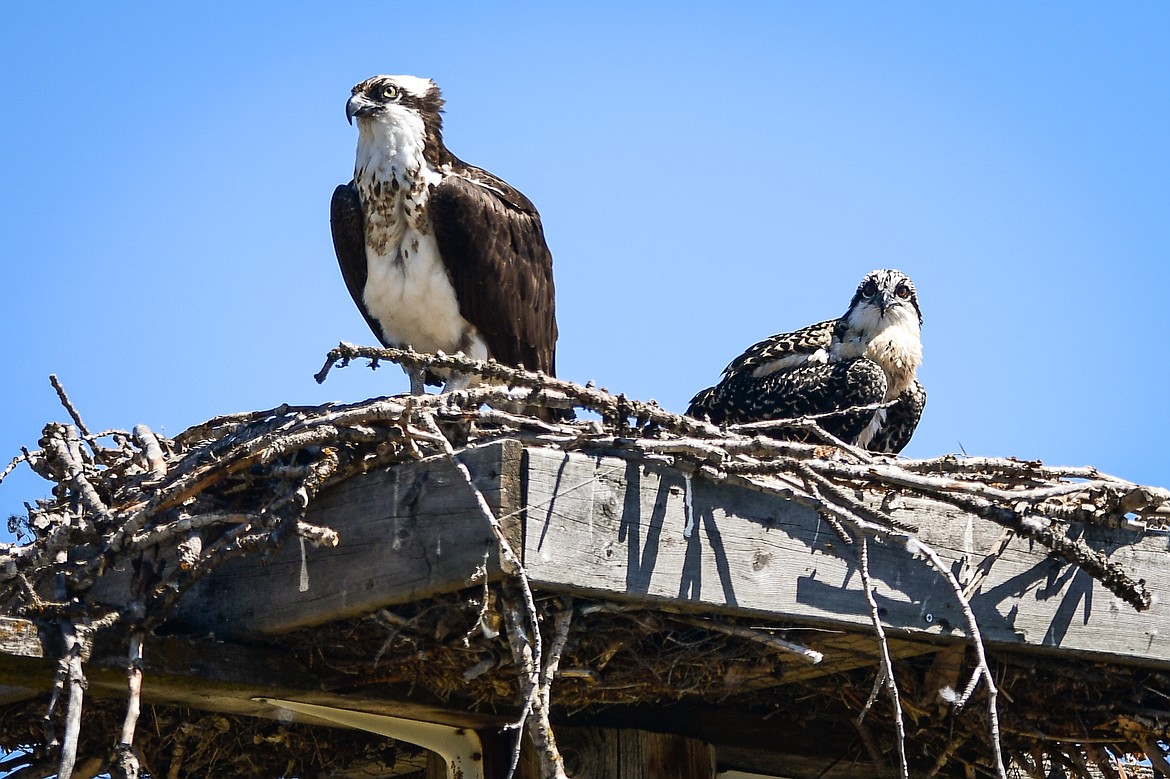
Osprey mates occupy a platform nest along Lower Valley Road on Wednesday, July 26. (Casey Kreider/Daily Inter Lake)
Casey Kreider
There was definitely a bird in the old osprey nest above Old Steel Bridge. Jess Garby could see the arc of a small round head peeking over the tangle of sticks, backlit by the morning sun.
She steadied the excitement rising in her throat. It was only April 6, far too early in the season for most ospreys to settle down with a brood. But maybe...
Garby raised her binoculars and drew the bird into focus.
“Yeah, it’s a goose,” she sighed a moment later. “You can really tell when it turns its head to the side.”
The education coordinator for Flathead Audubon Society and a self-proclaimed “raptor girlie,” Garby had spent the better part of the last week scanning the skies, hoping to catch sight of her first osprey of the year.
The birds migrate to the Flathead Valley in droves each spring, often flying thousands of miles north from overwintering grounds in Mexico to reunite with longtime partners in nests that they built in years prior. They spend the next five months trading feeding and nesting duties as their clutch grows from hatchlings to nestlings to fledglings.
This year, participants in a new monitoring program organized by Flathead Audubon will follow the birds through every stage. Volunteers will visit an “adopted” osprey nest each week to record observations about the inhabitants, including the number and approximate age of the offspring. It’s a unique opportunity to engage with an iconic animal in an intimate way, Garby said.
“You’re getting to go outside and just watching a bird raise a family, watching all the hardships it has to go through,” she said. “It really makes you appreciate these animals on a total other level.”
The project is also practical. Once compiled, the data volunteers collect this summer will likely represent one of the most complete studies on ospreys in Northwest Montana in years.
IN 1966, brothers Donald and Douglas MacCarter launched a first-of-its-kind study on ospreys around Flathead Lake with the aim of uncovering what, exactly, was to blame for precipitous declines in the birds’ population. They spent 10 years observing nesting ospreys around Flathead Lake, ultimately recording data on dozens of adult osprey pairs and more than 240 fledglings.
The final study, published in 1979, linked the sudden decline in raptors to DDT, a commonly used chemical insecticide that blocked calcium production when ingested by birds, causing them to lay thin-shelled eggs that cracked under the slightest pressure. The effects were most pronounced in ospreys and other raptors because the toxin accumulated as it moved up the food chain.
Six decades later, some of the nests the MacCarter brothers observed are being used by a new generation of ospreys.
“We’re using some of this historical data,” said Garby. “Some of these maps that they were looking at, the nests are still there, and people are going to be monitoring them this summer, which I think is really special.”
WHILE DDT is now banned, Garby hopes Flathead Audubon’s osprey monitoring project will help spread awareness about the threat that baling twine poses to nesting ospreys.
The birds often layer their nests with loose bits of baling twine snagged from nearby farms. The plastic strands can easily knot around the legs and wings of adult ospreys and fledglings alike, sawing deep gashes into their skin and severely inhibiting movement. Without quick human intervention, it is almost certain an entangled bird will die, either by infection or by starvation and dehydration.
“The sooner we can get to a bird, the better their chances of surviving,” said Beth Watne, the executive director of Montana Wild Wings.
The nonprofit raptor rehabilitation center typically responds to about three entanglements each year.
Regular visits to known osprey nests means more opportunities to spot injured birds before it's too late, said Garby.
Volunteers will gather data on the percentage of synthetic materials used in each osprey nest, which Garby plans to use as an educational tool during presentations to farmers, ranchers and 4-H groups.
“That’s, I think, one of my main priorities with this project is being able to present this to the people that are using baling twine in a way that’s nonjudgemental and understanding that it’s a tool that they use, but it’s really affecting the population [of osprey],” she said.
Nearly 50 people turned out for two initial training sessions, and Garby said she has already placed some volunteers on a waitlist as she scouts out more potential nest sites. The initial interest makes her hopeful the project will be able to continue for several years to come, generating valuable long-term data that can be used to track changes in the population over time.
In Missoula, researchers are using data collected from an ongoing osprey monitoring project to study heavy metal contamination in the Clark Fork River. Another citizen science initiative organized by Yellowstone Valley Audubon Society bands nestlings to study migration routes and long-term survival rates.
For now, Garby is still eagerly awaiting her first osprey sighting of the year.
“Ideally, in a week or two, next time I come here, an osprey will be vocalizing,” she said. “That gets me really excited. We were birding around water this morning and I was waiting to hear that.”
Reporter Hailey Smalley can be reached at 406-758-4433 or [email protected]. If you value local journalism, pledge your support at dailyinterlake.com/support.
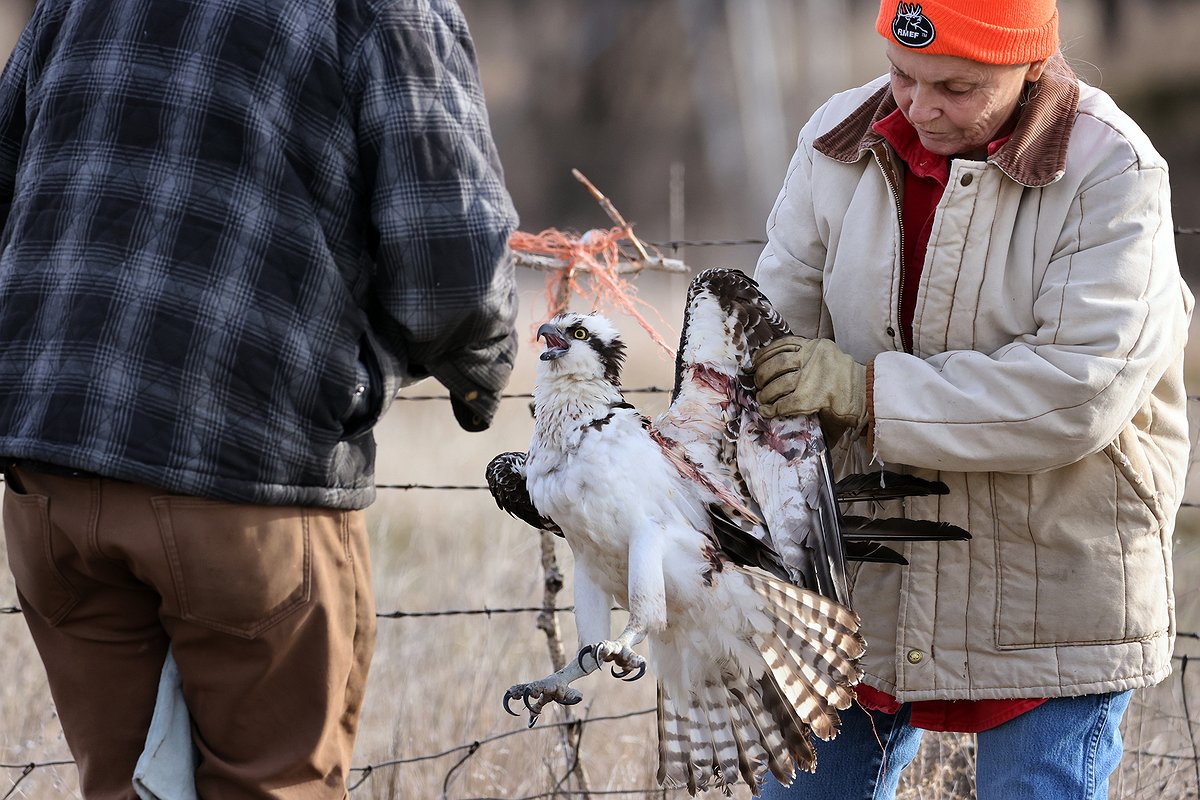 Beth and Bob Watne work to untangle and osprey that is trapped in bailing twine on a fence in Kalispell. The bird was taken to the Wild Wings Recovery Center for treatment. (Jeremy Weber/Daily Inter Lake)
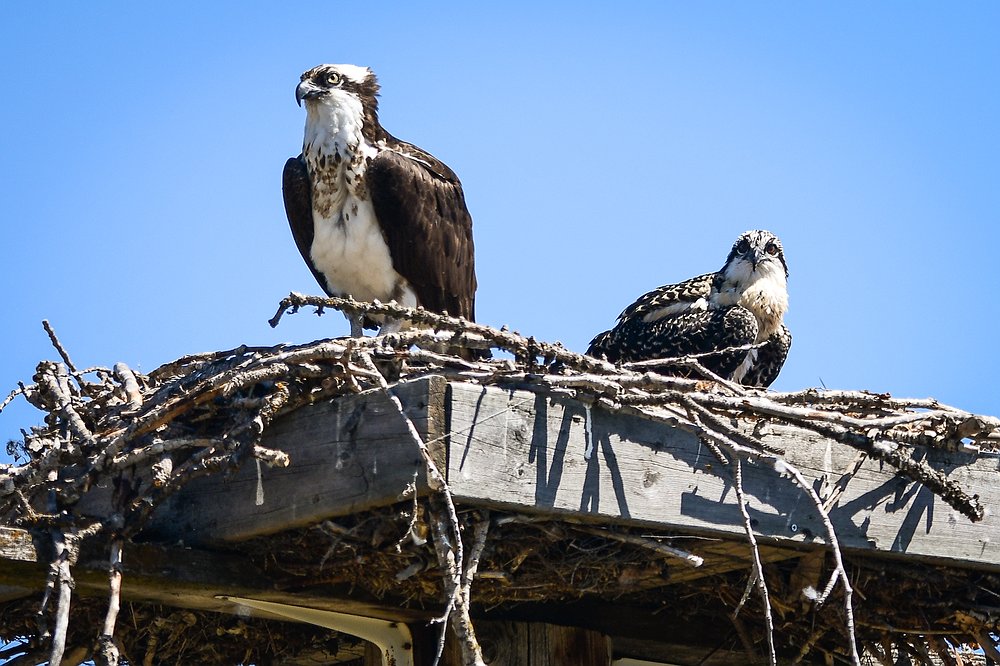 Osprey mates occupy a platform nest along Lower Valley Road on Wednesday, July 26. (Casey Kreider/Daily Inter Lake)
Casey Kreider
ARTICLES BY HAILEY SMALLEY

Trump stumps for Flint in Kalispell as Election Day nears
President Donald Trump, wearing a dark suit, red tie and red USA cap, ambled into the Majestic Valley Arena to the raucous roar of a crowd.

Flathead National Forest greenlights Swan Valley timber project
A 2,307-acre timber project is now under way in the Swan Valley.
Flathead National Forest greenlights Swan Valley timber project
A 2,307-acre timber project is now under way in the Swan Valley.