
‘Women of Impact’ talk diversity
KAYE THORNBRUGH | Hagadone News Network | UPDATED 5 months, 3 weeks AGO
Kaye Thornbrugh is a second-generation Kootenai County resident who has been with the Coeur d’Alene Press for six years. She primarily covers Kootenai County’s government, as well as law enforcement, the legal system and North Idaho College. | April 23, 2026 1:07 AM
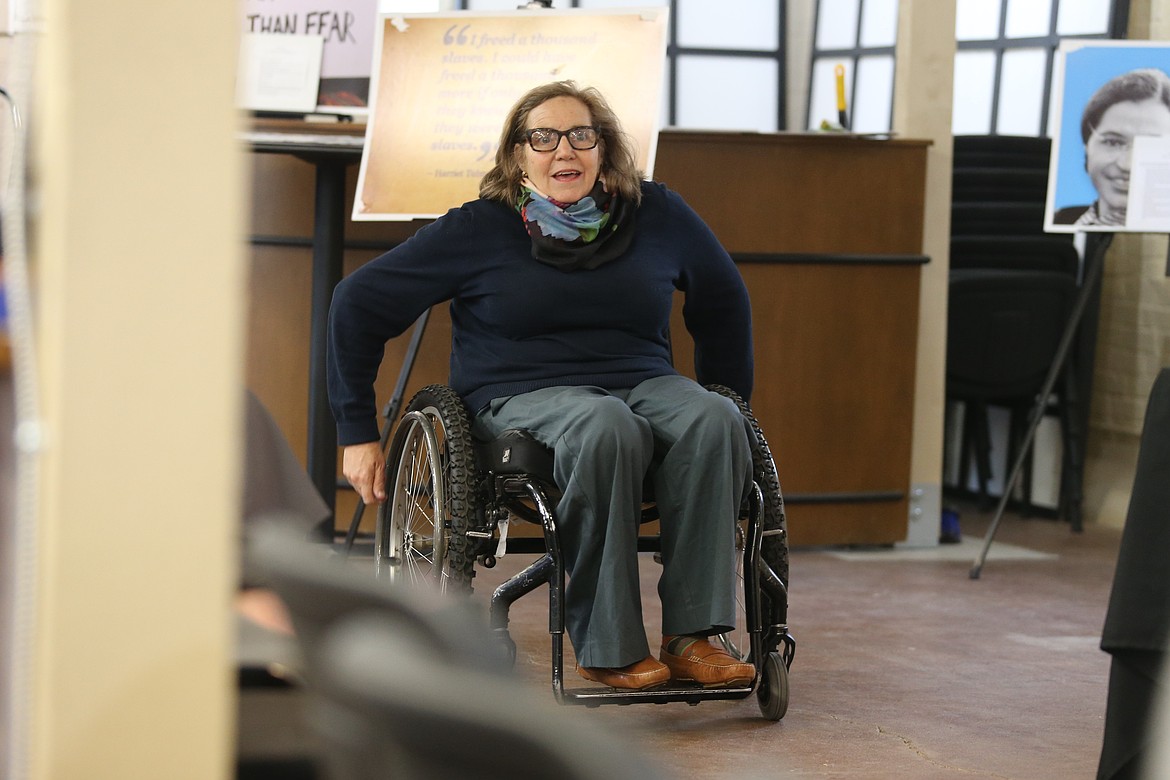
COEUR d’ALENE — For years after Blair Williams lost the ability to walk, she said she was reluctant to identify herself as disabled.
Williams was just 14 years old when a viral illness paralyzed her. When she returned to school, using a wheelchair, she was the only physically disabled student. At that time, most children like Williams were confined to their homes or placed in institutions, a fate Williams said she narrowly avoided.
The stigma attached to disability was so strong that her reluctance continued until well into adulthood. But now, 45 years after she became disabled, Williams said she’s part of the disability community.
“There’s a whole culture out there that’s pretty underrepresented,” Williams told a group of about two dozen women Wednesday morning at the Human Rights Education Institute. “We’re underrepresented because we did a really good job, in our culture and in our nation, of institutionalizing and putting us away.”
Williams was a panelist at the latest Women of Impact Roundtable Series presented by North Idaho Alliance. Wednesday’s discussion centered on the impact of diversity.
“When you integrate and you welcome and you encourage people with disabilities to be part of your community, we have a chance and we can be more seen,” Williams said.
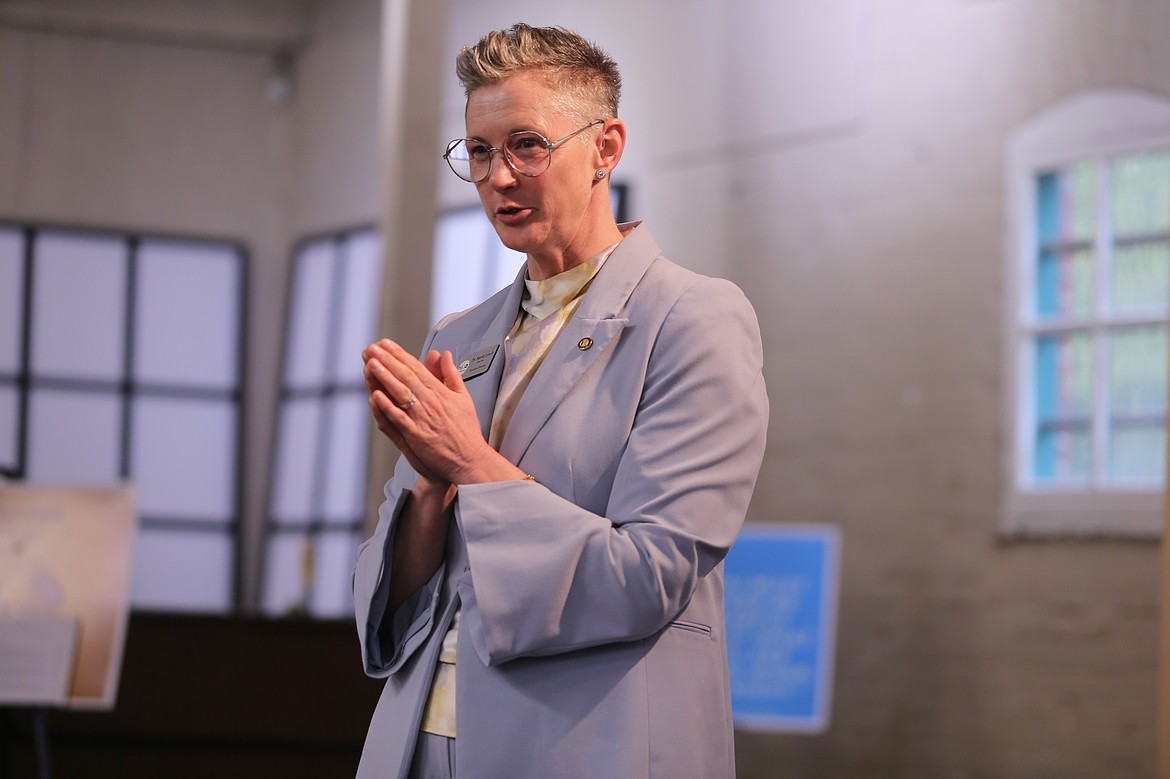
Sarah Lynch, executive director of the North Idaho Pride Alliance and a retired Air Force pilot, also described the impact of representation.
The daughter of two pilots, Lynch’s path in life was clear. She joined the Air Force, where she said she didn’t want to stand out or be perceived as different from her male peers.
“I believed I could do everything the guys could do,” she said.
Lynch recalled a pair of teen girls approaching her in a grocery store when she was wearing her flight suit. The girls were excited; they had never seen a woman pilot before, had scarcely imagined such a thing.
“It was such an eye-opener for me that visibility is important,” Lynch said. “Those two high school girls didn’t know they could grow up to be a pilot until they saw one.”
Over the course of her career, Lynch said she learned not only to recognize and acknowledge the different qualities and characteristics people possess, but also to value what people from diverse backgrounds and experiences bring to the table. With different people come different perspectives, ways of thinking and approaches to challenges.
“I’ve taken that into leadership as a civilian, as well,” Lynch said. “Everybody has these different ideas and they’re valuable. All of that contributes to solving a problem.”
Even now, Williams said, there are many places she cannot go, including the homes of most of her friends, because her wheelchair cannot get inside. She challenged the audience to consider how they might help make the community more welcoming and accessible to disabled people, from public spaces to the workplace and even personal spaces like the home.
“I’m encouraging you to look for those individuals with disabilities, look for those cultures and communities that have done a better job of allowing us to be seen and look for ways to invite us in,” Williams said.
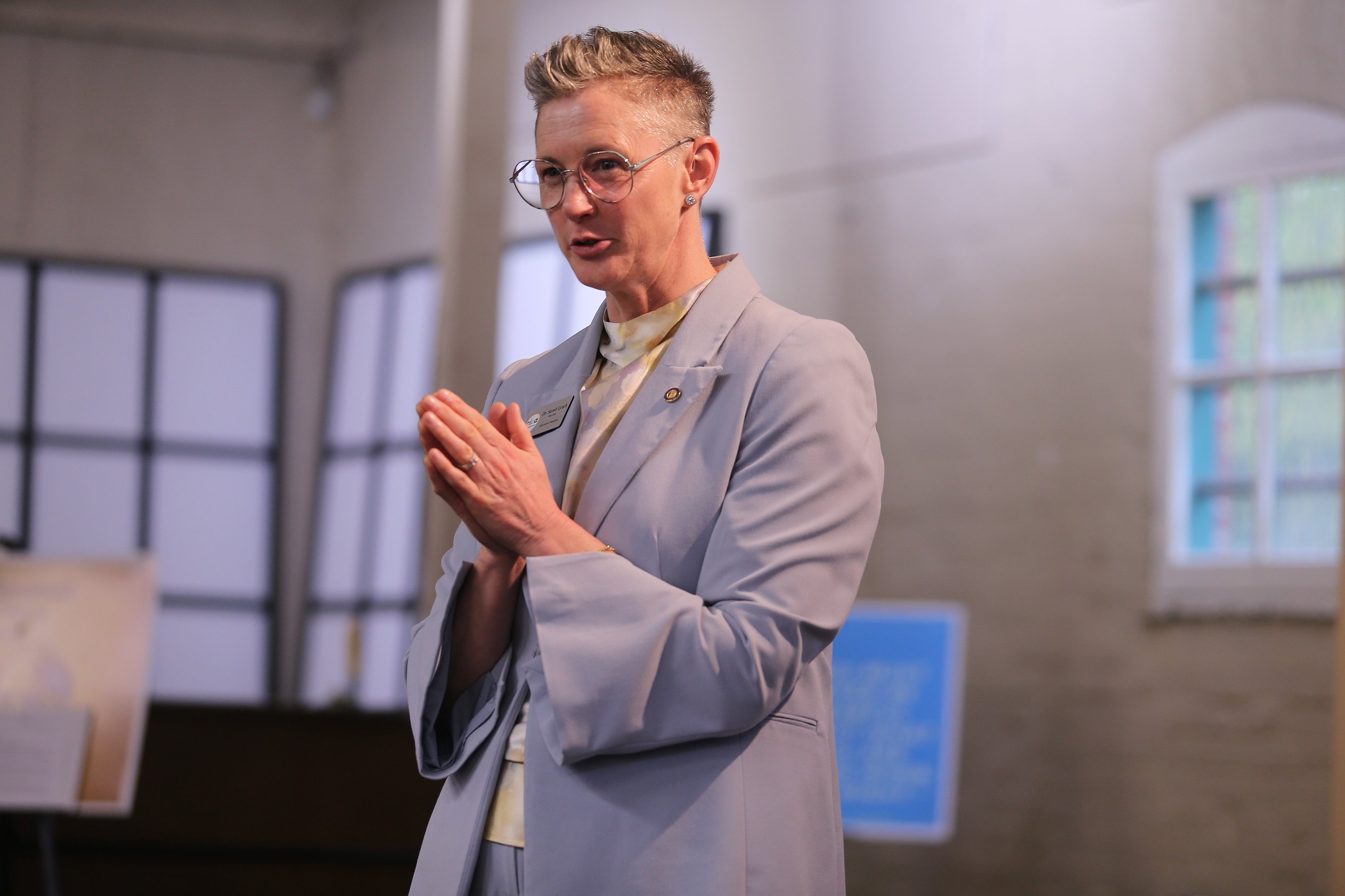 North Idaho Pride Alliance Executive Director Sarah Lynch spoke on Wednesday during a panel discussion at HREI.
ARTICLES BY KAYE THORNBRUGH
Stateline shooter pleads guilty to manslaughter
A DoorDash driver who fatally shot a pedestrian during a road rage incident near Stateline Speedway has pleaded guilty to voluntary manslaughter, though whether a judge will accept the pretrial settlement offer in the case remains to be seen.
Stateline shooter pleads guilty to manslaughter
Prosecutors originally charged Edsel Johnson with first-degree murder
A DoorDash driver who fatally shot a pedestrian during a road rage incident near Stateline Speedway has pleaded guilty to voluntary manslaughter, though whether a judge will accept the pretrial settlement offer in the case remains to be seen.
Kootenai County history revealed
Community members get close-up look at time capsule contents
Liz Boutin is no stranger to historical artifacts. A museum professional and fine artist, Boutin said she's handled Egyptian and Greek items that date back to antiquity. But she had a new experience this summer, after local historical preservationists retrieved a 100-year time capsule from inside the outer wall of the old Kootenai County courthouse.