
Cd’A deficit projected to shrink
KAYE THORNBRUGH | Hagadone News Network | UPDATED 5 months, 3 weeks AGO
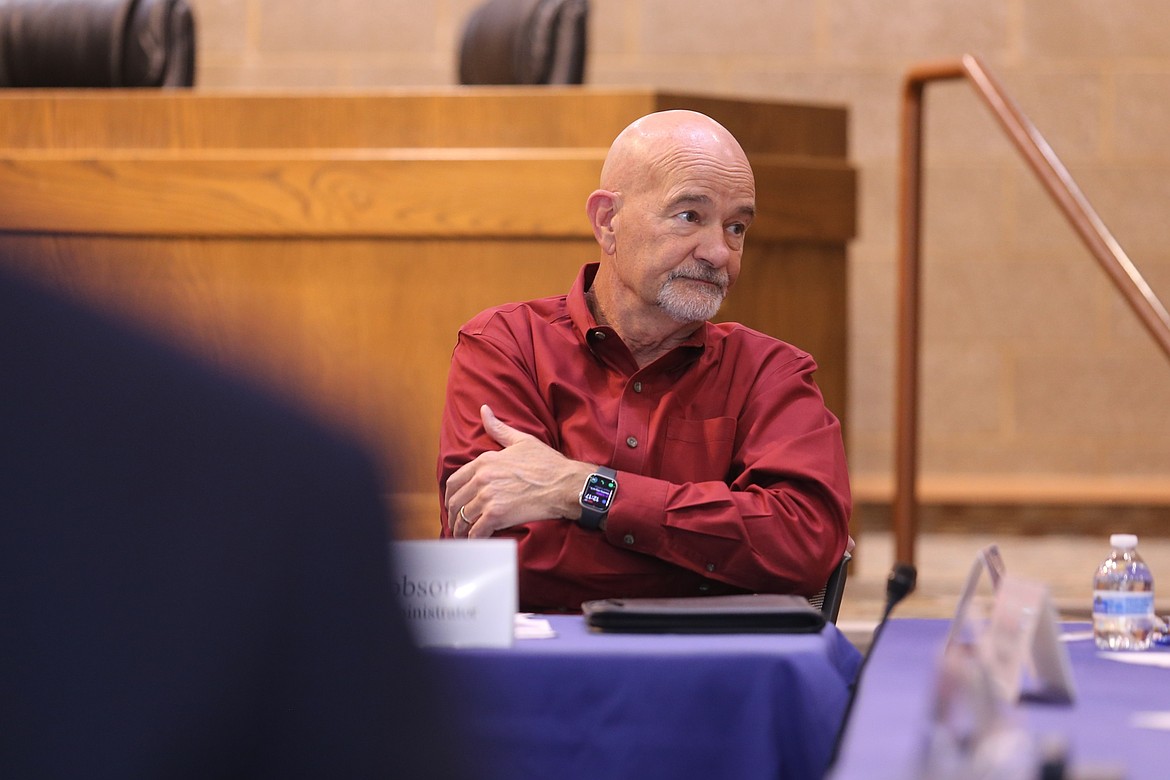
Interim City Administrator Ron Jacobson convened with the Coeur d'Alene City Council and other city leaders Monday for a budget update.
KAYE THORNBRUGH/Press
Kaye Thornbrugh is a second-generation Kootenai County resident who has been with the Coeur d’Alene Press for six years. She primarily covers Kootenai County’s government, as well as law enforcement, the legal system and North Idaho College. | April 28, 2026 1:09 AM
COEUR d’ALENE — Potential savings from general fund wages and benefits are expected to reduce the city’s projected budget deficit from $1.8 million to $1.1 million.
Katie Ebner, finance director and treasurer for Coeur d’Alene, presented city leaders Monday with an update on the city’s financial status, ahead of the budget season.
“We are looking at a $1.65 million dip into fund balance,” she said. “While we don’t like any dip into fund balance, this is great news compared to the original budget deficit of $4 million.”
Ebner said the general fund is on track and the city’s spending and cash flow align with normal seasonal patterns, but the multi-year outlook is poor unless the city increases revenue.
It’s recommended that cities maintain a reserve level equal to about 25% of their operating costs, Ebner said. Coeur d’Alene has a reserve level of about 28%, but with annual shortfalls exceeding $1 million, those reserves will be depleted.
If the city takes a 3% tax increase and 1% in foregone taxes each fiscal year between 2026 and 2029, and personnel costs increase at an expected rate of about $1.3 million per year, the reserve level could drop to about 16% at the end of that period.
Without a property tax increase, closing the deficit would likely require cutting about 18 jobs, assuming there are no additional increases in wages, benefits or operating costs, a scenario Ebner said is unlikely. Meanwhile, the general fund would drop to about 5% by 2030.
“If the deficit doesn’t change, (the fund balance will) just keep going lower and lower,” Ebner said.
Interim City Administrator Ron Jacobson pointed to decisions made by Idaho lawmakers that affect municipal budgets, such as the Legislature’s decision to redirect money from the beer excise tax, liquor account distributions and proceeds generated from sales of a new state license plate to increase pay for Idaho State Police. Some of that money would have instead gone to cities and counties.
“How do you project or forecast that?” Jacobson said. “The actions that the Legislature can take can have a devastating impact on revenues the cities can generate.”
Mayor Dan Gookin said a property tax increase is likely.
“I think it’s a given that we’re going to take the 3% plus 1% this year, just to keep us treading water, just barely,” he said.
It’s possible for the city to take another 3% for capital projects. Gookin asked City Council members to prepare a list of their priorities if they choose this option.
Gookin said he hates the idea of taking foregone taxes and never agreed to do so during his time as a city councilor. But taking the city’s $6.3 million in foregone taxes could be on the table.
“My fear is that our Legislature is going to gut that,” he said. “If we have the same type of legislature, eventually they’re going to say, ‘no foregone taxes,’ which means my attitude is we take it while we can and we do what we can with it. The taxpayers are going to hate that, but quite honestly, this is the corner we’ve been backed into by the Legislature.”
Councilor Christie Wood said there’s a feeling among city leaders throughout Idaho that political ire is driving certain decisions of state lawmakers, negatively impacting cities.
She said legislators have limited cities' ability to generate revenue from growth and other sources, leaving city councils with no choice but to raise taxes to keep cities functioning.
“It feels like a constant financial punishment to people who live in the cities,” she said. “It’s a terrible situation.”
ARTICLES BY KAYE THORNBRUGH
Stateline shooter pleads guilty to manslaughter
A DoorDash driver who fatally shot a pedestrian during a road rage incident near Stateline Speedway has pleaded guilty to voluntary manslaughter, though whether a judge will accept the pretrial settlement offer in the case remains to be seen.
Stateline shooter pleads guilty to manslaughter
Prosecutors originally charged Edsel Johnson with first-degree murder
A DoorDash driver who fatally shot a pedestrian during a road rage incident near Stateline Speedway has pleaded guilty to voluntary manslaughter, though whether a judge will accept the pretrial settlement offer in the case remains to be seen.

Kootenai County history revealed
Community members get close-up look at time capsule contents
Liz Boutin is no stranger to historical artifacts. A museum professional and fine artist, Boutin said she's handled Egyptian and Greek items that date back to antiquity. But she had a new experience this summer, after local historical preservationists retrieved a 100-year time capsule from inside the outer wall of the old Kootenai County courthouse.