
Moses Lake Adventist Church finished after 20-plus years
JOEL MARTIN | Hagadone News Network | UPDATED 5 months, 2 weeks AGO
Joel Martin has been with the Columbia Basin Herald for more than 25 years in a variety of roles and is the most-tenured employee in the building. Martin is a married father of eight and enjoys spending time with his children and his wife, Christina. He is passionate about the paper’s mission of informing the people of the Columbia Basin because he knows it is important to record the history of the communities the publication serves. | April 30, 2026 3:15 AM
MOSES LAKE — After decades of fundraising, labor and repeated setbacks, the Moses Lake Seventh-day Adventist Church building is finally complete.
“It was miracle after miracle,” said Hugh Thomas, a member of the church’s building committee.
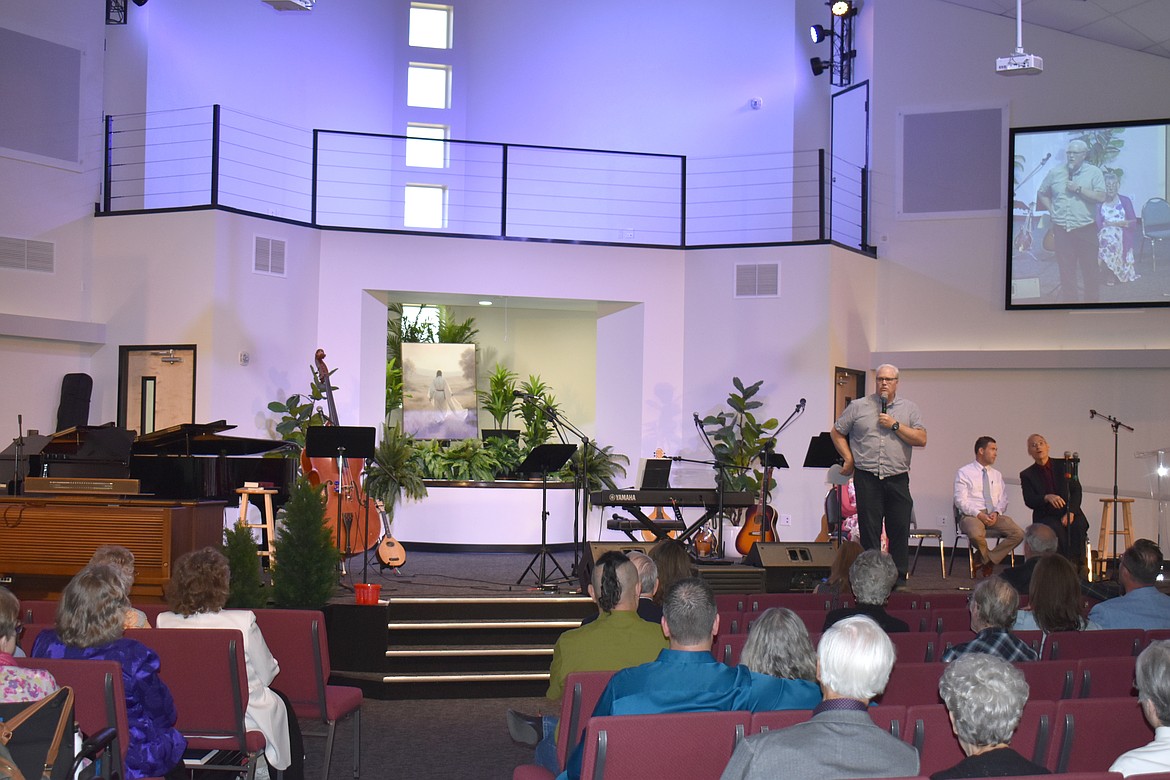
The building, located on West Valley Road across from the Grant County Fairgrounds, was mostly complete in October 2024, but one last piece remained: the sanctuary. Sabbath services were instead held in the large waiting area outside the sanctuary, which was roped off and inaccessible. April 25 marked the first time services could actually be held inside the sanctuary, and about 120 people came to a presentation on the new building that afternoon after services.
The building has been a work in progress, one way or another, for more than 20 years. The original Seventh-day Adventist Church was located downtown at Fifth Avenue and Division Street, where the Grant Transit Authority multimodal facility is now. The church sold that building in 2006 and began to hold services in Crestview Christian School, which is a ministry of the church, while planning a full church building on the same property. The shell of the building went up in 2010, Thomas said, and almost immediately the money ran dry and the construction stalled until 2014. The wake-up call, Thomas said, was a 450-foot retaining wall.
“We had a bid for $75,000, and a few of us got together and said, ‘I think we can do it cheaper.’ And … we did it for under $8,000.”
In 2016, the committee decided to pave the shared parking lot between the church and the school.
“A miracle happened,” Thomas said. “The bid was astronomical for the asphalt, but in exactly that year, (the city of Moses Lake) paved Valley Road, and we let them park their equipment here. Whenever they had more loads of asphalt, they did our parking lot, so we got it underpriced.”
The church kitchen was another stumbling block that was removed from their path, Thomas said.
We were told at first we did not have to put a grease trap into our kitchen, then we had to put a grease trap in,” he said. “We decided to put the grease trap in on Thanksgiving Day. We’re in the backhoe digging away next to the kitchen area way below the foundation and the foundation starts giving way. I suddenly call (Jim Morgan at) M1 tanks. I’m like, ‘Jim, I need a tank, and I need it now.’ … He ran down to M1, grabbed a big cement tank, a 1,000-gallon tank, and dropped it in there so we can not lose (the foundation).”
Time and again, Building Committee member Ben Altrogg said, the cost of the building was whittled down, with donated supplies that came in at just the right time and contractors willing to discount their work.
“Every time we pressed forward in faith, the Lord provided,” Altrogg said at the church’s celebration of the new sanctuary April 25. “Any time we held back because we didn’t know what we were going to do, the blessings stopped almost immediately. So what I remember the most is (that) it was better to step in faith than it was to sit in fear.”
Meanwhile, there were still expenses to be met. The church held garage sales in the parking lot, using items donated not only by congregants but by others in the community. Those sales raised between $10,000 and $20,000, church member Judy Twigg said.
“They’d start out as a few days, and then they got so popular … they started lasting for one to two weeks,” Twigg said. “People in the community donated some things, and) the community rallied to come to every sale. We’d put up signs on the corner of Valley Road saying, ‘Garage sale,’ and people would flock in.”
Anonymous matching grants defrayed much of the cost as well, said former Pastor Clinton Meharry, who led the church from 2012 to 2024.
“Quite a number of times different individuals offered to give a significant amount … and that gave the members and friends an incentive that if we donate, it doubles our money,” Meharry said.
“I bet you this church matched over 10 times, anywhere from $10,000 to $50,000,” Thomas said. “It was amazing, God pouring out his blessing. When somebody would come up with a gift, the church would match it very quickly, and another one would come, and another and another and another, and it still spilled over.”
The new sanctuary has a capacity of 500 people, considerably larger than the church’s regular Saturday attendance. It’s an open two-level design with a main stage area and upstairs a second stage, sound booth and catwalk for access.
“We do not want people to come in here and say, ‘Ugh, this church,’” Thomas said. “We want people to come into this church and say, ‘There is God in this church.’”
This story has been updated to reflect that the Seventh-day Adventist Church holds its services on Saturdays, and the new sanctuary has a capacity of 500 people.
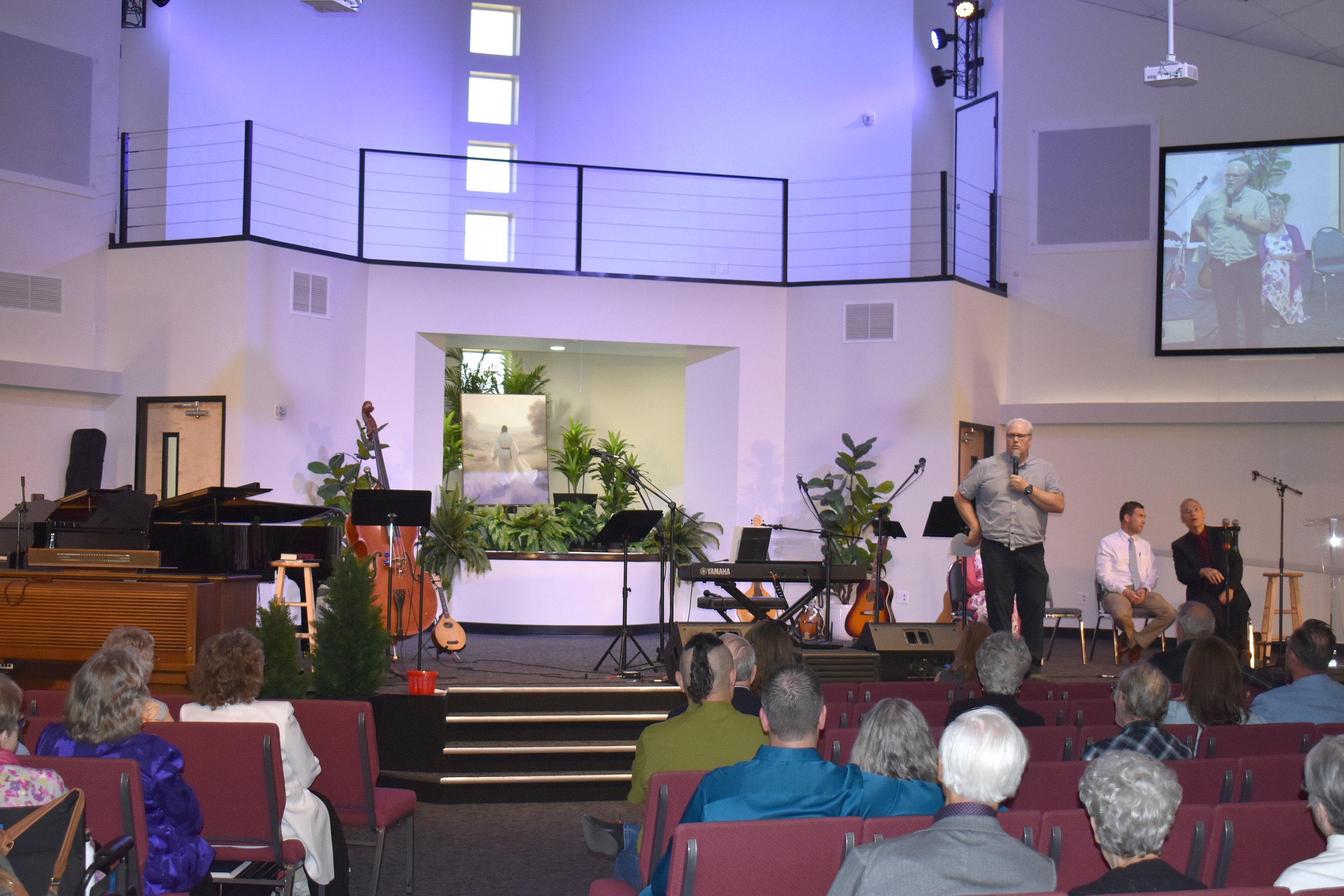 The final step in the Moses Lake Seventh-day Adventist Church’s more than 20-year building odyssey was the sanctuary, which opened April 25.
ARTICLES BY JOEL MARTIN

Endless battle
Noxious Weed Control Board works to keep invasive plants under control
MOSES LAKE — Some of the nastiest plants in Grant County were the topic of a class led by Jay Johnson, a consultant with the Grant County Noxious Weed Control Board, Tuesday. The Noxious Weed Control Board, as its name would suggest, is tasked with keeping weeds under control in Grant County. That’s not a small job; the board’s website lists 129 species of noxious weeds that are found around Grant County. A noxious weed is defined as an invasive, non-native plant that threatens agricultural crops, local ecosystems or fish and wildlife habitat, according to the Noxious Weed Control Board. Washington state law requires that these weeds be identified and their spread kept to a minimum, if not completely eradicated. “We’re one of those agencies a lot of people don’t really understand,” Johnson said. “We’re a county office and … our funding is tax-based assessment. When you get your tax bill and you look down at all the expenses that you pay for, there we are.”

BASIN EVENTS: Oct. 16-24
COLUMBIA BASIN — Whether you feel like shopping, crafting, learning or seeing a show, there’s something happening for you this week in the Basin. Oct. 16 ‘My Family (Mi Familia)’ screening Spanning three generations, “My Family (Mi Familia)” is a heartfelt drama that follows the Sánchez family as they build their lives in East Los Angeles. Through love, hardship, triumph, and sacrifice, the film explores the immigrant experience, the strength of family bonds, and the traditions that connect one generation to the next. Lowrider show and taco truck before the screening. Sponsored by Columbia Basin Allied Arts, EDUBS C/S and the Moses Lake Creative District. $12 per person. Doors open at 6 p.m., film begins at 7 p.m. at the Moses Lake Civic Center Auditorium, 401 S. Balsam St. Tickets and info: www.cba-arts.org.

Moses Lake author encourages women to look beyond church culture norms
MOSES LAKE — A Moses Lake author’s book, “A Christian Woman Striving to Live Her Faith in a Man-Controlled World,” takes aim at the role to which many churches relegate the female half of their congregations. “It’s to encourage women in the faith,” Linda Curran said. “A lot of churches say, ‘Teach Sunday school, do this, do that, but don’t (evangelize.)’" In her book, Curran recounts a time when she moved to a new community and joined a church there. She was surprised to learn that, as a new female member, she had been automatically assigned church cleaning duties. When she questioned it, she wrote, she was met with condescension and her objections were brushed aside. In other churches, she said, women who were capable of teaching were relegated to “women’s ministry.”