
Shoshone County eyeing Opportunity Zone benefits
JOSH McDONALD | Hagadone News Network | UPDATED 12 hours, 25 minutes AGO
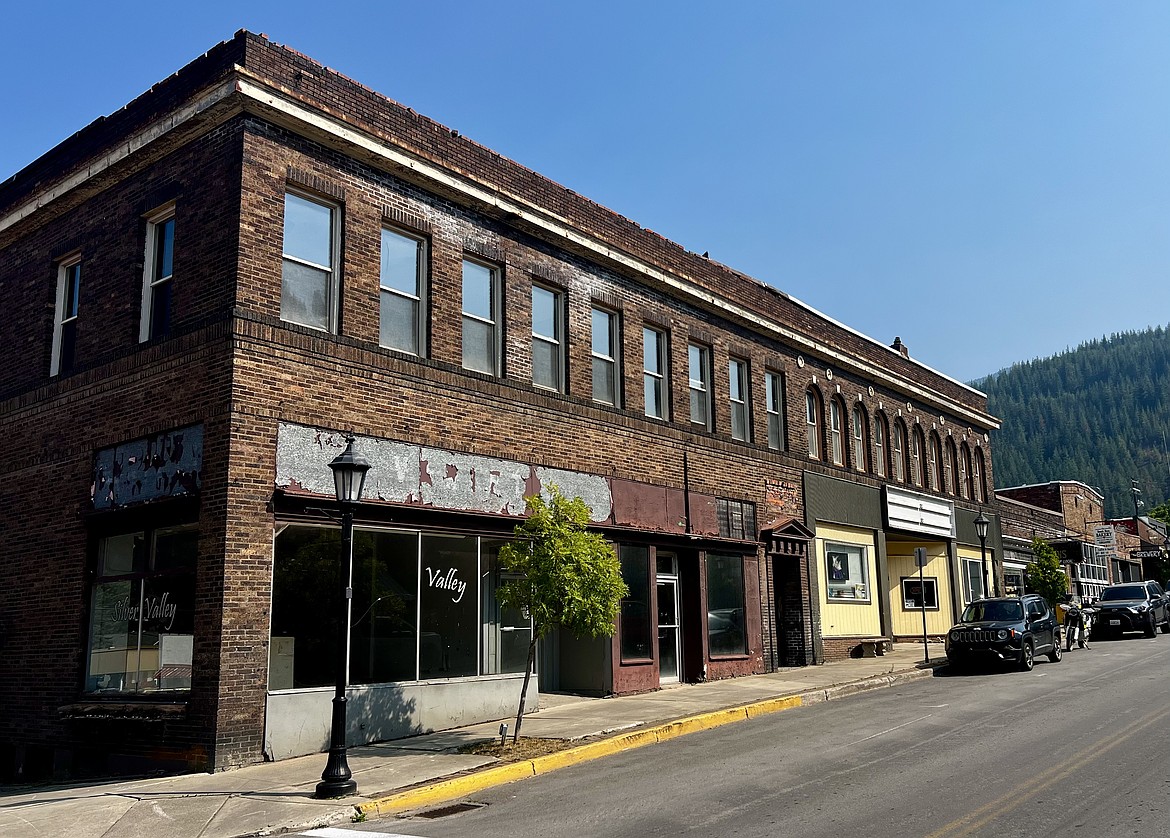
Historic buildings sit vacant on Kellogg's Main Street. Local officials hope to see more development and activity in the uptown Kellogg area if it receives an Opportunity Zone designation.
JOSH McDONALD
A census tract stretching through the heart of the Silver Valley is among Idaho's top recommendations for a new federal Opportunity Zone designation, a move local leaders say could help attract private investment for redevelopment, housing and business projects throughout the corridor.
The Idaho Economic Advisory Council recently included the Shoshone County proposal among its recommended areas for consideration under the revamped Opportunity Zone program.
Shoshone County's proposal is one of 25 areas recommended statewide for Opportunity Zone designation. Idaho received 36 applications from communities seeking the federal designation, but state officials can nominate only 25 eligible census tracts to the U.S. Treasury.
Opportunity Zones are federally designated census tracts created to encourage investment in economically distressed communities. Rather than providing grants directly to local governments, the program offers tax incentives designed to attract private capital into qualifying areas for projects such as housing, commercial development and business expansion.
According to the Idaho Capital Sun, Idaho communities submitted 36 potential tracts for consideration. The advisory council narrowed the list and ranked recommendations largely on data measuring the likelihood that a designation would generate investment.
Silver Valley Economic Development Corp. Executive Director Paige Olsen submitted the county's application and said she was encouraged by the proposal's standing among the state's recommendations.
"I'm thrilled to see we are one of the top contenders," Olsen said.
Olsen, who has worked on development and expansion projects throughout Shoshone County for years, said the designation could become an important economic development tool for the region.
"Overall, I think this could be a significant opportunity for the Silver Valley if our census tract receives the designation," Olsen said. "Opportunity Zones are intended to encourage long-term private investment in economically distressed areas by offering federal tax incentives to investors. Rather than providing funding directly to local governments, they make it more attractive for private capital to invest in projects like housing, commercial redevelopment, industrial growth, infrastructure, and business expansion."
Because of the federal criteria used to determine eligible census tracts, the proposed Shoshone County Opportunity Zone includes all of Kellogg, Smelterville and Wardner, communities that are at the center of much of the county's current growth and redevelopment activity.
"Due to the parameters used to determine the qualified census tract, Shoshone County's qualifying census tract includes uptown Kellogg and Smelterville," Olsen said. "In my opinion, these are two areas that stand to benefit the most and arguably need it the most."
Over the past 25 years, Smelterville has experienced some of the county's most concentrated commercial growth, with the additions of Walmart, Dollar Tree, Maverik, Jitterz and the recently closed Grocery Outlet.
Kellogg, meanwhile, remains Shoshone County's largest community but has seen relatively little commercial growth since the turn of the millennium. However, the recent restart of the Bunker Hill Mine has generated renewed interest in several long-vacant and underutilized commercial properties.
"Uptown Kellogg has incredible potential for revitalization through redevelopment of historic buildings, vacant storefronts, and mixed-use projects, while Smelterville offers opportunities for new commercial, industrial, and housing development," Olsen said. "An Opportunity Zone designation could help attract the private investment needed to move any potential projects forward."
The county's application also highlighted several existing assets and ongoing investments that could make the area attractive to investors. While the Silver Valley's association with the Bunker Hill Superfund site has historically raised concerns among some developers and investors, Olsen said conditions continue to improve. The state's application summary noted that years of environmental cleanup have helped make redevelopment opportunities more feasible and attractive to investors.
"Our proposal also highlighted assets throughout the corridor, including Silver Mountain, Shoshone Medical Center, Kellogg schools, the Bunker Hill redevelopment area, and the continued environmental cleanup that's making redevelopment increasingly viable," Olsen said. "These existing investments provide a strong foundation for attracting additional private capital."
Opportunity Zones were created through the Tax Cuts and Jobs Act of 2017 and later made permanent through federal legislation. Under the updated program, known as Opportunity Zones 2.0, rural areas receive larger incentives than urban communities, and new reporting requirements are intended to better measure results.
For rural communities like those in the Silver Valley, Olsen said the designation could help level the playing field when competing for investment dollars.
"One thing I like about this program is that it gives rural communities another tool to compete for investment dollars that often flow to larger metropolitan areas," Olsen said. "It's not a silver bullet; the designation doesn't guarantee investment, but it does create a more favorable environment for investors. We'll still need quality projects, strong partnerships, and proactive marketing to capitalize on the opportunity."
If approved by the governor and ultimately designated by the U.S. Treasury Department, the Silver Valley tract would become one of Idaho's newest federally recognized Opportunity Zones, potentially opening the door for future private investment throughout the corridor.
Other recommended tracts are located in Boise, Nampa, Caldwell, Emmett, Garden City, Pocatello, Twin Falls, Burley and Kootenai County. The proposals range from downtown revitalization districts and housing corridors to industrial and commercial growth areas. Gov. Brad Little will make the final selections before Idaho submits its nominations to the U.S. Department of the Treasury by Sept. 28.
ARTICLES BY JOSH MCDONALD
Shoshone County eyeing Opportunity Zone benefits

Increasing fire danger prompts restrictions in Shoshone County