
Not ancient history: Museums serve as economic engines for their communities
TAYLOR INMAN | Hagadone News Network | UPDATED 1 month, 3 weeks AGO
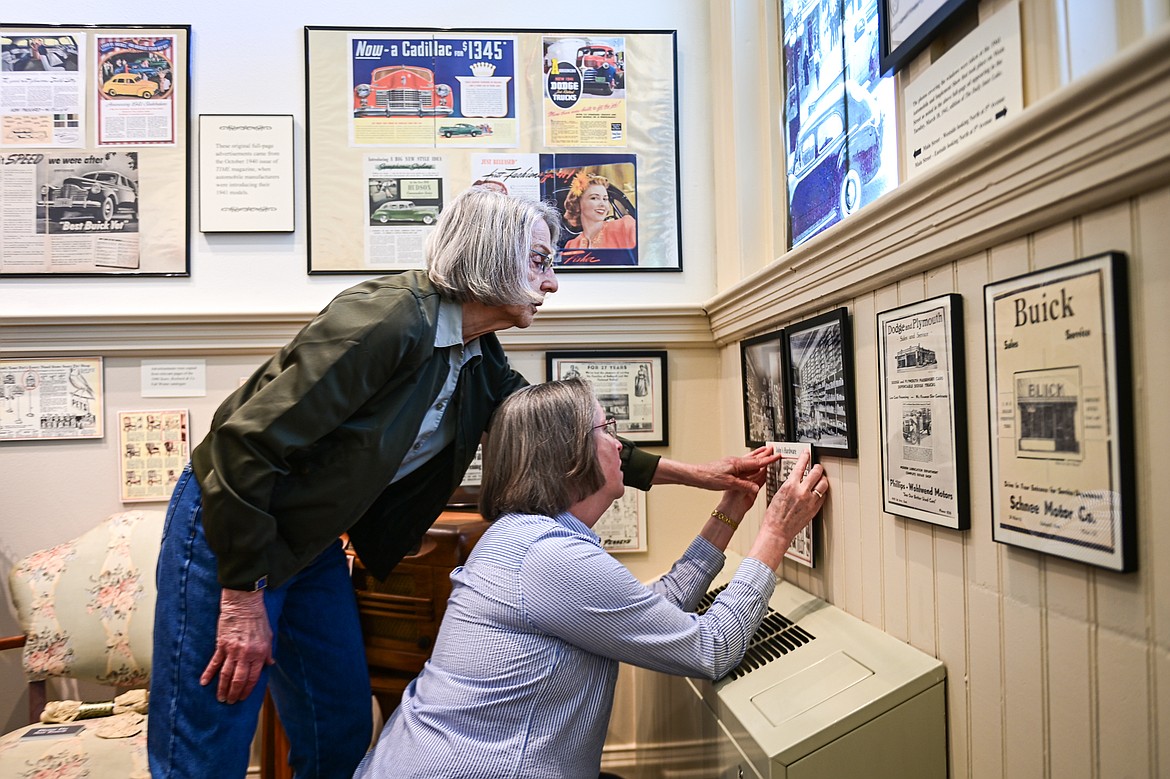
Volunteers Mary Miers and Nancy Hart hang photographs of John's Hardware while curating an exhibit titled "Going to Town: Stroll Kalispell in 1941" at the Northwest Montana History Museum on Tuesday, June 23. (Casey Kreider/Daily Inter Lake)
Casey Kreider
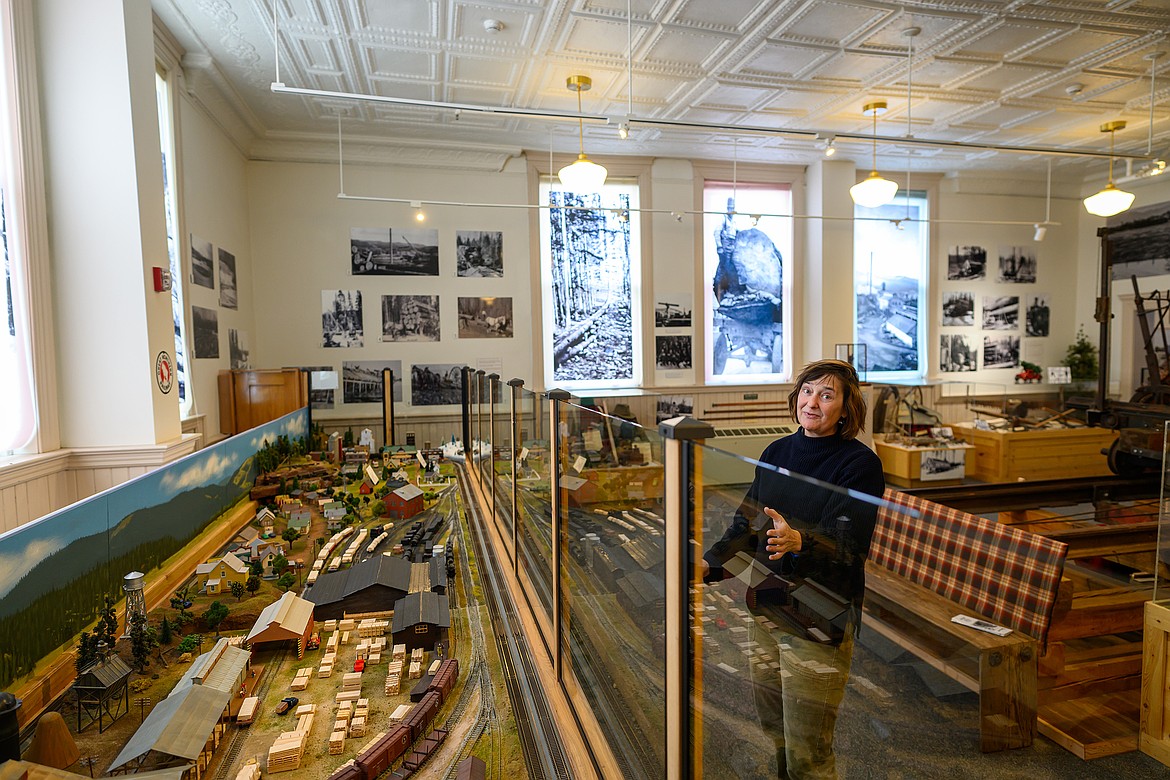
Northwest Montana History Museum Director Margaret Davis stands near a display featuring an HO scale model train. (Chris Peterson/Hungry Horse News)

The historic Central School building, which houses the Northwest Montana History Museum, is seen in downtown Kalispell in this 2019 file photo. (Brenda Ahearn/Daily Inter Lake)
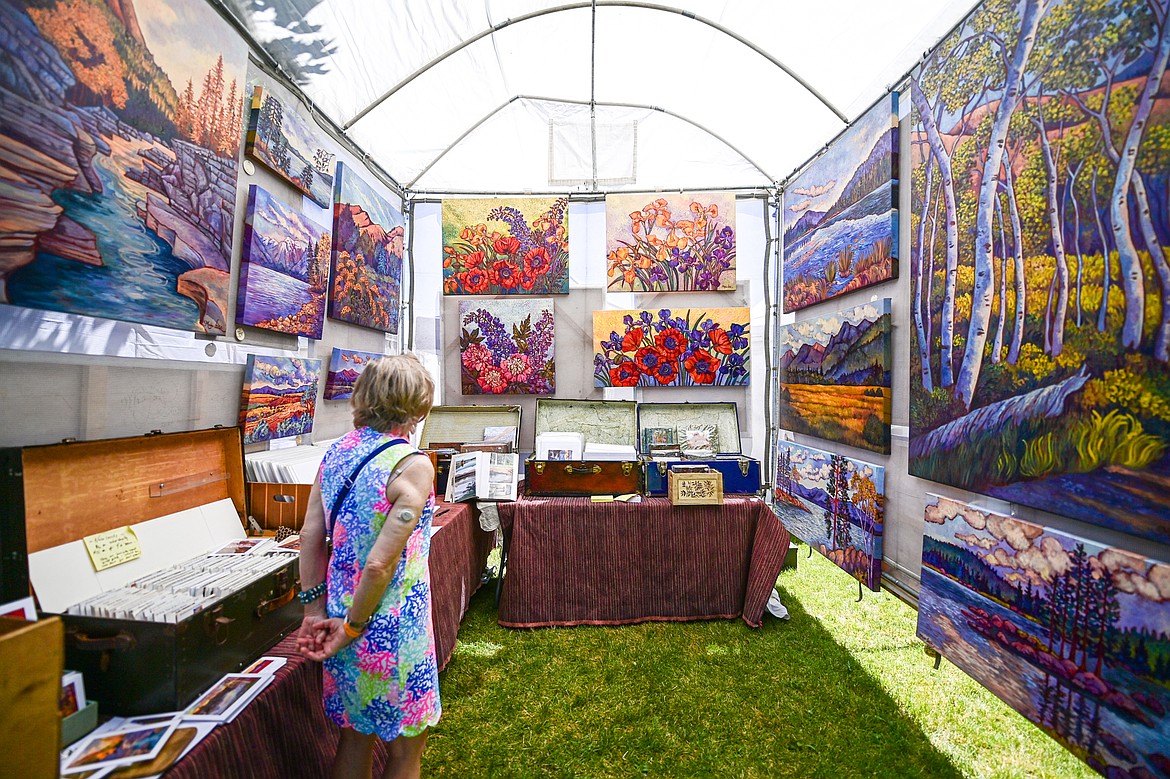
A visitor checks out the paintings of Maia Leisz at the Maia Leisz Fine Art booth at Glacier Art Museum's 56th Arts in the Park in Depot Park on Friday, July 10. (Casey Kreider/Daily Inter Lake)
Casey Kreider
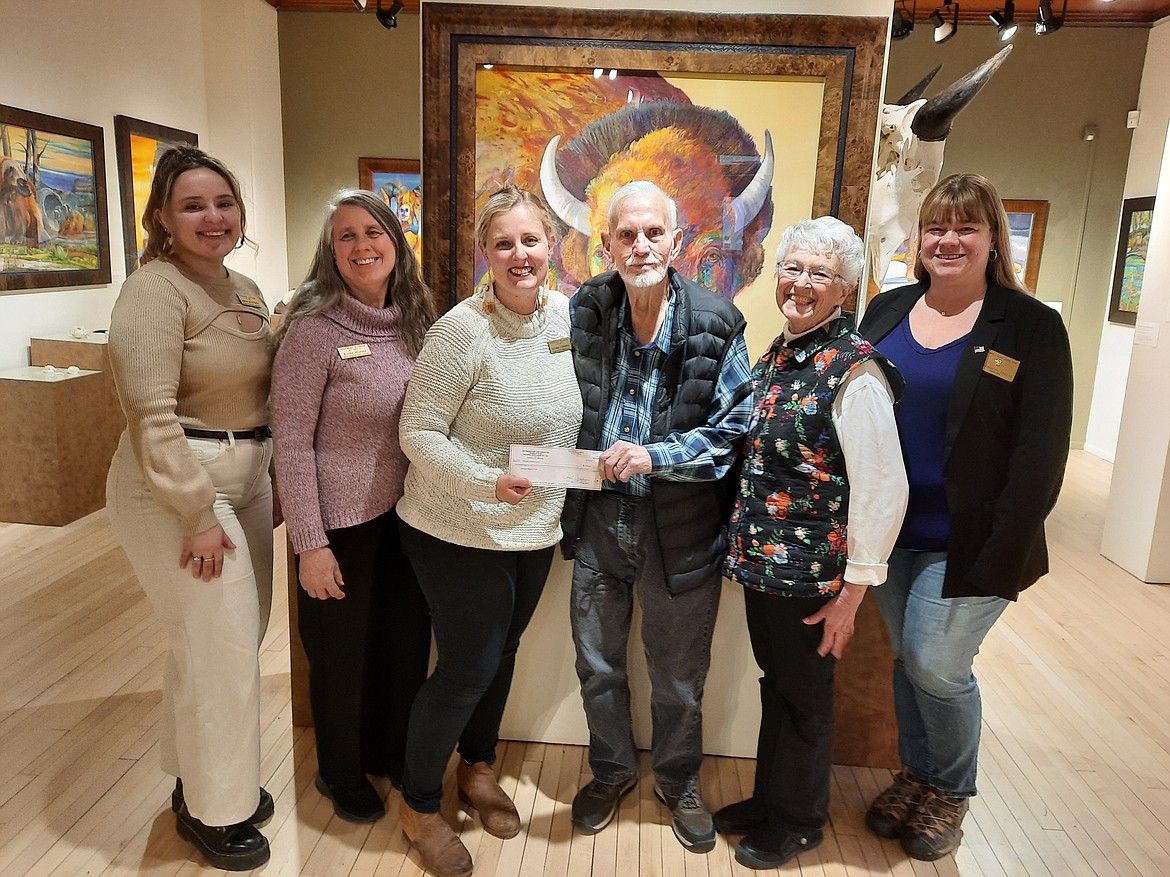
The past Exalted Rulers of Kalispell Elks Lodge No. 725 donated $500 to the Hockaday Museum of Arts to pay the entrance fee for all military members (active and veterans) and their families for visitation to the museum between Memorial Day and Labor Day. Pictured left to right, Camryn Mahnken, museum and programs assistant; Kathy Martin, education director; Alyssa Cordova, executive director; Robert Stephens, Elks past exalted ruler and past Elks Grand Lodge member; Candy Stephens, Elks past exalted ruler and past state president of the Montana state Elks; Elizabeth Zeglin, Elks past exalted…
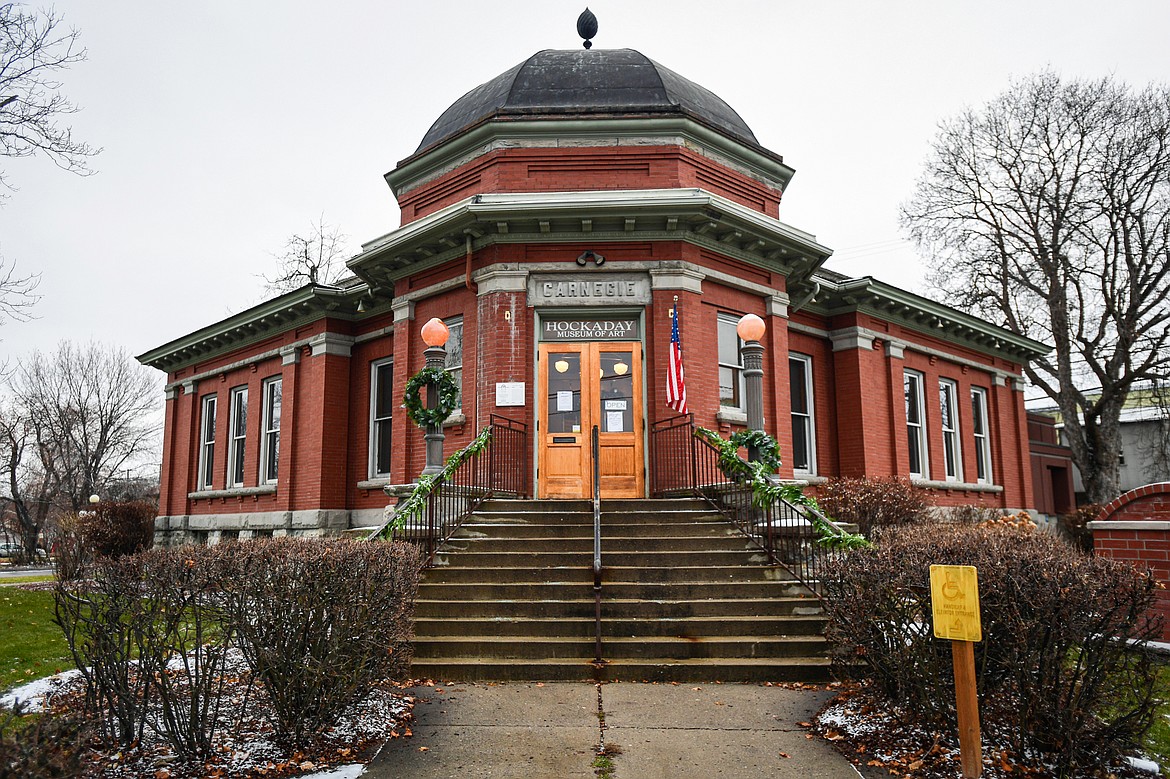
The Hockaday Museum of Art in Kalispell on Friday, Dec. 13. (Casey Kreider/Daily Inter Lake)
Casey Kreider

Blackfeet/Piikani artist Terran Last Gun paints a temporary mural on one of the gallery walls at the Hockaday Museum of Art in Kalispell on Wednesday, April 3. As part of the Hockaday's upcoming exhibition "Terran Last Gun: Piikani Visual Sovereignty," the artist created a new, site specific, temporary mural in the Hockaday galleries for both the public and the upcoming exhibition, which runs from April 5 to June 22. (Casey Kreider/Daily Inter Lake)
Casey Kreider
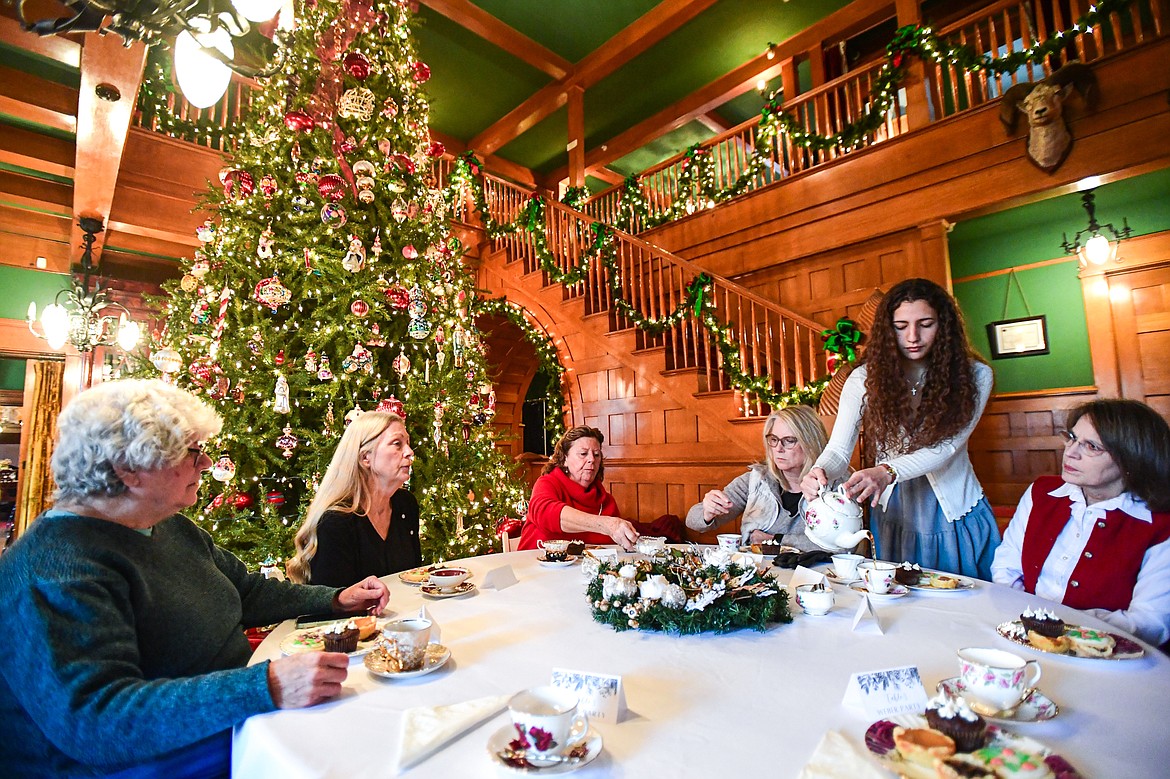
Tea and sweets are served during a Christmas Tea Party & Tour at the Conrad Mansion Museum on Saturday, Dec. 14. (Casey Kreider/Daily Inter Lake)
Casey Kreider
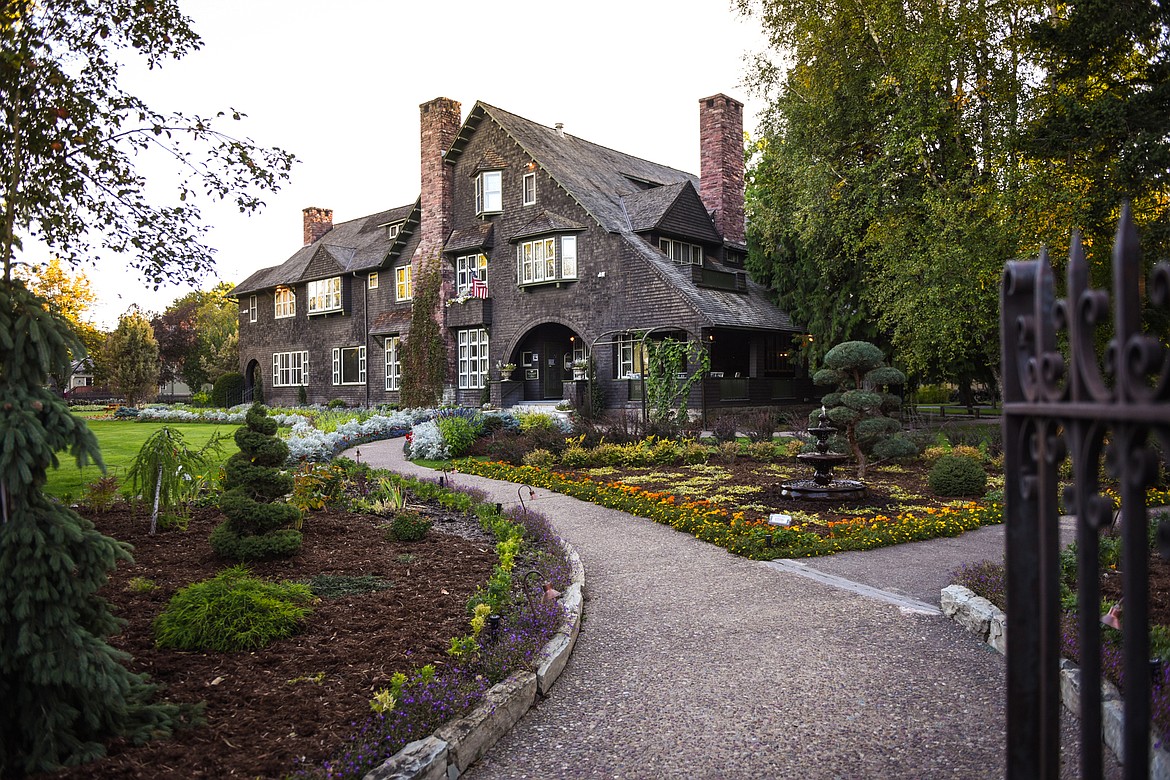
The Conrad Mansion in Kalispell on Sept. 29, 2020. (Casey Kreider/Daily Inter Lake)
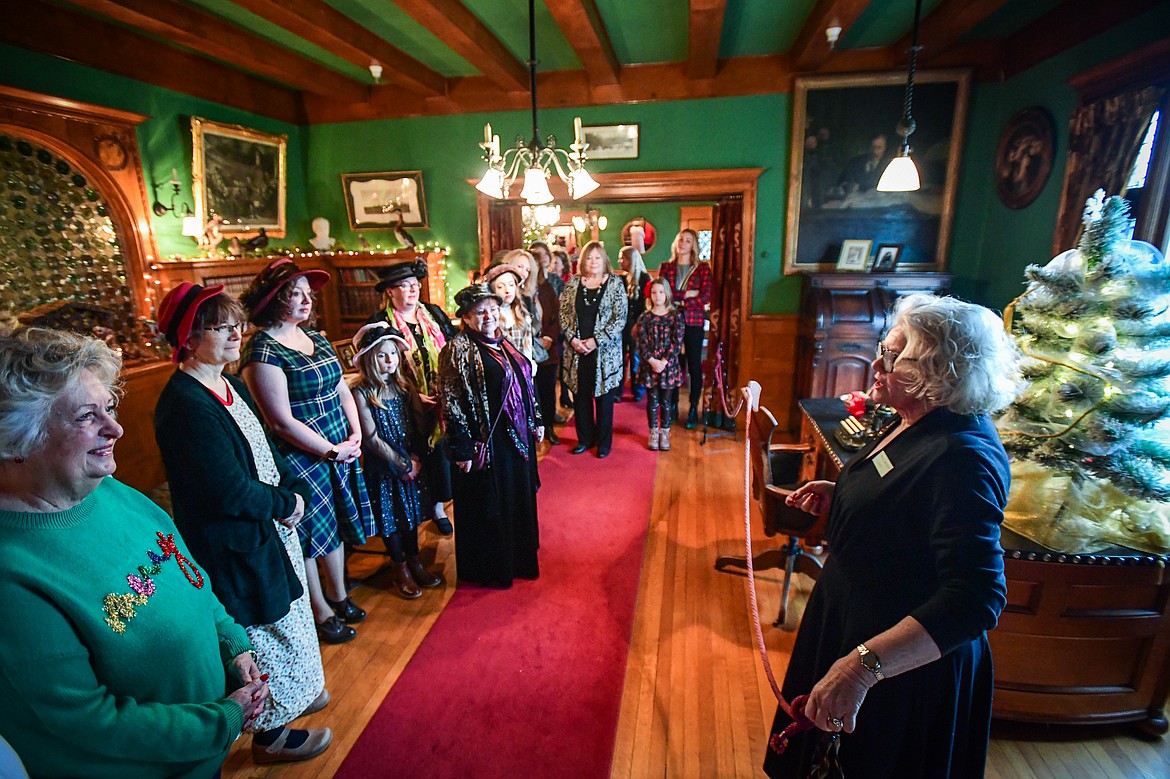
Tour guide Cindy Conner shows a group around the inside of the Conrad Mansion Museum during a Christmas Tea Party & Tour on Saturday, Dec. 14. (Casey Kreider/Daily Inter Lake)
Casey Kreider
REPORTER AND PODCAST HOST Taylor Inman covers Bigfork and the north shore of Flathead Lake for the Bigfork Eagle and the Daily Inter Lake. Her reporting focuses on local government, community issues and the people who shape life in Northwest Montana. Inman began her journalism career at Murray State University’s public radio newsroom and later reported for WKMS, where her work aired on National Public Radio. In addition to reporting, she hosts and contributes to Daily Inter Lake podcasts including News Now. Her work connects listeners and readers with the stories shaping communities across the Flathead Valley. IMPACT: Taylor’s work expands local journalism through both traditional reporting and digital storytelling. | August 9, 2026 1:10 AM
When leaders of Kalispell’s three major history museums sit down to chat and catch up over coffee, it’s a convening of the city’s “culture core.”
It was a name coined during the pandemic. When the executive directors of the Northwest Montana History Museum, the Conrad Mansion Museum and Glacier Art Museum were relatively new in their posts and facing unfamiliar territory during lockdown.
They started to meet up and collaborate on a regular basis, as they realized their institutions offered more than just a look into the area’s rich history.
“All of our institutions are located in close proximity, so you can visit all three of them in a day and then you can stay downtown and shop and eat,” said Alyssa Cordova, executive director of the Glacier Art Museum. “It’s really neat that all three of us happen to be located a few blocks away from each other and we're all in these historic buildings.”
Local history museums and other cultural institutions are more than just a treat for inquisitive minds; they are economic anchors that support the surrounding area.
Data gathered in a 2026 report developed by the University of Montana’s Institute for Tourism and Recreation Research surveyed visitors to 44 museums across two summers, which provided a look into the motivations, experiences, spending and demographics of museumgoers.
The economic impact was hard to ignore, as survey respondents visiting Montana museums reportedly generated over $352,000 in local spending, according to the Institute for Tourism and Recreation Research.
Museums serve as powerful economic drivers, creating both direct and secondary benefits through increased local spending, business activity, and employment, the report notes.
Local business advocates agree, like Lorraine Clarno, executive director of Discover Kalispell and the Kalispell Chamber of Commerce. She said the Northwest Montana History Museum, Glacier Art Museum and Conrad Mansion are “unique and individual gems for both residents and visitors alike.”
“While they are three distinctly different experiences, having them within walking distance function as a single, more compelling destination — with lower costs, longer visits, and spillover benefits for all of our businesses downtown,” Clarno said.
Museum visitor spending produces substantial ripple effects across Montana’s economy, with approximately $1.30 in total economic output generated statewide for every dollar spent by visitors, according to the Institute for Tourism and Recreation Research.
It’s flattering when visitors seek out the Northwest Montana History Museum during their stay in the Flathead Valley, said Executive Director Margaret Davis. Oftentimes, people will go to the museum while they wait for their flight to leave.
“I have to hand it to them. I mean, they could go to a coffee shop and scroll on their phone. But instead, they're coming over to learn about our history. It shows that people are looking for experiences that they know they can't get anywhere else,” Davis said.
Located in the historic Central School Building in downtown Kalispell, the Northwest Montana History Museum has 50,000 items in its collection related to the history of the region — from railroad relics to homesteader essentials. Their dedicated volunteers help facilitate museum operations, new exhibits and research opportunities.
There are a lot of factors that could drive visitors to check out local museums, like bad weather, which Davis said often brings crowds into town.
Torrential rains that caused flooding across the area, namely in the Many Glacier Valley, in late June also brought “a flood of people” into the museum.
“That was a huge day for us ... I mean, there was almost a line in the main hallway to get in. It’s the same when it's raining because all the lake folks have a cabin full of people and they want to do something. We have interactive kids' stuff in every room, so we really try to make sure we're engaging all the ages,” Davis said.
Museums charge admission, seek grants and raise funds as nonprofits to make ends meet. It’s important to keep diversified streams of revenue, Davis said. At the Northwest Montana History Museum, people or businesses can become members by giving on an annual basis.
They currently have around 350 members.
“We have a healthy number of people who either just want to support us or they have roots here and they just want to keep tabs [on the museum]. And they clearly understand that in order to have the thing you enjoy, you have to support it, right?” Davis said.
Memberships for museums, like other nonprofits, provide immediate and unrestricted funds that serve as a predictable and ongoing funding base, according to the Society for Nonprofits. It also gives people a way to have a more intimate, ongoing relationship to the organization.
The Glacier Art Museum has more than 700 members, including 65 new members who joined in 2025. The museum, housed in a turn-of-the-century Carnegie Library Building, holds 2,500 artworks focusing on Montana and Glacier National Park.
Cordova said 60% of the museum's revenue comes from donors and sponsors, around 20% from fundraising events and the remaining 20% comes from a combination of grant funding, admission and gift shop sales.
Events like New Artists, which highlight the artwork of local high schoolers, have been happening annually for 40 years. It also hosts a children’s art exhibit, which showcases the work of young budding artists. Cordova said some of those children grow up to become established artists, who can look back on their involvement with the Glacier Art Museum as adults. Being the only art museum between Missoula and Spokane, Cordova said the institution serves an important purpose for the region.
“This museum being here 57 years has created an amazing art community here. I think in the art ecosystem, it's really special that this town does have an art museum and other art opportunities as well. It all kind of works together to create that community,” Cordova said.
Events like these are part of how museums and other cultural institutions establish themselves in the minds of patrons, who may eventually want to join as a member or donate to the cause.
Events also raise necessary revenue for museums, like at the Conrad Mansion Museum, where themed tours are some of the biggest draws of the year, taking place during the fall and holiday season, according to Brit Clark, executive director of the mansion.
“Being a Victorian mansion, we really have a lot to work with. We can do really beautiful, spooky Victorian Halloweens and really elegant, charming Christmases,” Clark said.
Clark started working at the Conrad Mansion Museum in 2018, but she fell in love with the house as a tour guide in her college years.
Originally built as the dream home of town-founder Charles Conrad and his wife Lettie, the mansion provides a look back at what life was like in the late 1800s and early 1900s, as well as the founding of Kalispell.
Clark said historic house museums let people immerse themselves in the past.
“A lot of times people walk through and they're the only ones in the house, so they really get to just feel like the family went out to dinner and they'll be right back, like they're just in someone's house,” she said.
Clark said another crucial part of the story is how important community involvement is to the preservation of the mansion. Without the support of community members in the 1970s, the mansion would have continued to fall into disrepair after the deaths of most of the original members of the Conrad family.
These days, the grandson of Alicia Conrad sits on the mansion board, which is comprised of Kalispell residents and history enthusiasts alike. Though the mansion is owned by the city, Clark said the nonprofit that runs the museum is 100% financially responsible for it. While admission, tours and fundraising efforts provide enough revenue to make ends meet, sometimes repairing the historic building can be a daunting task.
“Right now, wiring is a big project we have, getting the porch repainted — I mean, there's so many projects ... But we just have to regroup, we have committee meetings and prioritize our list of projects,” Clark said.
Maintaining the old buildings the museums are housed in is a struggle for members of Kalispell’s “culture core.” Because of the nature of older buildings, Davis said energy costs are probably the biggest expense, followed by staffing.
There are costs associated with advertising, too. But in many cases, visitors seeking out local museums will have a good chance of finding them online. Clark said the Conrad Mansion has been listed as the No. 1 attraction in Kalispell by TripAdvisor for several years, which she believes brings a lot of people through the doors.
“Every now and then, you'll get people who are here specifically for the three museums, but a lot of times it's just something fun they're looking to do while they're taking a break from nature,” Clark said.
Visiting downtown Kalispell’s museums in one day inspired the “culture core” to introduce Locals Day, where anyone with a Montana ID can pay $10 for a passport for admission to all three museums. They also work together with local partners to jointly fund the Downtown Kalispell Walking Tour, which showcases the evolution of Kalispell as a cultural, economic, and transportation hub,” according to Clarno.
This collaboration includes joint marketing materials, combined ticketing, or shared event calendars, which spread fixed costs across three organizations instead of each bearing them alone.
“This type of clustering gives the city a distinct, marketable identity as a walkable historic and cultural downtown, which serves them well in marketing all the wonderful things to do in Kalispell,” Clarno said.
While visitors make up most of the foot traffic in the summertime, locals still account for the majority of local museum support.
“Throughout the year, our school tours, our members and our public events draw local attendance. I'd say in terms of funding, most of our support does come locally, which is also again proof of value,” Cordova said.
Nearly 99% of survey respondents viewed museums as important or very important to the community, often describing them as “hidden gems” and “essential local assets,” according to the Institute for Tourism and Recreation Research.
Speaker series are another draw for locals, which have typically been supported by grant funding in the past. Grants have allowed local museums to facilitate new exhibits, bring in out-of-town speakers and create events that the community will turn out to see.
In 2025, the landscape for federal grants completely changed following massive cuts made by the Department of Government Efficiency, or DOGE. Hit hard was Humanities Montana, the state’s humanities council and federal-state partner of the National Endowment for the Humanities. Executive Director John Knight said last year’s federal award was canceled for the first time in the organization’s history, which led to layoffs and cuts for programming.
As the conduit between the National Endowment for the Humanities and the public trust in Montana, the nonprofit previously took care of the financials for public speaker series and other programming across the state.
“The other loss is really kind of cultural. A lot of our programs, including our speakers' program, were really responsive to different regions and communities across the state — especially rural communities, like in Eastern Montana and our tribal nation communities, who were helping us understand and drive what type of programming that could be seen in their region,” Knight said.
When funding for that programming was taken away, many institutions didn’t have the infrastructure to continue developing those cultural resources, Knight said. The organization cancelled 77 programs last year, with 6,248 projected participants impacted, according to the organization's 2025 Annual Report.
“A lot of our communities ended up honoring those programs and finding a way to pay those speakers, even if it was just a small stipend ... with some support from the Montana 250 Commission, the Montana Arts Council and the Montana Cultural Trust Grant,” Knight said.
Their federal award was partially reinstated last year. But the challenges continue — Humanities Montana did not have access to funds that Congress appropriated in 2026 until June of this year. Of that funding, they’ve only been able to access 49% of the full amount, Knight said.
“We started to bring back some speaker programs under an umbrella program called Montana Voices. And now that we have access to some of our National Endowment for the Humanities dollars, we're looking to allocate some of those funds to build that programming back up over the next couple of years,” Knight said.
These cuts affected an exhibit at the Glacier Art Museum, according to Cordova, who said funding previously approved for a three-day indigenous-focused program in 2025 was reneged.
"I'm just still scratching my head over it because it was funding that was voted on and approved. We already incurred some cost on those grants that we had applied for and received,” she said.
The museum had contracted out some Indigenous speakers, teachers and artists for the programming through Humanities Montana, Cordova said.
“We just couldn't do the program unfortunately and we did have to eat some initial cost, but it wasn't a large amount in the grand scheme of things,” she said. “It was really unfortunate because we’re a community connector and we missed out on that opportunity to do what we do best — which is support artists and what they do.”
Even though opportunities for grants and municipal funding are decreasing, private donors have stepped up, she added, as the cuts have pushed nonprofits to increasingly rely on individual donors as their main revenue source.
As museums navigate these changes, those who run them prioritize their mission to educate and preserve local history. Davis said to her, like many other institutions, the Northwest Montana History Museum should remain a place where community members can gather and be part of the living history of the community.
"I feel like we're a community center, and that's kind of the role that this building has always played. We hold 150 events — that’s a lot of events. But I just want this to be a place where people can meet,” Davis said.
Reporter Taylor Inman can be reached at 406-758-4440 or [email protected]. If you value local journalism, pledge your support at dailyinterlake.com/support.
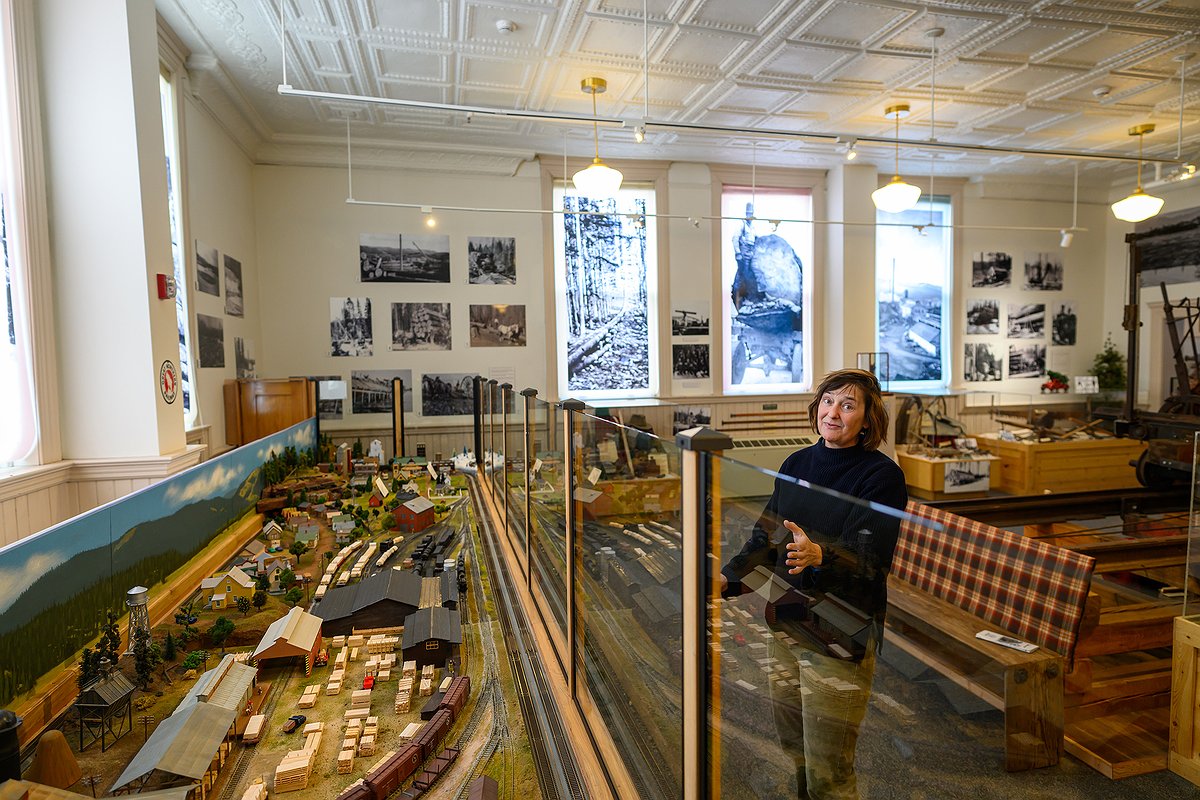 Northwest Montana History Museum Director Margaret Davis stands near a display featuring an HO scale model train. (Chris Peterson/Hungry Horse News)
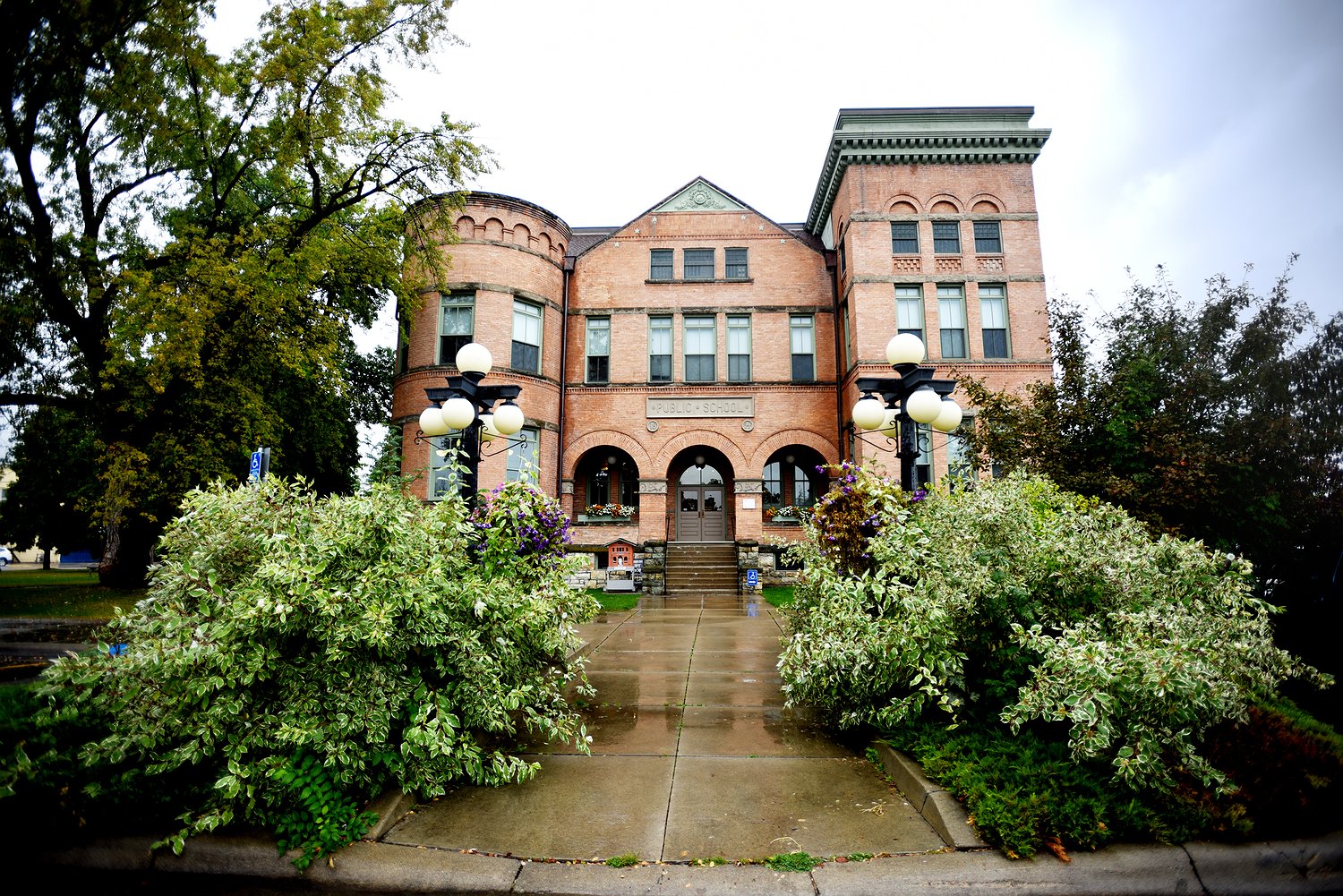 The historic Central School building, which houses the Northwest Montana History Museum, is seen in downtown Kalispell in this 2019 file photo. (Brenda Ahearn/Daily Inter Lake)
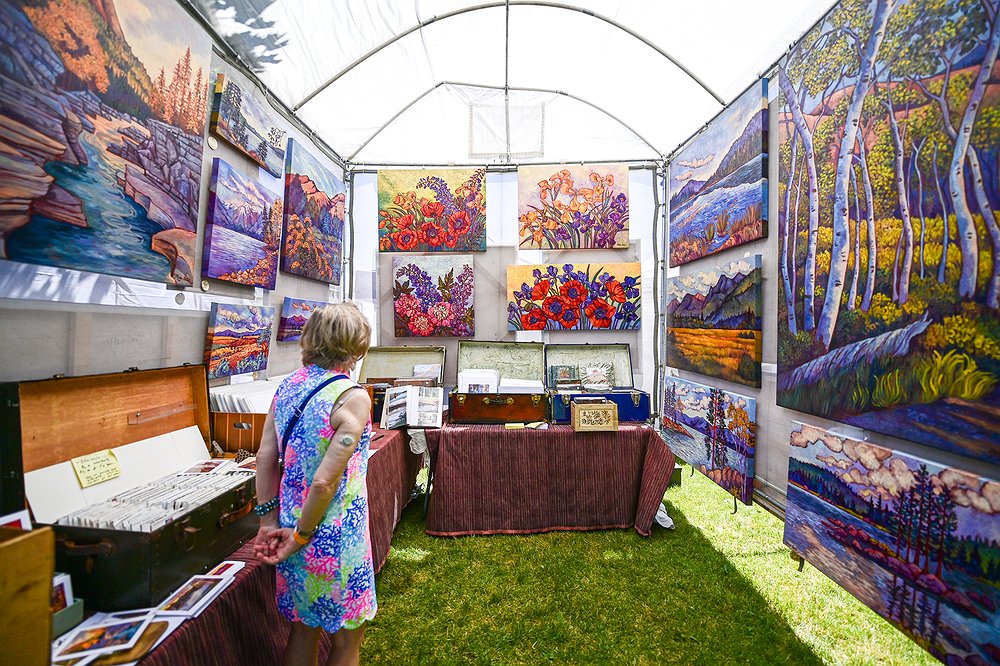 A visitor checks out the paintings of Maia Leisz at the Maia Leisz Fine Art booth at Glacier Art Museum's 56th Arts in the Park in Depot Park on Friday, July 10. (Casey Kreider/Daily Inter Lake)
Casey Kreider
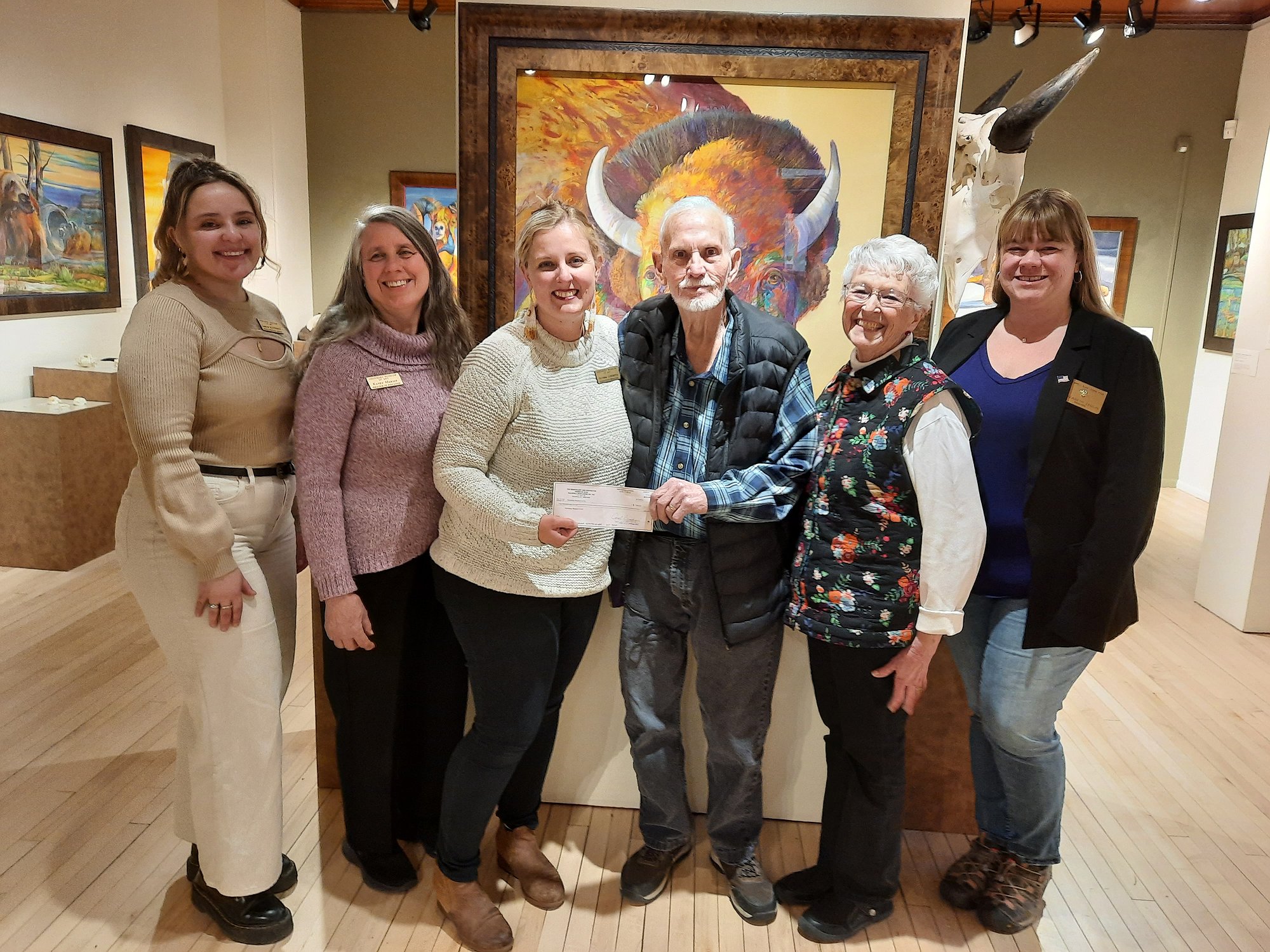 The past Exalted Rulers of Kalispell Elks Lodge No. 725 donated $500 to the Hockaday Museum of Arts to pay the entrance fee for all military members (active and veterans) and their families for visitation to the museum between Memorial Day and Labor Day. Pictured left to right, Camryn Mahnken, museum and programs assistant; Kathy Martin, education director; Alyssa Cordova, executive director; Robert Stephens, Elks past exalted ruler and past Elks Grand Lodge member; Candy Stephens, Elks past exalted ruler and past state president of the Montana state Elks; Elizabeth Zeglin, Elks past exalted ruler and current state president of the Montana state Elks.
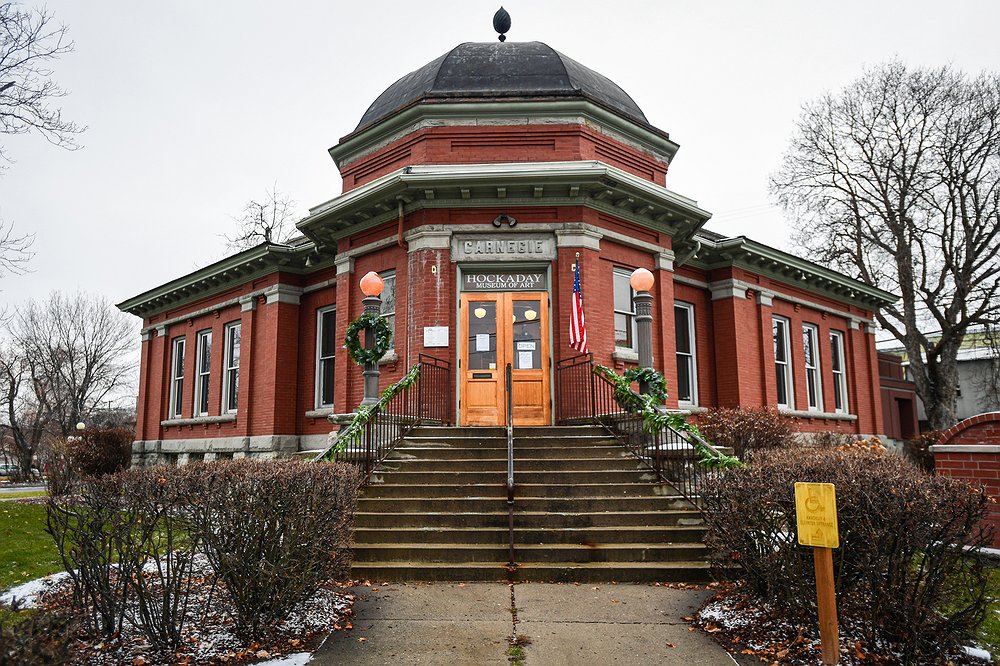 The Hockaday Museum of Art in Kalispell on Friday, Dec. 13. (Casey Kreider/Daily Inter Lake)
Casey Kreider
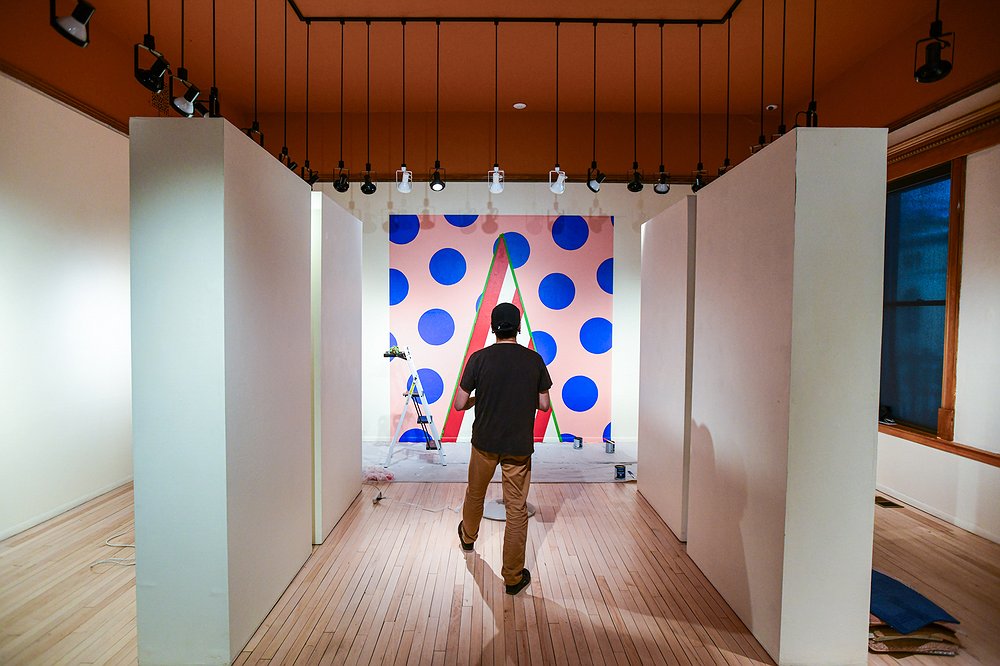 Blackfeet/Piikani artist Terran Last Gun paints a temporary mural on one of the gallery walls at the Hockaday Museum of Art in Kalispell on Wednesday, April 3. As part of the Hockaday's upcoming exhibition "Terran Last Gun: Piikani Visual Sovereignty," the artist created a new, site specific, temporary mural in the Hockaday galleries for both the public and the upcoming exhibition, which runs from April 5 to June 22. (Casey Kreider/Daily Inter Lake)
Casey Kreider
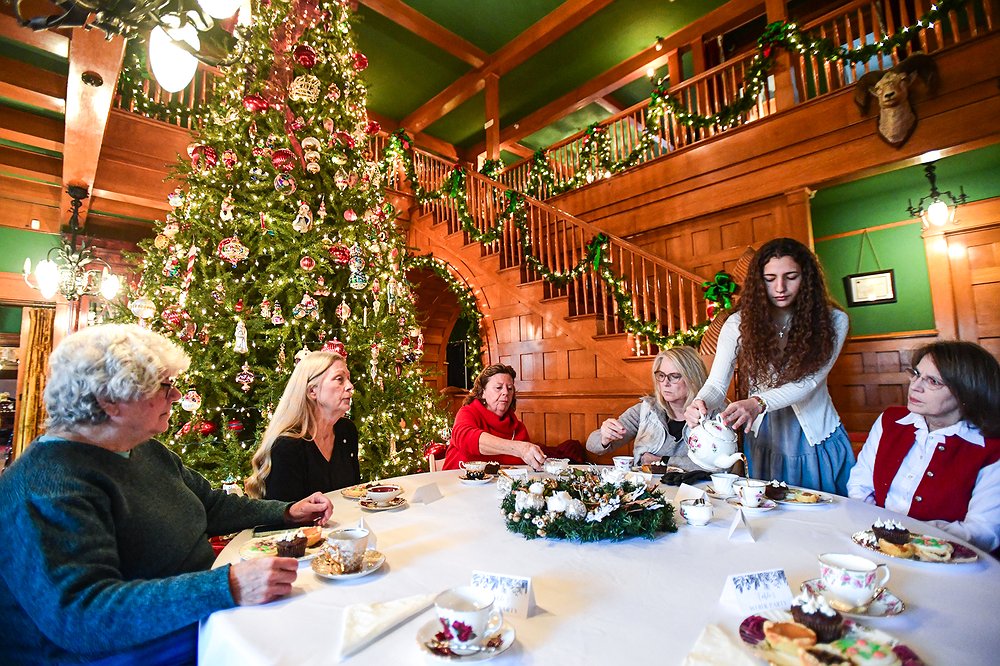 Tea and sweets are served during a Christmas Tea Party & Tour at the Conrad Mansion Museum on Saturday, Dec. 14. (Casey Kreider/Daily Inter Lake)
Casey Kreider
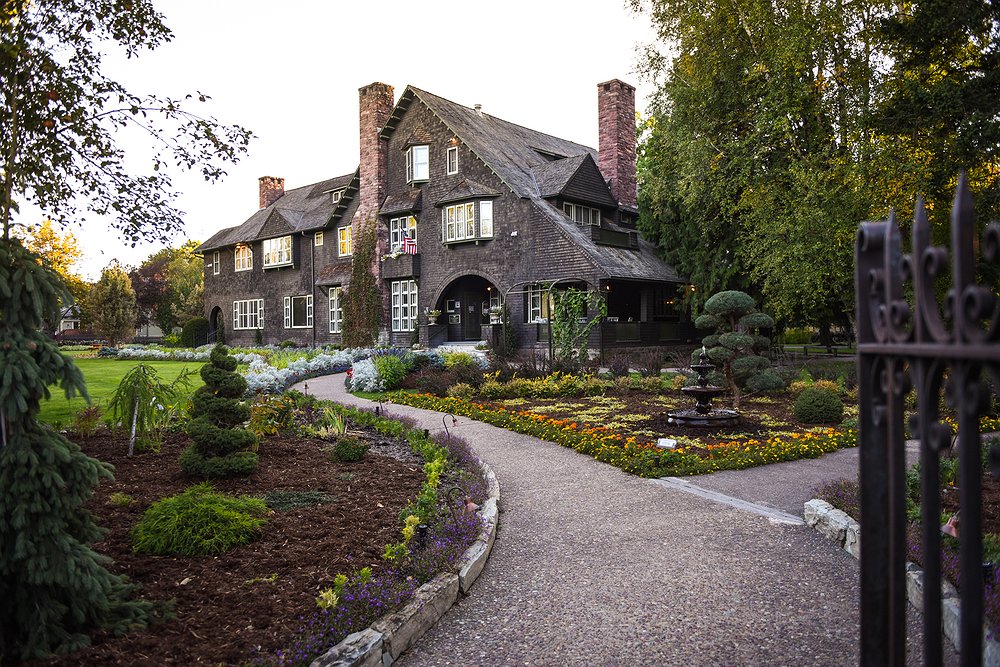 The Conrad Mansion in Kalispell on Sept. 29, 2020. (Casey Kreider/Daily Inter Lake)
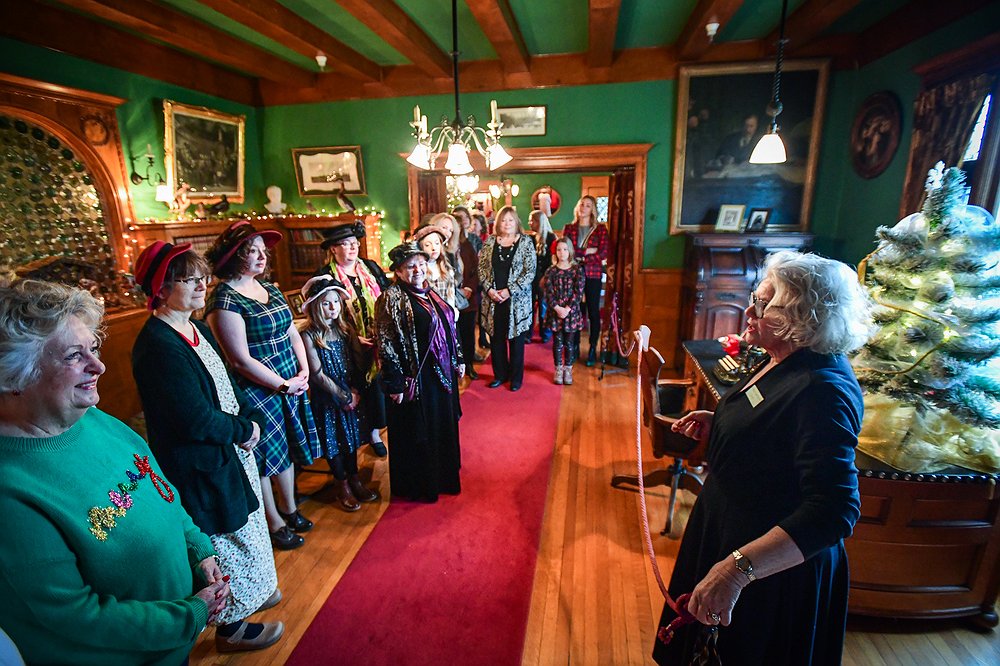 Tour guide Cindy Conner shows a group around the inside of the Conrad Mansion Museum during a Christmas Tea Party & Tour on Saturday, Dec. 14. (Casey Kreider/Daily Inter Lake)
Casey Kreider
ARTICLES BY TAYLOR INMAN
No measles cases identified in Flathead County following recent exposure alert
The Flathead City-County Health Department hasn’t identified any measles cases in the county following an exposure alert that originated in the West Glacier area at the beginning of September.
Deep Dive: Outdoor Lab part one, watermelon snow and bumble bee detectives
Daily Inter Lake reporter Hailey Smalley talks with host Taylor Inman about the first of her two stories in her Outdoor Lab series - snow algae at Logan Pass and a bumble bee survey in an alpine meadow.

Logan Health nurses union ratifies new contract with major across-the-board raises
Nurses at Logan Health in Kalispell say their newest union contract includes "life changing" pay raises that benefit both tenured and new nurses.