
Huckleberry sellers feel the squeeze during poor harvest year
TAYLOR INMAN | Hagadone News Network | UPDATED 1 month, 2 weeks AGO
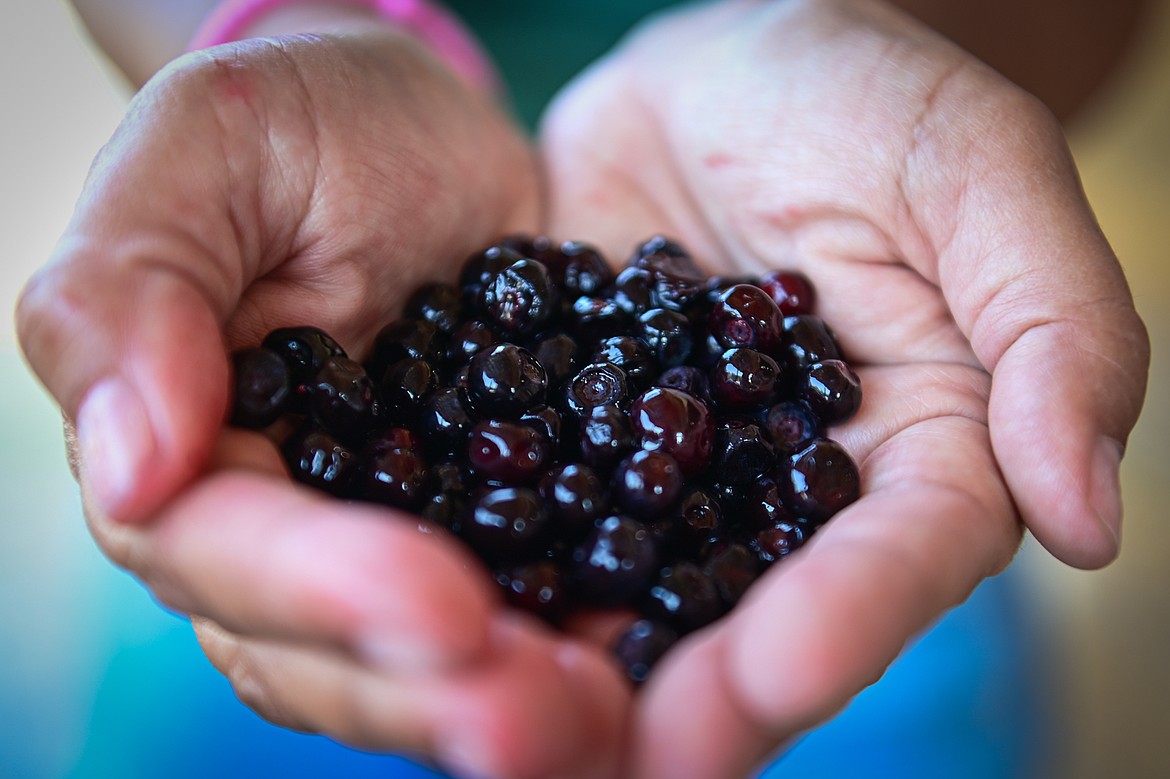
Aleisha Rust holds a handful of huckleberries outside Mama B’s Jubilee in Bigfork on Tuesday, Aug. 11. (Casey Kreider/Daily Inter Lake)
Casey Kreider
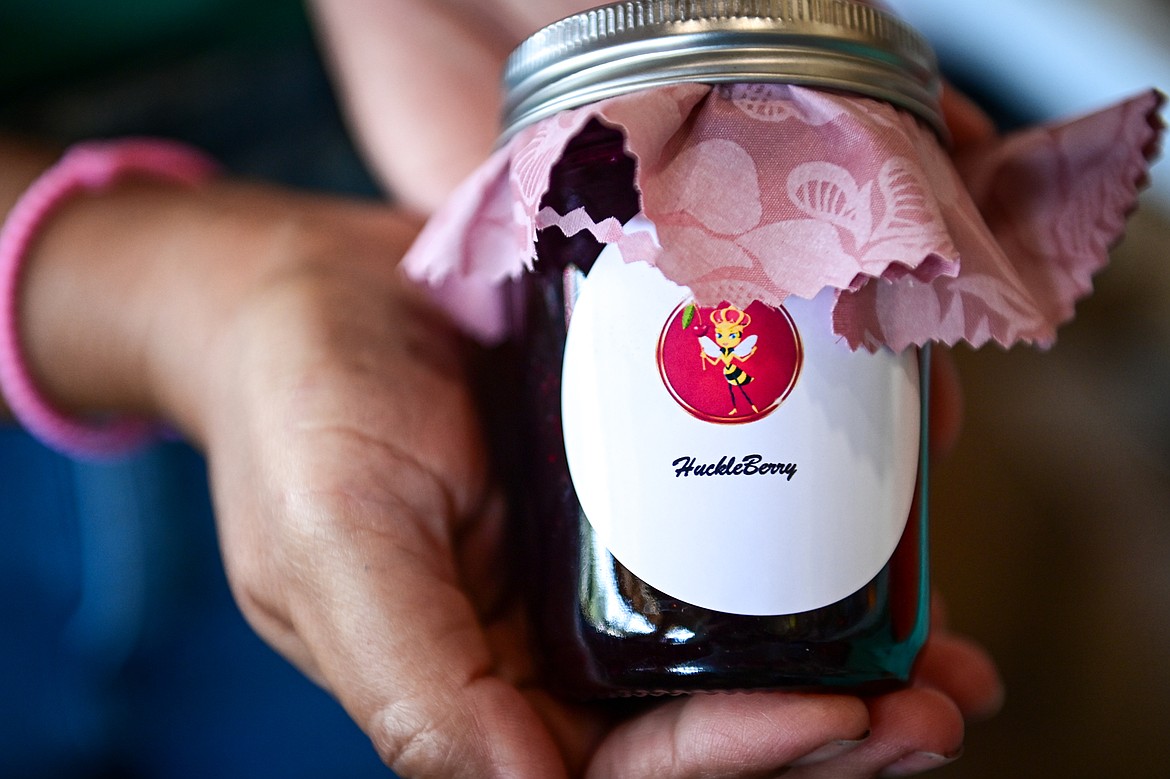
Aleisha Rust holds a jar of huckleberry jam sold at Mama B’s Jubilee in Bigfork on Tuesday, Aug. 11. (Casey Kreider/Daily Inter Lake)
Casey Kreider
REPORTER AND PODCAST HOST Taylor Inman covers Bigfork and the north shore of Flathead Lake for the Bigfork Eagle and the Daily Inter Lake. Her reporting focuses on local government, community issues and the people who shape life in Northwest Montana. Inman began her journalism career at Murray State University’s public radio newsroom and later reported for WKMS, where her work aired on National Public Radio. In addition to reporting, she hosts and contributes to Daily Inter Lake podcasts including News Now. Her work connects listeners and readers with the stories shaping communities across the Flathead Valley. IMPACT: Taylor’s work expands local journalism through both traditional reporting and digital storytelling. | August 18, 2026 12:00 AM
Tom Corl has “high hopes for high up hucks” as the season for the region’s most famous berry is playing out to be one of the worst in about a decade, according to the longtime huckleberry picker.
The Essex resident said he has been picking berries for 40 years. The 76-year-old was in his 30s when he lost his job at a local lumber mill and ever since, he’s been making his money from the forest — foraging berries and mushrooms, as well as selling firewood.
August is typically the best month for huckleberry picking, so he’s hoping to recoup a little bit as the berries come in at higher elevation.
“I like the later berries better because I think they have more flavor to them. I’ll pick until I get snowed out up on the ridges. But I can't tell you where I get them, you know,” Corl said.
Last summer, Corl was overflowing with huckleberries, with about 80 gallons picked by this time last year. But in early August this summer, he’d only picked about 7 gallons.
It’s the time of year where locals and visitors alike are trying to get their hands on the small, sweet and tangy berries. But the poor harvest is leaving many local pickers empty-handed and causing stand owners to dig into their frozen supply or get berries from outside of the area.
Brenda Koch, owner of Mama B’s Jubilee in Bigfork, said while she usually has community members come in to sell huckleberries, no one has turned up yet this year. She’s heard it’s particularly hard to find the berries in the Bigfork area, while a few places in Hungry Horse or Blacktail Mountain are yielding some productive berry patches.
The stand, located off Montana 35 near Harvest Foods in Bigfork, sells Flathead cherries, jams and homemade gifts every summer, along with lots of huckleberries. Although she can’t get as many local huckleberries as usual, she still has a decent supply for people to purchase. She’s opted to buy from a larger seller, who works with pickers across western Montana, Idaho and Washington to sell to restaurants and stores.
Because there are less pickers in general, that means prices go up.
“That obviously will drive up the price because now the people who are picking will have a little bit more say on how much they're going to get for what they found. And there's still the same amount of people wanting to buy them,” Koch said.
She typically sells huckleberries for around $80 a gallon, but this year that’s gone up to around $100 a gallon. In other places, she’s heard the price can jump to $125 a gallon.
“We had to work hard to make sure that we had enough in our freezers for jam and all that stuff throughout the season. I wasn’t sure how much longer we're going to have them, but I think we have enough to get us through the end of the month,” Koch said.
71-year-old Mark McGee said he also has a supply of huckleberries this year, but it’s nothing compared to last summer.
“It's just not a good year. Last year was the best in 40 years, every cannery in the valley was full,” he said.
Also known as “huckleberry Jack,” he opened the first cherry stand in the Coram area 35 years ago. His stand today is in front of the Dew Drop Inn off U.S. 2, and everyone who stops by gets a free sample — including tourists who want to try their first huckleberry.
“It sells the fruit a lot better than I do,” McGee said.
He used to be a picker himself but now opts to buy from others. Running the stand for so long, he has strings he can pull to get some local berries. But when the harvest is this bad, he has to dig into frozen reserves from last year, he said.
This spring saw warm weather followed by a cool, rainy June, but those conditions don’t necessarily make for a bad huckleberry harvest, according to U.S. Geological Survey Supervisory Research Ecologist Tabitha Graves.
Any plant needs combinations of certain timing temperatures and precipitation, but pollination is another factor that can make or break berries.
“For berry production in particular, the Vaccinium genus, which huckleberries are part of, 85% of their fruit set and yield depends on pollination. In the mix of things that are out there, they're a species where pollination is pretty important, and they're an early flowering species,” she said.
One of the most abundant pollinators is bumblebees, she said. A study she’s taking part in on the Flathead Reservation found 85% of the bees that were observed visiting Vaccinium were bumblebees.
A relatively cool and wet spring can be fine for huckleberries and for bumblebees, she said, but more precipitation in some locations could cause conditions where bees don’t want to get out and fly.
“Bees fly around on the warmer days when it's above 50 to 55 degrees, it's kind of a lower cutoff. And when there's a lot of cold wet days in a row, that can mean there's not bees flying around enough during the time when the flowers are out,” Graves said.
Graves said there still could be berries in some places, but maybe not in the patches that people habitually go to every summer. There’s also a lot of variation on when berries come in and become ripe. She said in her research, they’ve seen timing differences of up to a month for when the bushes flower and when berries ripen across several sites at high and low elevations in Glacier National Park.
Along with being important to 41 different native bee species, huckleberries are a dependable food source for local wildlife. Earlier this month, Montana Fish, Wildlife and Parks put out a notice for people to be extra aware of bears looking for alternative food sources this fall due to the poor berry turnout. The agency also recommended being wary in patches that still have huckleberries, as bears will be competitive for their food.
For Corl, the poor huckleberry harvest will hurt his bottom line. He sells to places like Glacier Distilling in Coram, but the majority of his sales come from people who know him — like many farming families from the east side of the Continental Divide who travel to Essex to buy “30 gallons in one whack,” he said.
He’ll be alright with his other means of income, but the worst part is how it will affect his favorite winter activity.
“It's going to affect my ice fishing! I won’t have gas money to go ice fishing,” he said with a laugh.
Reporter Taylor Inman can be reached at 406-758-4440 or [email protected]. If you value local journalism, pledge your support at dailyinterlake.com/support.
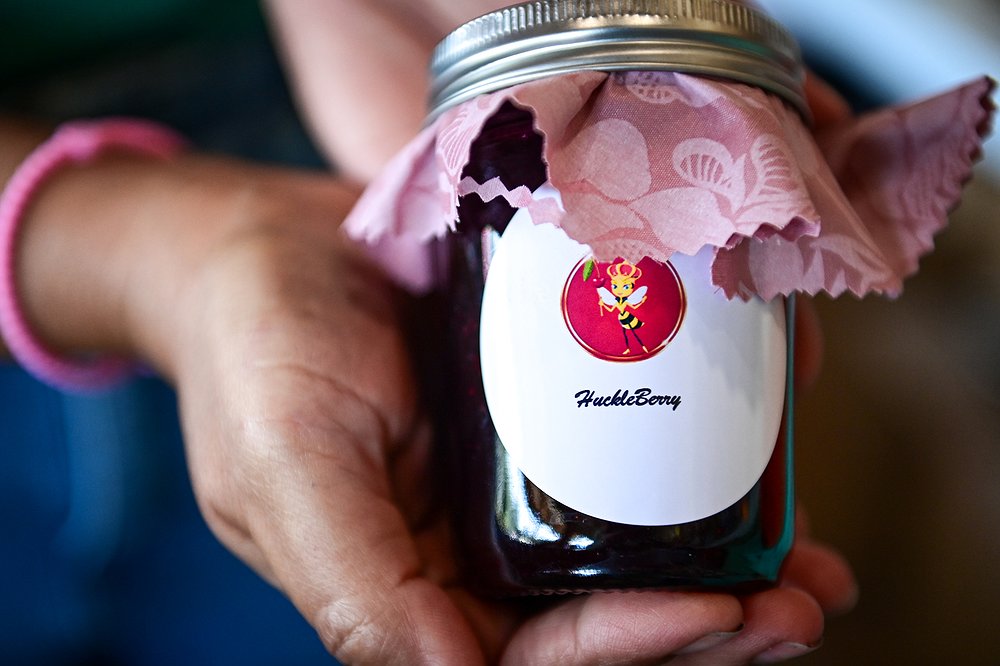 Aleisha Rust holds a jar of huckleberry jam sold at Mama B’s Jubilee in Bigfork on Tuesday, Aug. 11. (Casey Kreider/Daily Inter Lake)
Casey Kreider
ARTICLES BY TAYLOR INMAN
No measles cases identified in Flathead County following recent exposure alert
The Flathead City-County Health Department hasn’t identified any measles cases in the county following an exposure alert that originated in the West Glacier area at the beginning of September.

Deep Dive: Outdoor Lab part one, watermelon snow and bumble bee detectives
Daily Inter Lake reporter Hailey Smalley talks with host Taylor Inman about the first of her two stories in her Outdoor Lab series - snow algae at Logan Pass and a bumble bee survey in an alpine meadow.

Logan Health nurses union ratifies new contract with major across-the-board raises
Nurses at Logan Health in Kalispell say their newest union contract includes "life changing" pay raises that benefit both tenured and new nurses.