SEPT NIBJ: Meeting people where they are: North Idaho's evolving approach to addiction care
JACK DEWITT | Hagadone News Network | UPDATED 1 month, 3 weeks AGO
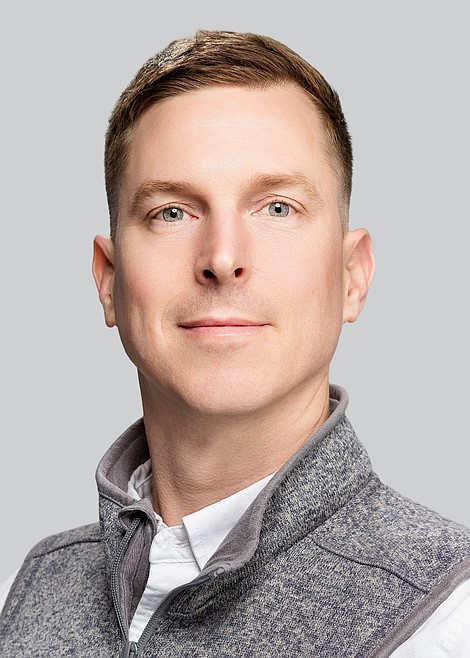
Dr. Milam
Courtesy of Kootenai Health
In the medical landscape of North Idaho, those who suffer from substance abuse disorder can be left to the wayside. Distrust, judgement and suspicion can cloud the care that they receive, and can even be a roadblock in their journey to sobriety.
Dr. Benjamin Milam, an internal medicine and addiction medicine physician with Kootenai Health, has been working to change that, working to build a continuum of substance abuse care since arriving in the region.
Milam completed his addiction medicine fellowship at UC Riverside in southern California before his move north.
“When I got here, Kootenai did not have, kind of, a substance abuse clinic going, so we started that in 2023,” said Milam. “We’ve kind of just been doing that ever since, and getting the word out and seeing more and more people.”
The clinic is now linked with more intensive outpatient programming, forming what he describes what he calls “a nice, cohesive group.”
Milam emphasizes that no single solution works for everyone. The goal is to “catch them where they’re most likely to be” and lower barriers for access.
Kootenai Health operates an adult recovery unit, right now it primarily serves alcohol withdrawal.
“It’s really important that everyone knows, ‘Hey, I can always go to this place’,” Milam said.
Detox, he stressed, is only the first step. From there, patients can move into outpatient or intensive outpatient programs, referred to as IOPs, Alcoholics Anonymous or church-based recovery groups such as Celebrate Recovery.
“Peer support group is the term that we give people who are going to groups that aren’t really run by psychiatrists or counselors or doctors,” he explained. “This is like people supporting people at its core.”
Other pathways include drug courts that frequently mandate IOPs, private treatment and counseling and private rehabilitation or detox centers.
At the medical-management level sits addiction clinics staffed by psychiatrists, internists and specialists like Milam. These clinics address underlying causes, often mental health, while offering medication options when appropriate.
“Our job is to look at the underlying causes that may be contributing to substance abuse and offer solutions,” he said. “Medicine is just like knowledge, right? It’s a tool that will make things easier, but it’s not going to make it easy. It’s not going to solve the problem for you.”
For those who need a more rigid structure, inpatient rehabilitation remains limited in North Idaho, although options exist in Spokane.
The demand for addiction centers is steady and multifaceted. “All of the above,” Milam replied when asked whether his clinic sees more new patients, returning patients or a rising tide of all patients. According to Milam, substance abuse, “doesn’t really care about your age, or sex, your creed, your demographic. It is pretty equal opportunity across the board.”
Drug abuse disorder isn’t just an acute symptom of something larger; it is a chronic, relapsing issue.
"You’re always going to have this issue, you may do very well, but there is always this kind of pull at you,” he said.
Among his worries for the area, Milam voiced concern about Kratom. Sold widely at gas stations, the product is increasingly being sold in high concentration forms. It draws users from a wide range of demographics, including those who may use the substance to help taper off of opioids.
“It is related in a lot of overdose deaths,” said Milam.
Some local jurisdictions like Kellogg have moved to restrict it, but at a state level, policy decisions remain unclear.
Milam spoke frequently about the importance of framing substance abuse as an illness rather than a weakness. He explained how the emotional centers of the brain can “turn off” the prefrontal cortex during withdrawal, leading to irrational decision making.
He shared a harrowing example from his earlier work in southern California whose memory remains with him. After experiencing some bleeding, a young woman had come to where Milam was working, where tox screen came back positive. She ended up having a spontaneous abortion, of which drug use is a “huge” risk factor for, which led to her being placed into the ICU for blood loss and risk of infection.
“From that point on, no one talked to her,” he said.
He talked about how the other staff would whisper amongst themselves and chastise the young woman behind her back.
“If you see that person as like, a person who killed their kid, right? It’s hard not to feel against them, right?” asked Milam.
Eventually, Milam sat and spoke with the young woman and learned her story. Milam said that she told him that she had been trafficked at a young age and had first received drugs at the age of eight, from her uncle.
“This is not what she wanted, you know? This is not her choice,” he said.
Adverse childhood events, he noted, are strongly linked to later substance use.
Genetics play a role in a person’s chances of addiction with an around 50% increase in vulnerability if a parent has a substance abuse disorder, but they are not destiny. Environment and expression matter deeply.
“It’s a probability, it’s not like a certain thing,” Milam said. “What you do in life in order to take care of yourself allows you to change your likelihood.”
Milam’s message is hopeful, treatment exists across a spectrum, from peer support to medical intervention, and local access is expanding. The starting point for help can be as simple as a conversation with a primary care doctor, he said.
The resources are there, the work however, is not easy.
“Nothing about this process is easy, but the more you have, the more tools at your disposal, the easier it can be,” Milam said.
ARTICLES BY JACK DEWITT

Little leads in fundraising
Idahoans are primary donors to gubernatorial candidates

Local seniors sound off on Social Security increase
Some say it will increase Medicare premiums