
Expanding access to rural healthcare is 'just the right thing to do' says new Logan Health Flathead Valley president
TAYLOR INMAN | Hagadone News Network | UPDATED 1 month, 3 weeks AGO
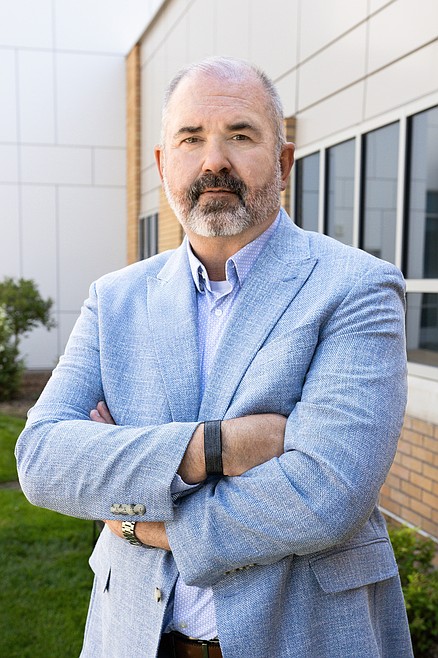
Josh Neff, president of Logan Health Flathead Valley (Photo courtesy of Logan Health)
Edited with Google AI
REPORTER AND PODCAST HOST Taylor Inman covers Bigfork and the north shore of Flathead Lake for the Bigfork Eagle and the Daily Inter Lake. Her reporting focuses on local government, community issues and the people who shape life in Northwest Montana. Inman began her journalism career at Murray State University’s public radio newsroom and later reported for WKMS, where her work aired on National Public Radio. In addition to reporting, she hosts and contributes to Daily Inter Lake podcasts including News Now. Her work connects listeners and readers with the stories shaping communities across the Flathead Valley. IMPACT: Taylor’s work expands local journalism through both traditional reporting and digital storytelling. | August 31, 2026 12:00 AM
Josh Neff remembers the lessons learned in the cockpit of his helicopter. As a former flight paramedic, he had to consider a thousand different circumstances at once with his team from takeoff to landing, while providing critical care to a patient.
"Sometimes in the thick of things, when we're dealing with problems acutely, like on a day-to-day basis. With the fires that pop up, there's something to be said about taking that quiet, quick pause to look up and see what our surroundings are doing. Do a double-check with the team and then carry on with the work at hand," Neff said.
Not only does his clinical background give him a little bit of "street cred" in his leadership roles, but the philosophy behind those days as a young paramedic has guided him throughout his 20-year career in healthcare. Checking in with patients and being involved with staff is a priority for Neff as the new president of Logan Health Flathead Valley.
Neff will lead Logan Health Medical Center and Logan Health Whitefish in partnership with Chief Medical Officer dyad partners Dr. Cory Short and Dr. Jonathan Amick.
He started the position on July 13 after leaving his post as president of Mercy Hospital in Durango, Colorado, a 90-bed regional medical center and Level III trauma center. He also served as system vice president of integration and rural health for CommonSpirit Health’s Mountain Region, where he worked with critical access hospitals and rural outreach programs across Colorado, Utah and western Kansas.
One of his initial goals at Logan Health is to do rounds in the hospitals every day to touch base with staff and patients. He said others in the Logan Health leadership team will start to do the same to better engage with what's happening across their facilities.
"It's important that we're visible. It's important that our frontline staff feel a sense of belonging and feel heard. It's the way we connect with our most important resource, and that's our people and our patients," Neff said.
Though nothing makes him happier to go into a patient's room and hear that they are satisfied with their care, there is also the opportunity to hear about what hasn't gone well and take action to make their stay a little better, he said.
"We sell the one thing nobody wants to buy, right? I think we're predisposed already to having folks in the hospital who don't really want to be here. So, if you're going to have to be here not feeling good in a hospital bed, how can we delight you? How can we make sure that the patient experience is top-notch? And that you feel as a patient like you're in charge of your care and you know what's going on," Neff said.
So far, he's heard feedback on needing to improve customer service and billing. Neff pointed to the hospital's core pillars of patient quality and safety outcomes and said customer service elements like how easy it is to get in to see a specialist, navigate a phone tree or scheduling system remain an important part of keeping patients happy.
During his first three weeks in the position, he said people in the community haven't been shy about sharing their experiences with Logan Health. Although he hears a lot of stories about how their staff save lives and provide great care, there are issues ahead to tackle.
"For as long as I've been in healthcare, my motto has been: 'Is this good enough for my mom?' Because if it's not good enough for my mom, it's not good enough for your mom. And while there are a lot of great things here, we've got some things that would probably, you know, ruffle my mom's feathers ... So, we're going to disproportionately focus on those elements," Neff said.
Coming from a larger, national institution, Neff said the Logan Health Billings Clinic system is "the right size for the future of healthcare." The number of hospitals it operates across Montana and northern Wyoming allows them to "shape the healthcare they provide to the nuances of the individual markets and the communities that they serve."
"What the hospitals provide in terms of support to the rural markets of Northwest Montana was very intriguing and I think they do a lot of things really good. And it's an incredibly beautiful valley ... I came from Durango, Colorado and it's pretty there too. So, there weren't many places in the country that were going to lure me away from Durango, but this certainly was the one that did it," Neff said.
Before becoming president of Mercy Hospital in Durango, Neff was on the executive team at CommonSpirit in 2018, one of the larger hospitals in the Denver metro area. It was here that his work began overseeing rural healthcare across their region in Colorado, Kansas and Utah amid a time of change for the entire industry.
The hospitals served a community of farmers and patients who lived far from town, so it became clear to Neff and others that they needed to invest in rural facilities and telemedicine to better reach people. 10 years ago, Neff said hospital systems were trying to drain all of the patients out of rural markets and into the "big mothership" of larger hospitals in metro areas.
But Neff believes that’s no longer the best way to ensure people are getting access to good healthcare.
“I think smart systems have flipped that, and I think Logan is one of those systems,” he said.
The number of critical access hospitals at his former healthcare system is comparable to what Logan Health owns across the Hi-Line, he said. As the name implies, keeping these hospitals is important to the health of rural communities. Critical access hospitals are designated by the federal government to be able to receive cost-based reimbursements from Medicaid and Medicare, since the majority of the patients they see receive healthcare coverage from those programs. These reimbursements can increase if facilities hit certain markers for great patient care.
Neff said ignoring the important role these rural hospitals have can lead to challenges for larger facilities like Logan Health Kalispell.
“We're already full, right? We don't want patients waiting for care. It's better for [rural hospitals] financially because they get to keep the patient, and it helps us make sure that we're caring for the for the sickest of the patients in the region in a way that's meaningful,” Neff said.
His passion for rural healthcare comes from growing up in "the middle of nowhere" south Texas. He watched his parents volunteer for a local fire rescue station as EMTs, which inspired him to get into healthcare early. He understood at a young age that their town didn't have as many resources as people in larger cities do when it came to receiving medical care.
Prioritizing their rural locations doesn't just make logistical sense to Neff, he said it's also just "the right thing to do," as the system is as responsible for the economic health of the communities they serve as much as the physical, mental and psychological health.
“When you've got small communities like Ronan, Libby and Eureka, if we are unable to sustain healthcare there, those communities potentially die. Hospitals can be one of the largest employers in a county, other than county government and then the school system,” Neff said. “So, if we can't figure out how to sustain healthcare, that's going to have a negative impact on financial viability of the community itself.”
Reporter Taylor Inman can be reached at 406-758-4440 or [email protected]. If you value local journalism, pledge your support at dailyinterlake.com/support.
ARTICLES BY TAYLOR INMAN
Construction group, boat manufacturer StanCraft returns to the Flathead Valley
Founded in 1933 on the shores of Flathead Lake by Stanley C. Young and his father, W.H. “Billy” Young, StanCraft began building small runabouts and later large cabin cruisers for boat enthusiasts.
From vision systems to robotic dogs, local industry leaders share thoughts on automation and AI
Investing in automation or artificial intelligence is a hot topic for many businesses in Northwest Montana, but how companies choose to implement new technology is just as important as ever before.
Montana State University unveils new College of Nursing building in Kalispell
The two-story, approximately 20,000-square-foot building at 311 Heritage Way is equipped with modern technology and student-centered spaces.