
CB Tech’s Armstrong wrapping up 40 years in education
JOEL MARTIN | Hagadone News Network | UPDATED 4 weeks, 1 day AGO
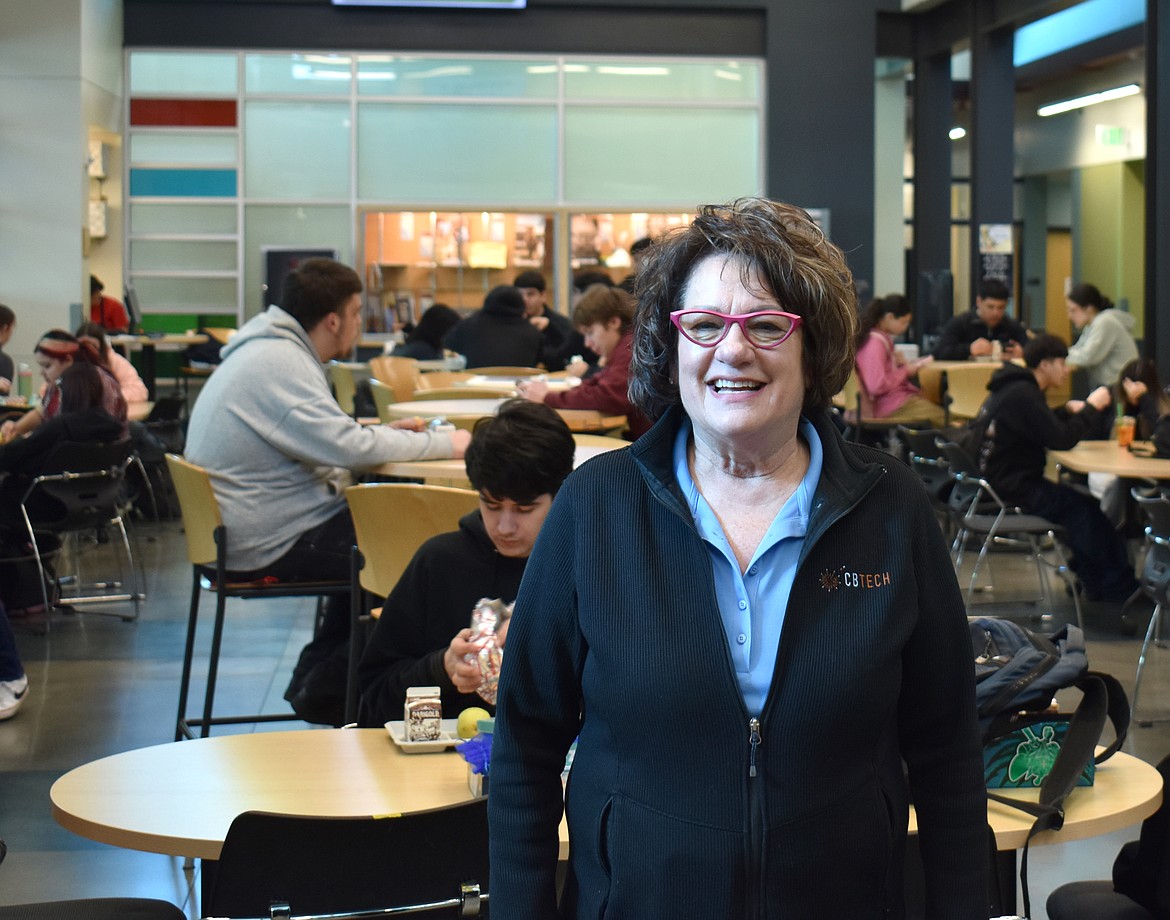
Columbia Basin Technical Skills Center Director Christine Armstrong stands in the common area of the school she helped build. Armstrong will retire this summer after 40 years with the Moses Lake School District.
JOEL MARTIN/COLUMBIA BASIN HERALD
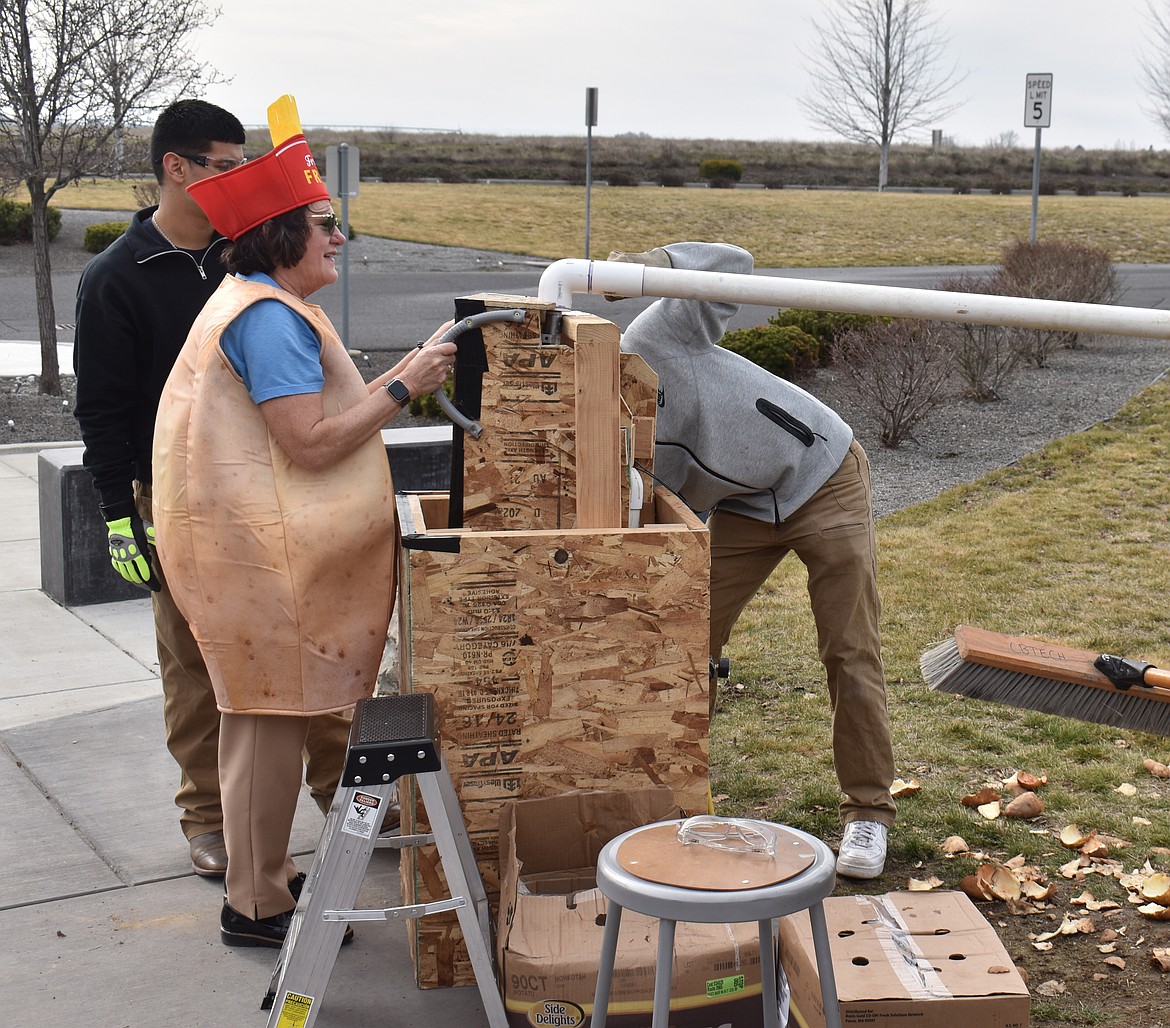
Christine Armstrong, in full tater costume, prepares to trigger a potato launcher at Potato Days at CBTECH. Armstrong’s combination of good humor – exemplified by her occasional silly costume – and firm hand has earned her the respect of her students and colleagues.
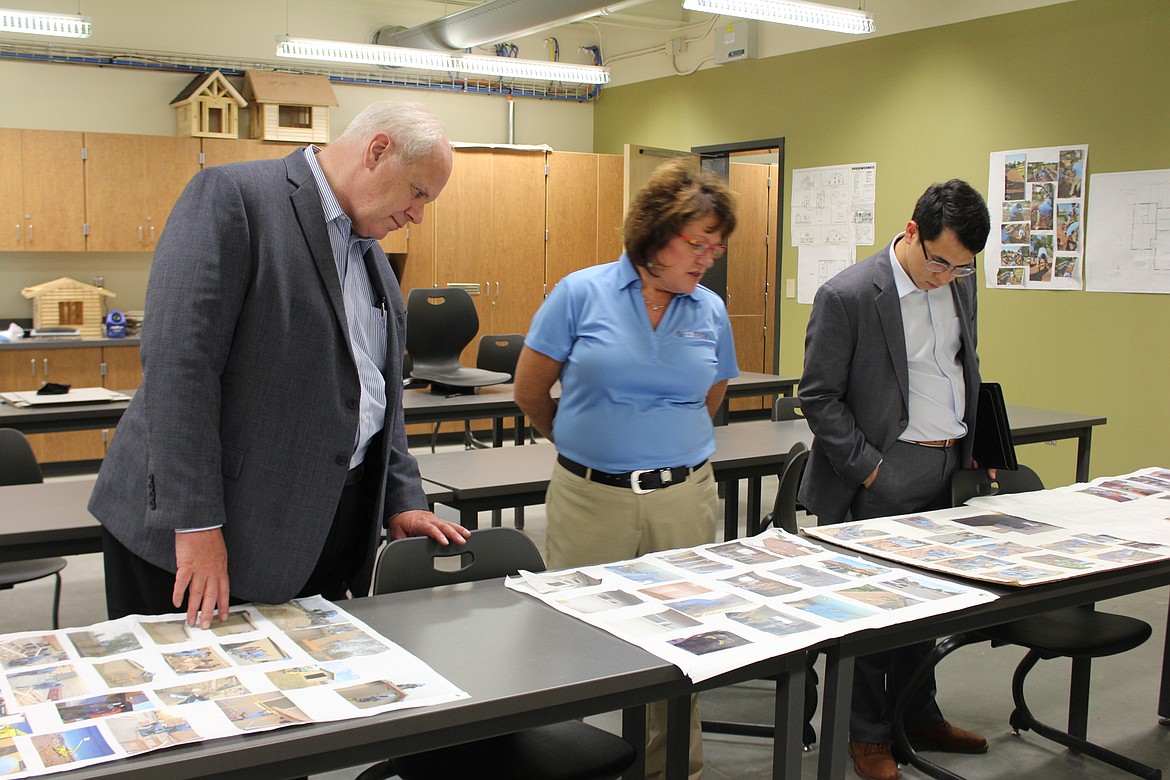
CBTECH Director Christine Armstrong, flanked by Washington State Treasurer Duane Davidson, left, and Davidson's aide Leo Marquez, looks over school construction projects in 2017. Armstrong, who will retire this summer, worked with state officials for years to get CBTECH built.
Joel Martin has been with the Columbia Basin Herald for more than 25 years in a variety of roles and is the most-tenured employee in the building. Martin is a married father of eight and enjoys spending time with his children and his wife, Christina. He is passionate about the paper’s mission of informing the people of the Columbia Basin because he knows it is important to record the history of the communities the publication serves. | February 23, 2026 3:15 AM
MOSES LAKE — Christine Armstrong has run the Columbia Basin Technical Skills Center since its inception, and now she’s set to retire after seeing thousands of students move through classrooms there and elsewhere.
“Her extraordinary vision of a learning environment was a school culture that she developed,” said former MLSD Superintendent Michelle Price. “The school culture there is that of a workplace where soft skill development and expectation, student ownership and leadership are all required.”
Armstrong, 64, will retire this summer after 40 years as an educator in the Moses Lake School District, the last 12 years as the director of CBTECH. There, she’s watched class after class of students reach potential they might not have known they had.
“(She has an) understanding of ... the needs of students and children and what they need to get there,” said Moses Lake School District Executive Director of Employee Services Michelle Musso. “They need that praise. They need that guidance. They need that structure, all of those things.”
CBTECH is under the umbrella of the Moses Lake School District, but it serves a consortium of 11 school districts in Grant and Adams counties. In addition to their regular high school education, students get hands-on education from seasoned professionals in fields like automotive technology, engineering, construction, culinary arts and welding. There’s a criminal justice program and a fire science program for prospective first responders, and CNA and medical assistant training for those interested in health care.
CBTECH also provides training in other things students don’t learn from a book.
“(CBTECH is) teaching kids the things I wish people had when they came to work for us,” said Moses Lake School District Executive Director of Employee Services Michelle Musso. “They’re teaching kids about work ethic, about how their appearance is part of their professionalism and how they show up, how they work hard and how to ask the questions and how to be dedicated and committed to what you're doing and following through and all of those things. She's producing exemplary future employees.”
Armstrong does that by taking a hands-on approach herself, prioritizing being present where the students are rather than running the school from behind a desk.
“I'm in and out of these classrooms, not every day, but a minimum of once a week, some of them several times a week,” she said. “There's all kinds of research that says if the kids see you visible, you'll have less problems. Do I get the amount of work done out there that I do in my office? No … (But) it's worth my time to be out there where the kids see me, and they'll come and talk to me and they'll come and tell me things.”
Laying down rules
When CBTECH opened in 2014, Armstrong laid down some requirements that other schools didn’t. They caused her some blowback, she said, but she stuck to it and is glad she did. One was student uniforms. Many of the districts in the area have had problems with gang activity, and she was having none of it at CBTECH. Instead, all students wear the same blue shirt with the CBTECH logo.
“I thought, I can't have red and blue in this building,” she said. ”Everybody has to wear the same thing … At that time, they had just tried uniforms at Frontier and Chief Mo and they only lasted maybe six weeks. The parents came in and had a fit now, so both of them backed off and they went to just letting the kids wear whatever they want. I said, ‘Well, I'm going to be strong on this. And if I have to get beat up a little bit, then I'm going to take it.’”
She didn’t literally get beaten up, she said, but she did get some angry parents, including one who refused to leave her office.
“His son was not going to wear a uniform,” she said. “He was not going to wear closed-toed shoes. (The father) had already bought school clothes. And I said, ‘Sir, I will buy your son's shoes and the shirts if it's that big of a deal.’ No, it was just the principle of the thing, (he said). Well, the principle of the thing is, I'm trying to create a culture here.”
The teachers at CBTECH, including herself, wear the same uniform as the students, she said, except when she wears a costume, as when she dressed as a giant spud during Potato Days.
“I have a dress-up closet and sometimes I'll just put one on (and) walk out there,” she said. “They think it's the funniest thing in the world. It just gets their attention; it's something different.”
Price said Armstrong’s strong leadership style and dedication to principles and supporting educators and students stuck with her.
“The first time that I met her, I was like, ‘Oh, my gosh. This woman has such a great sense of leadership and humility, and she has a playful personality,” said Price, who was an elementary school principal at the time. “When holidays would roll around, she was the first one in some sort of crazy costume and crazy hair. That was my first impression of her.”
Another point was the use of cell phones. These days, many schools limit or prohibit the use of cell phones, but CBTECH has had that policy from the beginning, except for cases where a student has medical reasons to need one. Earbuds are, likewise, not allowed.
The third requirement, and one that made her stand out among school administrators, was her faculty. For a school where students were going to learn careers, she prioritized field experience over academic credentials.
“My best instructors at a skill center level come from industry,” she said. “They do not come from the educational route. I think I only have three teachers who come from education, but all of them had experience in industry.”
The instructors are expected to earn a teaching credential within three years, she said, but in the meantime, they convey knowledge that most traditional teachers can’t.
“To me, (teaching) is like any other trade,” she said. “You either have it or you don't. If you don't have a love for culinary, it's hard to portray that to kids and get them to get excited. At this level, those people have to love what they do. And you have to love kids.”
Armstrong’s methods don’t always play well with the district’s administration, Musso said, but the students are worth a little flexibility.
“We are always brainstorming and figuring out ways to make it work because her angle is what is important,” Musso said. “It is to get kids ready for the workforce and ready for their futures. So sometimes we have to do things that are unique and different, and that's not always easy for type A people on our side. But we figure it out with her because the end product is that kids are getting what they need for their futures.”
A reluctant start
Armstrong never set out to be a teacher, she said.
“In high school, I was in Future Business Leaders of America and I was in Future Farmers of America,” Armstrong said. “I wanted to have a floral shop and a greenhouse. That's my love.”
Armstrong grew up on an orchard in Wapato. Her parents were adamant that their children should go to college, she said. She went to Yakima Valley College for two years, then put in a semester at Washington State University.
“I absolutely hated it,” she said. “I came from a town of 4,600. There were 25,000 students there at that time. I had visited and it looked great, but when I got there, I just couldn't do it. I only got to go home at Thanksgiving and Christmas, and that doesn't work for me.”
Fed up with college, Armstrong came home and tried to figure out what to do next. There was one flower shop in Wapato, so her father helped her put together her resume and she took it there.
“(The owner) said, ‘Well, there's no openings, but I'll keep your resume just in case,’” Armstrong said. “I went home and said, ‘Dad, I'm not going to get any experience because that's the only shop in town.’ He goes, ‘Go back tomorrow and tell her you’ll work for free. It's experience. She doesn't need to pay you.’ So, I went back the next day. I told her I'd work for free. She said, ‘When can you start?’
Armstrong started the next day, and after two weeks, she was on the payroll. For the next six years, she worked there off and on during the summers, she said. Meanwhile, she went to Central Washington University to finish a degree, hoping to be a county extension agent.
“They mostly, at that time, talked on the phone,” she said. “And I don’t like to talk on the phone. So, my dad said, ‘Well, why don’t you get your teaching certificate?’”
She did that, and when she graduated, the first district she interviewed with was Moses Lake. They offered her a job teaching family and consumer science teacher, which used to be called home economics. It wasn’t ideal, she said, but college had left her broke and she needed the money.
“I started teaching, and it was 16 hours a day,” she said. “Your first year is so hard. I wanted to be prepared; I wanted to be a good teacher. I was correcting papers on the weekends because there were no computers when I first started. I thought, I can't do this. How can I live the next 40 years doing something that's 16 hours a day? But after the first trimester, I saw, OK, now you do that curriculum over and it's not taking 16 hours. And I love these kids and this is good.”
CTE champion
After 12 years in the classroom, Armstrong took the helm at the Career and Technical Education Center at Moses Lake High School. That wasn’t a great time for CTE, recalled then-MLSD Superintendent Michelle Price.
“There was a time in our state and in the nation when the (go to college) messaging was ramping up and districts across the state were reducing their CTE programs and adding different academics or adding more sections of different classes,” Price said. “Christine stood firm and I stood beside her. She was absolutely like, ‘We cannot let go of our technical and industry-specific trainings. We've got to stay focused.’ So, at a time where many districts in the state were eliminating career and technical programs, Christine at Moses Lake High School was working toward not only maintaining them but increasing them.”
The state had allocated money in 2008 for a technical skills center, Price said, and by 2009 the design work was finished, and the district was ready to start building.
“We were what was called shovel-ready,” Price said. “Then the economy tanked, and it sat.”
In 2011, the state re-prioritized skills centers, and in 2012, $19.4 million was allocated to build CBTECH. The state head of school construction phoned Armstrong personally to tell her that Moses Lake was getting a skill center.
“The night before I got that phone call, I lived (nearby) and I used to walk every night,” she said. “I walked this property, and I was like, ‘God, if you want there to be a skill center here, then let me know, because I want to do this thing.’ I had prayed at home, I told other people to pray, but it was the only time I ever walked the property and did that. And I got that phone call the next morning.”
“None of that would have happened without Christine staying at the table on statewide committees and advocating for kids and communities across the entire Columbia Basin,” Price said. “We opened that facility in 2014, and it was such a celebration. We got there because her advocacy and passion for making sure that kids had hands-on, high-demand industry experience and career pathways opened up.”
Next steps
Armstrong hasn’t got a lot of concrete plans for her retirement, she said. Her husband has been home for several years, she said, and she has a son still living at home as well. She might substitute or volunteer at another school district, she said.
“It's time for me not to be in charge,” she said. “It's time for somebody else to be in charge.”
“Christine Armstrong has poured her heart into CBTECH and into the students it serves,” MLSD Director of Public Relations Ryan Shannon wrote in an email to the Columbia Basin Herald. “Her leadership has helped shape not only innovative programs, but futures – opening doors for countless students and connecting classroom learning to real-world opportunity. While we will truly miss her steady presence and passion for career and technical education, we celebrate the lasting impact she has made and wish her all the best in her well-earned retirement.”
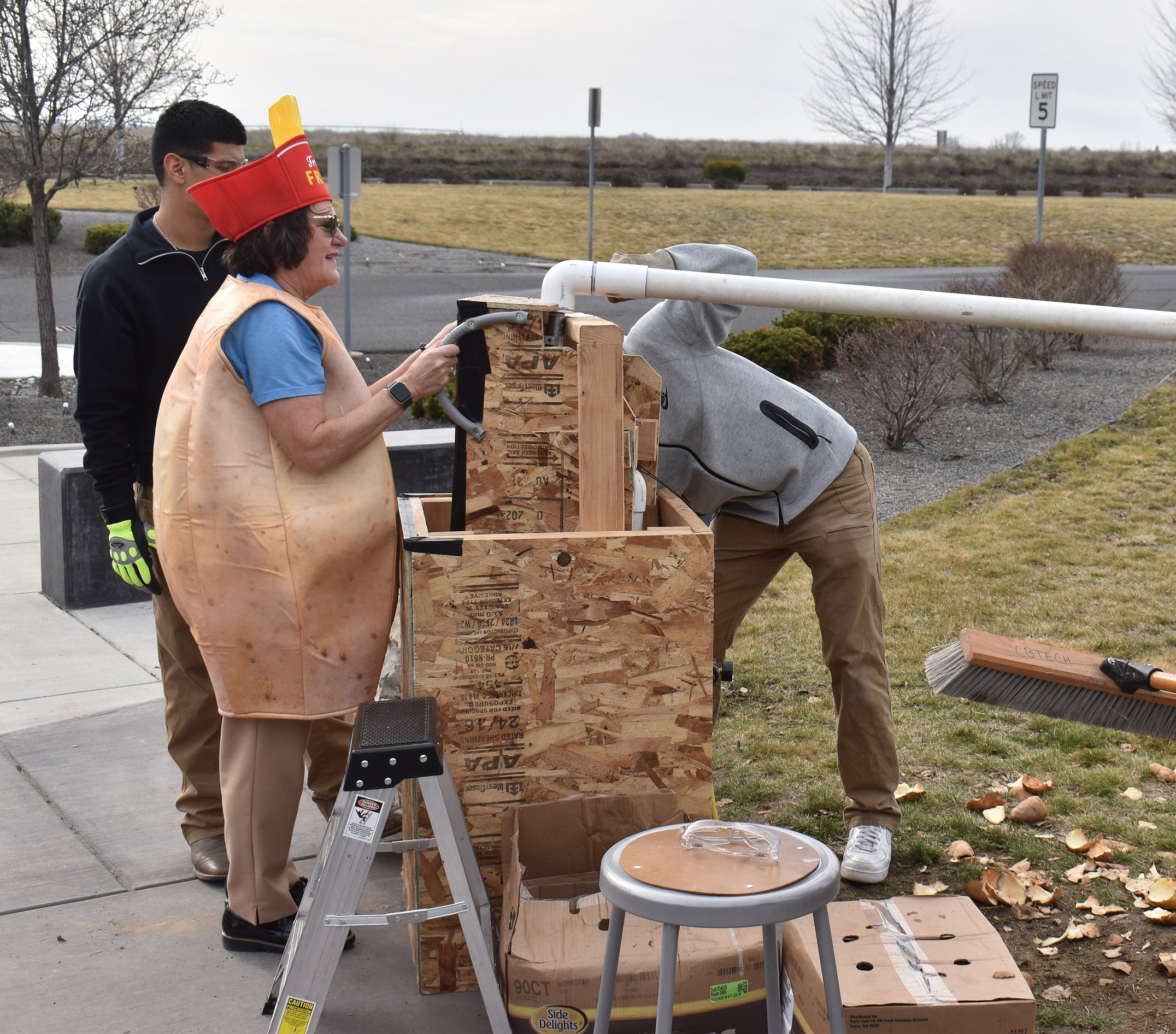 Christine Armstrong, in full tater costume, prepares to trigger a potato launcher at Potato Days at CBTECH. Armstrong’s combination of good humor – exemplified by her occasional silly costume – and firm hand has earned her the respect of her students and colleagues.
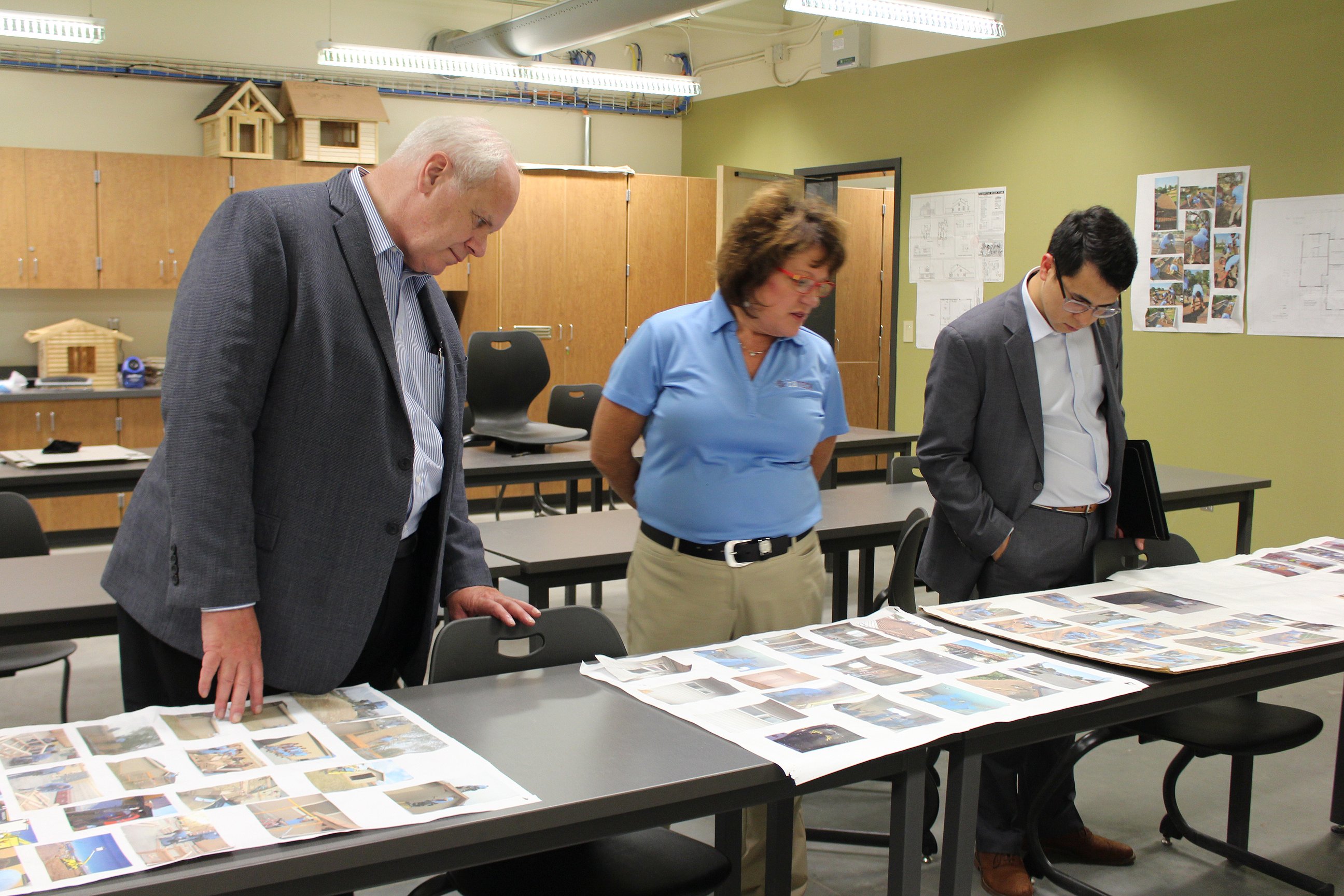 CBTECH Director Christine Armstrong, flanked by Washington State Treasurer Duane Davidson, left, and Davidson's aide Leo Marquez, looks over school construction projects in 2017. Armstrong, who will retire this summer, worked with state officials for years to get CBTECH built.
ARTICLES BY JOEL MARTIN

COLUMN: Looking ahead toward Easter
A few weeks ago I wrote a story about local Lenten observances that got me to thinking: What is it about this time of year?

Moses Lake Touch a Truck to return April 25
MOSES LAKE — The MomCo Touch a Truck event will be April 25, and there may be something new, according to organizer Brittney Ketterer.

Summit set to build leaders for recovery, mental health
MOSES LAKE — The Eastern Washington Home Grown Leadership Summit will come to Moses Lake April 18, to equip people who have lived through hard times to help others through them.