
Q&A with Fourth Congressional District candidates
NANCE BESTON | Hagadone News Network | UPDATED 26 minutes AGO
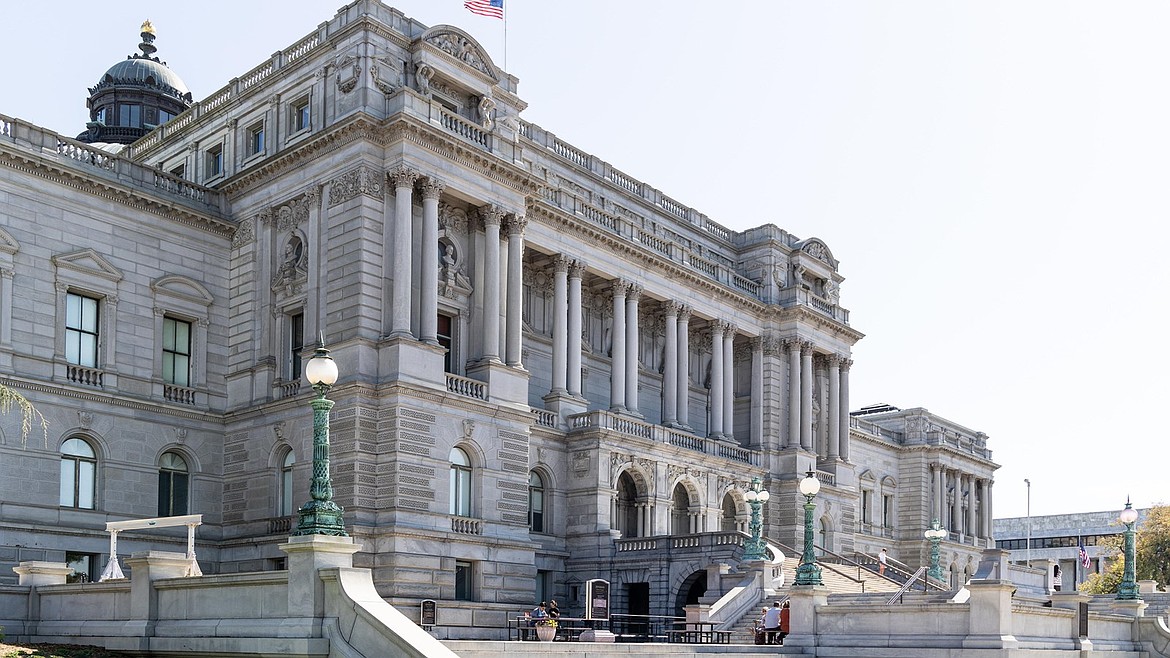
Eleven candidates are running for the Fourth Congressional District seat during this primary election. Ballots are due Aug. 4.
COURTESY PHOTO/U.S. NATIONAL PARK SERVICE
MOSES LAKE — Eleven candidates are running in the primary election for the Fourth Congressional District in Washington. All candidates were contacted several times with a handful of questions, of the eleven candidates, only five responded by the deadline given.
Candidates who responded include Jacek “Jack” Kobiesa, no party preference; Favian Valancia, independent; Jerrod Sessler, republican; Devin Poore, cascade; and Matt Boehnke, republican.
Those who did not respond to requests for comment include Amanda McKinney, republican; John Duresky, democrat; John C. Hughs, republican; Ken Vaz, republican; Zac Rossi, no party preference; and Elpidia Saavedra, republican.
With the length of responses, candidates' answers will be split into two articles. July 17 is the deadline for ballots to be mailed out for the primary election with ballots due Aug. 4. Visit VoteWa.gov. to register to vote or check registration status.
Question: What specific policies would you support to strengthen economic growth and job opportunities in Central Washington, particularly in agriculture, energy and small businesses?
Boehnke: Democrats in Olympia and D.C. are driving jobs, energy projects, and farms out of business with taxes, mandates, and red tape. As a State Senator and Ranking Member on Energy, Environment & Technology, I’ve fought those policies and passed bipartisan bills to grow clean‑energy, data‑center, and small‑business jobs here at home. In Congress, I’ll cut regulations, lower taxes, and defend our dams so Central Washington agriculture, food processors, and manufacturers stay competitive. I’ll use my background as a cybersecurity professor and workforce leader to expand skills‑based training in trades, ag‑tech, and national‑security careers so our kids don’t have to leave to find good work. Republicans should be the party of builders, of farms, factories, and energy projects, not the party of bureaucrats.
Valencia: For agriculture and small businesses, I’ll push to end tariff chaos and foreign conflicts that raise costs for farmers and consumers, simplify regulations, and protect reliable water and power. And I'll back real investment in trades and workforce training so our kids can build good careers without leaving Central Washington. On a personal more direct level, I'll stand for smaller government and less waste. I'll introduce a bill to reform the IRS to eliminate federal income taxes for anyone making under $60,000 a year — the bottom half of taxpayers provides just 3 percent of federal revenue, and that money does more good paying rent and supporting local businesses than it does in Washington, D.C. This would shrink the IRS by about 20-40 percent and save taxpayers between $4-8 billion per year.
Poore: I'd pursue federal investment in agrivoltaics - installing solar power on farmland while maintaining full agricultural productivity on the same acres. Extreme corporate consolidation in the agriculture industry has squeezed farm margins nationwide. District 4 alone lost over 1,400 farms in the last 15 years. While I support policies to fight that directly, like antitrust enforcement and right-to-repair laws, farmers also need new revenue stream opportunities. Agrivoltaics lets Central Washington farmers and ranchers lead the nation as energy innovators, not just commodity producers. It also drives new demand for domestic solar manufacturing, exactly what Moses Lake's own solar supply chain has been missing since REC Silicon's shutdown, and exactly the kind of market that supports newer investments like Sila's battery plant. Leading the charge on agrivoltaics would mean expanded job opportunities for local installers, electricians, and agrivoltaic specialists across the region.
Sessler: As America’s Engineer and a small business founder who created hundreds of jobs, I’ll fight for policies that unleash growth in Central Washington. We need to drag a lot more money back to Central Washington for projects that we do better than any region in the world. I support cutting federal regulations and taxes that strangle agriculture, energy, and small businesses. We need tax incentives for domestic manufacturing and ag processing, streamlined permitting for infrastructure, and full support for our farmers and ranchers. I’ll push to repeal job-killing green mandates and prioritize vocational training through apprenticeships, not endless college debt. My focus: protect your wallet, return farms to profitability, and create real opportunities right here in Central Washington. Let’s build an economy that rewards hard work again.
Question: Water access and irrigation are critical to this district’s agricultural economy. How would you address water availability, infrastructure and competing demands in the Columbia Basin?
Boehnke: The Left’s war on dams, water storage, and irrigated agriculture is an attack on Central Washington’s economy and on American food security. In the State Senate, I’ve stood up to extreme Democrat policies that would sacrifice farms to satisfy Seattle activists. In Congress, I’ll fight to complete Columbia Basin Project infrastructure sooner and modernize irrigation so our growers have reliable, affordable water for the next generation. I will continue to oppose dam breaching and any federal “fix” that sends our water and power somewhere else, and demand science‑based salmon and ESA decisions, not courtroom politics. Strong agriculture is a national‑security issue, and I’ll be a relentless voice for the farmers, packers, and transporters who feed this country.
Valencia: No water, no crops, no economy — it's that simple. I'll fight for federal funding to modernize aging irrigation infrastructure, and expand water storage. I'll continue the work that Representative Newhouse has been doing, I'll bring everyone to the table and figure out what's working and what we need to improve. Existing water rights must be honored, and decisions about our water should be driven by the people who live and farm here, not dictated from D.C. I'd also push back on any federal proposal that threatens the dams and reservoirs our irrigation system depends on. Congress's job is to fund the infrastructure, cut the red tape, and let local water managers do their work.
Poore: I'd support finishing the Columbia Basin Project's long-unbuilt East High Canal, the third canal authorized back in 1935, alongside the West and East Low canals that were actually built. Its absence has left roughly 300,000 acres without reliable irrigation water, forcing farmers onto a declining aquifer instead. There's real capacity in the Columbia for both farms and cities, but drawing more from behind Grand Coulee also has to go through honest negotiation with the Colville Tribe, whose Lake Roosevelt water rights claim is already active with the state. I'd also fund converting open canals to enclosed pipe where it makes sense, and solar canopies over the rest - both approaches cut evaporation losses and, in the solar case, generate power along the way. Expanding water availability here is achievable with the right infrastructure investment and genuine tribal diplomacy.
Sessler: Water is life for our farms and ranches in the Columbia Basin as well as the Yakima Valley. I’ll defend water rights against federal overreach and tribal claims that threaten our economy. We must invest in infrastructure, modernizing irrigation systems, maintaining dams, and expanding storage, finishing the CBP and we need to do this while rejecting dam removal insanity. As a rancher myself, I know we can balance supply through smart engineering and local control, not D.C. bureaucrats. We do not have a water shortage. We have an excess or regulations. I’ll fight for policies that prioritize agriculture and rural communities over radical environmental agendas. No more stealing water from the people who feed America.
Kobiesa: I support targeted policies to drive growth in Central Washington’s agriculture, energy, and small businesses, emphasizing secure property rights and innovation. Water Rights: Strengthen appurtenance so perfected rights stay permanently tied to the land for stability and investment, while allowing streamlined, “no injury” transfers/changes via Ecology review. Pair with efficiency incentives (drip irrigation, storage) and WSU/PNNL R&D for drought resilience. Agriculture: Promote value-added processing, precision ag tech, and export access. Energy & Science: Sustain Hanford cleanup and PNNL funding (6,000 jobs) while advancing nuclear innovation (SMRs) and grid reliability. Leverage the site for energy R&D and private partnerships. Small Businesses: Expand low-interest loans/grants (USDA REAP, state SSBCI, Beginning Farmer programs) for equipment, energy upgrades, and startups. Cut permitting red tape and offer R&D tax credits. Enablers: Broadband/infrastructure investment and aligned workforce training. These evidence-based steps build on regional strengths for sustainable job creation and prosperity.
ARTICLES BY NANCE BESTON
Q&A with Fourth Congressional District candidates
MOSES LAKE — Eleven candidates are running in the primary election for the Fourth Congressional District in Washington. All candidates were contacted several times with a handful of questions, of the eleven candidates, only five responded by the deadline given.

Gusty winds, dry conditions raise fire concerns ahead of Fourth of July in Columbia Basin
MOSES LAKE — Dry conditions, gusty winds and rising temperatures are expected to increase wildfire danger across Grant and Adams counties over the Fourth of July weekend, prompting warnings from forecasters and local officials for residents to use extreme caution with fireworks and other potential ignition sources.
Ephrata Council expedites approval of kratom ban, raises concerns from local retailer
EPHRATA — The Ephrata City Council voted 6-1 Wednesday night to ban the sale, distribution and advertising of kratom and kratom-derived products within city limits, making Ephrata the fourth city in Grant County to adopt such restrictions and the first in the county to do so while businesses are actively selling the substance. The ordinance takes effect 60 days after passage.