
Route of the Hiawatha: A treasured spectacle through the Bitterroot Mountains
HANNAH SHIELDS | Hagadone News Network | UPDATED 3 months, 2 weeks AGO
RURAL GOVERNMENT REPORTER, REPORT FOR AMERICA Hannah Shields covers rural government and accountability reporting for the Daily Inter Lake and Northwest Montana weekly papers as part of the national Report for America program. Her reporting focuses on transparency, public spending and the impact of local government decisions on small communities. Shields has covered issues ranging from school district finances to development disputes and rural infrastructure projects. She regularly uses public records and investigative reporting to examine institutions that affect local residents. Her work helps bring greater oversight and visibility to rural government across Northwest Montana. IMPACT: Hannah’s work strengthens transparency and accountability in rural communities that often lack consistent watchdog coverage. | July 9, 2026 12:00 AM
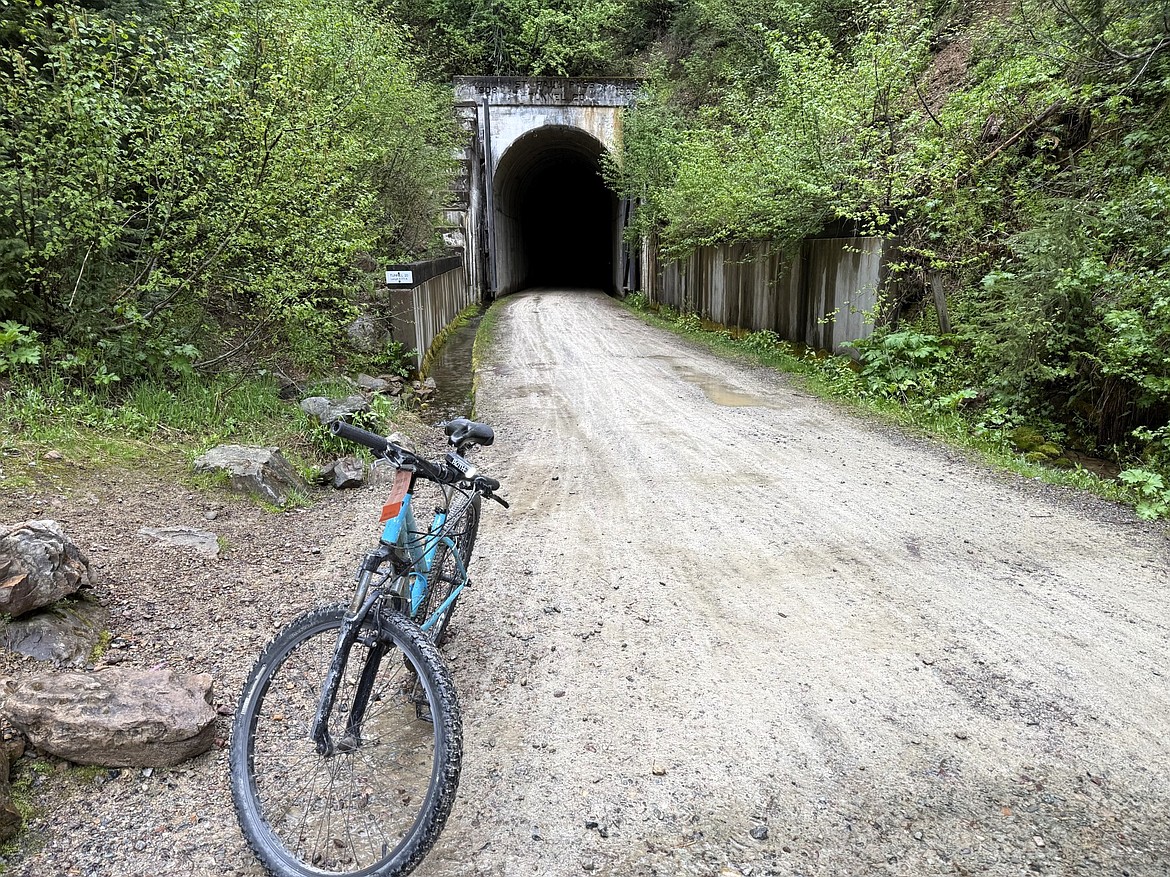
It was pitch-black inside the cavernous tunnel.
Dark shadows swallowed the cloudy afternoon sunlight, and I looked over at my friend as she fumbled with a tiny device on the handlebars of her rented bike.
“How do you get this to turn on?” she asked, searching for a switch.
Other bikers whizzed by as Anna and I fussed with our lights. Voices echoed from deep inside the cavern, and a few hearty whoops rang through the air.
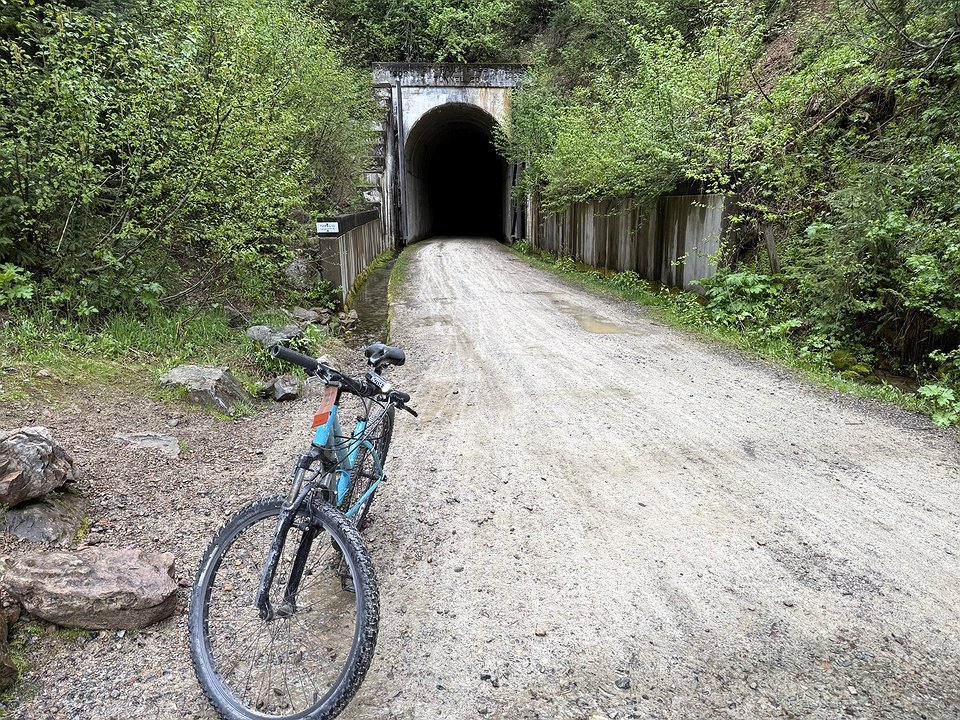
We perched on our bikes at the mouth of St. Paul Pass Tunnel, also known as Taft Tunnel, that burrows 1.66 miles through the Bitterroot Mountains under the Idaho-Montana border. It’s one of 10 tunnels on the Hiawatha Mountain Bike Trail, a 15-mile scenic stretch along the abandoned Milwaukee Railroad.
Rain showers greeted us when we first arrived in Mullan, Idaho, earlier that day. The weather forecast had promised a dry and cloudy afternoon, so we bid our time at The Beanery in Kellogg, Idaho, less than 30 miles away. It's a cozy little spot – part coffee shop, part cocktail bar – with friendly staff, flavored mimosas and fresh strawberry puree on granola yogurt.
As 2 o’clock rolled around, the rain subsided, and Anna and I decided to take our chance.
The bike rental shop for Hiawatha Trail is located at Lookout Pass off I-90, which functions as a ski resort during the winter season. If you reserve online ahead of time, you can save $10 on the adult pass, which includes the $40 bike rental, $20 trail ticket and $20 shuttle pass (I strongly recommend taking the shuttle back up the trail, otherwise it’s a 30-mile round trip). It’s definitely cheaper to have your own bike and bike rack, since we shelled out another $45 to have our bikes delivered to the trail head.
The experience, however, was priceless.
WE FOLLOWED the smiling bike delivery driver a few miles back up the highway toward Montana, before we exited onto a winding dirt road and parked in a gravel parking lot.
As he unloaded our sky-blue rentals from the back of the pickup truck, he cautioned us not to bike too fast, or we’ll spray mud all over our legs. Sage as his advice was, the mud was inevitable.
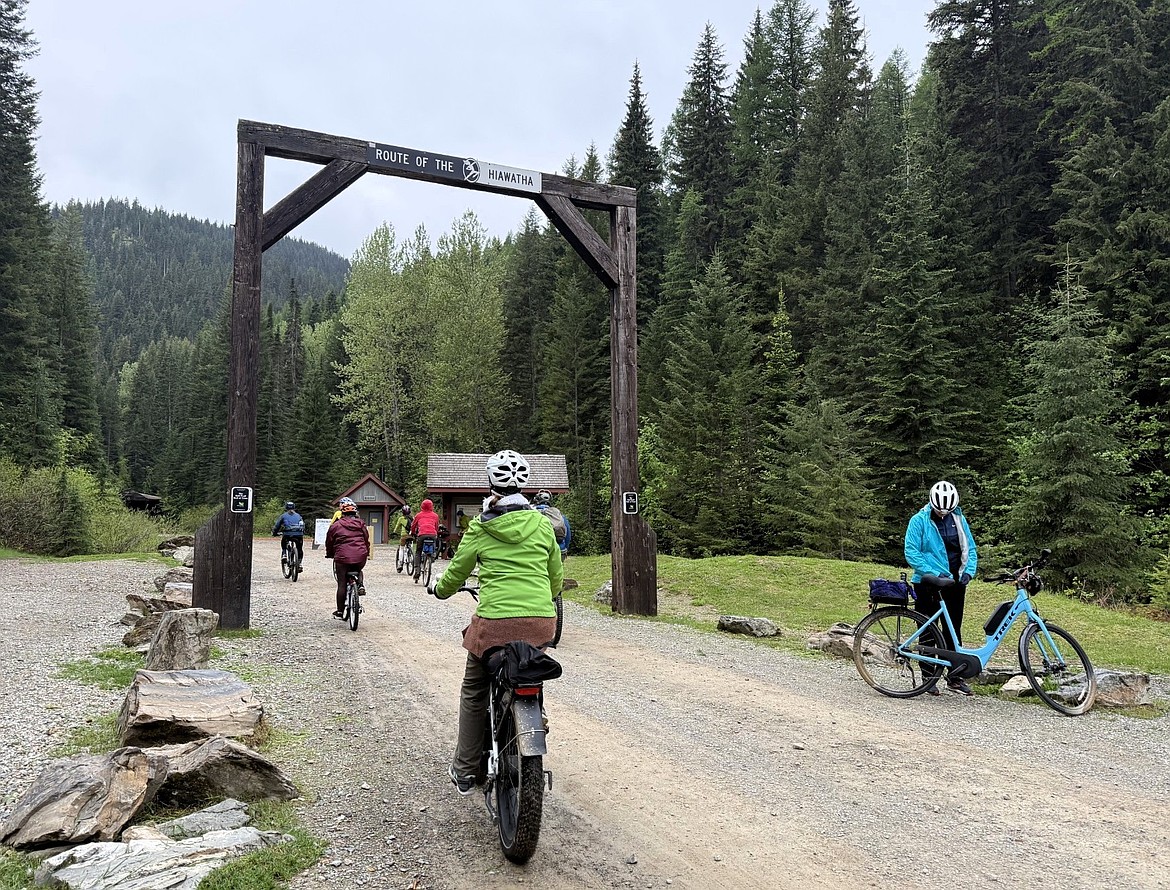
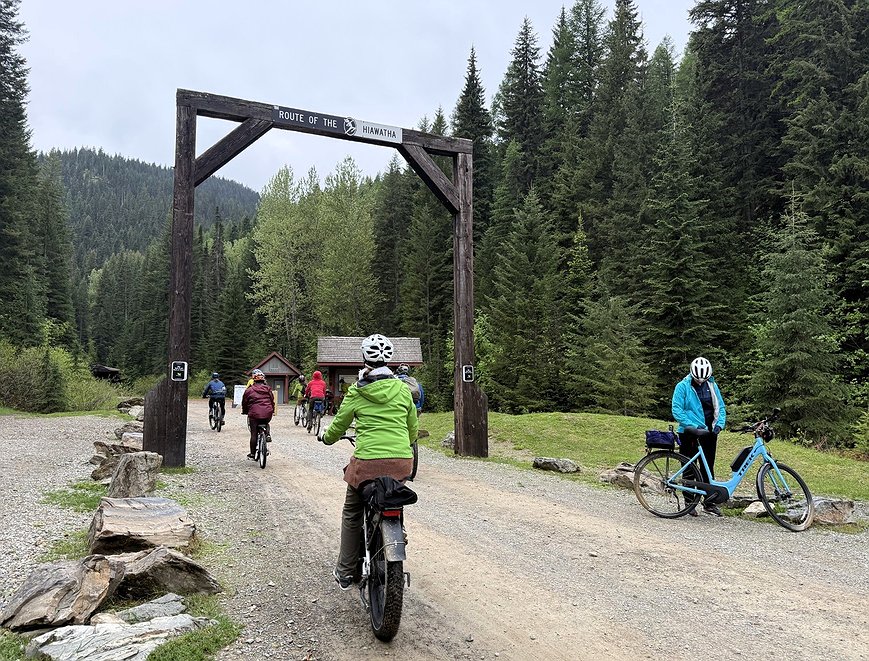
Families and couples sported clear plastic ponchos and coats as they biked under the wooden arch that read “Route of the Hiawatha.” Just ahead was St. Paul Pass Tunnel, standing at about 23 feet high and 16 feet wide.
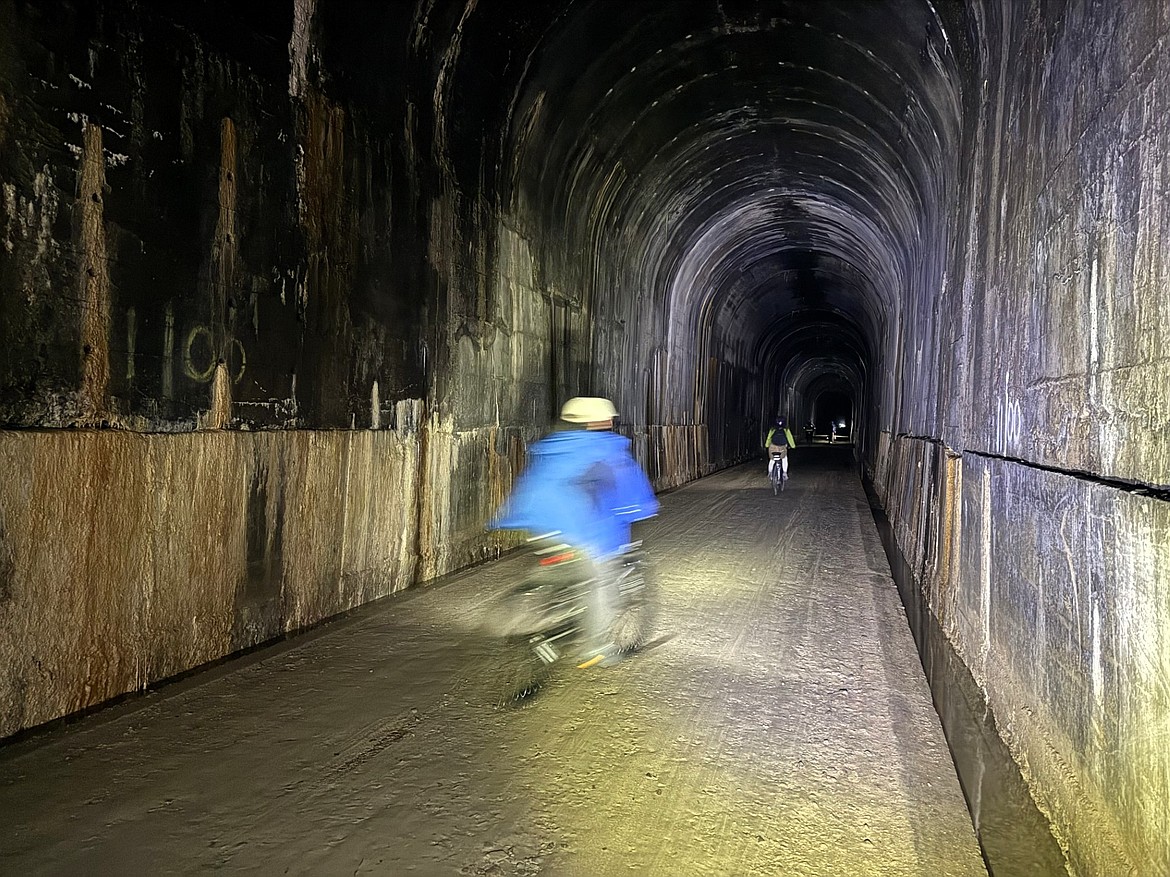
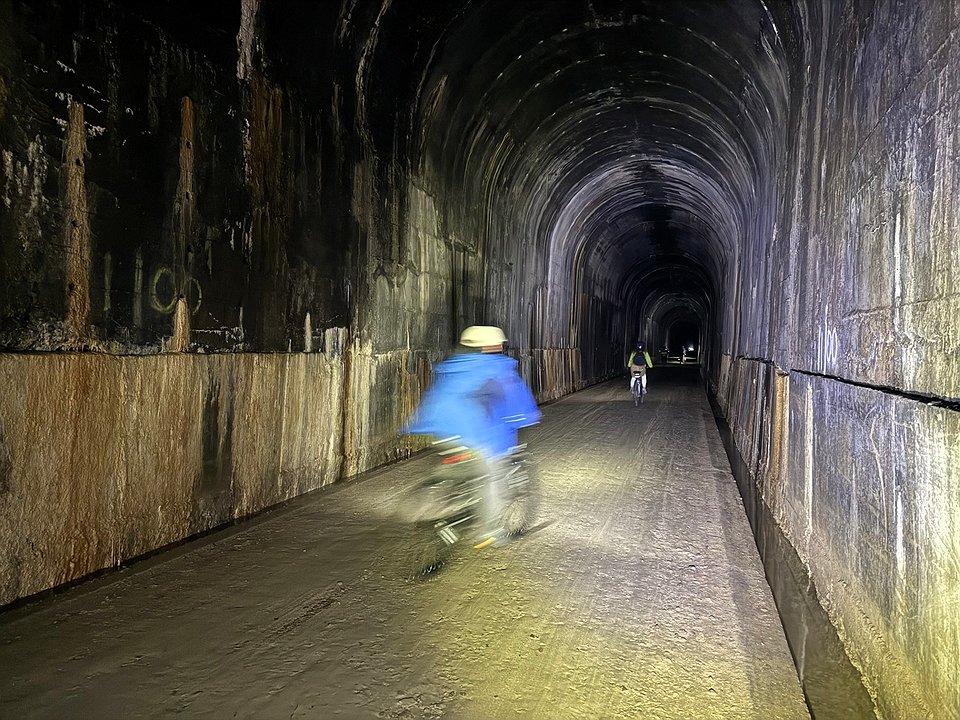
When our lights finally flashed on (you have to hold the button for a couple seconds), we trekked through the cavernous structure. I marveled at the sheer size of it as we peddled deeper into the mountains.
A pinpoint of light appeared ahead, and I assumed another biker was coming toward us. It took a few minutes for me to realize it was the far end of the tunnel. On either side of the path, a narrow stream rushed through a tiny ditch while water dripped from the ceiling.
When we emerged outside, a waterfall bubbled to our right and foliage sporting various hues of emerald and neon green lined the trail ahead. Even on a cool and cloudy day, the Hiawatha Trail is a treasured spectacle.
PEDDLING DOWN the gravel path, surrounded by lush greenery, it was hard to imagine a historical blaze once ripped through this area more than 100 years ago.
When the Milwaukee Railroad was completed in 1909, it became the United States’ third and final transcontinental train track. But not even a year had passed when one of the largest fires in U.S. history swept through western Montana, Idaho and Washington. The conflagration scorched more than 3 million acres, wiped out three towns, and killed 78 firefighters and nine civilians.
The Chicago, Milwaukee, St. Paul and Pacific Railroad company, or Milwaukee Railroad for short, faced financial hardship over the following decades. All railway operations west of Miles City, Montana, stalled in 1980 after the company filed for bankruptcy three years earlier.
A segment of the rail from Haugan, Montana, to Avery, Idaho, was purchased by the federal government for $3.9 million in 1985, and the U.S. Forest Service made plans to transform part of the abandoned railroad into the “Route of the Hiawatha” in the early 1990s. The first 13 miles of the trail opened to the public in May 1998.
Along the bike path are tall, skinny signs with numbers on them, identical to highway markers. We learned from the shuttle driver on the way back that the numbers represented the distance in miles from that point to Chicago.
THE EASY downhill slope requires little physical exertion. My friend and I held a steady conversation throughout the entire route – we also couldn’t resist letting out a whoop when we passed through a tunnel.
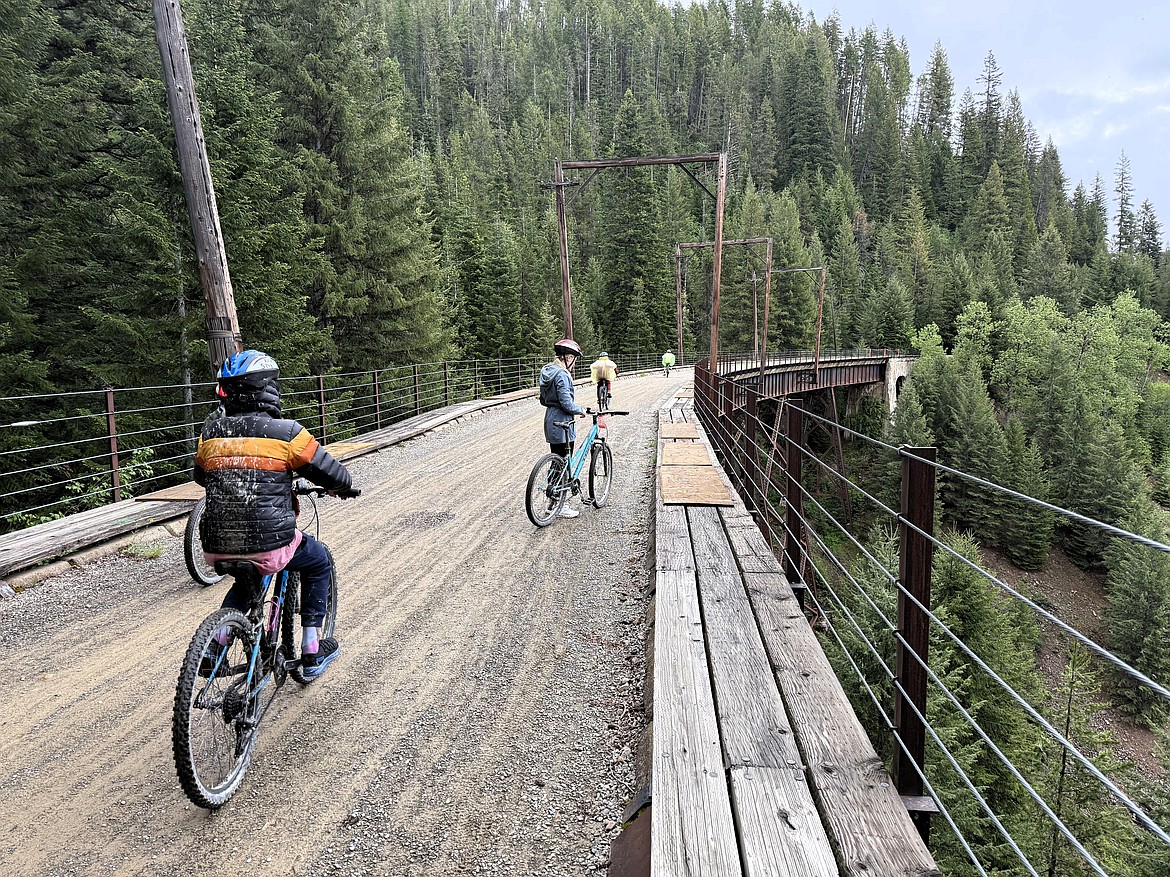
Every few miles, the wall of trees gave way to an expansive view of forested mountain tops and the winding river far below. We crossed a handful of wooden bridges that curved along the mountain side. The scent of damp earth and pine clung to the air, and the sound of running water trickled in the background.
Pushing through the final few miles of the trail, our bellies reminded us it was way past lunch time. Conversation waned as our bodies cried for food, and we regretted not packing a few granola bars for the ride.
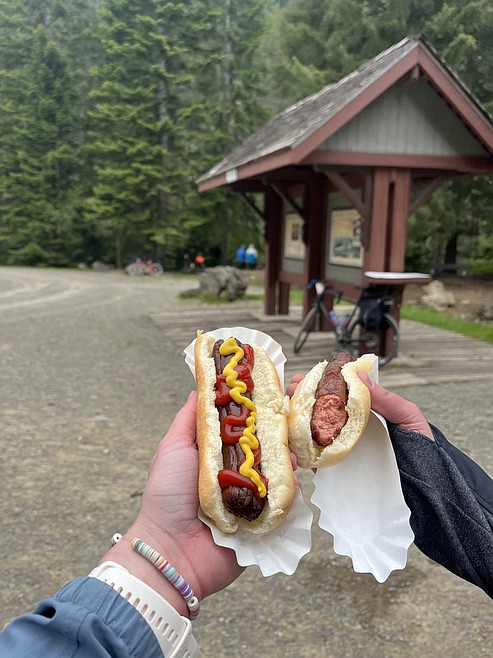
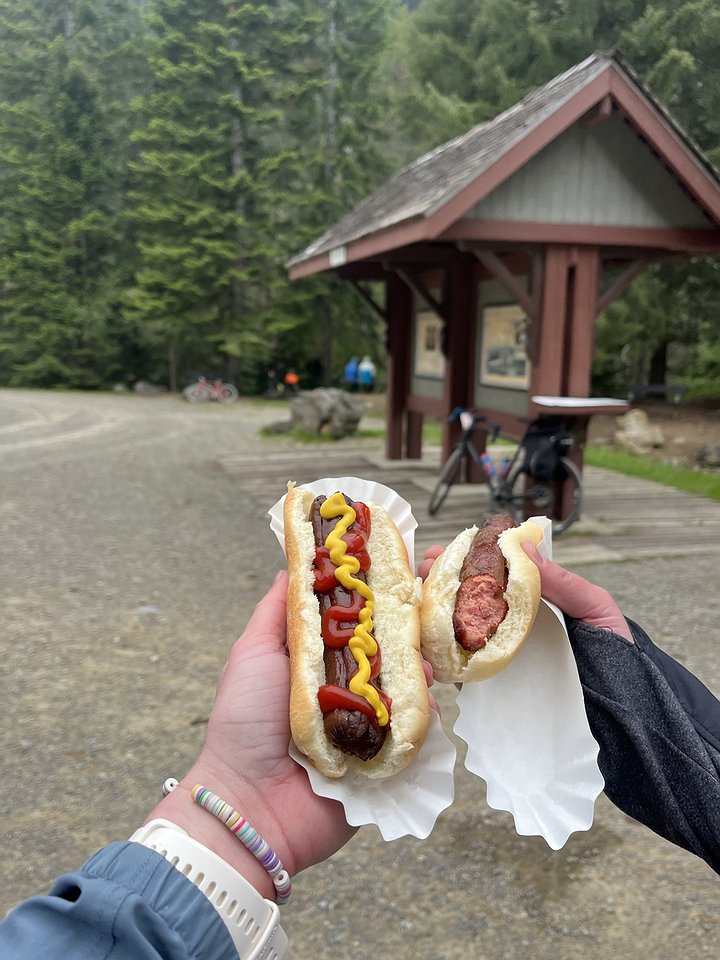
As we reached the end of the trail, a savory smell wafted toward us. Just ahead was a white tent, selling chips, drinks and hot dogs. Anna and I wasted no time as we set our bikes to the side and jogged toward the food booth.
There was no better way to end our journey than with a mustard-covered frankfurter.
Report for America Reporter Hannah Shields can be reached at 406-758-4439 or [email protected]. If you value local journalism, pledge your support at dailyinterlake.com/support.
ARTICLES BY HANNAH SHIELDS
Property owners pool money build Rollins fire department's new station
Construction of the nine-bay station began in May 2025 and wrapped up earlier this year, adding approximately 9,000 square feet of garage space to the original 6,000-square-foot station.
Lakeside resort vote tabled a second time by Flathead County commissioners
Territory 1889 is a members-only resort planned to span 1,700 acres west of U.S. 93, near Blacktail Mountain.
Crews contain 1,700-acre Bras Fire near Hot Springs
A grass fire that threatened two residences and scorched 1,688 acres east of Hot Springs was fully contained Monday afternoon.