Idaho leaders praise proposed griz plan
BILL BULEY | Hagadone News Network | UPDATED 3 months, 1 week AGO
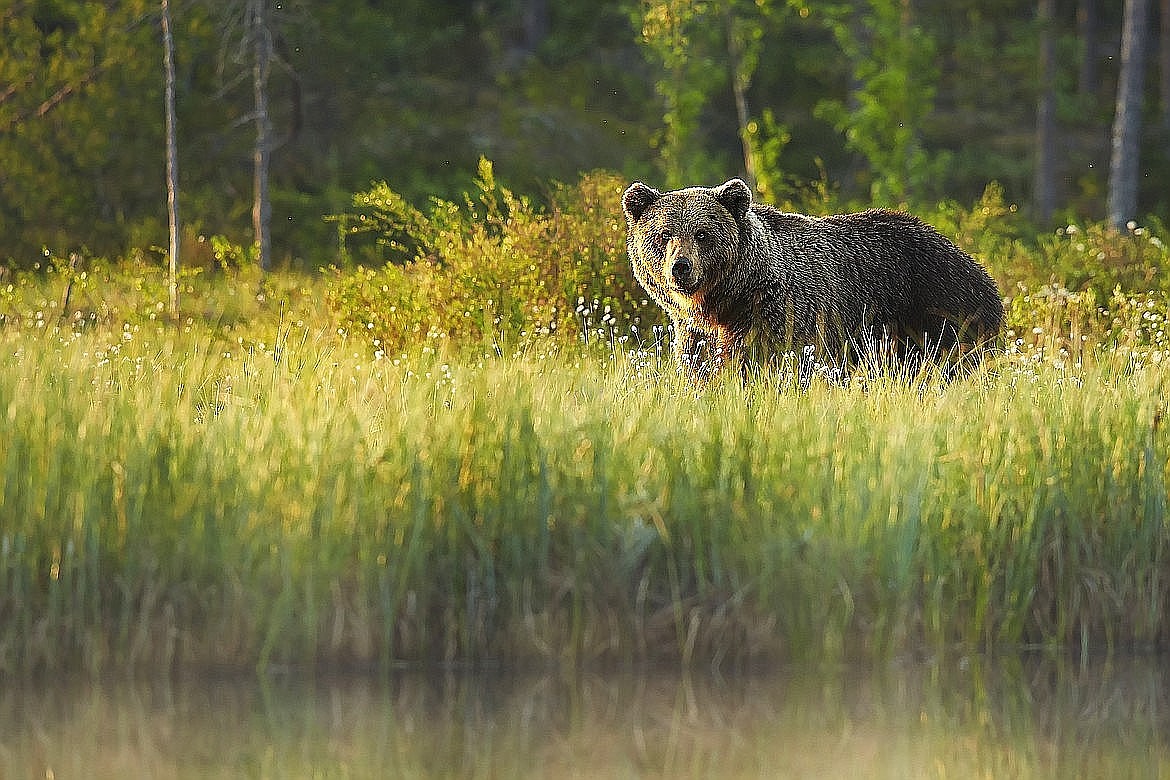
A grizzly bear is pictured in a field in this Idaho Department of Fish and Game photo. In 2022, IDFG officials reported an increased amount of human and grizzly encounters in the Panhandle region. (Photo courtesy IDAHO DEPARTMENT OF FISH & GAME)
Bill Buley covers the city of Coeur d'Alene for the Coeur d’Alene Press. He has worked here since January 2020, after spending seven years on Kauai as editor-in-chief of The Garden Island newspaper. He enjoys running. | July 16, 2026 1:05 AM
Idaho's U.S. Sens. Jim Risch and Mike Crapo on Wednesday applauded the Department of the Interior proposal to provide new flexibility for western states in managing grizzly bears.
“It’s abundantly clear Idaho’s grizzly bear populations have widely exceeded recovery goals,” said Risch. “Increasing state authority to manage grizzly bears ensures our own local wildlife agencies, who understand Idaho’s environment best, can follow the science and make commonsense conservation decisions without bureaucratic inefficiencies.”
Crapo said the recovery of the grizzly bear in the West is a conservation success story made possible by decades of work from state, tribal, federal and local conservation partners.
“For years, I have advocated for returning grizzly bear management to the states as recovery objectives and benchmarks have been achieved," he said. "Secretary Burgum’s announcement moves us one step closer to allowing Idaho wildlife professionals to manage a recovered grizzly population in a way that protects both the species and Idaho communities.”
Secretary of the Interior Doug Burgum was joined by Montana Gov. Greg Gianforte, Wyoming Gov. Mark Gordon, Idaho Gov. Brad Little and Fish and Wildlife Director Brian Nesvik for the announcement on Tuesday.
By providing additional management flexibility in areas where conservation benchmarks and population objectives have been achieved, the proposal would help wildlife managers address conflicts and public safety concerns while continuing to support the long-term conservation of grizzly bears.
“The science is more than clear: grizzly bears have recovered and far exceeded every federal recovery benchmarks. Today, Interior is returning conservation leadership to the Western states instead of Washington bureaucrats,” said Secretary of the Interior Doug Burgum. “Under the leadership of President Trump, we’re following the science, upholding the law and ending politics masquerading as conservation.”
The FWS rule authorizes state and tribal wildlife agencies to activate their own management plans for grizzlies in coordination with FWS, a press release said.
"Idaho has proven we can successfully conserve grizzly bears while responsibly managing wildlife and protecting our communities," Little said. "This proposal is another important step toward returning wildlife management to the states, where decisions are guided by science and those closest to the land. I appreciate President Trump and Secretary Burgum for recognizing what Idaho has long maintained – that recovered grizzly populations should be managed by the states, not Washington, D.C."
The revised proposal supports the Trump administration's goal of reducing unnecessary regulatory complexity, empowering states and tribes and ensuring wildlife management decisions are practical, science-based and effective on the ground. The rule does not change the grizzly bear’s listing status under the Endangered Species Act and does not affect existing experimental population designations.
Grizzly bears in the lower 48 states were listed as threatened in 1975. Since that time, sustained conservation efforts by states, tribes, federal agencies, private landowners and local communities have contributed to significant recovery progress in several geographic areas.
"The Service remains committed to a collaborative approach that supports conservation while ensuring communities have the tools they need to respond to expanding bear populations, a release said.
The U.S. Forest Service previously said that about 35-40 grizzly bears reside in the Selkirk Mountains, with another 30-40 occupying the Cabinet-Yaak ecosystem of Idaho and Montana.
Three grizzly bears were shot and killed in North Idaho last year.
A hunter killed a grizzly bear on May 9 in the Priest Lake drainage of Idaho's Panhandle. The Kootenai County resident told the Idaho Department of Fish and Game he thought he was looking at a black bear when he shot a young female grizzly from a distance of less than 100 yards in the evening.
Another shooting took place on June 10 near the lower St. Joe River near St. Maries in Unit 6 of the Idaho Panhandle, an area not commonly used by grizzly bears. The hunter said he thought it was a black bear.
The U.S. Fish and Wildlife Service and the Idaho Department of Fish and Game are still seeking information regarding the illegal killing of a federally listed threatened grizzly bear north of Perkins Lake in Boundary County near the Idaho/Montana border that was shot on or about Oct. 28.
The Service is reopening a 30-day public comment period on the revised proposed 4(d) rule. The revision updates a January 2025 proposal and focuses solely on the 4(d) provisions. The Service is not proposing changes to, and is not seeking additional comment on, other components of the January 2025 proposed rule.
The proposed rule, supporting documents, and instructions on how to participate in the public comment process are available at www.fws.gov/grizzlyrulemaking.
ARTICLES BY BILL BULEY
Kootenai County named American World War II Heritage City
Kootenai County named American World War II Heritage City
Where History Still Salutes: Kootenai County Named WWII Heritage City

Monday Night Dinner finale on Saturday
Schluter says it will be a gathering of laughs and love a day after he gets hitched