
Legislative candidates address transportation, economic development
NANCE BESTON | Hagadone News Network | UPDATED 3 hours, 32 minutes AGO
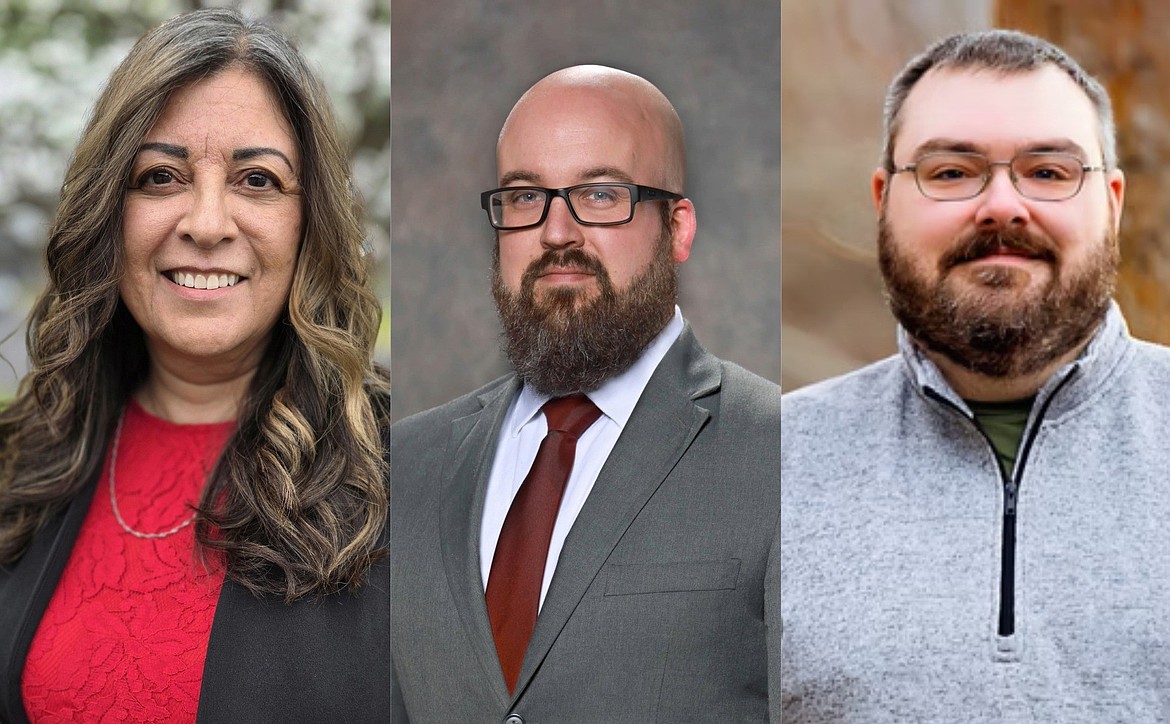
Three candidates are running for Legislative District 13, position 2, from left to right is Deanna Martinez, Don Myers and Joshua Thompson.
COURTESY PHOTO/DON MYERS, DEANNA MARTINEZ, JOSHUA THOMPSON
OLYMPIA — Voters in Legislative District 13 will choose among three candidates for State Representative Position 2 in the upcoming election. To help readers compare where the candidates stand on key issues, each was asked the same questions and given the same deadline to respond.
Republicans Deanna Martinez and Don Myers submitted their responses by the deadline. Candidate Joshua Thompson responded one day late, citing a family medical emergency. His answers are included to ensure voters have the opportunity to review the views of all three candidates.
For this installment, candidates were asked about what transportation and infrastructure projects they would prioritize if elected and what their top three priorities are.
This version includes Thompson's responses to the first three questions regarding water, healthcare and housing. To read Martinez's and Myers's answers, visit bit.ly/13thDistPos2.
Primary ballots must be postmarked or returned by Aug. 4.
Question: District 13 relies on highways, farm-to-market roads, rail and freight corridors to move agricultural products and support economic growth. What transportation and infrastructure projects would you prioritize and how would they benefit local communities and businesses?
Myers: My first priority would be protecting what taxpayers have already paid for. One lesson I've learned in local government is that timely maintenance is almost always more cost effective than waiting until a road has completely failed. Sometimes that means preserving several roads that are still in fair condition instead of spending the entire budget on one road that has already reached the point of reconstruction. It's not always the easiest decision, but it provides the best long-term value.
I also believe infrastructure projects should be coordinated. When roads are rebuilt, we should address other aging underground infrastructure at the same time whenever possible. Good planning prevents unnecessary costs and avoids tearing up a newly completed road a few years later.
By focusing on preventive maintenance, coordinated infrastructure planning and fair investment in rural communities, we can build a transportation system that supports the needs of district 13.
Martinez: District 13 relies on highways, farm-to-market roads, rail and freight corridors to move agricultural products and support economic growth. What transportation and infrastructure projects would you prioritize and how would they benefit local communities and businesses?
I’ll support continued assessment of our infrastructure, especially corridors that support economic growth. I’ll work with fellow Republican legislators and across the aisle to reinvest in maintenance of our transportation infrastructure. I’ll advocate for the additional Moses Lake bridge crossing which could increase development and economic growth for this area. The second crossing would also alleviate congestion and provide alternative routes for EMS and commerce.
Thompson: My first priority would be completing the I-90 Vantage Bridge deck replacement and maintaining the I-90 corridor through Kittitas and Grant counties. I would also support safety and capacity improvements on key routes such as State Routes 17 and 26, U.S. 97, and the farm-to-market roads farmers depend on during planting and harvest.
Second, I would advocate for a reliable state funding partnership with counties and small cities to repair bridges, preserve pavement, improve intersections, and replace aging culverts. Preventive maintenance costs taxpayers less than allowing roads and bridges to deteriorate until they require emergency replacement.
Third, I would support investments in short-line rail, the Grain Train program, rail crossings, and connections to ports and industrial areas. Moving more agricultural products by rail can reduce highway congestion, lower shipping costs, and help Central Washington businesses compete in national and international markets.
I would also streamline permitting, pursue federal matching funds, and ensure rural projects receive a fair share of state transportation dollars.
These investments would improve safety for families, reduce delays and vehicle damage, help farmers get products to market, and make District 13 more attractive to employers. My standard would be simple: projects must provide measurable benefits to the communities and taxpayers funding them.
Question: The economy of the 13th District depends heavily on irrigated agriculture and access to Columbia Basin Project water. What specific actions would you take in Olympia to protect water access for farmers, support ongoing infrastructure improvements and address future water demands?
To read Martinez's and Myers's answers, visit bit.ly/13thDistPos2.
Thompson: My top priorities would be making Washington more affordable, protecting agriculture and infrastructure, and strengthening public safety and essential services.
I would work to lower the cost of living by opposing new income taxes and unnecessary tax increases, reducing regulations that raise housing and business costs, and helping families, farmers, and small businesses keep more of what they earn.
Protecting agriculture means preserving access to Columbia Basin Project water, securing funding for the Odessa Groundwater Replacement Program, and investing in highways, farm-to-market roads, bridges, rail, and freight corridors. Agriculture is the backbone of the 13th District, and reliable water and transportation systems are essential to protecting jobs and growing our economy.
I would also support law enforcement, address the fentanyl and mental-health crises, and improve access to rural healthcare. That includes expanding workforce recruitment programs, telehealth, and local training opportunities so families do not have to wait months or travel hours to receive care.
These priorities reflect the concerns I hear from residents across the district. My focus would be delivering practical results while protecting local control, constitutional rights, and the values of Central Washington.
Question: Many residents in District 13 face challenges of accessing primary care, specialty care, and mental health services. What legislative solutions would you propose to improve healthcare access and workforce recruitment in rural Central Washington?
To read Martinez's and Myers's responses, visit bit.ly/13thDistPos2.
Thompson: Rural families should not have to drive hours or wait months for basic healthcare. In Olympia, I would focus on recruiting providers, strengthening local facilities, and removing barriers that prevent qualified professionals from serving rural communities.
I would expand targeted loan-repayment and scholarship programs for doctors, nurses, dentists, counselors, and other professionals who commit to working in underserved areas. Students from rural Washington who want to return home and build their careers should receive priority.
I would also partner with local colleges, hospitals, and clinics to expand nursing, behavioral-health, medical-assistant, and rural residency programs. Students should be able to complete more of their education and clinical training close to home.
Protecting telehealth access and improving rural broadband would help patients consult specialists without repeatedly traveling to Seattle or Spokane. Telehealth should supplement—not replace—local, in-person care.
I would streamline licensing for qualified professionals, reduce unnecessary delays, and support responsible scope-of-practice reforms while maintaining strong patient-safety standards. Mental-health services should also be integrated into primary-care clinics, supported by mobile crisis response and partnerships with schools and law enforcement.
State funding must produce measurable results, including shorter wait times, more providers, and sustainable rural hospitals and clinics. Local healthcare leaders—not Olympia bureaucrats—should help determine how resources are used.
My goal is practical: build a dependable rural healthcare workforce and make quality care available closer to home.
Question: Communities throughout the district are experiencing housing shortages for families, agricultural workers, teachers, healthcare workers and first responders. What policies would you support to increase housing availability while respecting local control and community character?
To read Martinez's and Myers's answers, visit bit.ly/13thDistPos2.
Thompson: Housing policy should recognize that Ellensburg, Quincy, Moses Lake, and our smaller rural communities each have different needs. I would oppose one-size-fits-all zoning mandates from Olympia and protect the ability of local governments and residents to guide responsible growth.
I am proud to be endorsed by the Spokane Home Builders Association, whose members understand firsthand how permitting delays, rising fees, infrastructure shortages, and unnecessary regulations drive up the cost of housing.
In Olympia, I would support faster and more predictable permitting, reasonable impact fees, and reforms that reduce construction costs without weakening safety standards. I would also pursue infrastructure funding for water, sewer, roads, and utilities so communities can support new housing without placing the full burden on existing taxpayers.
I would support voluntary incentives for communities that expand housing options such as starter homes, townhomes, accessory dwelling units, and appropriately located multifamily housing. Local residents—not state bureaucrats—should decide where those options belong.
For agricultural workers, teachers, healthcare professionals, and first responders, I would encourage partnerships among employers, nonprofit organizations, housing authorities, and private builders to create workforce housing.
The goal is more housing families can afford while respecting property rights, local control, farmland, water resources, and the character of each community.
ARTICLES BY NANCE BESTON
Ephrata Police Dept. launches officer wellness program through state grant
EPHRATA — The Ephrata Police Department is launching a new officer wellness program after the Ephrata City Council approved a state-funded grant and related contract aimed at providing mental health and behavioral health support for police personnel.
Legislative candidates address transportation, economic development
OLYMPIA — Voters in Legislative District 13 will choose among three candidates for State Representative Position 2 in the upcoming election. To help readers compare where the candidates stand on key issues, each was asked the same questions and given the same deadline to respond.
GCFD 7 seeks volunteers for voter pamphlet committees
Grant County Fire District 7 is seeking residents interested in serving on committees that will prepare arguments for and against the district's upcoming Emergency Medical Services levy proposition on the Nov. 3 general election ballot.