
Foresters remove ash trees as part of colossal effort to keep Whitefish's landscape healthy
KELSEY EVANS | Hagadone News Network | UPDATED 2 months, 4 weeks AGO
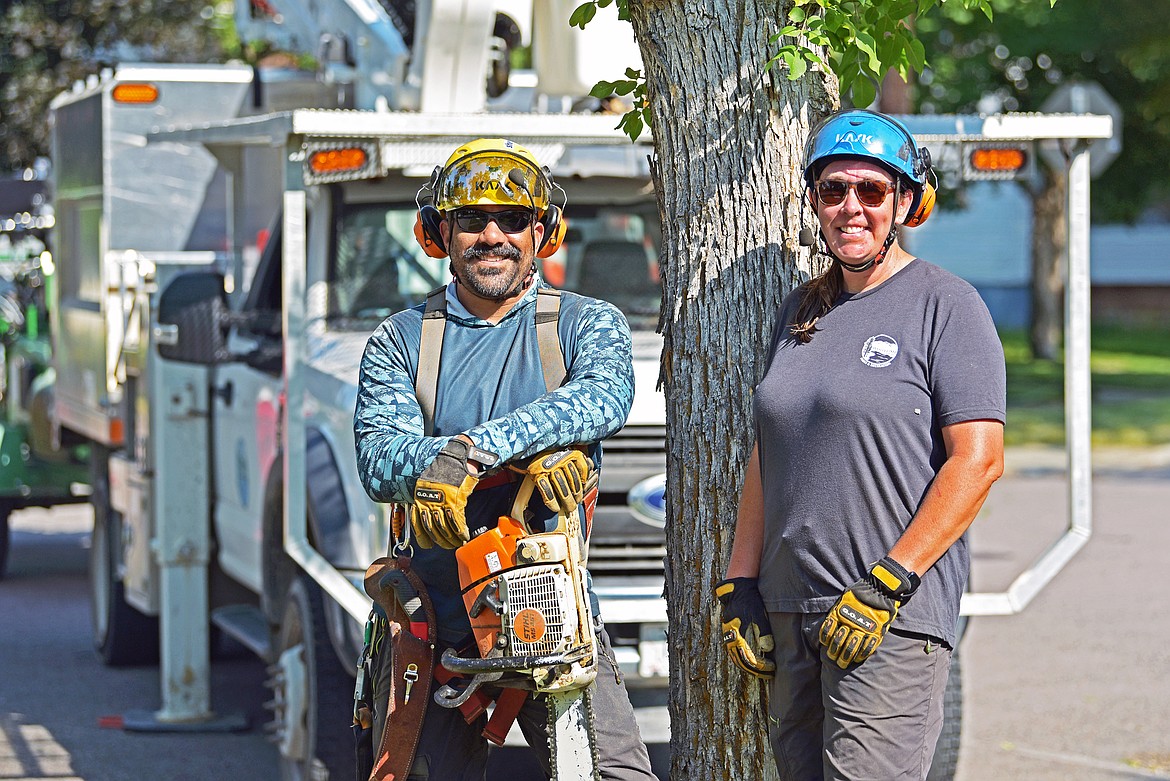
Whitefish Arborist Philip Hodge and Whitefish Urban Forester Landscape Foreman Jen Sybrant on July 22. (Kelsey Evans/Whitefish Pilot)
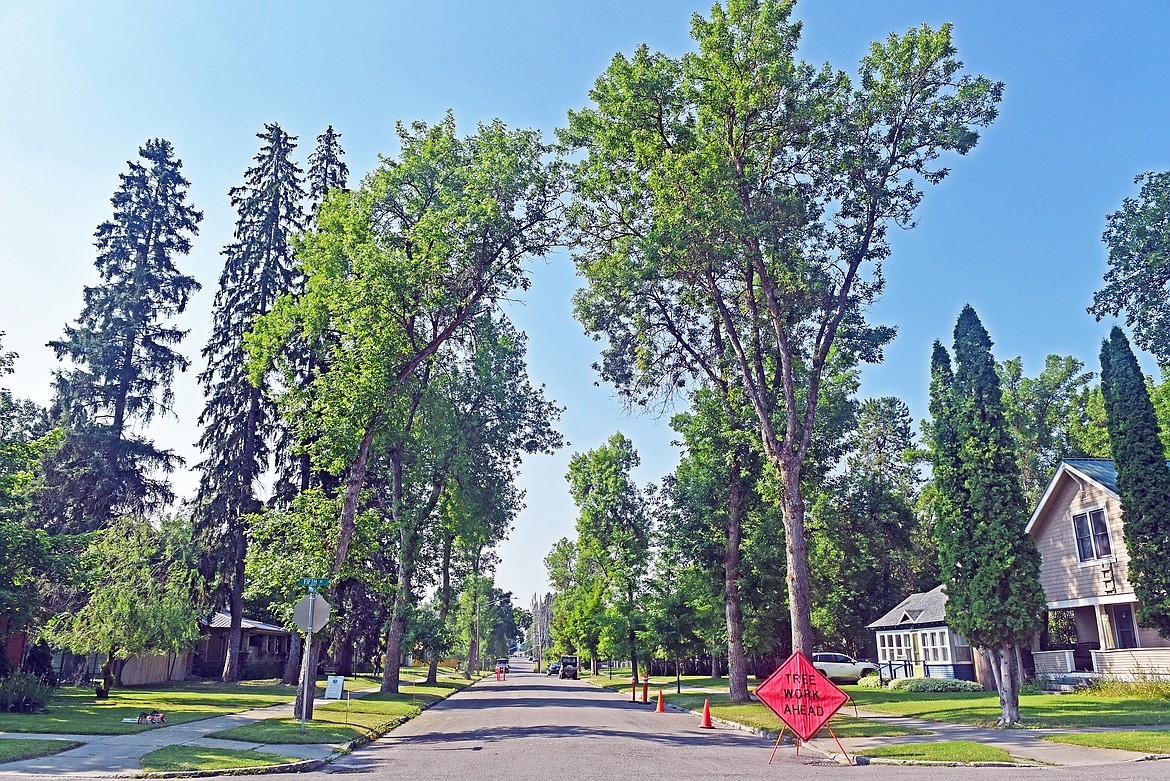
Ash trees on the sidewalks of Kalispell Avenue, as they were about to be removed on July 22. (Kelsey Evans/Whitefish Pilot)
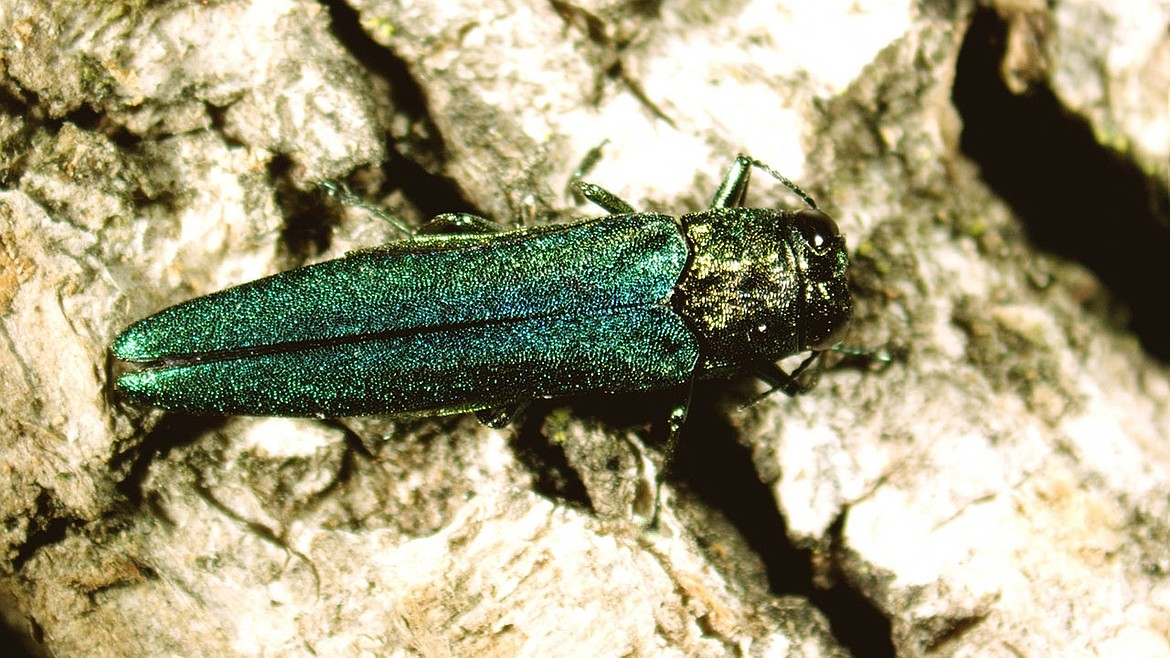
USDA photo of an emerald ash borer.
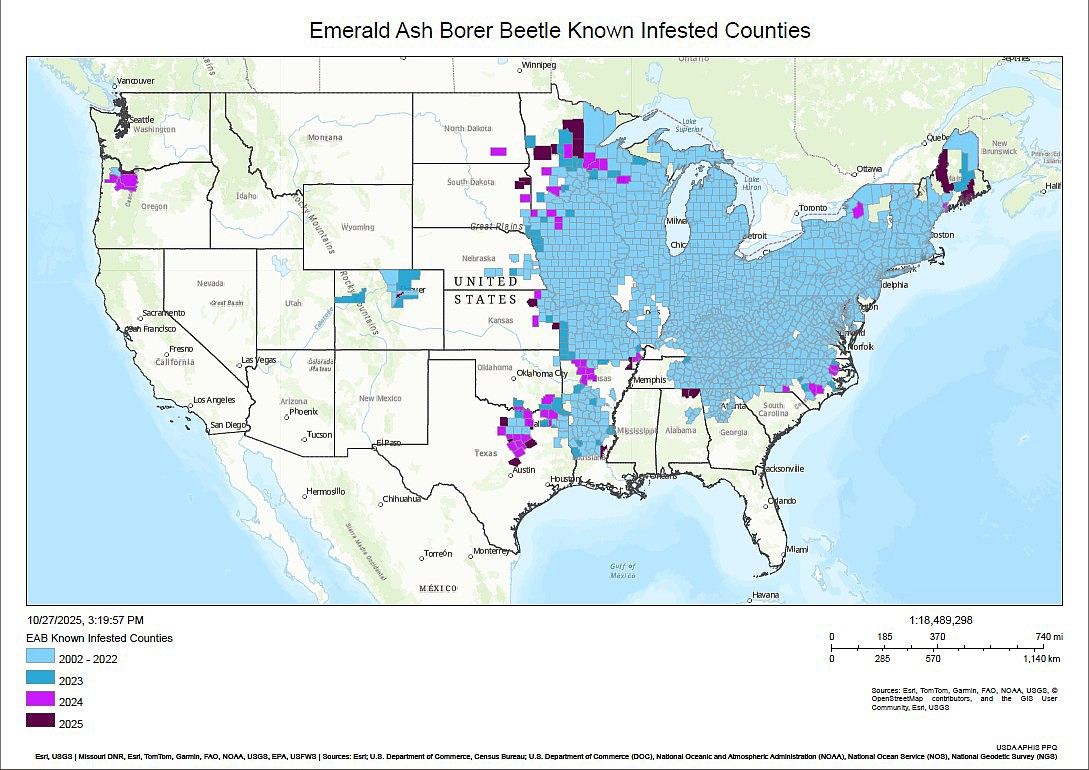
USDA map of emerald ash borer beetle infestation.
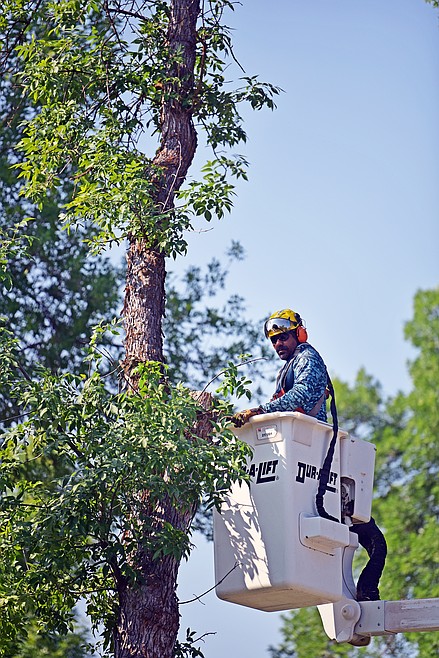
Whitefish arborist Philip Hodge removes limbs on an ash tree on Kalispell Avenue July 22. (Kelsey Evans/Whitefish Pilot)
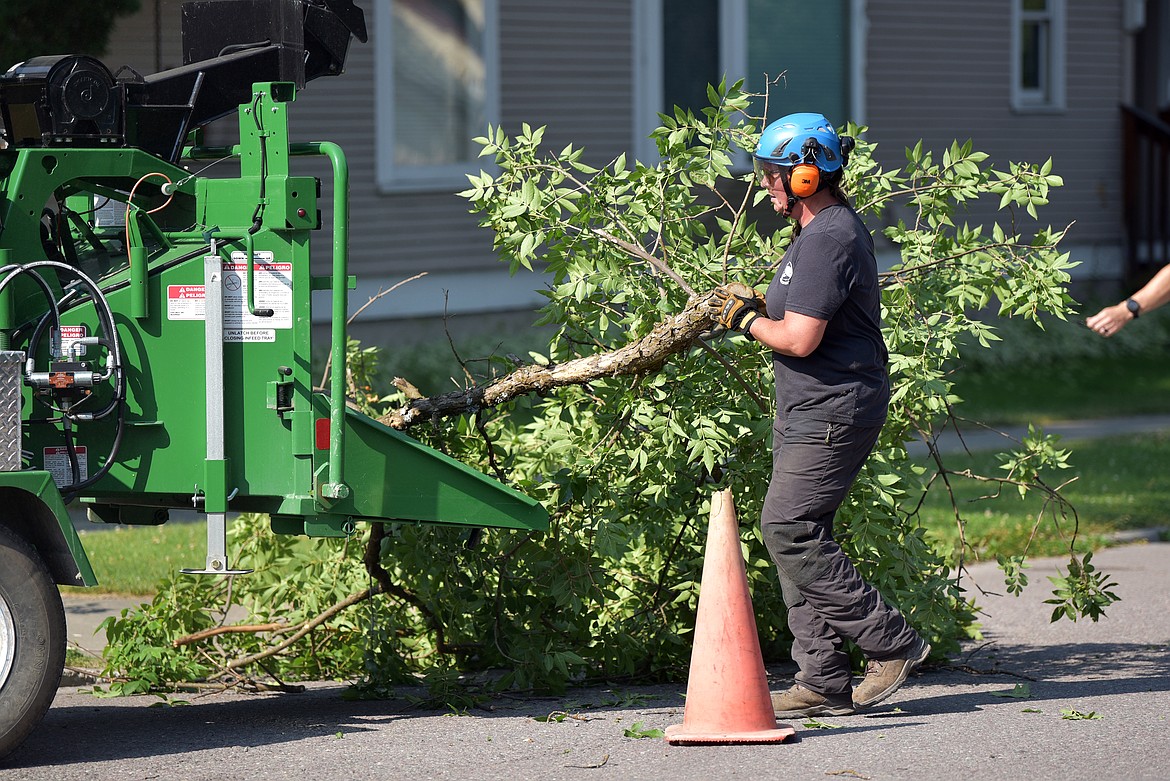
Jen Sybrant, city of Whitefish urban forester landscape foreman, feeds tree limbs into a grinder on July 22. (Kelsey Evans/Whitefish Pilot)
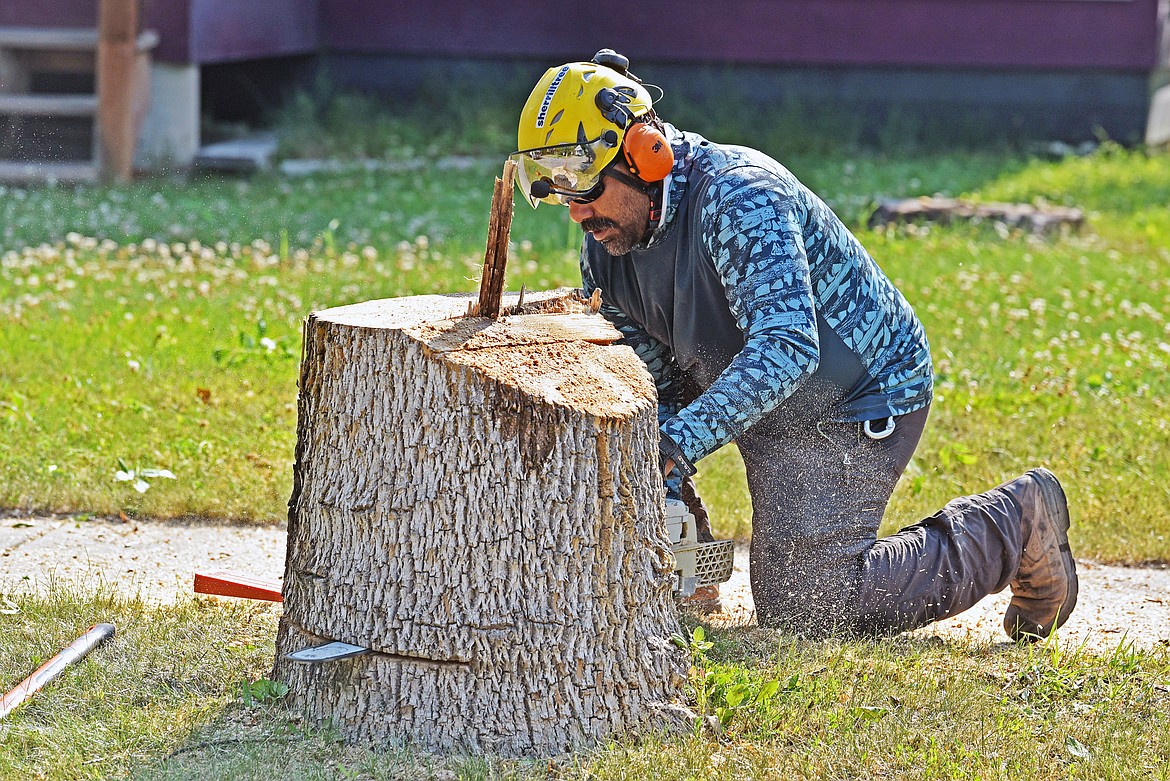
Whitefish arborist Philip Hodge works to remove the last of an ash tree on Kalispell Avenue July 22. (Kelsey Evans/Whitefish Pilot)
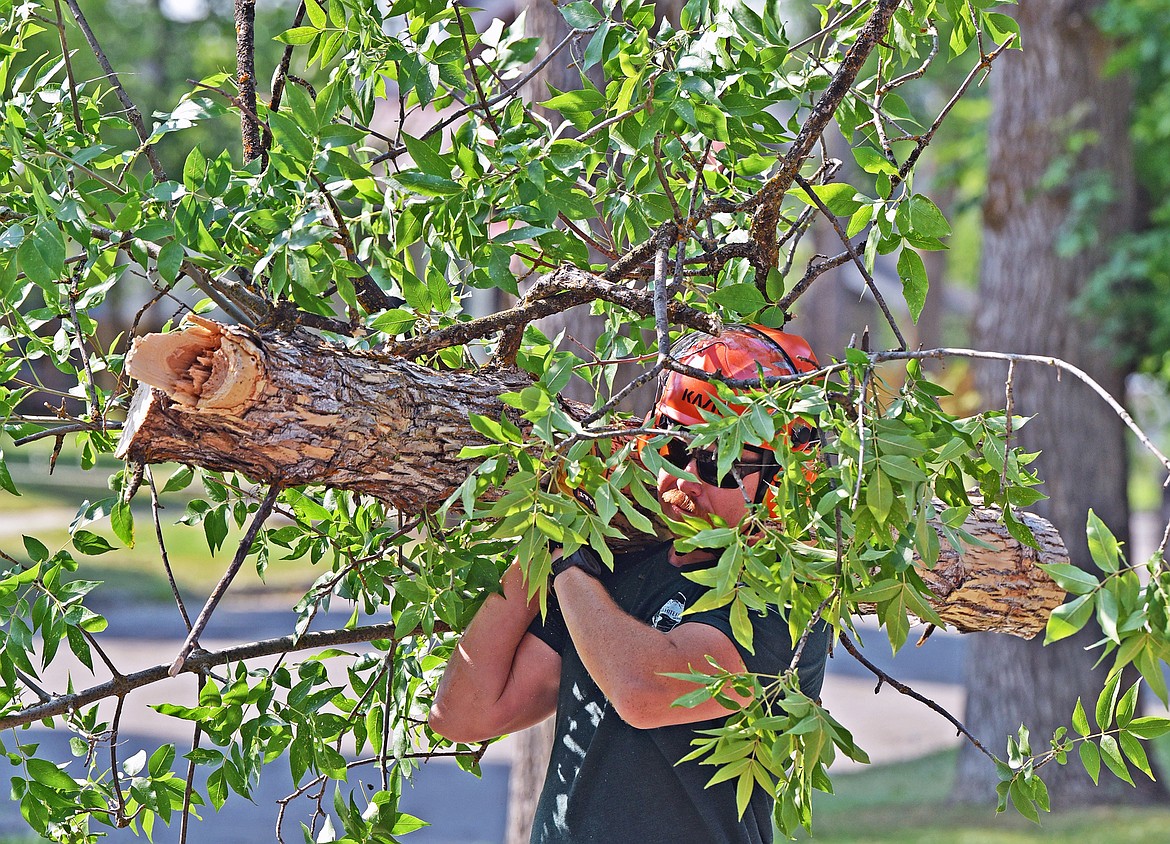
The limbs groaned and trembled in the blue sky above Whitefish. With a huff, the chainsaw paused, and a limb of a 1920s-born tree crashed to the ground on Kalispell Avenue.
Neighbors peered from windows and walkers paused to gaze at the transformation of the historic avenue lined with ash trees.
For the city of Whitefish's urban forestry staff, it was just another day on the job.
With two full-time and two seasonal staff members, Whitefish's urban foresters have worked to keep the landscape healthy by removing 160 trees in the last five years, planting 566 in their place. In the last year alone, the team pruned 1,244 trees.
Last week, the urban foresters were focused on removing six ash trees along Kalispell Avenue.
"We're trying to get ahead of the curve," said Philip Hodge, city arborist of 11 years. "So we don't lose everything all at once, and we can still have canopy over our streets."
The "curve" is the anticipated destruction of ash trees as the emerald ash borer spreads across the continent.
The emerald ash borer is an invasive wood-boring beetle from Asia. First detected in Michigan in 2002, the borer is responsible for the death and decline of tens of millions of ash trees in North America, taking out whole communities of trees on the east side of the continent.
Now the pest is making its way west. It is in 38 states, including South Dakota, Colorado and Oregon.
If and when the pest arrives in Whitefish, they will "eat the tree from the inside out," said Jen Sybrant, city of Whitefish urban forester landscape foreman of 13 years.
"So you just have a dead, hollow standing monster," she said.
From the outside, borer damage looks similar to that of the ash bark beetle, which already resides in the area. The bark beetle, however, does not spread as swiftly, and the tree can often survive its infestation.
By contrast, borers could wipe out the local ash population in just a couple of years — and it's only a matter of time until they arrive, the foresters said.
There are 104 green ash trees still standing in Whitefish, making up 5.94% of the urban forest. Many were planted in the 1920s.
"They were only a dollar, it was a heck of a deal," Sybrant said. "So they're planted all over town."
Besides along Kalispell Avenue, larger ash trees are found near City Beach and Smith Fields.
Now 100 years later, the foresters' plan is to systematically remove all of the older ash trees before the pest arrives, as per the emerald ash borer course of action plan developed in 2020.
THE ASH TREE plan is just one part of the multifaceted work the urban foresters do.
Whitefish’s urban forestry crew takes care of 4,000 right-of-way trees, 1,000 city park trees, 119 landscape beds, eight pollinator beds and 100 flower baskets.
Hodge is a certified arborist, so he does technical work and ensures job site safety, including taking care of saws, chippers and trucks.
As the urban forester landscape foreman, Sybrant takes on planning and management roles. She organizes plantings and stewards pollinator gardens.
Ryan Shively has worked on the team seasonally for the last five years. His full-time job consists solely of watering trees. The fourth staff member is RJ Reynolds, in his first season as a grounds-member.
Staff members work together on tree removals, plantings and taking care of the landscape beds and flowers.
There are 100 flower baskets; 91 are on a drip irrigation while nine must be hand watered daily.
Sybrant was an instigator of eight new pollinator gardens in several Whitefish parks. Sybrant said they are starting to take off after being planted over two years ago.
As for the trees, Sybrant said they have broken the city down into zones to help plan.
"We identify crucial trees, hazard trees, and take care of those, and then work on pruning everything within three to five years," she said.
The team removed five dead quaking aspens from medians on Central Avenue two weeks ago.
"This winter, the quaking aspens took a hit," Sybrant said. "We had the warm temps right off the bat, then we had a cold snap – we've lost quite a few."
Grand firs have also taken a hit. There's only a few left in town, in shady spots.
"It's just too hot for them," Hodge said.
Sybrant added, "Climate change, it's real."
In the fall, they'll replace those quaking aspens and other trees removed, focusing on a variety of pest and drought resistant trees. Along Kalispell Avenue they'll plant elms, fruitless crab apples, paper birch, red oaks and maples.
Landowners can help the urban forest by participating in the city's adopt a tree cost sharing program. The city also has a memorial tree program.
Everyone is encouraged to water their trees, even older trees.
"I know it's expensive, but the trees need it," Sybrant said. "A good example is along Spokane Avenue between fifth and sixth. You can tell those that don't have irrigation, they're dying."
It's all a "marathon game" for planting the "right tree in the right place," Hodge explained.
"We get that a lot - 'Why are you planting such a small tree?'" Sybrant said. "It's not for you. It's for the next generation."
The department is also working on above and beyond educational efforts. Soon, banners will go up around town giving essential tips such as keep mulch away from trunks; water young trees near the root ball; don't move wood, burn it where you burn it; and glean fruit trees. The foresters are also partnering with Whitefish High School environmental studies students to create educational videos about protecting trees.
"I'm in this for the next generation, for my kids, and everybody after me to have shade and beauty in this town," Sybrant said.
Hodge said, "Leave it better than you found it ... The best time to plant is 20 years ago. Next best time is today."
For more information about urban forestry, see the city's website at cityofwhitefish.gov/596/Urban-Forestry.
Editor Kelsey Evans can be reached at 406-862-3505 or [email protected]. If you value local journalism, pledge your support at whitefishpilot.com/support.
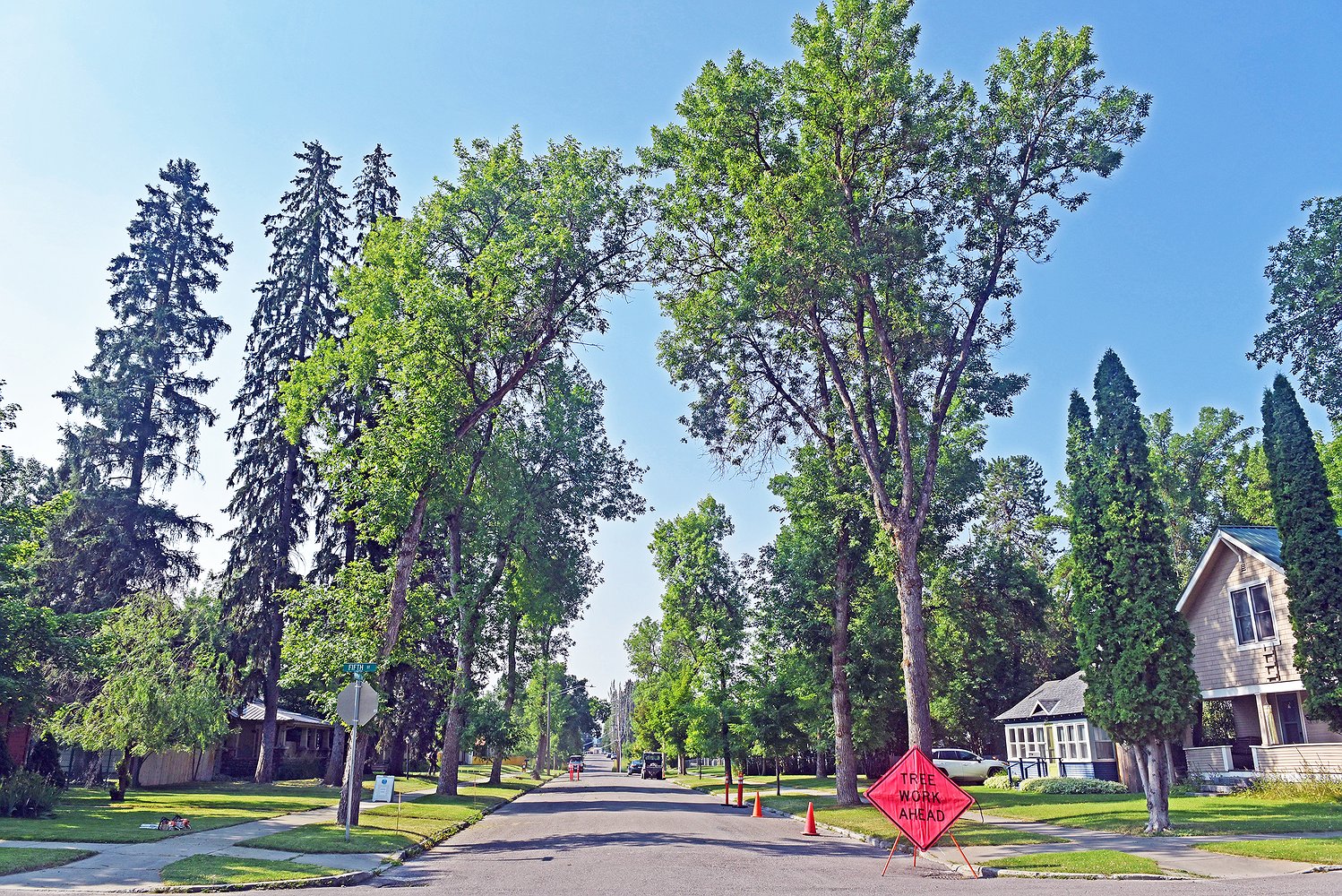 Ash trees on the sidewalks of Kalispell Avenue, as they were about to be removed on July 22. (Kelsey Evans/Whitefish Pilot)
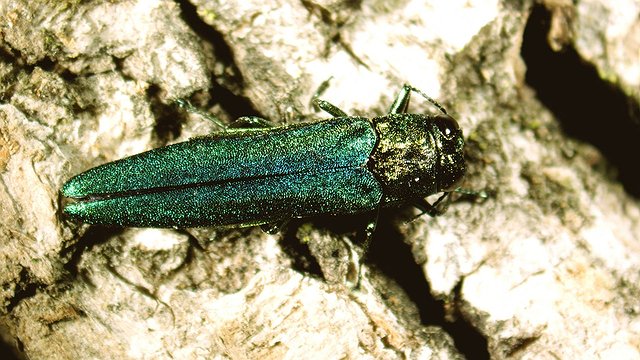 USDA photo of an emerald ash borer.
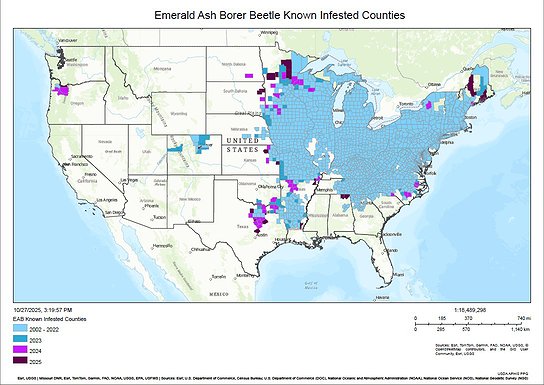 USDA map of emerald ash borer beetle infestation.
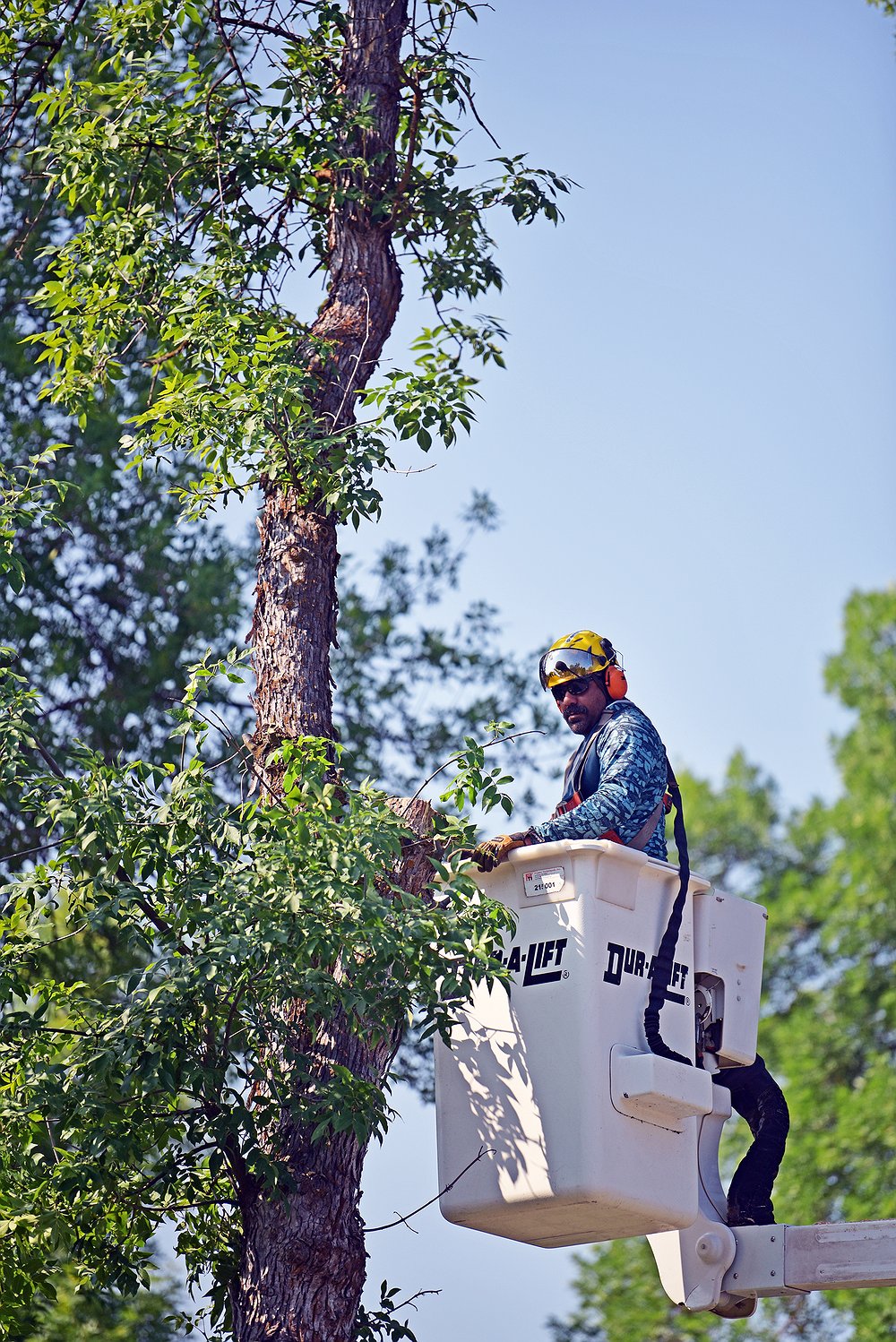 Whitefish arborist Philip Hodge removes limbs on an ash tree on Kalispell Avenue July 22. (Kelsey Evans/Whitefish Pilot)
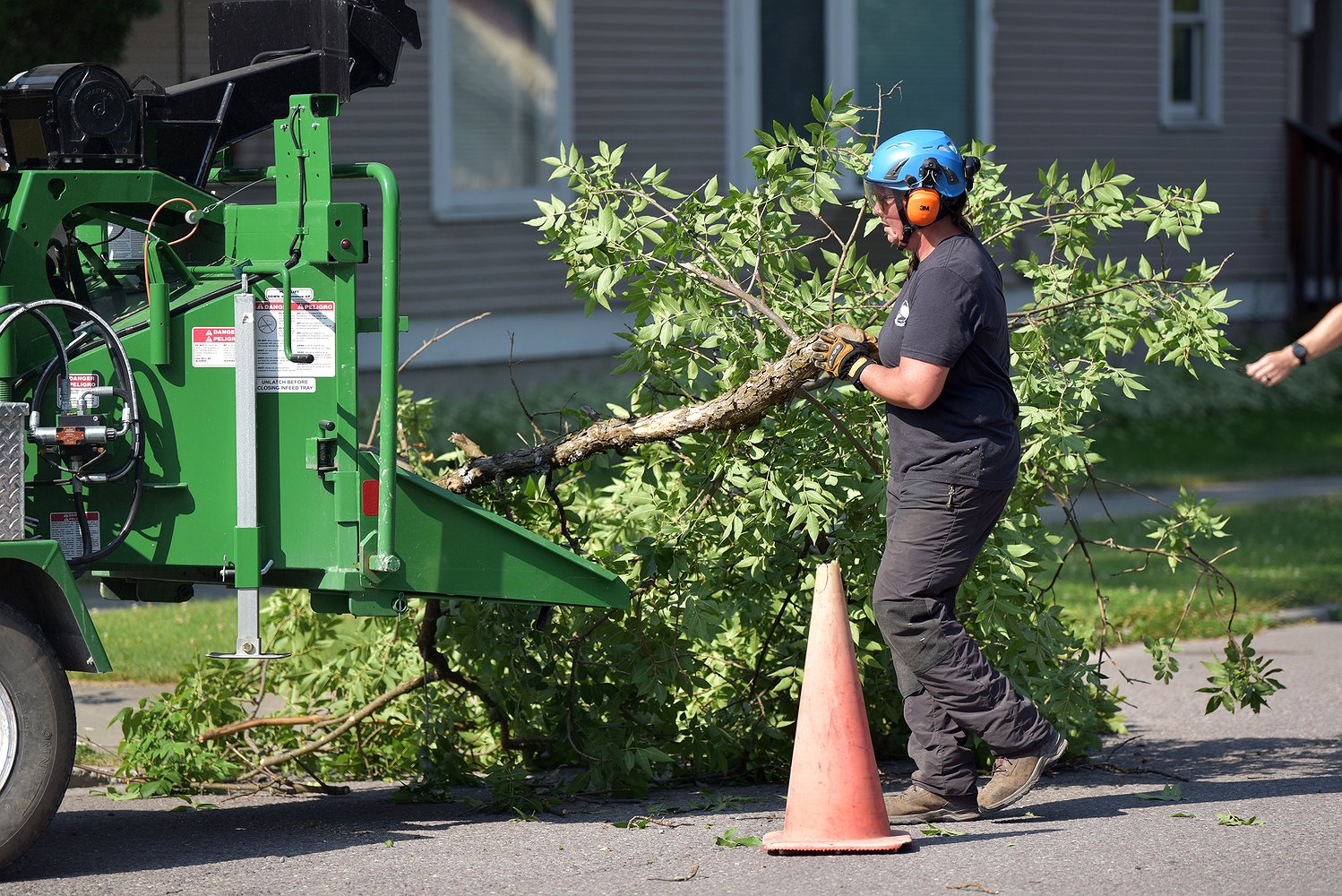 Jen Sybrant, city of Whitefish urban forester landscape foreman, feeds tree limbs into a grinder on July 22. (Kelsey Evans/Whitefish Pilot)
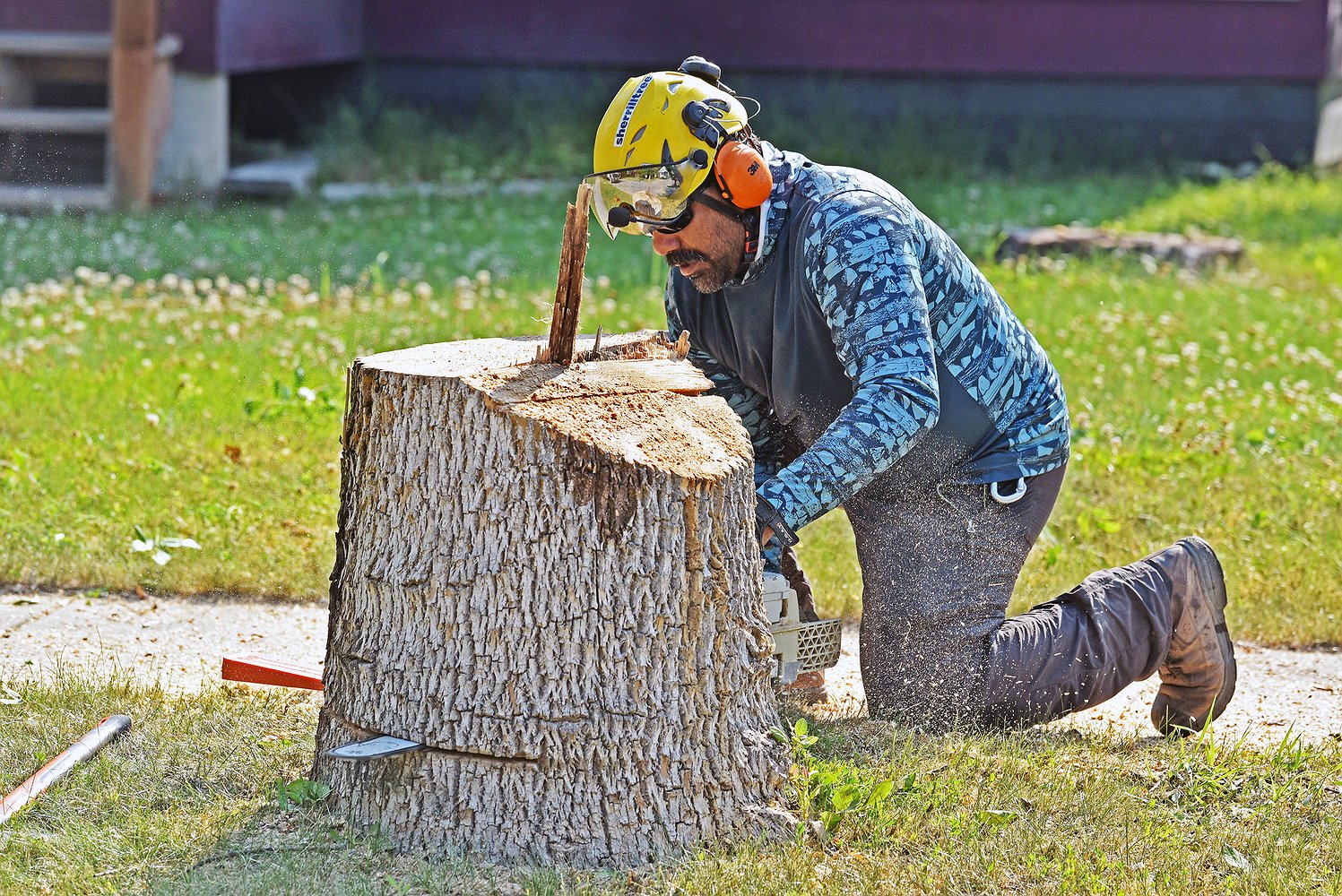 Whitefish arborist Philip Hodge works to remove the last of an ash tree on Kalispell Avenue July 22. (Kelsey Evans/Whitefish Pilot)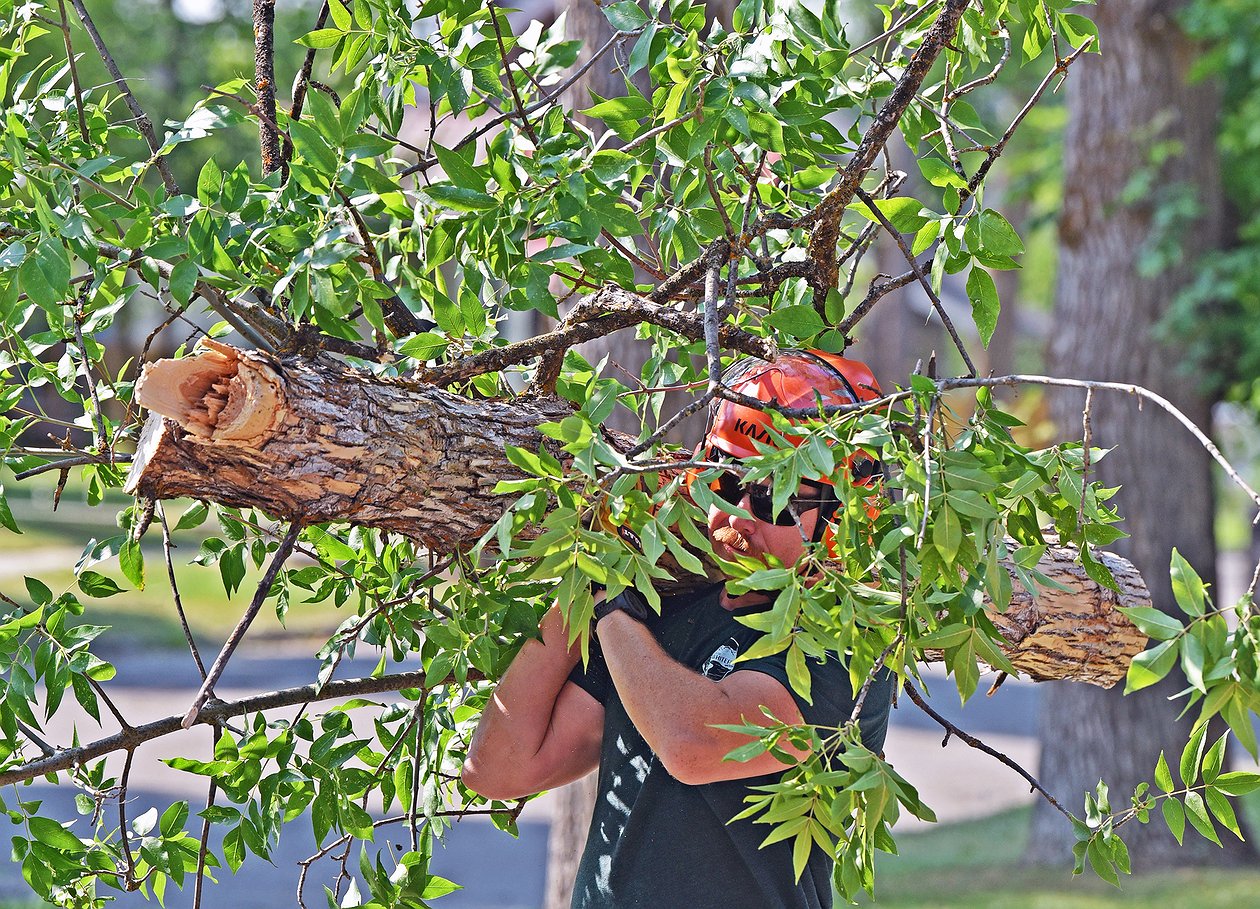
ARTICLES BY KELSEY EVANS
Haskill Creek group seeks permit to host events at Voerman Road property
Haskill Creek Farms on Voerman Road in Whitefish has applied for a Flathead County conditional use permit for a “recreational facility” with the intention of hosting small-to-medium sized events.

Whitefish snowboarder premieres hitchhiking film ‘Mosey’
Jason Robinson’s hitchhiking, snowboarding odyssey film “Mosey” premieres at the Whitefish Performing Arts Center on Friday, Oct. 23.

Election 2026: Newcomer Peachey seeks House District 3 seat
Whitefish Republican Derek Peachey is running for House District 3.