
Forest predicts large timber project will adversely affect threatened species
HAILEY SMALLEY | Hagadone News Network | UPDATED 4 months, 1 week AGO
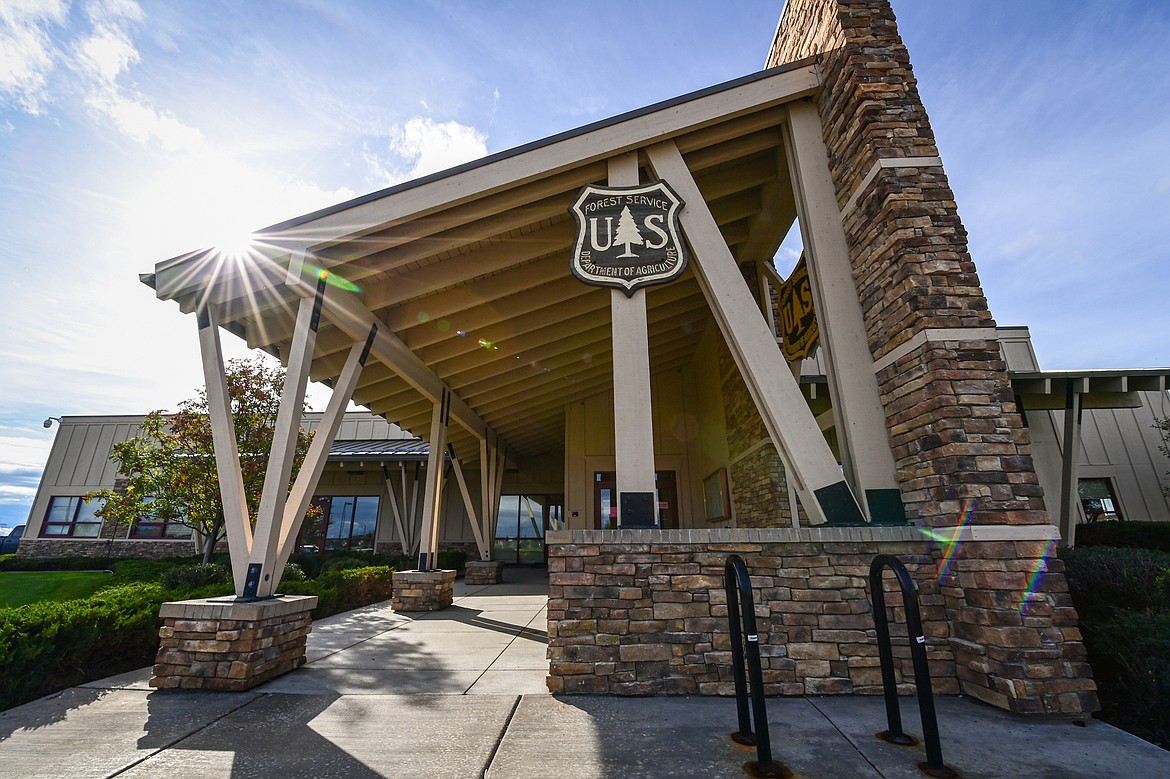
The U.S. Forest Service Flathead National Forest Supervisor's Office on Wolfpack Way in Kalispell on Wednesday, Oct. 1. (Casey Kreider/Daily Inter Lake)
Casey Kreider
A large-scale timber project along U.S. 2 between Summit and West Glacier is expected to have limited, short-term effects on endangered and threatened species, according to an environmental assessment released by the U.S. Forest Service on Tuesday.
“Wildlife is not driving the project’s purpose and need for action,” reads the document. “Although proposed project activities may have negative impacts to some wildlife species over the short-term due to disturbance and habitat changes, many wildlife species would benefit from proposed treatments over the long term due to increased diversity of vegetation communities and decreased risk of high intensity and severity wildfire.”
The Granite Moccasin Project includes 2,417 acres of commercial timber harvest and 2,189 acres of noncommercial treatments along a 40-mile stretch of the highway. The work is expected to occur over a 10-year period.
More than half of the project area is considered part of the wildland urban interface, and officials said the treatments will mitigate the risk of catastrophic wildfires in Essex, Pinnacle, Snowslip and Fielding. Treatments will reduce canopy cover and remove downed wood and ladder fuels from dense areas of the forest.
Those protections come at the expense of about 3,947 acres of lynx denning habitat, including 1,608 acres designated as critical denning habitat.
The big cats are listed as threatened under the Endangered Species Act and rely on a mosaic of forest landscapes for survival. Lynx use downed logs, snags and other woody debris in dense forests for shelter. Lynx hunt rabbits and other prey in more open areas.
While the project will slash into the species’ denning habitat, treatments are expected to increase lynx foraging habitat by about 1,926 acres.
Grizzly bears, another federally threatened species, will see similar habitat effects. Treatments will thin about 1,641 acres of dense forest vegetation the bears use for cover, transitioning those stands into foraging habitat.
About 1,629 acres of core grizzly bear habitat will be affected by increased traffic from logging trucks and equipment along haul routes. Studies suggest grizzly bears are especially sensitive to road traffic and avoid areas within 500 meters of open haul routes.
A total of 79.85 miles of Forest Service roads will be used during the project, including 7.6 miles of roads yet to be constructed.
Beyond grizzly bears, the increased road density is expected to cause minimal short-term impacts to threatened populations of bull trout and other aquatic species, as soils from the roadways can slough into nearby rivers and creeks. In total, the project is expected to up sedimentation in streams by about 0.3%.
“This amount of current road sediment input is so low that it is not expected to affect spawning success, fry emergence or survival of bull trout,” states the assessment.
Three culverts near Pinnacle Creek will be replaced during the project. While the construction will disturb resident populations of westslope cutthroat trout in the short-term, the upgraded culverts will allow the fish to pass more easily through the stream, resulting in long-term benefits.
The project is expected to produce about 2.5 million cubic feet or 12.5 million board feet of timber, generating an estimated revenue of $393,979.
The project is being reviewed under an emergency action determination that the Trump administration introduced last year. It allows the Forest Service to forgo the typical objection period for projects in areas considered to be at high risk for catastrophic wildfire.
The Forest Service is accepting comments on the project through July 1. Comments may be delivered to the Hungry Horse Ranger Station or submitted online by going to fs.usda.gov/r01/flathead/projects and clicking on the “Granite Moccasin” tab.
Reporter Hailey Smalley can be reached at 406-758-4433 or [email protected]. If you value local journalism, pledge your support at dailyinterlake.com/support.
ARTICLES BY HAILEY SMALLEY

Trump stumps for Flint in Kalispell as Election Day nears
President Donald Trump, wearing a dark suit, red tie and red USA cap, ambled into the Majestic Valley Arena to the raucous roar of a crowd.
Flathead National Forest greenlights Swan Valley timber project
A 2,307-acre timber project is now under way in the Swan Valley.
Flathead National Forest greenlights Swan Valley timber project
A 2,307-acre timber project is now under way in the Swan Valley.