Lincoln Co. employees get modest pay increase
SCOTT SHINDLEDECKER | Hagadone News Network | UPDATED 3 months, 4 weeks AGO
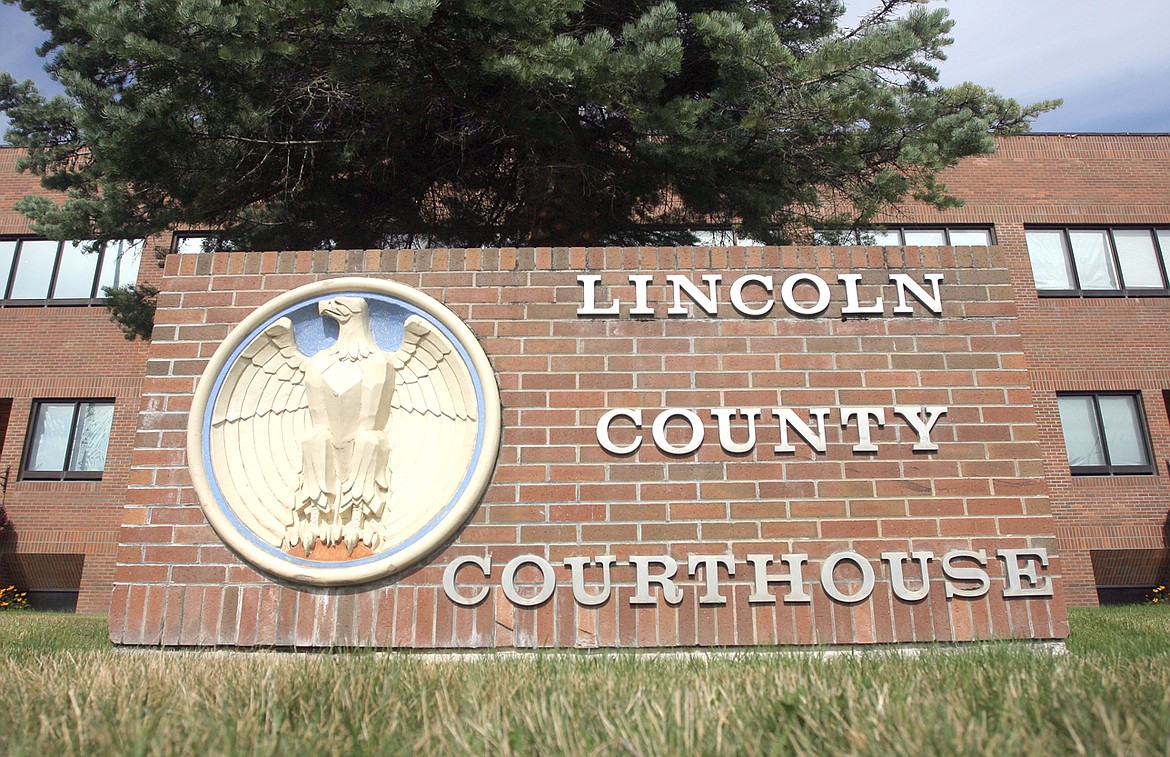
Lincoln County Courthouse. (Paul Sievers/The Western News)
The Lincoln County Commissioners recently approved a modest 1.5% salary raise for its elected officials and non-union county employees.
The commissioners approved the pay raise at the June 10 commission meeting. The county Compensation Board met June 4 to discuss the matter and approved a recommendation to support the raise by a 9-1 count.
The pay increases takes effect July 1, the beginning of the new fiscal year.
District 3 Commissioner Noel Duram made a motion to approve the raises at the June 4 meeting, then voted against it. He ultimately voted for it at the June 10 meeting. There was no public comment about the wage increase.
District 2 Commissioner Jim Hammons said the raise was possible due to the county’s investment earnings.
The county received a total of $12 million in federal money from the Local Consistency and Tribal Fund (LATCF) in fiscal years 2022 and 2023.
Hammons said $7 million of the LATCF allocation was invested with the intent that annual investment earnings would help fund employee wage increases without increasing the burden on taxpayers. He reported that investment earnings for the current year are projected at approximately $283,000.
Hammons said the county's investment portfolio, managed through Raymond James Investments, produced an approximate return of 2%. There was also discussion about reviewing investment strategies to see if higher returns were possible while maintaining appropriate safeguards for public funds.
District 1 Commissioner Brent Teske and Hammons agreed a 1.5% raise was the most practical and affordable.
"I feel we can't go any lower or higher," Hammons said.
Teske mentioned rising insurance costs will likely see county employees have to pay a portion of their health insurance.
"The increase was 7% last year and this year it's 6.7, so at some point employees will have pay some of that," Teske said.
Duram said someone mentioned commissioners working half-time or part-time so money could be saved, but he and Teske disputed the idea.
"I appreciate the comment, but I know I put 40-50 hours per week into it and I know it would be very beneficial financially in some ways, but I don't know if that'd be the best route to go," Duram said.
Teske explained the number of meetings commissioners attend.
"I don't think people understand the workload, the draw, the additional meetings we attend," he said.
Libby businessman Jeff Koskela, who ran for Teske's commission seat in the June primary, emailed all three commissioners and The Western News with his thoughts on the part-time vs. full-time status.
"My recommendation on commissioner wages, "part time as per MCA" this would then provide for the salary of the administrator. In order to have a balanced budget sometimes cuts have to be made," thanks, Jeff Koskela.
According to county Finance Director Wendy Drake, the county received about $7.3 million in levied taxes in the last fiscal year.
The county sheriff and three commissioners will each make $69,319.62. The county attorney will receive $67,319.62 from local coffers, but that’s just a portion of her salary as the state kicks in the rest.
The clerk and recorder, clerk of court, treasurer and superintendent of schools will each make $67,319.62.
The county coroner’s salary is $20,195.89 while the deputy coroner’s annual pay is $6,058.77.
At the June 4 compensation board meeting, Sheriff Darren Short re-iterated his concerns about pay for county deputies. He explained that under Montana law, deputy salaries are tied to the sheriff's salary.
Short said when elected officials receive smaller increases than other county employees, deputies effectively fall behind over time because their wage progression is linked to the sheriff's compensation. He requested that elected officials receive the same percentage increase as county employees to avoid widening the pay gap between sworn and non-sworn staff.
Teske noted that the Montana Association of Counties (MACo) and law enforcement organizations are exploring legislative changes that would separate deputy compensation from the sheriff's salary structure.
County Administrator Matt Williams demonstrated a new budgeting and salary projection tool providing real-time analysis of the financial impacts of proposed wage increases, investment earnings and insurance costs.
The county’s coffers have received a boost with the reauthorization of the Secure Rural Schools Act and $799,000 in funding from U.S. Congressman Ryan Zinke that allowed the sheriff’s office to buy new vehicles and other equipment.
Secure Rural Schools provided $3.6 million to the county for critical local government services such as education, transportation and public safety.
In another bright spot, the county got $953,002 in 2025 from Kootenai National Forest timber harvest revenue, making its actual SRS allocation about $2.6 million.
County officials have been consistent in approving cost of living increases since 2018 when former Public Administrator Darren Coldwell said a mistake in longevity pay for county sheriff office employees required a 7.5% pay hike.
At a May 16, 2018, county commission meeting, county Administrator Darren Coldwell pointed out that the 1% longevity was left out of the sheriff wage for numerous years and some of the deputies received a 1% longevity based on the sheriff’s wage and not their own wage as it should have been.
Further, Coldwell said at the time there were statutes that mandated wage gaps between sheriff and deputies and Lincoln County was out of compliance. To bring the county back into compliance, the commissioners had to approve a 7.5% COLA increase for elected officials in 2018.
That year, the commission included Mark Peck, Jerry Bennett and Mike Cole and they approved the increase to achieve compliance with the state.
One year later, Coldwell again lobbied for a substantial wage increase. At a May 29, 2019, compensation board meeting, he said in order to continue the positive working attitude, the wage needs to increase and if kept stagnate the county will not get the best individuals to run.
At that point, the commissioners included Mark Peck, Jerry Bennett and Josh Letcher, who beat Cole in the 2018 election for District 3 Commissioner. In 2019, they approved a COLA raise of 8%.
One of Letcher’s campaign platforms was fiscal responsibility, but during his term as commissioner, pay increases went up about 20% while timber sales bottomed out at about 5 million board feet in 2023 before rebounding to about 70 million board feet the last two years.
Teske joined the commission in 2021 as an appointee before winning election in 2022. Hammons also won his seat in 2022.
County commissioners approved a 5% COLA increase in 2025 and 1.5% in 2024 for elected officials. In 2023, the increase was 4.7% and in 2022, it was 1.5%. In 2021, it was 1.8% and in 2020, it was 2.5%.
Prior to 2018, there was a five-year span of no increases following the Great Recession of 2008.
ARTICLES BY SCOTT SHINDLEDECKER

Libby Loggers get much-needed win over Ronan