Idaho facing severe summer drought
BILL BULEY | Hagadone News Network | UPDATED 5 months, 1 week AGO
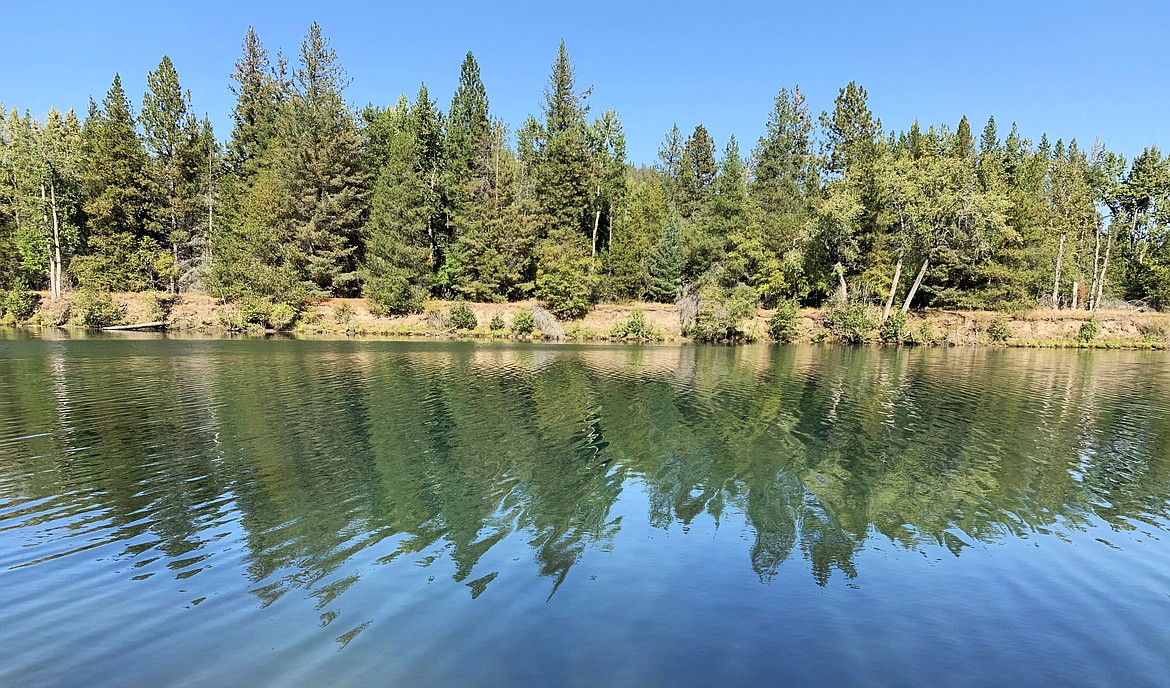
Trees are reflected in the Coeur d'Alene River in this file photo.
BILL BULEY/Press file
Bill Buley covers the city of Coeur d'Alene for the Coeur d’Alene Press. He has worked here since January 2020, after spending seven years on Kauai as editor-in-chief of The Garden Island newspaper. He enjoys running. | May 14, 2026 1:07 AM
Statewide snowpack was 58% of normal on May 1 and was expected to continue its steady seasonal decline, according to the May Idaho Water Supply Outlook Report from the Natural Resources Conservation Service.
“Early May has brought a significant shift in the spring weather pattern,” the report said. “A high-pressure ridge is bringing warm, dry conditions to the Pacific Northwest. Very little, if any, precipitation is expected over the next two weeks.”
Seventy-five percent of Idaho is in moderate to exceptional drought, the report said. The remaining 25% is considered to be abnormally dry. On April 14, the governor declared drought in all 44 counties.
“While the impacts from the low snowpack year have not fully manifested yet, it’s very likely that without much summer precipitation, Idaho (and the West) will experience an increase in drought severity,” the report said. “Drought conditions are the most severe along the southern Idaho border. This region had a record-low snowpack and has received significantly less precipitation than normal over the water year thus far.”
Without much high-elevation snowpack remaining to sustain natural flow, most reservoirs will not maintain storage levels for as long as they typically do and are unlikely to accrue additional storage, according to the report.
Streamflow in eastern and southern Idaho rivers have already dropped from well below to extremely below normal levels due to this winter’s poor snowpack. Low streamflow levels are beginning to be observed in North Idaho as well.
“Without a lot more rain, streamflow levels may decline to historically low levels this summer given the near record low snowpack conditions,” the report said. “These shifts in peak streamflow timing and the early decline to potentially record low summer baseflows will strain water supplies, fisheries and ecosystem health, hydropower generation, and Idaho’s recreation sector."
While most Idaho reservoirs have above normal storage for this time of year, it’s likely most reservoirs will be drawn down to very low levels this year and will not have much carryover going into the next water year.
Panhandle basins received near to above-normal precipitation in April ranging between 100 to 115%, and total water year precipitation remains near normal at 105 to 110%. Snowpack continues to be lackluster for this time of year and is 55% of normal.
Even though this year’s snowpack peak was about a month earlier than normal, April was relatively cold and wet, which helped reduce the rate of snowmelt.
NOAA’s 30-day outlook predicts above-normal temperatures and below-normal precipitation, suggesting the snowmelt rate will pick up its pace over the next month. There is 70 to 80% of this year’s snowpack remaining.
Although snowpack has been well below normal across the Idaho Panhandle for most of the winter, this area is faring better than most of the Western United States,” the report said.
Reservoir storage in the Panhandle lakes is near to above normal: Coeur d’Alene is 108% of normal (95% full), Pend Oreille is 91% of normal (54% full), and Priest Lake is 125% of normal (104% full).
Streamflow forecasts for May through July are 38 to 92% of normal at the 50% exceedance level across the Panhandle basins. Streamflow forecasts increased in the Pend Oreille from last month because the headwaters in Montana kept the high-elevation pack at near normal levels due to the cool, wet April weather.
However, conditions deteriorate slightly moving north into the Flathead and Kootenai, and decline significantly further to the west in Idaho due to below median snowpack and drier overall conditions in North Idaho.
“Since this was one of the lowest snowpacks since 1934, the first in most of our lifetimes, we will learn many important lessons this year as we navigate the challenges that come our way,” the report said. “Ultimately, this year will be a blueprint for strengthening Idaho’s resiliency to drought.”
ARTICLES BY BILL BULEY
Kootenai County named American World War II Heritage City
Kootenai County named American World War II Heritage City
Where History Still Salutes: Kootenai County Named WWII Heritage City

Monday Night Dinner finale on Saturday
Schluter says it will be a gathering of laughs and love a day after he gets hitched