
Precinct committee races could reshape Kootenai County politics
KAYE THORNBRUGH | Hagadone News Network | UPDATED 5 months AGO
Kaye Thornbrugh is a second-generation Kootenai County resident who has been with the Coeur d’Alene Press for six years. She primarily covers Kootenai County’s government, as well as law enforcement, the legal system and North Idaho College. | May 14, 2026 1:09 AM
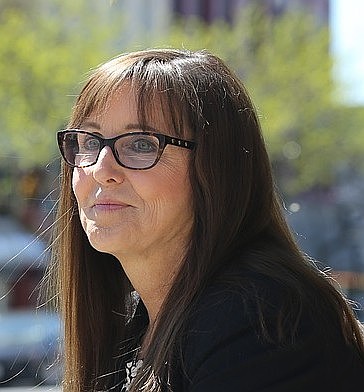
COEUR d’ALENE — When Lisa Whitehead was appointed to an open seat on the Kootenai County Republican Central Committee about six years ago, she didn’t know much about the role of a precinct committeeman.
But as a staunch conservative, she believed she could help the local arm of the GOP.
“I went through living in Seattle, Chicago and Denver and I still came out of it Republican,” she said. “It is in the core for me.”
Whitehead represented precinct 419 in Coeur d’Alene, which now includes most of the Sanders Beach, Armstrong Park and Silver Beach neighborhoods. She won the 2022 race to keep her position but lost in 2024 to a challenger endorsed by North Idaho Republicans, a political action committee that sought to shift the balance of power on the central committee.
For two years, Whitehead stepped back from local politics.
Now she’s running in the May 19 Republican primary election. Whitehead is part of a three-way race to represent her precinct on the central committee, standing apart from KCRCC loyalists and the North Idaho Republicans slate, and part of a larger battle over who will shape Republican politics in Kootenai County for the next two years.
Kootenai County is divided into 74 precincts, each containing at most a few thousand residents. Every two years, voters elect representatives from each precinct during May primary elections.
These committeemen, elected in neighborhood-level races sometimes won or lost by a handful of votes, form the central committee of each county’s political parties.
“Precinct committeemen are the foundation of the Republican Party and are the liaison between the party and their neighbors in the precinct,” said Brent Regan, who chairs the Kootenai County Republican Central Committee.
Central committees choose which candidates to support in general elections. They select delegates to send to the state convention, where the delegates make changes to the state party’s platform and rules. They also pass resolutions that may drive conversation within the Idaho Legislature.
The Kootenai County Republican Central Committee holds even more sway due to its practice of endorsing Republican candidates ahead of the primary election. Candidates backed by the KCRCC in the Republican primary election often win and usually go unopposed in the general election.
“The most important election is not in November,” said former Idaho Lt. Gov. Jack Riggs. “It’s in May.”
Riggs and his wife, Sandy Patano, a former vice chair for the Idaho State Republican Party, are founding members of North Idaho Republicans.
“The goal of North Idaho Republicans is to support what we feel are good, conservative Republican candidates,” Riggs said.
That begins with the precinct committeemen who choose what races to weigh in on, which candidates to support and where to direct party resources.
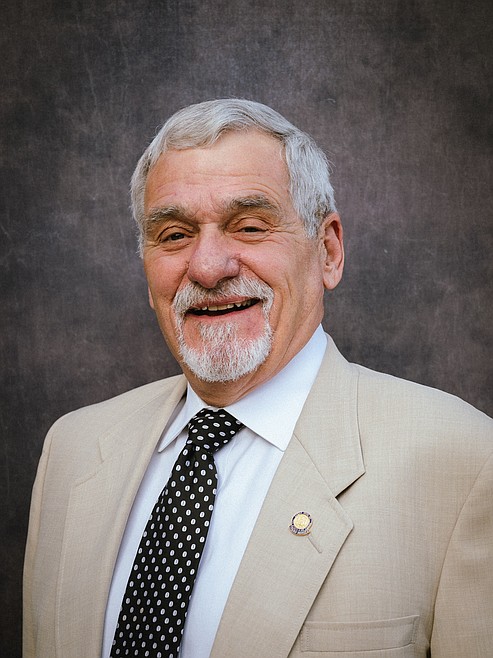
John Goedde, a former Idaho state senator of 14 years and former Coeur d’Alene School District trustee, is NIR’s choice to represent precinct 419 on the central committee. He previously served on the KCRCC.
In his day, Goedde said, the central committee did not endorse candidates in Republican primary elections. Instead, he said, Republican voters chose a winner without the party’s influence and the KCRCC went on to support that winner in the general election.
“It was the unwritten rule,” Goedde said. “That certainly hasn’t been the rule since Mr. Regan put the rating and vetting system in place.”
Regan said the KCRCC isn’t exerting unfair influence by endorsing candidates in primary elections.
“The purpose of the vetting and rating process is to provide voters with reliable information so they can make better-informed decisions,” he said in an email. “Critics who claim the process creates division are actually arguing against freedom of speech.”
The rating and vetting process took shape during Whitehead’s time on the central committee.
At that time, she said, the system was presented as a way to make sure candidates who ran in the Republican primary election truly held conservative ideals and weren’t Democrats in disguise.
“When that got started, I really thought vetting was the bomb,” she said. “I really thought it was great.”
But the system turned into something else. The central committee didn’t stop at determining whether a Republican candidate was conservative, Whitehead said; it began pitting Republicans against one another at the primary level.
“We started handing out a list,” Whitehead said, referring to the list of recommended candidates that the KCRCC distributes to Republican voters throughout the county.
In 2024, North Idaho Republicans backed a slate of 70 candidates and picked up 30 seats. It wasn’t enough to form a new majority on the central committee. But it was enough to cause a stir.
Regan said NIR-endorsed precinct committeemen “were welcomed and given every opportunity to participate fully.”
“Some did so by joining subcommittees, engaging in debate and volunteering at events,” he said in an email. “Unfortunately, others chose to work against the Republican Party.”
Over the past two years, some of the NIR-backed precinct committeemen resigned. Others were forced out of their positions. Regan said the body voted to expel one committeeman who “accused another committeeman of murdering his wife.”
Some of the remaining NIR-endorsed committeemen opted not to run for reelection, while others are fighting to keep their seats on the central committee.
Among them is Marc Stewart, who represents precinct 405.
“My experience has been really interesting over the last two years,” he said. “There’s been a lot of good. There’s been some bad. And there’s been some ugly.”
Stewart’s opponent, Steve Adams, a former committeeman and former Coeur d’Alene city councilor, did not return requests for comment. In an interview published in The People’s Pen, he described Stewart as “very disruptive” to the central committee.
For his part, Stewart said he’s spent the past two years challenging the status quo.
“I speak the truth and I try to hold the KCRCC’s leadership accountable,” he said.
Other KCRCC-recommended officials have faced controversy. Mike Hill recently resigned from his position as Rathdrum mayor after his alleged involvement in a reported domestic battery incident. Last year, Allie Anderton stepped down from the Coeur d’Alene School District board of trustees after her arrest on suspicion of driving under the influence and possessing drug paraphernalia. She later pleaded guilty to two separate DUI charges.
Regan said the central committee’s rating and vetting system “does not guarantee perfection,” but instead “simply represents a rational judgment among the choices presented to voters.”
“Humans sometimes fail,” Regan told The Press in an email. “It is unrealistic to expect any vetting process to predict unforeseeable future events. The system’s role is to evaluate candidates based on the best available information at the time.”
Stewart said he carefully considered whether to run for reelection. He made his decision because he wants to finish the work that he and other new committeemen started two years ago.
“We came within four votes last time of changing leadership,” he said. “Let’s not stop now. Let’s keep going. I think we can accomplish it. I think change is possible.”
County government, city councils and other local bodies are dominated by officials who received the KCRCC’s endorsement.
Joshua Dahlstrom, who represents precinct 404 and received the support of NIR, said he believes the KCRCC’s rating and vetting process denies information to Republican voters.
“In a primary, you should know about everybody who is a Republican and you should be informed enough to make a decision about who you want to vote for,” he said.
The Idaho GOP’s rules prohibit central committees from endorsing any candidates for the office of precinct committeeman.
Dahlstrom said he believes the KCRCC is skirting the party’s rule by pouring more than $17,000 into Kootenai Freedom Caucus, a newly formed PAC. The KCRCC’s donation makes up the vast majority of the PAC’s funds, according to public records.
The KCRCC’s voter guide, which was distributed to Republican voters throughout the county, directs voters to visit the Kootenai Freedom Caucus website. The site is dedicated to promoting a slate of precinct committeeman candidates.
Dahlstrom isn’t on the endorsement list, nor is any North Idaho Republicans candidate.
“It’s because certain people are threatened by me giving voters all of the information on all of the Republican candidates so that informed voters can choose from them," Dahlstrom said.
Dahlstrom’s opponent, Joe Fisher, moved from Seattle to Kootenai County in 2020.
“I moved here for conservative values and I kind of saw the impact of politics on businesses and personal freedoms during COVID,” he said. “That’s why I want to run. I’m passionate about keeping this area conservative and keeping it the way I found it.”
Fisher said he’s associated with Kootenai Freedom Caucus and received its endorsement, but he’s unsure who runs the PAC. Campaign filings show that Ross McGowan is the PAC’s chairperson and treasurer, but its website doesn’t indicate who else is involved.
“It’s hard to tell,” Fisher said. “It’s basically kind of a group of people. I don’t think there’s a leader, per se.”
Fisher declined to identify any of the “more prominent” people associated with Kootenai Freedom Caucus.
“I would prefer not to say that, because I don’t really know the ramifications of disclosing that,” he said.
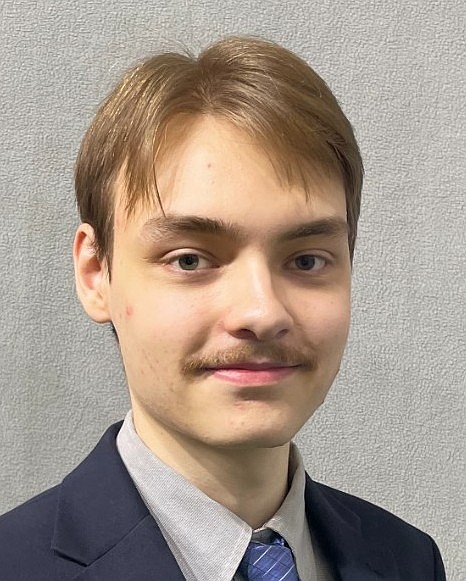
The third candidate in the race for precinct 419, Wilhelm Jostlein, also received the Kootenai Freedom Caucus endorsement. His experience includes being a Boy Scout, being an usher and security team member at his church and door knocking for local Republicans.
“I like the idea of helping communicate between the voters in our precinct and the people we elected,” Jostlein said.
Fisher suggested Kootenai Freedom Caucus includes sitting precinct committeemen who are concerned about a “takeover” by North Idaho Republicans. He noted that precinct committeeman races were rarely competitive until NIR formed.
“It used to be where there were several uncontested seats or no one running at all,” he said. “It wasn’t until there were political differences to where a certain bit of the public wanted to have influence because they thought the KCRCC was leaning too right.”
Whitehead exists in a third space, without the endorsement of Kootenai Freedom Caucus or North Idaho Republicans. She said she hopes Republicans across the conservative spectrum can find common ground.
“What I won’t do is turn the relationship with them to horrible, nasty division,” she said. “I just think it’s really important that we know they’re not all horrible and we need to treat everybody with respect.”
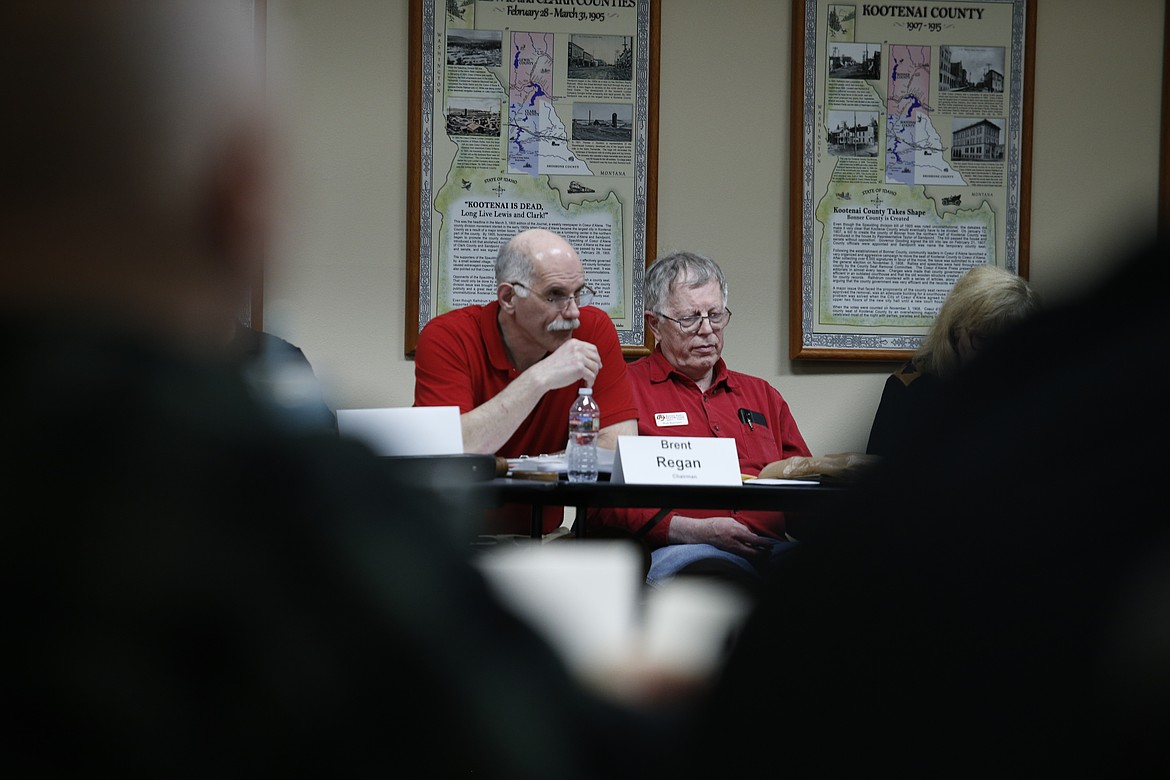
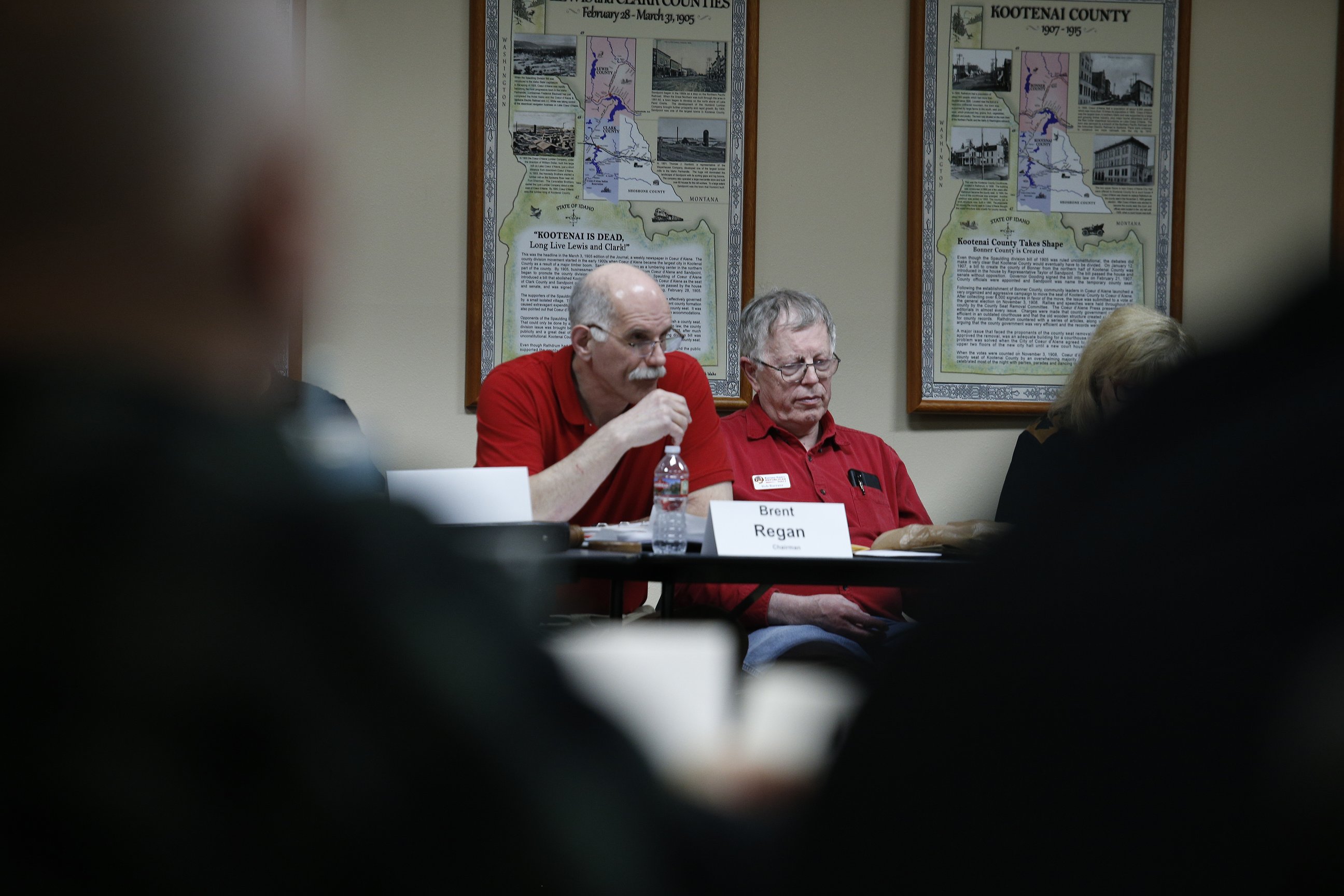 Brent Regan, left, pictured in this January 2025 photo, leads the Kootenai County Republican Central Committee.
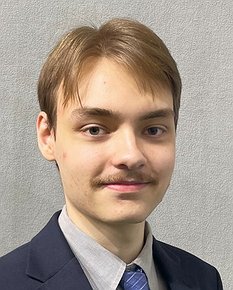 Jostlein
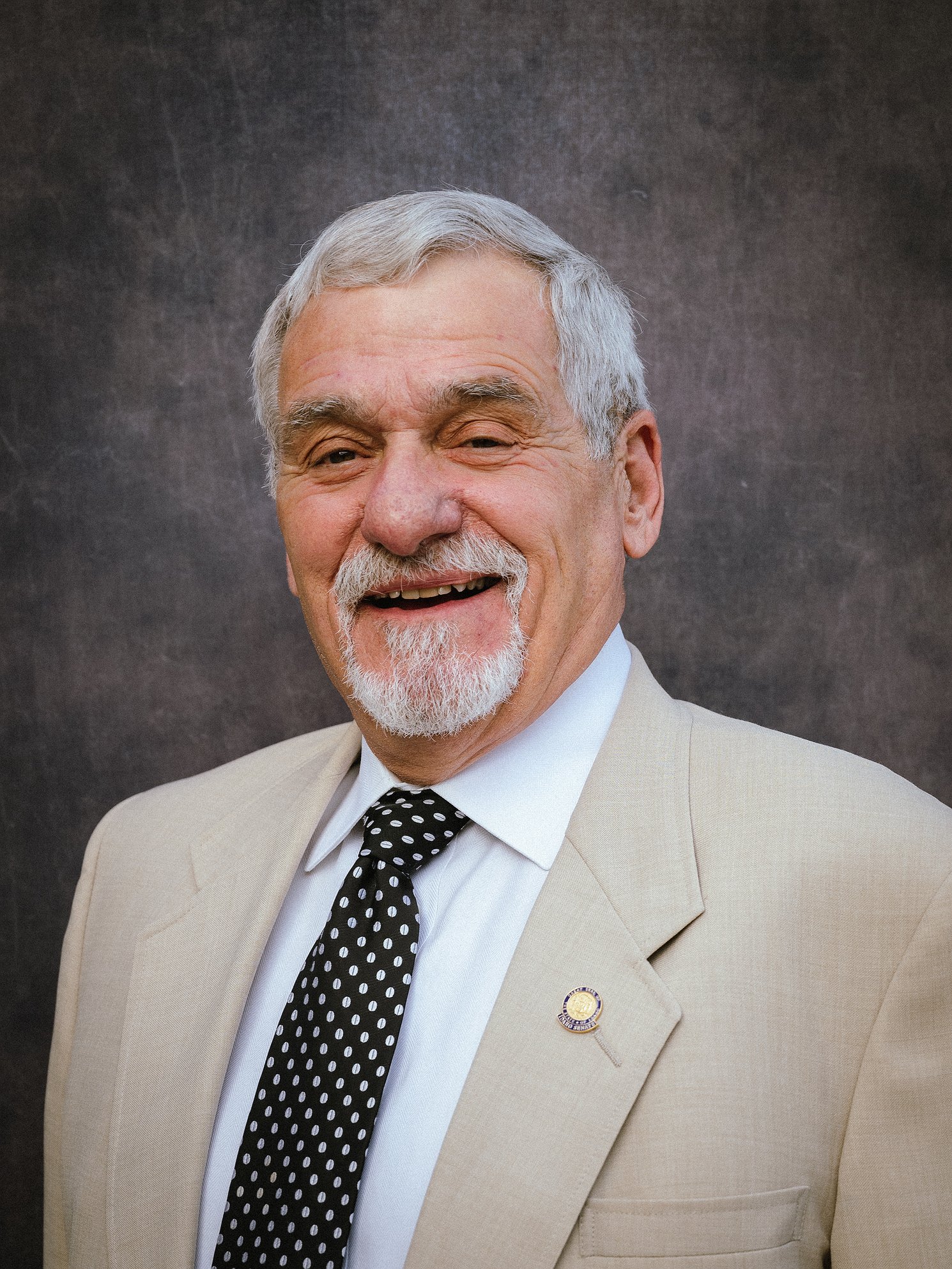 Goedde
ARTICLES BY KAYE THORNBRUGH
Stateline shooter pleads guilty to manslaughter
A DoorDash driver who fatally shot a pedestrian during a road rage incident near Stateline Speedway has pleaded guilty to voluntary manslaughter, though whether a judge will accept the pretrial settlement offer in the case remains to be seen.
Stateline shooter pleads guilty to manslaughter
Prosecutors originally charged Edsel Johnson with first-degree murder
A DoorDash driver who fatally shot a pedestrian during a road rage incident near Stateline Speedway has pleaded guilty to voluntary manslaughter, though whether a judge will accept the pretrial settlement offer in the case remains to be seen.

Kootenai County history revealed
Community members get close-up look at time capsule contents
Liz Boutin is no stranger to historical artifacts. A museum professional and fine artist, Boutin said she's handled Egyptian and Greek items that date back to antiquity. But she had a new experience this summer, after local historical preservationists retrieved a 100-year time capsule from inside the outer wall of the old Kootenai County courthouse.