
Theresa Sullivan retires as Samaritan Healthcare chief executive officer
CHERYL SCHWEIZER | Hagadone News Network | UPDATED 3 months, 3 weeks AGO
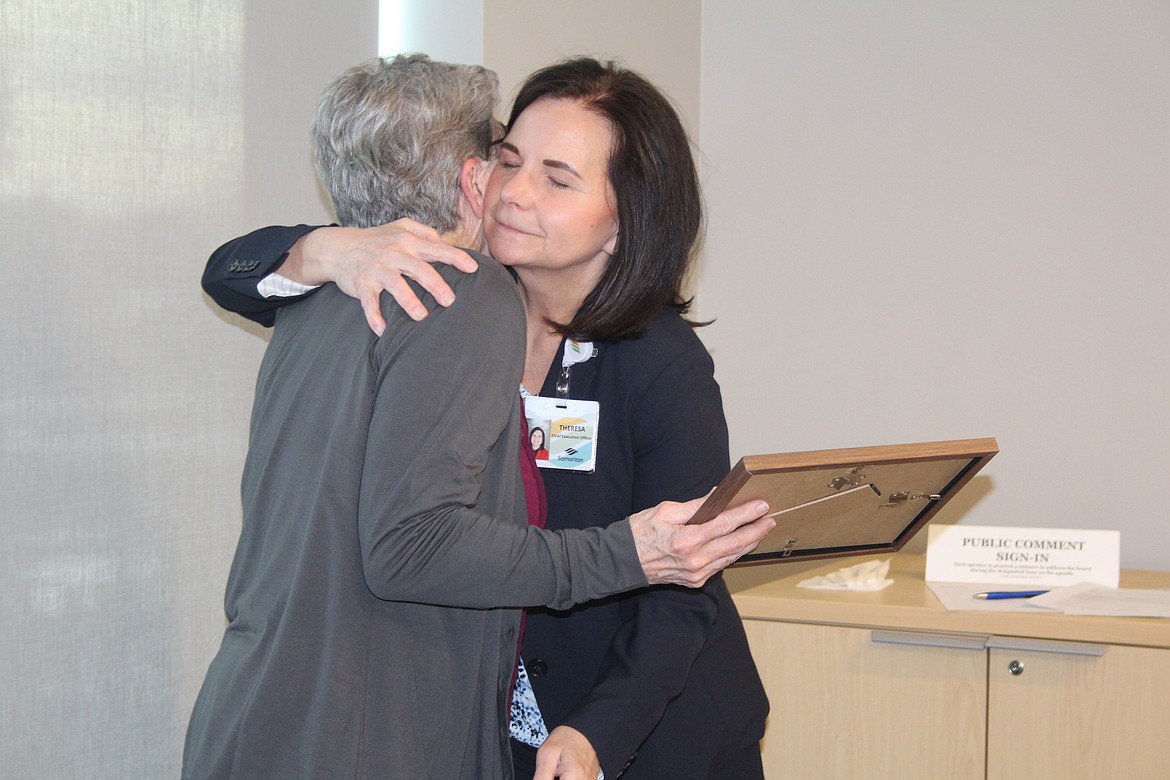
Retiring Samaritan Healthcare Chief Executive Officer Theresa Sullivan gives a hug to Commissioner Katherine Christian at Sullivan’s last board meeting in April.
CHERYL SCHWEIZER/COLUMBIA BASIN HERALD
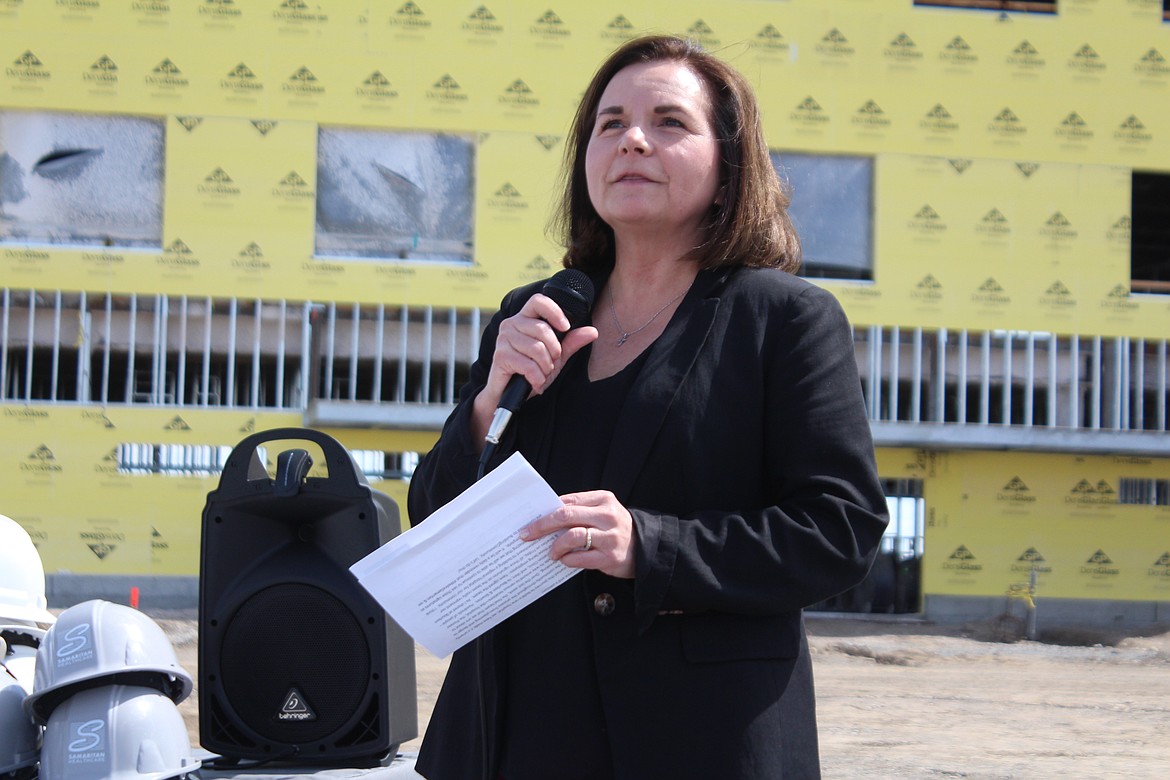
Theresa Sullivan, retiring Samaritan CEO, speaks at a ceremony during construction of the new Samaritan Hospital.
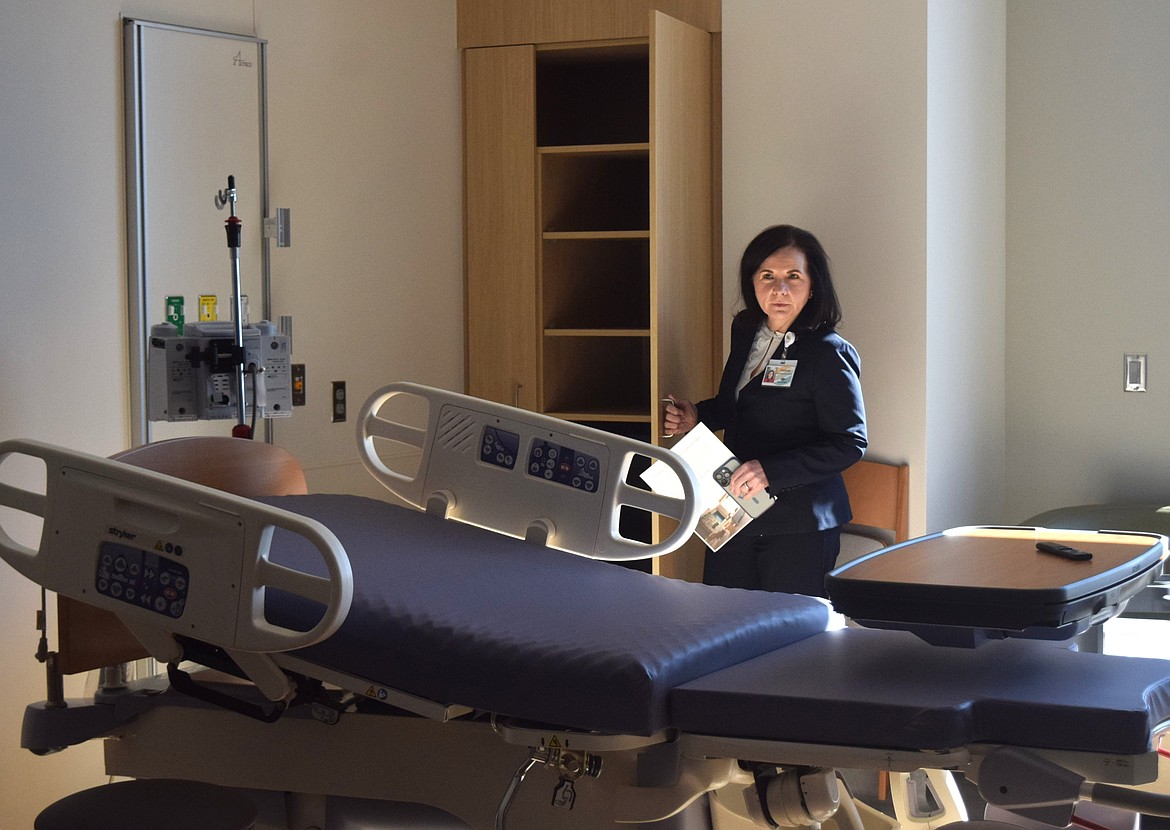
Theresa Sullivan leads a tour of the new Samaritan Hospital prior to its opening in March.
Senior Reporter Cheryl Schweizer is a journalist with more than 30 years of experience serving small communities in the Pacific Northwest. She began her post-high-school education at Treasure Valley Community College and enerned her journalism degree at Oregon State University. After working for multiple publications, she has settled down at the Columbia Basin Herald and has been a staple of the newsroom for more than a decade. Schweizer’s dedication to her communities and profession has earned her the nickname “The Baroness of Bylines.” She covers a variety of beats including health, business and various municipalities. | May 14, 2026 3:00 AM
MOSES LAKE — Theresa Sullivan said what really interested her in the job at Samaritan Healthcare, back in 2014, was the potential for growth. Then-Chief Executive Officer Tom Thompson was recruiting an administrator.
“What really attracted me was what he described in the need for services here,” Sullivan said. “I had been in a rapidly growing organization where we grew a lot of services, and I was excited about that possibility.”
Sullivan took chief operating officer job and was promoted to the CEO job in 2015. After 11 years in that job, she’s retiring next week.
The first trip to Washington revealed a state that was different from its national image, she said.
“We headed this way, and I’m (thinking), ‘Wow, this is not what I expected.’ Not necessarily in a bad way. It just wasn’t what I expected,” she said. “But actually, I really kind of liked it. I was ready to try something different.”
A native of Minnesota, with grown children and grandchildren and other family back in the Midwest, Sullivan said she planned to stay three to five years. Over time she changed her mind, and that was due, she said, to the people she met here.
“People in the community. The people here at Samaritan. You become part of that with people, and you want to continue working on that together. And I had made a commitment to Dale Paris and to the board,” she said.
When she arrived, what she found also was a surprise.
“When I came to Moses Lake, what really shocked me was how big a community Moses Lake was, how far it was if you couldn’t get care here, and how few services we had,” Sullivan said. “I worked in a town much smaller than Moses Lake that had hospitals 15 miles on either side. And we had more services in all three of those (facilities). I was shocked by that, and I didn’t feel that it was fair to the people that lived here.”
Moses Lake didn’t have enough family practice physicians, she said, and Samaritan lacked some critical surgical services. Nor did it have the trauma services Sullivan thought appropriate. When she became CEO, she said, she saw patients being transferred that really could’ve - and should’ve - been treated at the hospital.
“What it really was we didn't have staff, so they meant staffed beds. And I said, ‘Well, if we don't have staff, that is a management and leadership issue. We need to take care of that.’ We were transferring 15 to 18 patients a month just because we didn't have enough staff,” she said.
It’s also important to have physicians and other medical professionals that live in the community, she said – and Samaritan’s case, many of them didn’t.
Samaritan administrators, commissioners and staff have worked to change those things, she said, and there’s been progress. In addition, hospital officials have worked to add new physicians and medical professionals and retain the existing staff.
The biggest project, however, has been the replacement of Samaritan Hospital. Sullivan said it was clear pretty early on that some hospital services were outgrowing the space available.
The trouble was the hospital site on Wheeler Road wasn’t big enough to expand. Its technology was outdated and some repairs and renovations had been postponed. Hospital officials estimated the work the building needed would cost millions of dollars. But that still left the problem of a site that was too small.
“My thought was, I don't want to look at the community and say, ‘I asked us to invest millions of dollars in this building, knowing that we're landlocked, and now, with the millions that we spent there, we’re going to have to start over again anyway,” she said.
Commissioners opted to start investigating construction of a new hospital; a feasibility study determined there would be enough demand for a bigger facility and that the hospital could obtain sufficient funding without asking hospital district patrons for a construction bond.
Planning for the new hospital started in 2019 with the goal of starting construction in 2020. The project was on track – and then an infectious disease of unknown potency started circulating worldwide. The COVID-19 pandemic required emergency preparations, discombobulated the hospital schedule and finances, brought construction to a halt, and dramatically raised its price.
“Obviously it was very challenging, because there were so many different – emotions, opinions, fear, so many things, and trying to find the way to work through that with everybody. That was a challenge. That’s one I wouldn't want to do over again,” she said.
Because construction costs rose so dramatically, hospital officials went to voters in 2023 for a local construction bond. Voters approved it, and Sullivan said she thought part of the reason was that hospital officials spent a lot of time talking to the community when they first considered the project.
“We had tried to gather support, not necessarily for the bond, but for the vision and the project all the way along,” she said.
Hospital officials talked to service clubs, local organizations – anyone who wanted to listen in 2016-28, explaining the project goal.
“I think people started to buy into that vision,” she said. “Then we did the same thing (during the bond campaign),” she said. “The time we took to try and engage the community, just in what we were trying to accomplish from a strategic plan perspective, and how we want Samaritan to grow and be different in the future, ultimately ended up helping us.”
The new hospital is the first step, she said.
“There are lots of possibilities. That's why I say (the hospital site) is the Field of Dreams. I know people might think I'm crazy, but I honestly believe with the growth of Moses Lake and the fact that we're so far from any other health care, that there's so much that can be done that eventually this will be a whole campus of medical services,” Sullivan said.
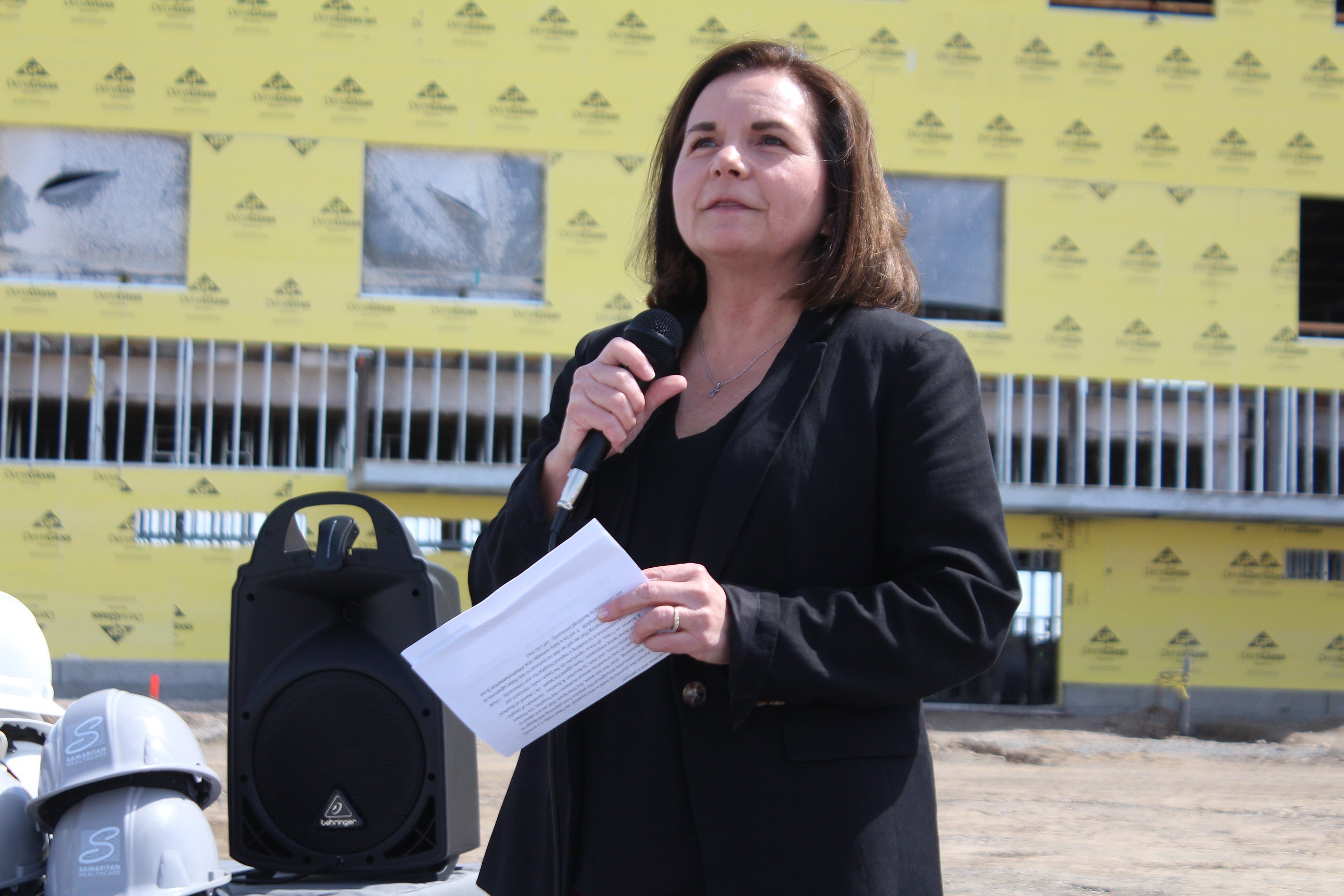 Theresa Sullivan, retiring Samaritan CEO, speaks at a ceremony during construction of the new Samaritan Hospital.
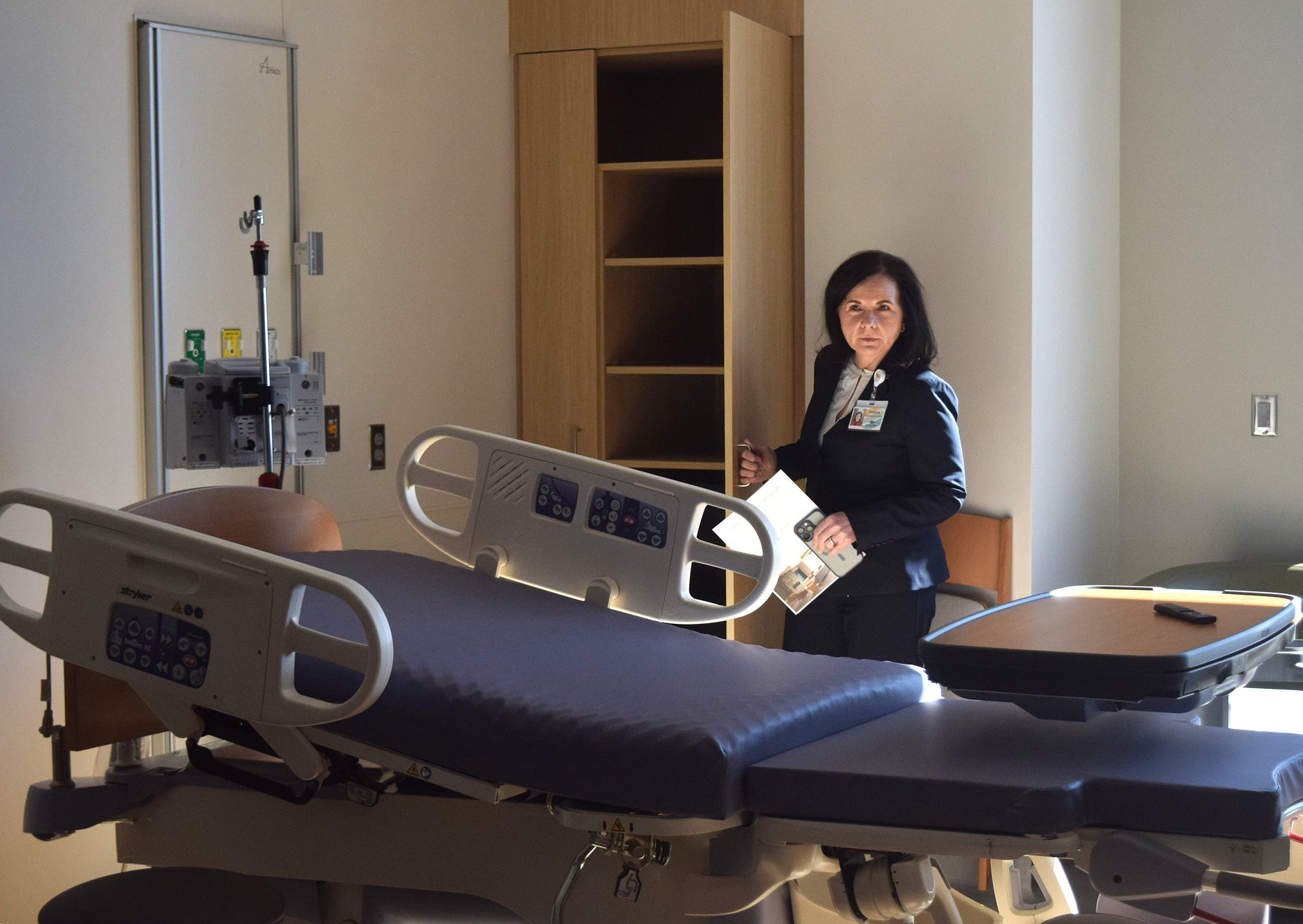 Theresa Sullivan leads a tour of the new Samaritan Hospital prior to its opening in March.
ARTICLES BY CHERYL SCHWEIZER

Road projects on hold for Labor Day weekend
MOSES LAKE — With Labor Day weekend dead ahead, drivers will be able to move freely about the state. Most road projects are on hold for the holiday weekend. Nobody will be working on the Hansen Road overpass on Interstate 90, but the lane restrictions that are in effect will continue through the end of the project.

Cost estimates for water source alternatives given to Moses Lake City Council
Protected under the U.S. Endangered Species Act, efforts are ongoing to keep it self-sufficient
MOSES LAKE — It’s going to cost a lot of money to provide alternative water sources for the city of Moses Lake, but some of the possible alternatives will cost more than others. City officials provided the Moses Lake City Council with costs for various alternatives Tuesday.

Dryer vent cleaning is important -- but often overlooked
MOSES LAKE — Not all the maintenance a house needs is visible. Sometimes a potential problem just goes unnoticed until it causes trouble, sometimes serious trouble. But a lot of potential problems give off warning signs. Clothes dryers often do when they need a good cleaning.