
Farm to Table carries on Linda Rider's legacy
CAROLYN BOSTICK | Hagadone News Network | UPDATED 3 hours, 33 minutes AGO
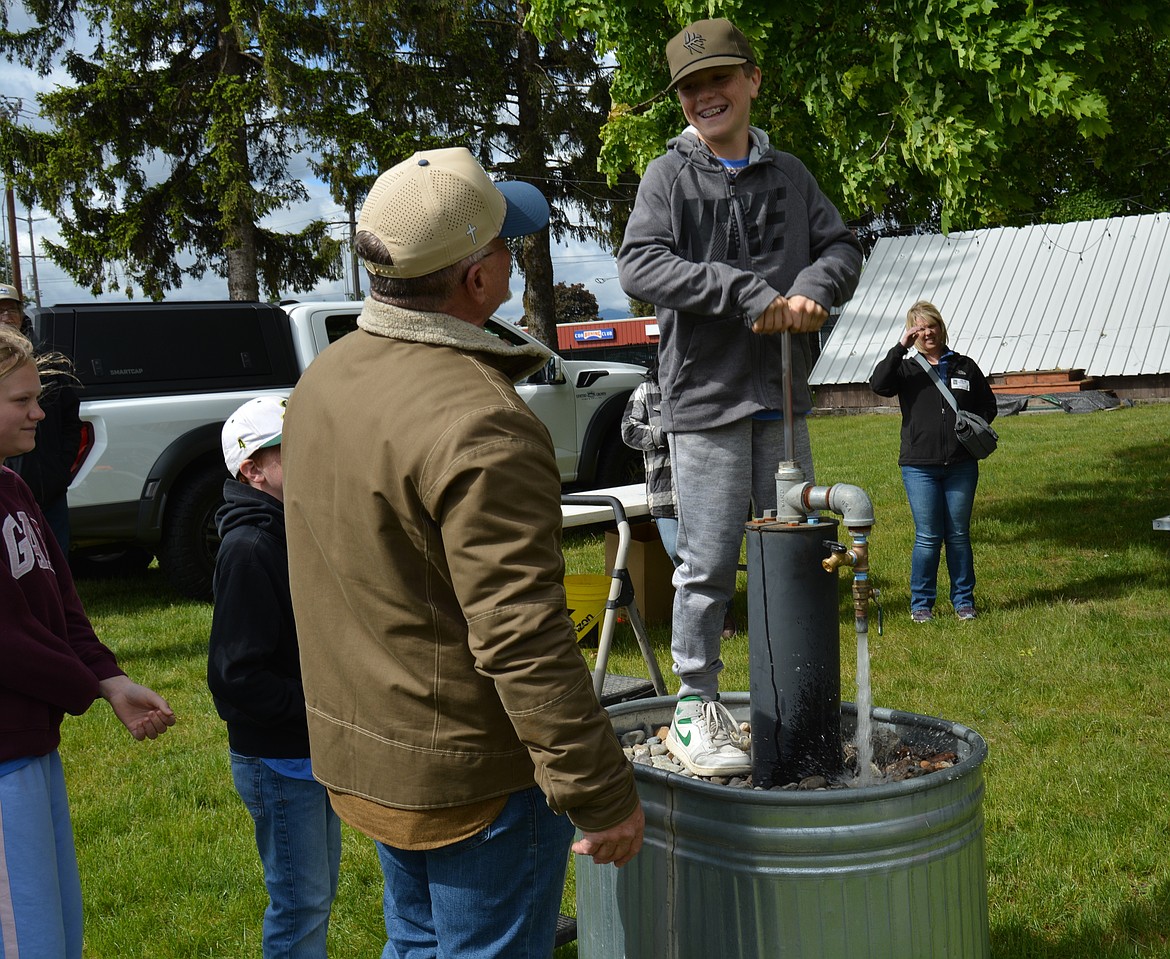
Easton Lengyel learns how to use a windmill pump from Rich Agueros of United Crown Pump and Drilling Thursday during Farm to Table event at the Kootenai County Fairgrounds.
CAROLYN BOSTICK/Press
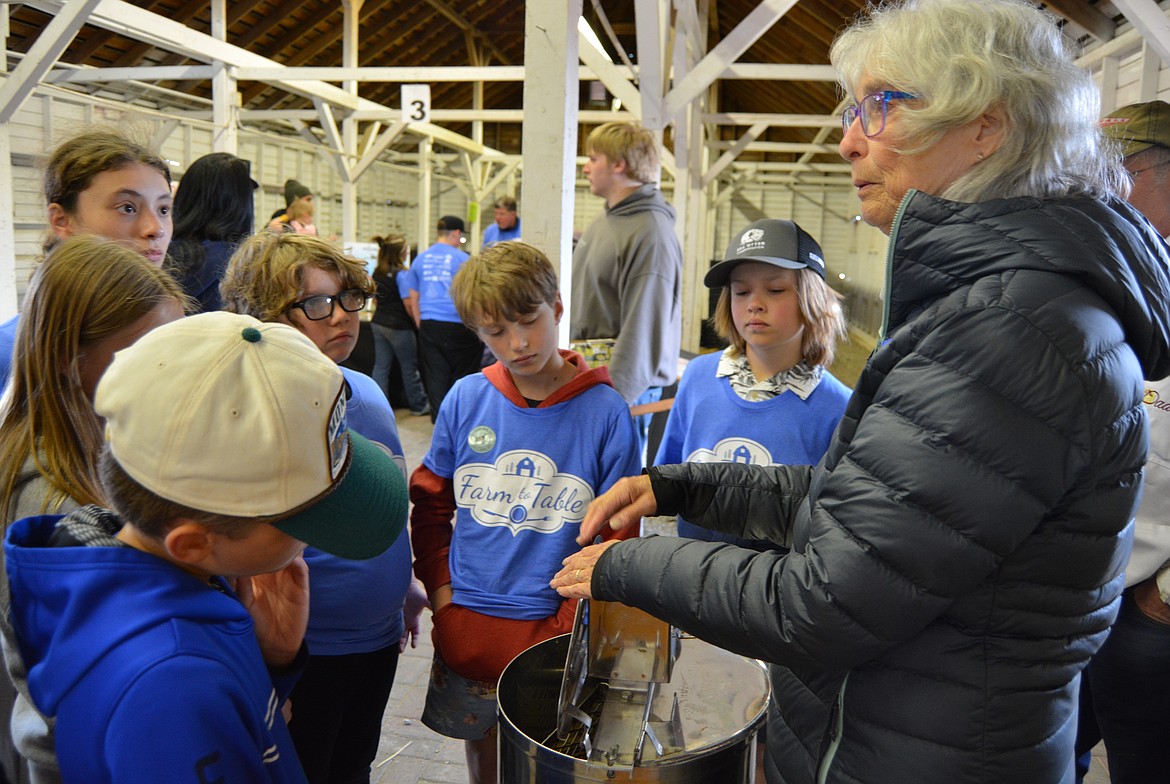
Kay Sansone explains how honey extractors use centrifugal force to remove the honey from honeycombs to a group of fifth graders Thursday during Farm to Table.
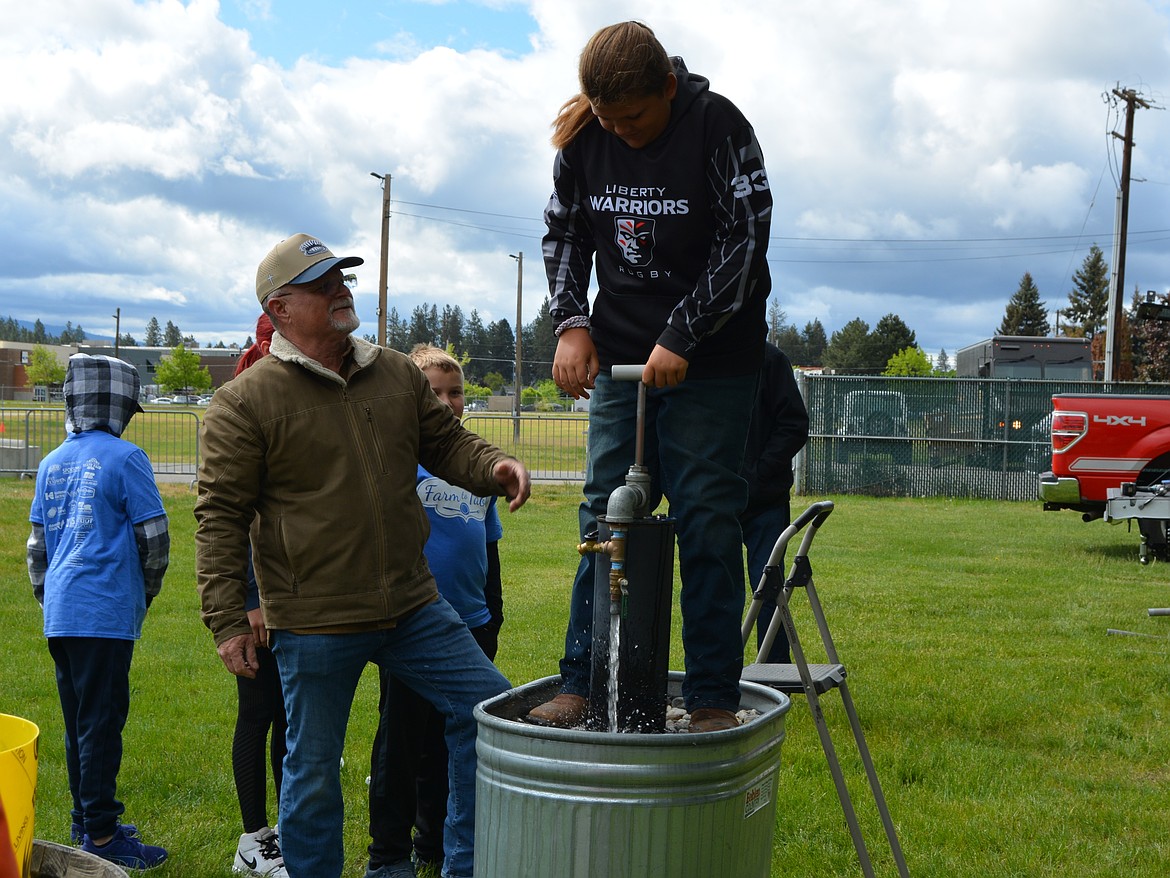
Mason Richardson tries his hand at the windmill pump at the Kootenai County Fairgrounds during the Farm to Table event.
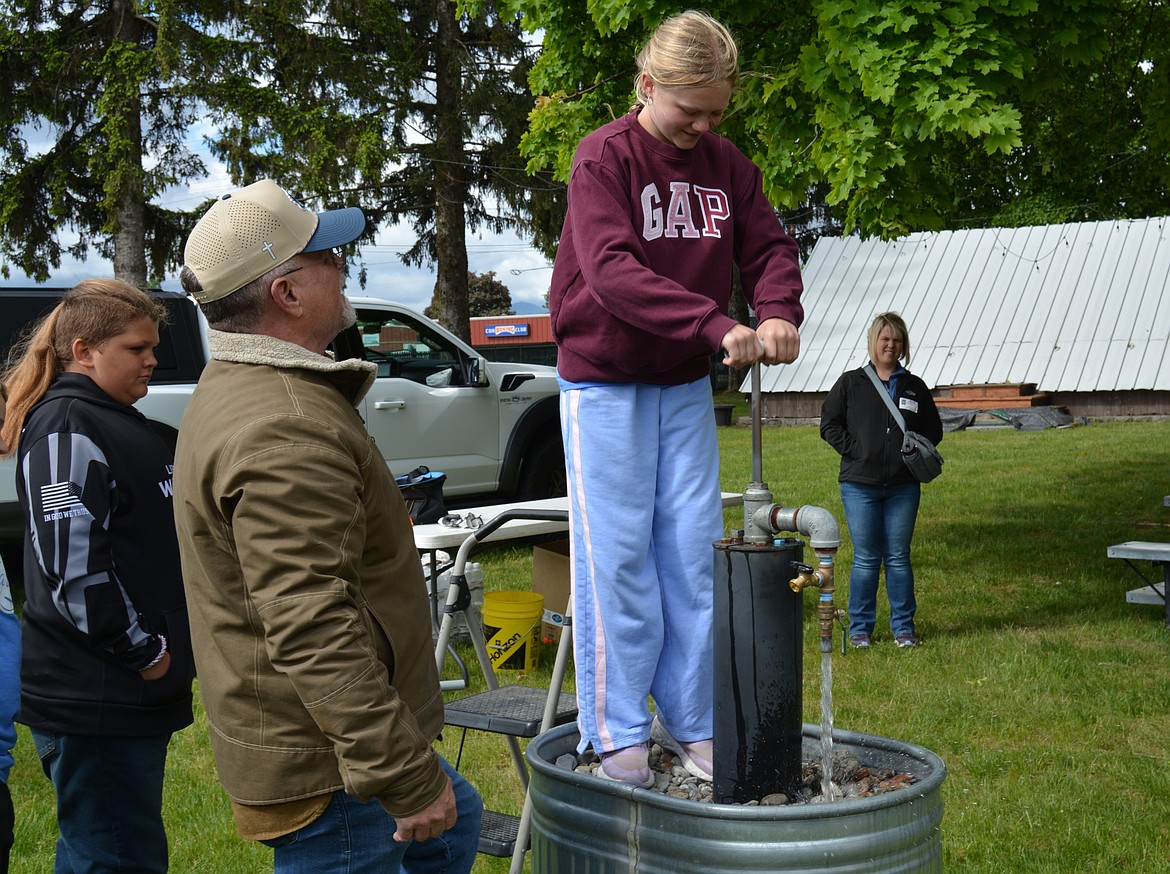
Ivy Hull works the windmill pump Thursday during a Farm to Table event for students at the Kootenai County Fairgrounds.
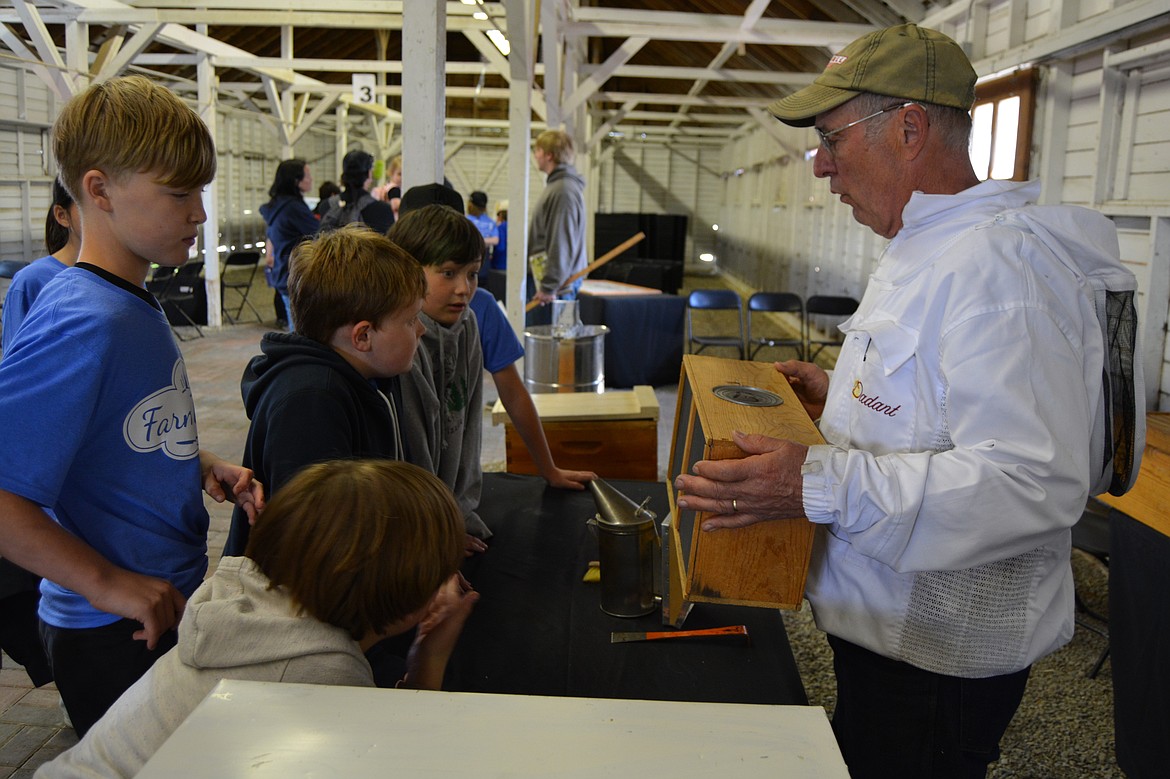
Dwayne Hanna shows John Krapfl (gray hoodie) and other students from Lakeland School District a nucleus, or "nuc" box.
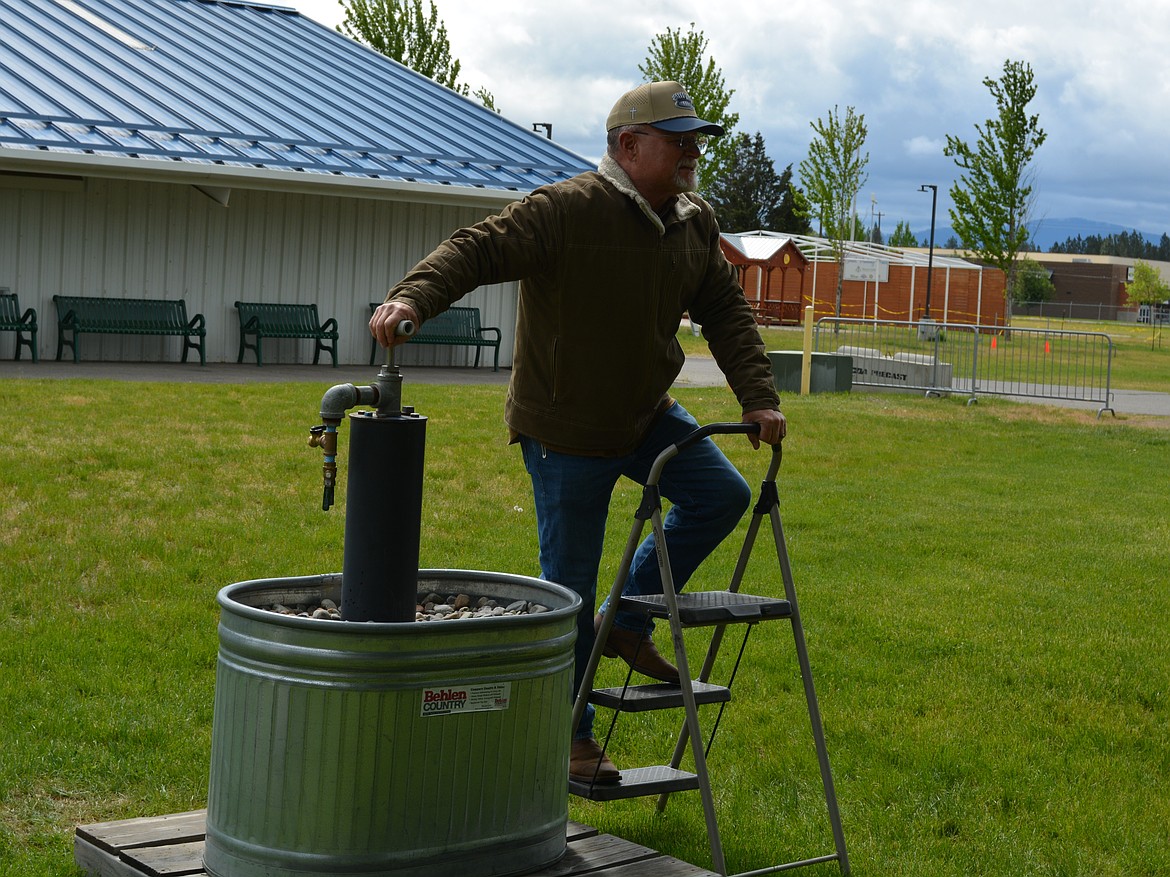
Rich Agueros of United Crown Pump shares about irrigation and the Rathdrum Prairie Aquifer during Farm to Table.
Carolyn Bostick has worked for the Coeur d’Alene Press since June 2023. She covers Shoshone County and Coeur d'Alene. Carolyn previously worked in Utica, New York at the Observer-Dispatch for almost seven years before briefly working at The Inquirer and Mirror in Nantucket, Massachusetts. Since she moved to the Pacific Northwest from upstate New York in 2021, she's performed with the Spokane Shakespeare Society for three summers. | May 16, 2026 1:07 AM
HAYDEN — Farm to Table started as a one-day event involving a single school.
Now, the agricultural program has expanded to serve 1,900 students from schools in Kootenai County and some students in Shoshone County over the course of a week at the Kootenai County Fairgrounds.
“It’s grown exponentially," General Manager and CEO of the Kootenai County Fairgrounds Alexcia Jordan said. “Linda Rider had a vision and it first came to life in 2015 and here we are 11 years later still doing it.”
Eighteen presenters came from across the state to share their expertise on agricultural topics ranging from growing vegetables, tending to goats, beekeeping and irrigation.
This marks the first year Farm to Table carries forward without Rider, who championed agriculture and storytelling and urged fellow farmers and ranchers to pass down their knowledge to the next generation.
Rich Agueros of United Crown Pump opened his presentation about irrigation with some general knowledge questions for students from John Brown Elementary.
“How many days can you go without food? How many days can you live without water?”
Several students replied that you could last three days without water.
“Everybody needs water,” Agueros said. “Do you know how Radiant Lake is filled? It used to be a well, a big well.”
Agueros went through a brief history of dry farming where the areas farmers cultivated would rotate from year to year to allow the soil to recover.
“They discovered that Twin Lakes was higher than the Rathdrum Prairie, so they decided they could bring some water from Twin Lakes to irrigate their crops,” Agueros said. “Well, Twin Lakes doesn’t have a lot of water filling it back up.”
Unfortunately, that worked about as well as using a bathtub to fill a container once the plug has been pulled, he said.
Around 1900, farmers started to dig water wells to farm a different way.
“Water is about 250 feet below us and that’s where you’d put a well,” Agueros said.
Agueros shared a little about doing Farm to Table years ago with Linda Rider.
“Linda passed away and we went to her memorial this past weekend,” Agueros said. “She made me promise to come back so I’m here to honor that.”
After the solemn moment paying tribute to Rider, he cut the students loose to demonstrate how to draw water from the aquifer from pitcher pumps and windmill pumps.
A nearby building was positively buzzing with information about pollinators and how beekeepers extract honey to sell.
Every bee in the hive has a purpose and if a queen isn’t laying enough eggs for the hive, they can swarm her and end her life in order to replace her with a different queen for the colony.
Kelli Austin has been sharing bee facts with students at Farm to Table for six years now.
“The queen has to have room to lay her eggs. How many eggs do you think the queen can lay in a day?” Austin asked.
John Krapfl thought she might be able to lay 100 eggs.
“It’s between 1,000 and 2,000 in a single day,” Austin said.
The students were surprised at the high number.
Queen bees can live up to five years and are responsible for deciding how many male and female bees are needed to keep the hive running.
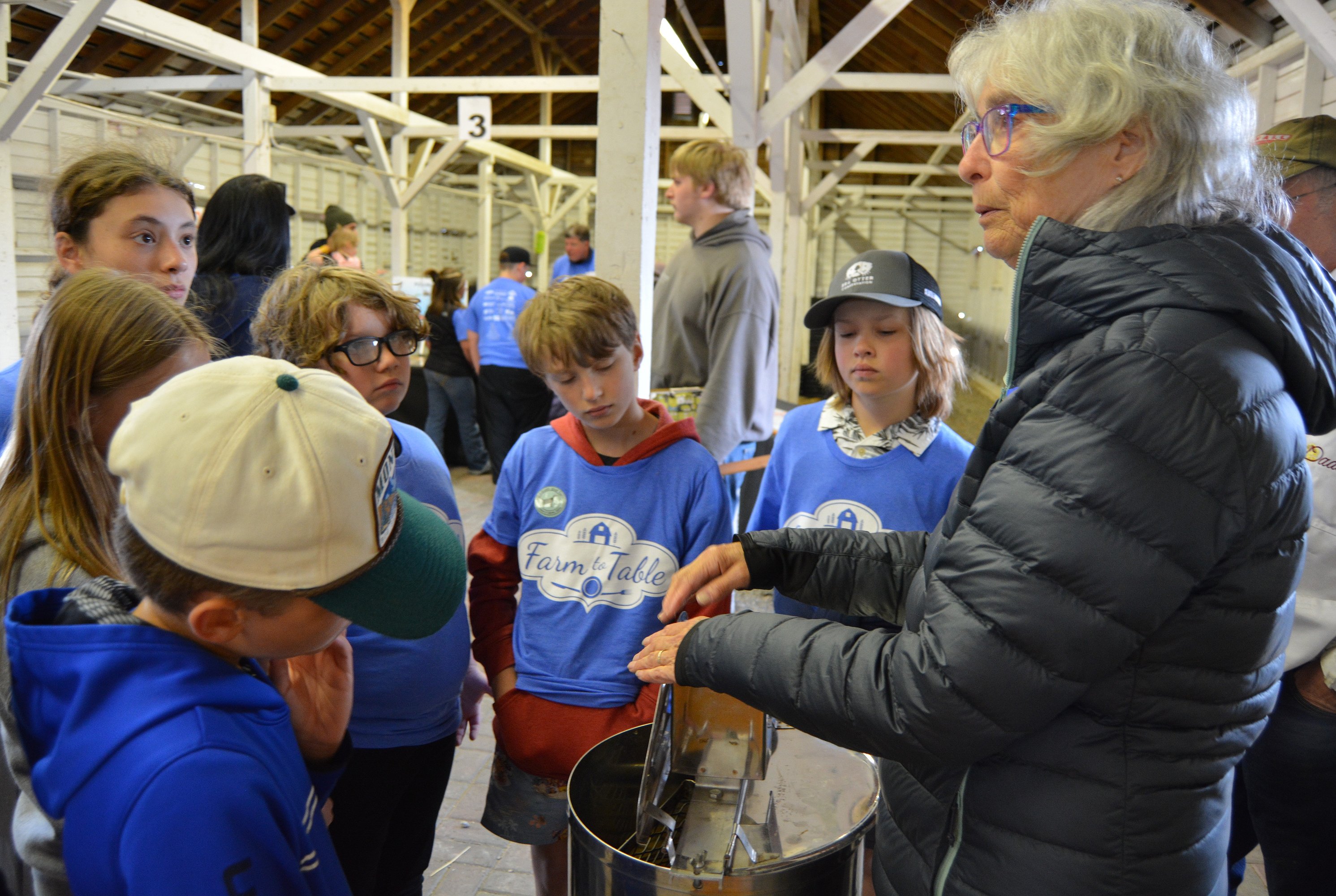 Kay Sansone explains how honey extractors use centrifugal force to remove the honey from honeycombs to a group of fifth graders Thursday during Farm to Table.
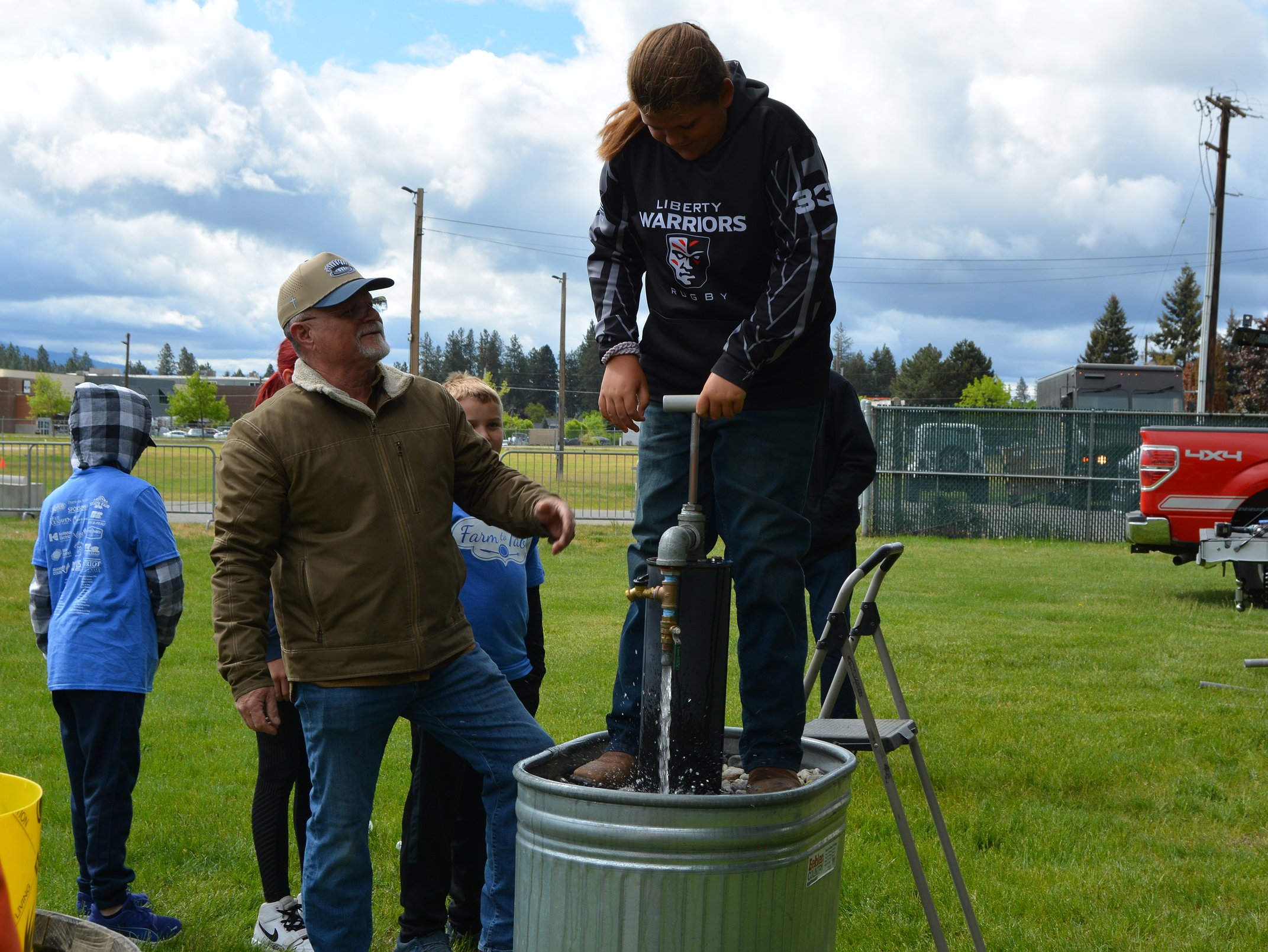 Mason Richardson tries his hand at the windmill pump at the Kootenai County Fairgrounds during the Farm to Table event.
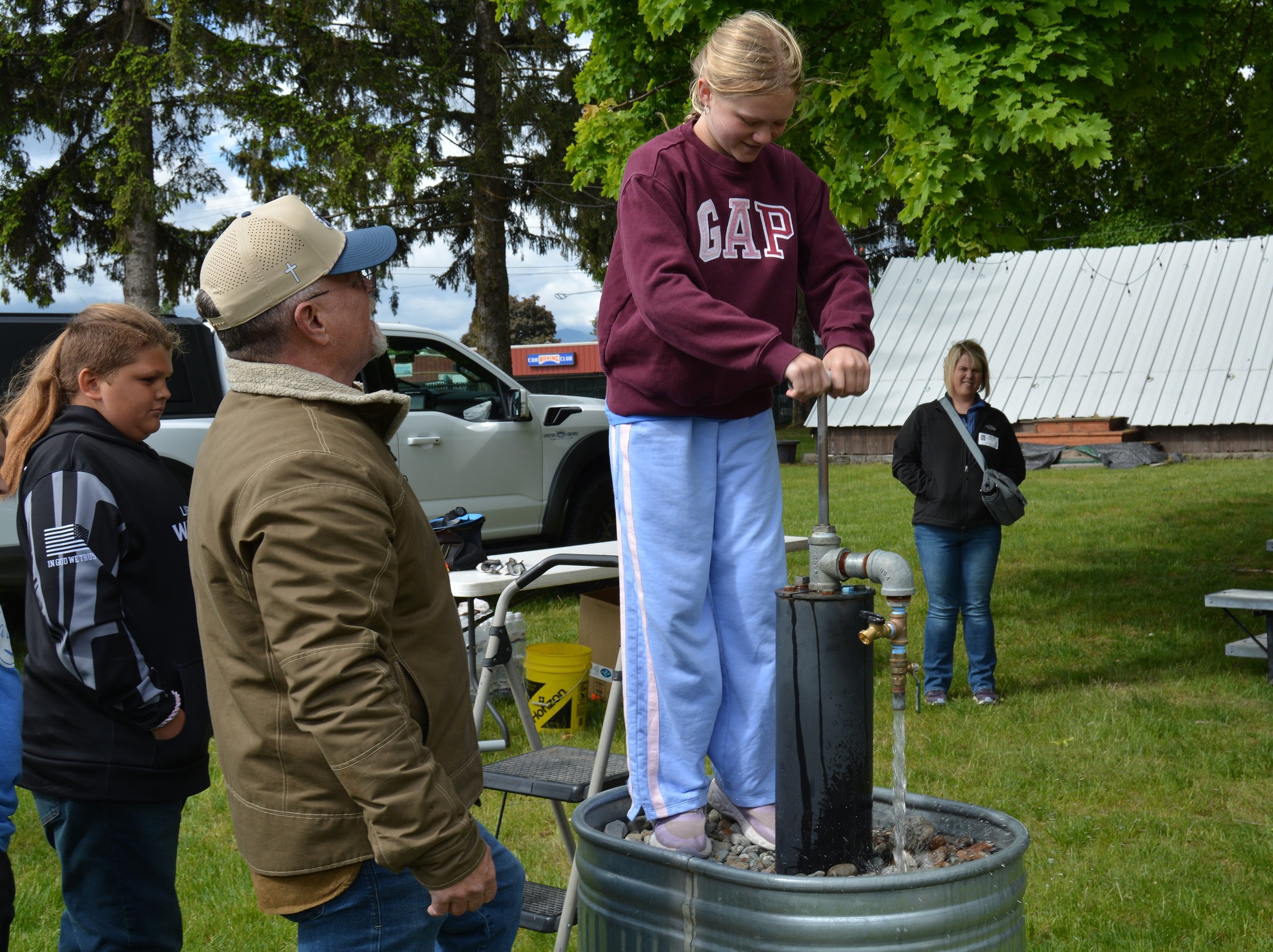 Ivy Hull works the windmill pump Thursday during a Farm to Table event for students at the Kootenai County Fairgrounds.
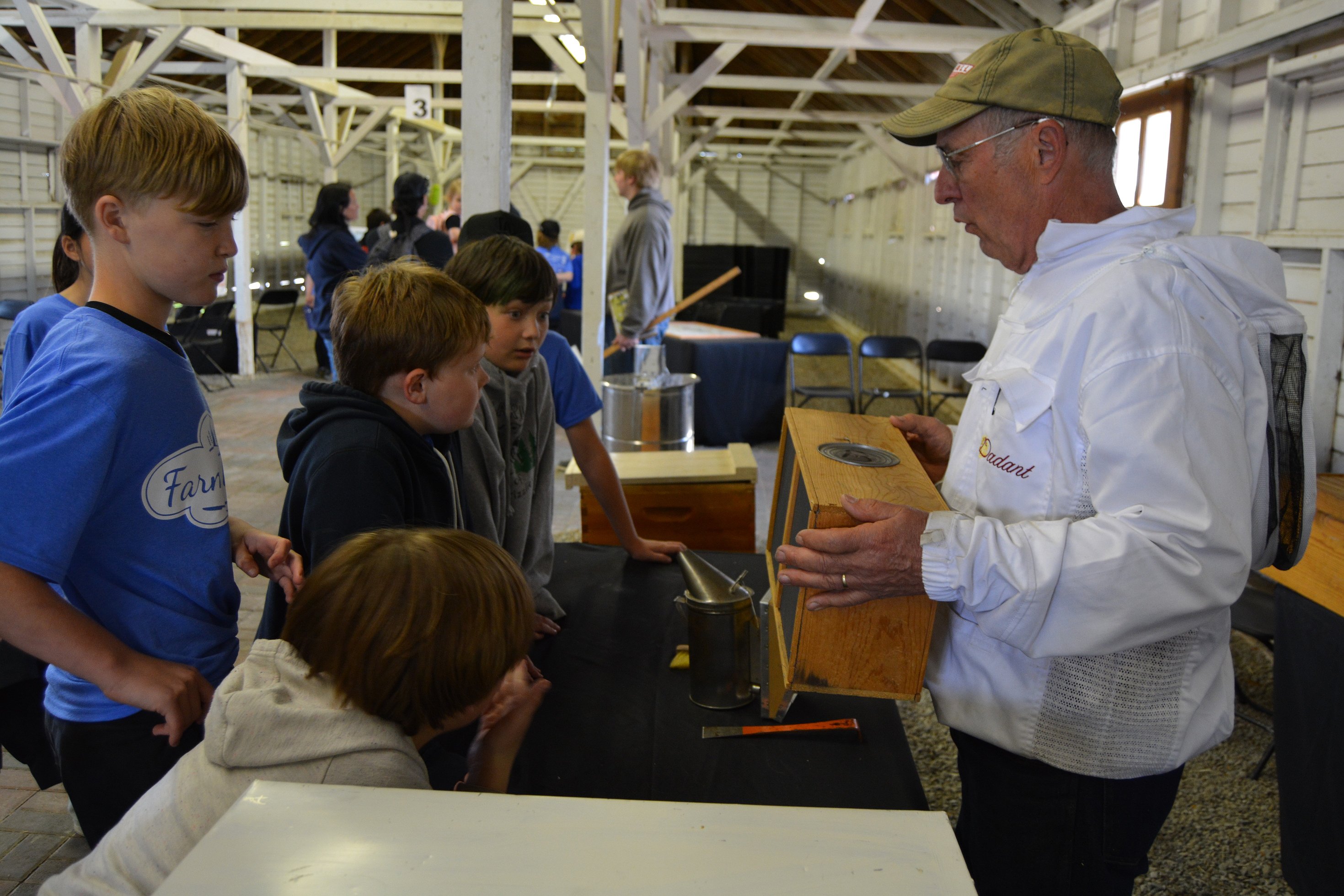 Dwayne Hanna shows John Krapfl (gray hoodie) and other students from Lakeland School District a nucleus or "nuc" box for bees.
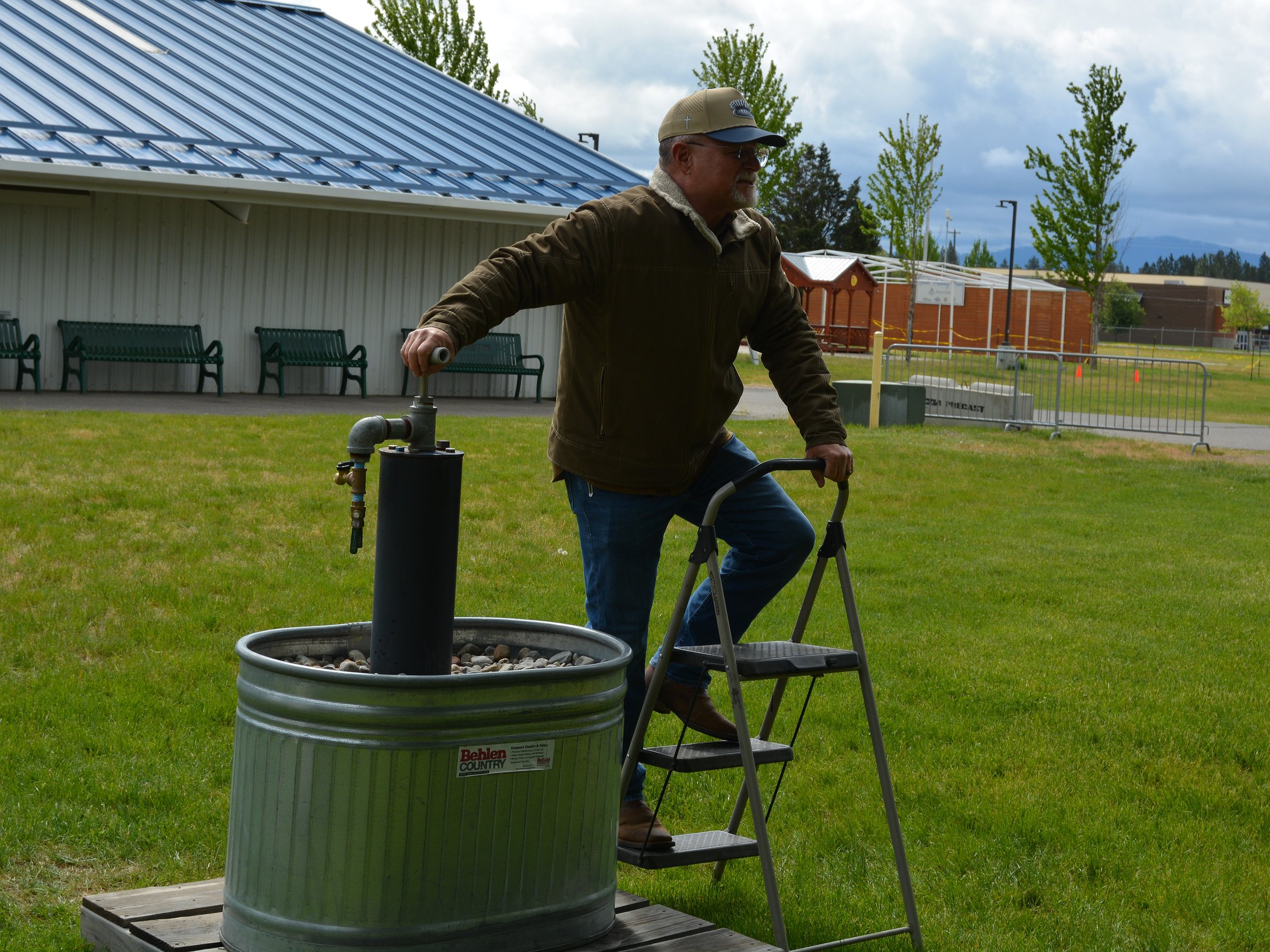 Rich Agueros of United Crown Pump shares about irrigation and the Rathdrum Prairie Aquifer during Farm to Table.
ARTICLES BY CAROLYN BOSTICK
Farm to Table carries on Linda Rider's legacy
Farm to Table started as a one-day event involving a single school. Now, the agricultural program has expanded to serve 1,900 students from schools in Kootenai County and some students in Shoshone County over the course of a week at the Kootenai County Fairgrounds.
KCFR temporary levy puts question to voters about operational costs
Kootenai County Fire and Rescue (KCFR) went back to the drawing board after a permanent override measure failed with voters in November.
Riders support men's health issues in style
Distinguished Gentleman's Ride on Sunday
Motorcycle aesthetics have long embraced leather and patches when it comes to the sartorial choices of riders, but once a year, motorcyclists around the world embrace their inner dandy. For cyclists who own classic motorcycles, the Distinguished Gentleman’s Ride encourages them to “dress dapper” and help raise money for prostate cancer research and men’s mental health initiatives with a Sunday ride.