
Working together
JOEL MARTIN | Hagadone News Network | UPDATED 4 months, 4 weeks AGO
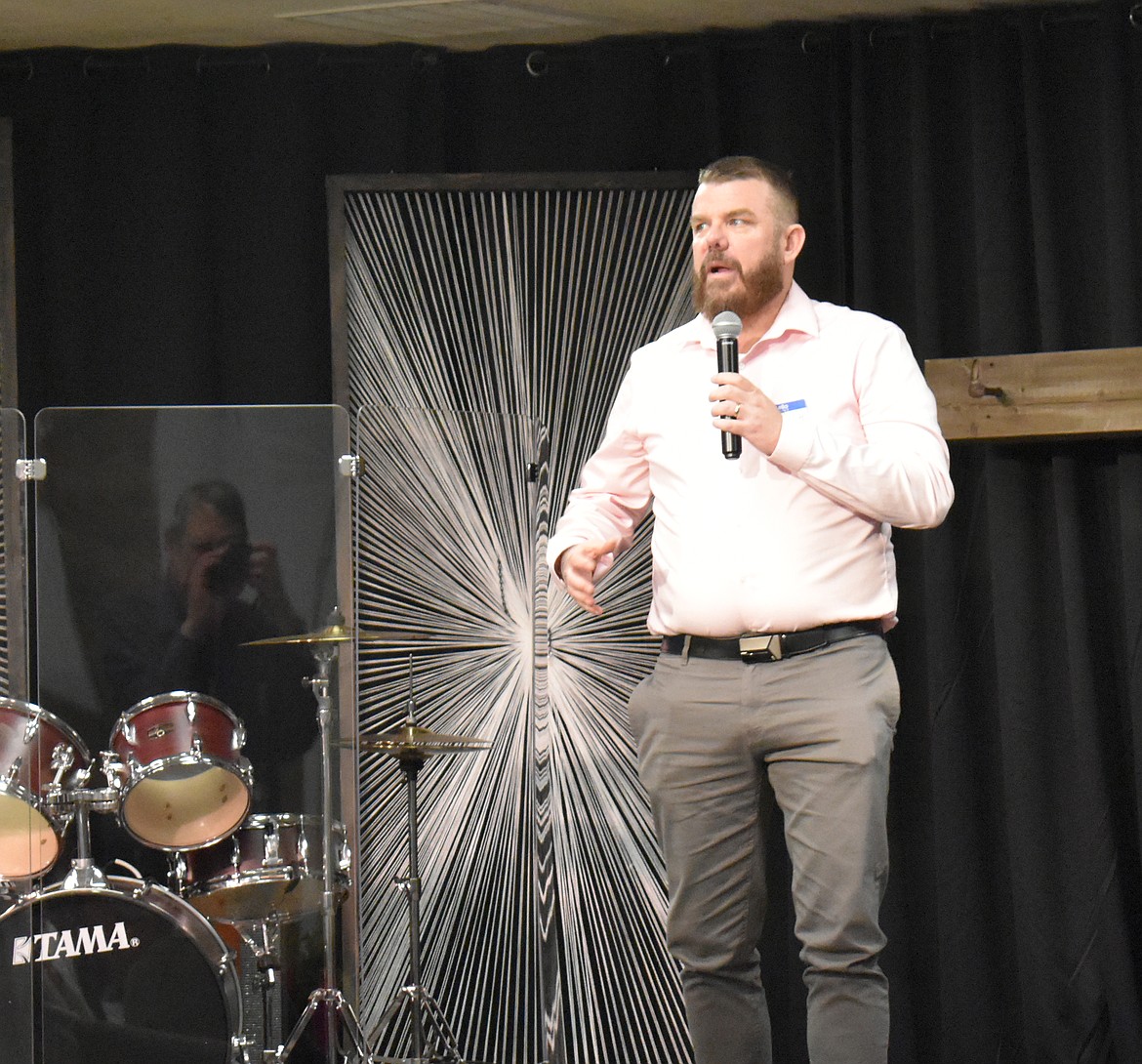
Joseph Hunter, a recovery advocacy manager with Thriving Together, shares his story of addiction and recovery at the Grant County Key Leader Event in Royal City May 14.
JOEL MARTIN/COLUMBIA BASIN HERALD
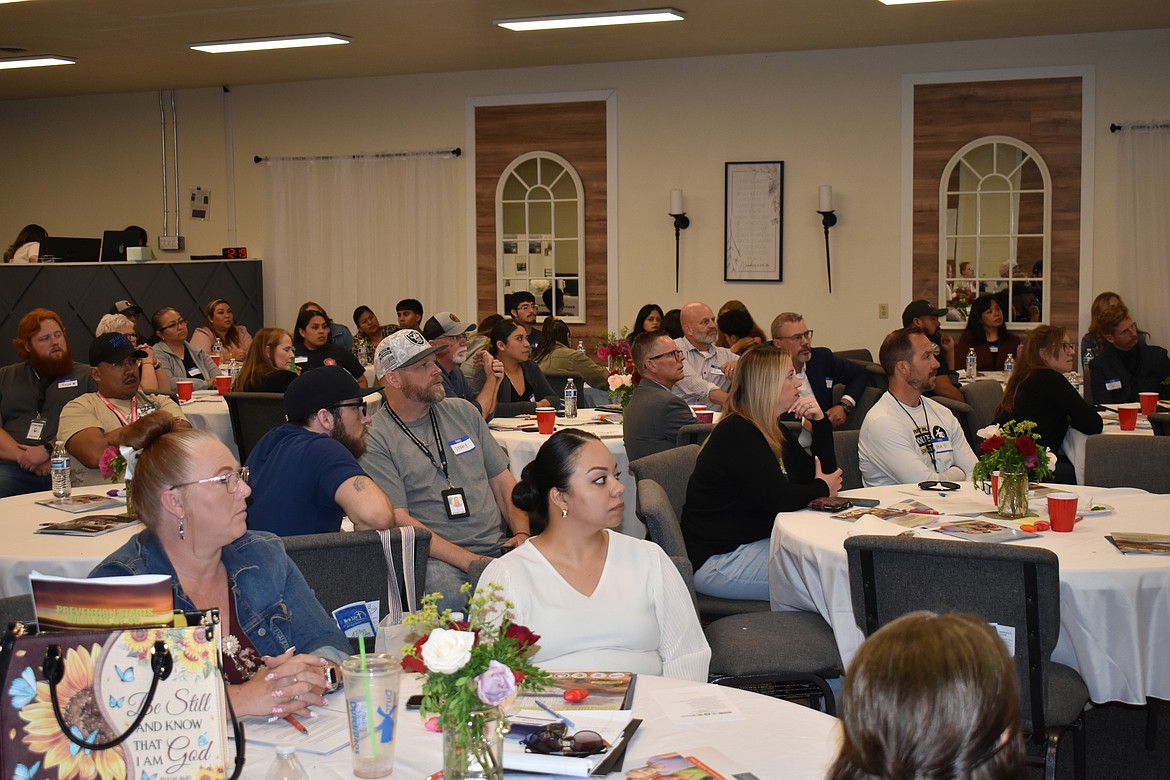
Substance use prevention professionals, volunteers and community members listen to speakers at the Grant County Key Leader Event in Royal City May 14.
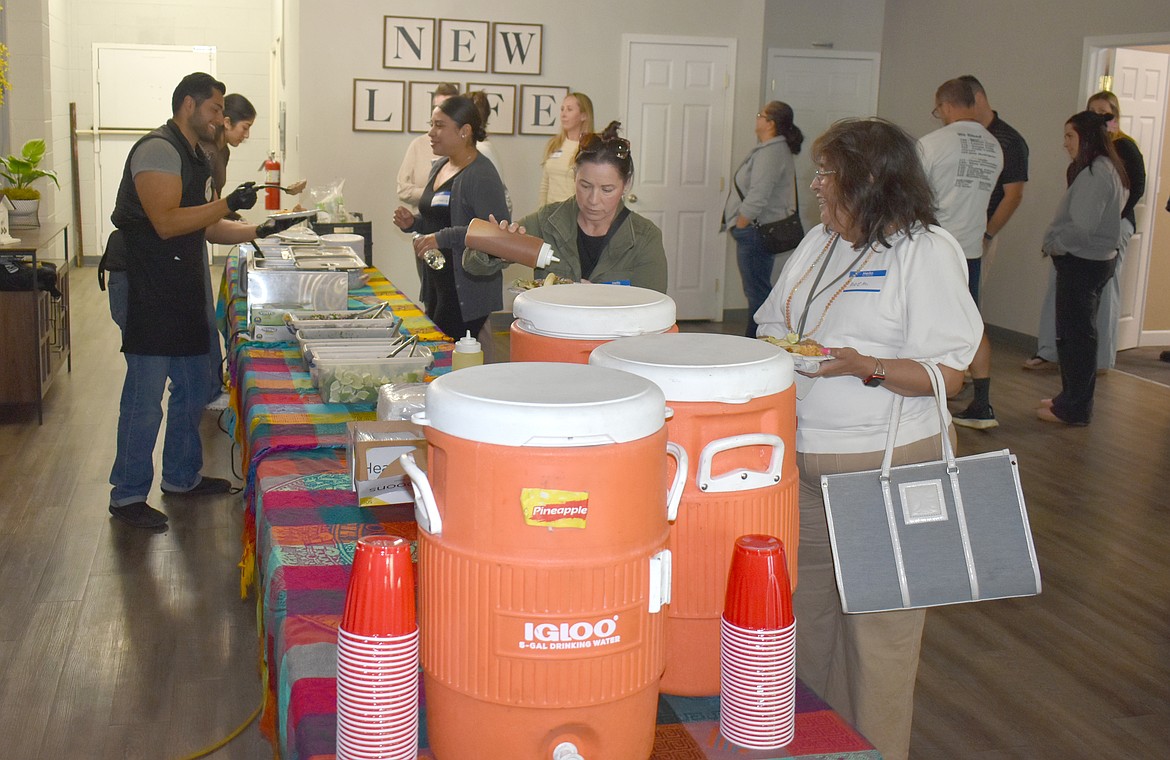
Attendees at the Grant County Key Leader Event serve tacos provided by Hugo’s Tacos of Royal City.
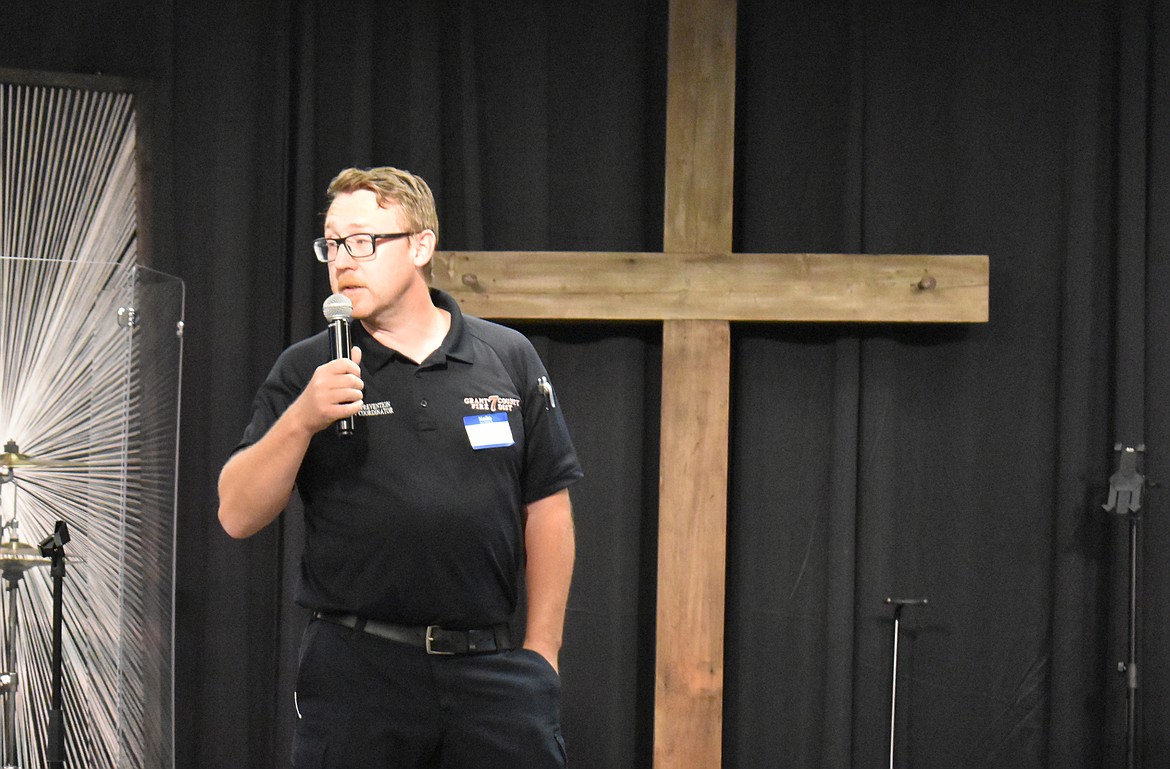
Soap Lake Community Prevention Coalition Coordinator Ryan Boldman discusses what works and what doesn’t at the Grant County Key Leader Event.
Joel Martin has been with the Columbia Basin Herald for more than 25 years in a variety of roles and is the most-tenured employee in the building. Martin is a married father of eight and enjoys spending time with his children and his wife, Christina. He is passionate about the paper’s mission of informing the people of the Columbia Basin because he knows it is important to record the history of the communities the publication serves. | May 20, 2026 3:05 AM
ROYAL CITY — Community leaders and substance use prevention professionals gathered May 14 in Royal City for the Grant County Key Leader Event to collaborate on ways to keep youth off drugs and alcohol.
“This is an annual event that we have for local youth substance use prevention,” said Moses Lake Community Coalition Coordinator Megan Watson. “It is the one time of year that all five prevention coalitions within Grant County get together and bring in community leaders so they can understand the nature of prevention work and what we're trying to do.”
The Grant County Key Leader Event brought together the Wahluke Community Coalition, Quincy Partnership for Youth, Moses Lake Community Coalition, Royal Community Prevention Coalition and Soap Lake Prevention Coalition. The Key Leader Event rotates among the five communities; this year it was Royal City’s turn to host, said Maria Gonzalez with the RCPC. The event was held at New Life Fellowship Church, one of the few buildings in town large enough.
How it starts
Joseph Hunter, recovery advocacy manager with Thriving Together, told his story of addiction. Hunter moved to Moses Lake as a child with his parents, both addicts. The family – Hunter, his parents and his two younger sisters – lived on welfare in a 700-square-foot house that belonged to his grandparents. They frequently went hungry, he said, and sometimes had electricity, sometimes not.
“The way we were raised, the way we looked, what we didn't have affected how we got treated in school,” Hunter said. “It was heavy to deal with waking up every morning when the worst part of your day was getting on that bus to go to school. We did that for many years, and I watched my parents continue to struggle with addiction.”
With strangers in and out of the house, Hunter said, he stayed awake at night to protect his sisters. Even so, both of them got pregnant young, adding babies to the crowded house.
When Hunter was a teenager, his home was raided by the police and his father sent away for dealing drugs. Despite grinding poverty and a chaotic family life, Hunter worked hard to be a good student and break the cycle of addition.
It looked as though he would succeed, until the 1996 Frontier Junior High School shootings, in which he lost some friends.
“It was like a switch went off in my head,” Hunter said. “I … started smoking weed and drinking. I was sixteen or seventeen, and that started that lifestyle for me.”
Drugs quickly became Hunter’s means of coping, he said, just as they had been for his parents.
“Addiction is progressive,” Hunter said. “It never just stops with a teenage boy drinking a cold beer; it goes to whiskey and (progresses) to other things. And for me, it progressed rapidly because I didn't know how to cope with life. I didn't know how to deal with success or failure or anything. What my parents taught me to do was you cope with it with drugs and alcohol. That's how you handle all your problems.”
His first trip to jail came in 1998, he said.
“I was 18 years old, and I had caught three felonies,” Hunter said. “From that point on, I have a booking photo in Grant County Jail from every year, sometimes two a year.”
Hunter cycled in and out of jail for the next 20 years, he said. The line of booking photos shows a descent deeper and deeper into addiction and self-destruction. In 2016, he said, he was prescribed opiates for the first time.
“I think it’s really important to know that my first drug dealer for opiates was a doctor,” Hunter said. “I got prescribed opiates when they were overprescribing and they were undereducating people on the side effects and long-term effects of opiates.”
For Hunter, the long-term effect was an ever-increasing need for a stronger dose. When the government began cracking down on overprescription and Hunter was cut off from his supply, he turned to heroin and later, fentanyl.
“The guy that is holding a sign by Walmart that looks like he ain't showered in months?” Hunter said. “That was me, for many years in Moses Lake. I'm sure many of you had seen me. You just didn't. You don't. People don't see you when you look like that. They look right through you. You're not you're not even human to most people. And one of my biggest things that I want to do is break the stigma around that.”
Eventually, Hunter said, he found recovery and turned his life around completely.
“The most important thing about my story is that recovery happens,” Hunter said. There used to be a (saying), ‘once a junkie, always a junkie,’ and that is not true. I was a junkie, and I'm almost 10 years clean now. I own a home. I'm married. I have kids who've never seen me get high. I don't drink; I don't smoke cigarettes anymore. I have a wonderful career where I get to do stuff like this.”
Having an adult in his life who could have pulled him aside early in his descent into addiction would have made a difference, Hunter said.
“What I would have needed was my own self, this guy who I am today, talking to that kid, telling him, ‘This is where your path is going to lead you if you don't stop,’” he said.
Intervening for Jordan
After Hunter’s presentation, Royal City Police Officer Josh Bronn passed out a case history of a fictional teen, showing their life circumstances and challenges, and asked attendees to suggest ways that adults could steer them away from substance abuse. One was 16-year-old Jordan, who lived with housing insecurity, family conflict, and exposure to violence and has become known as a problem student at school. Jordan’s family is skeptical of counseling and mental health services and believes such things should be handled privately. Jordan recently began smoking marijuana to calm her anxiety and cope with emotional dysregulation and has begun to be curious about the prescription medications in her home.
“The challenging part is that there's that stigma at home with mental health, and then two, there are very limited resources,” an attendee said. “'I’m thinking maybe school counselor (or) mentors at school. In the state of Washington at the age of 13 and older, you can decide if you want mental health services and you don't need family support. So maybe that would be an avenue that we can go through.”
“What we came up with is an alternative program to suspension at the school,” said Soap Lake Prevention Coalition Vice President C.W. Forrest. “What it is, is a hub at the school, and instead of getting suspended for vaping, drugs, alcohol, whatever it is, you get enrolled into this program. They sit down with you, they meet with you, they meet with your parents, they find all the issues surrounding your entire life. They put you in contact with mental health, food programs for the family. They do all of that on top of educating you through this to graduation.”
Early prevention
Soap Lake Prevention Coalition Coordinator Ryan Boldman spoke about what works – and what doesn’t – in keeping young people off substances. Boldman spent 25 years gaining practical experience in addiction, he said, and now spends his life finding ways to help people out of it.
“What we tend to do when we talk to kids, is focus on what they should not be doing,” Boldmans said. “We say, don't do this, don't do that. If you do this, this will happen. Turns out it doesn't work very well, and the reason that that doesn't work very well is because it only focuses on the negative.”
Law enforcement officers who deal with counterfeiting spend most of their time studying real money so they can quickly spot a fake, Boldman said, and that same principle can apply to substance abuse prevention.
“We tend to treat kids like they are born knowing that they should not do drugs,” Boldman said. “We tend to talk to youth as though they are born knowing the skills to resist peer pressure. We say (things) ‘You know healthy ways to cope. Why don't you go do those healthy things?’ That's not really the way it works. Refusal skills, coping skills, decision-making skills – all of those are skills that have to be developed. If we don't teach those skills early, they are going to fail. There are all ways that you can implement prevention by teaching those positive decision making and coping skills and refusal skills early and avoiding scare tactics.”
Young brains don’t finish maturing until they’re about 25 years old, Boldman said, but the legal age for alcohol and marijuana is 21. This means it’s up to the important people in a young person’s life to delay their first encounter with drugs or alcohol until they have the maturity and judgment to regulate themselves better.
“The later that drug use starts, the better chance they have,” Boldman said. “Even if they do it later in life, they won't become addicted to it because that decision making, coping, refusal skills, all those things have built up and their brain has developed to the point where they can deal with that. I would say 80%, 90% of people that are actively in addiction started substances before the age of eighteen. Early prevention has long term impact.”
Parents, law enforcement officers and other authorities need to take age limits seriously, Boldman said, but so do business owners. It’s illegal to sell alcohol to a minor, but they still see prominent displays and advertising telling them that the way to have a good time is to get drunk.
“How many people have ever seen a beer commercial that was really depressing?” Boldman asked. “No, (the people in them) are having fun. They're partying, having a good time. And then, like, at the very end, the advertiser says (very quickly) ‘Please drink responsibly,’ Because they don't want to say, ‘Hey, don't drink too much of our product.’ They want to say, ‘This is how you have a good time.’ Well, that's what kids see.”
Youth can be steered away from substance abuse if adults start prevention early, Boldman said, through brief interventions in school and health care, and through healthy activities, mentoring and leadership.
“How many of you (who are not drug prevention professionals) in your daily lives sit around and think up ways that you or your organization can help kids not engage in substance use?” Boldman asked. “Not very much, for most of us. But it’s something that we can all do, and we figured that out in five minutes, sitting here talking about (kids like Jordan). So we need to find ways that we can integrate our entire community for these kids. And you’ve already shown that you can do that.”
Taking the next step
“There have been some really awesome ideas from everybody,” Bronn said in closing. “Hopefully, we can use these tools, this training, to go out and network with each other and learn what works and what doesn’t in our communities.”
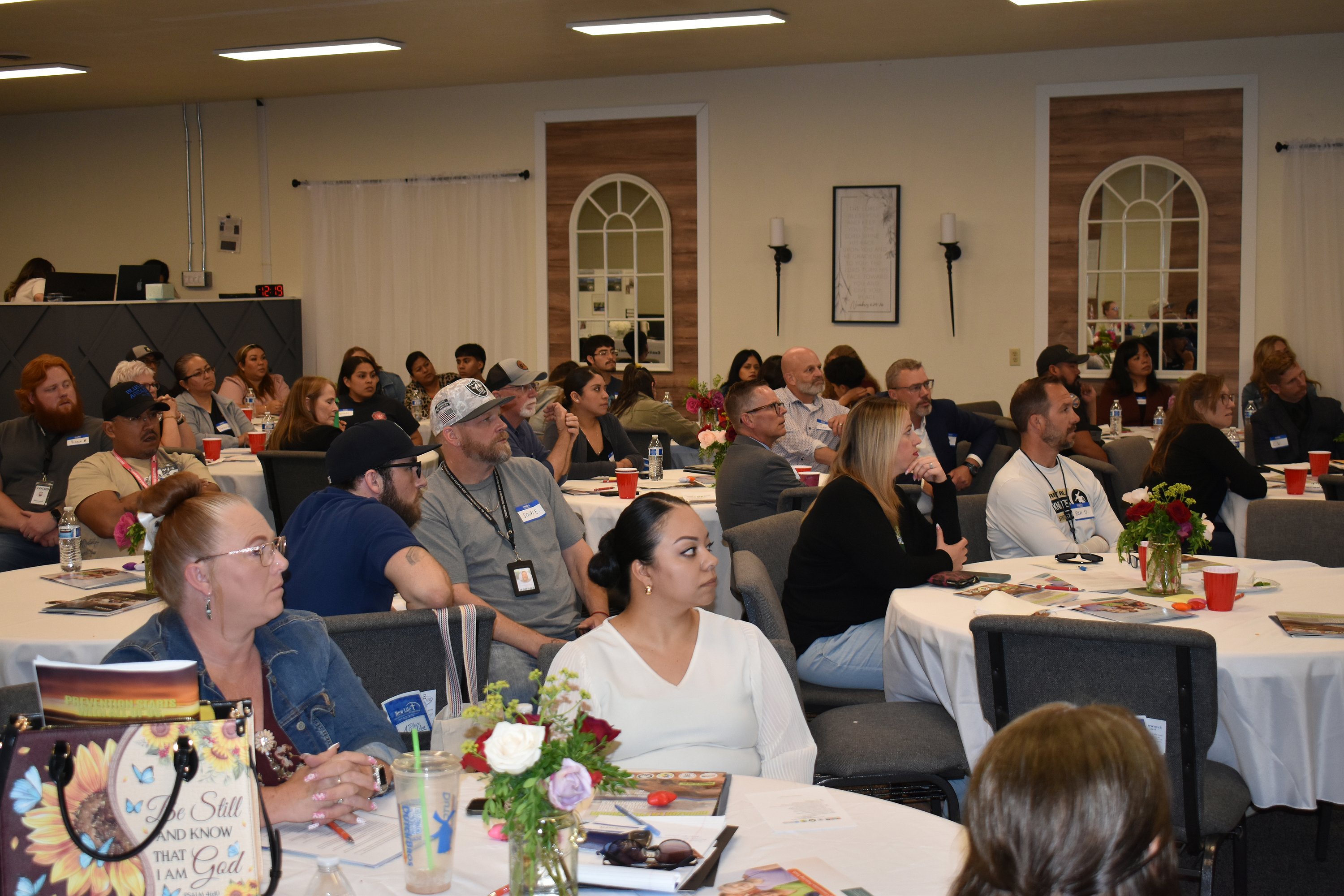 Substance use prevention professionals, volunteers and community members listen to speakers at the Grant County Key Leader Event in Royal City May 14.
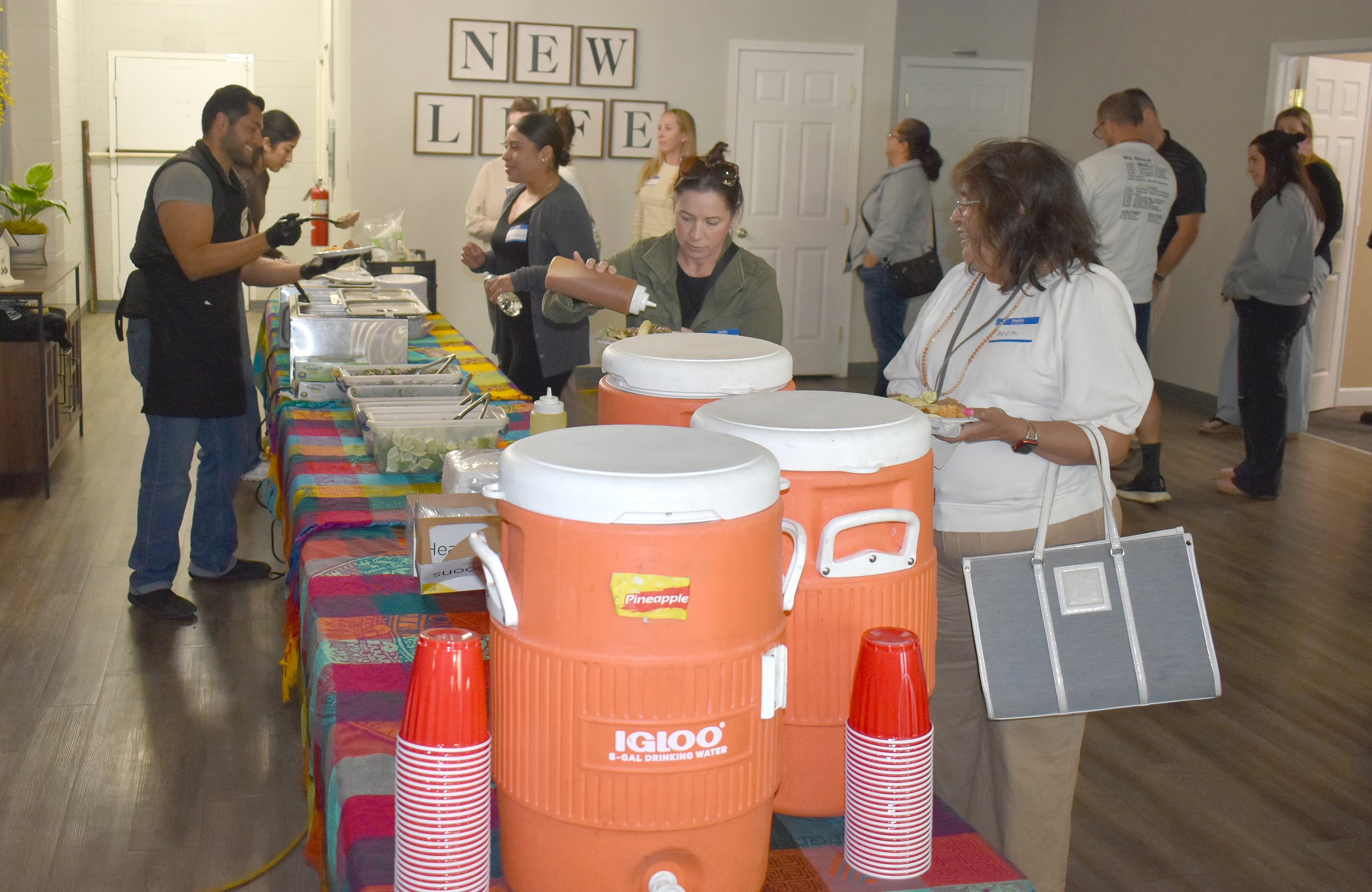 Attendees at the Grant County Key Leader Event serve tacos provided by Hugo’s Tacos of Royal City.
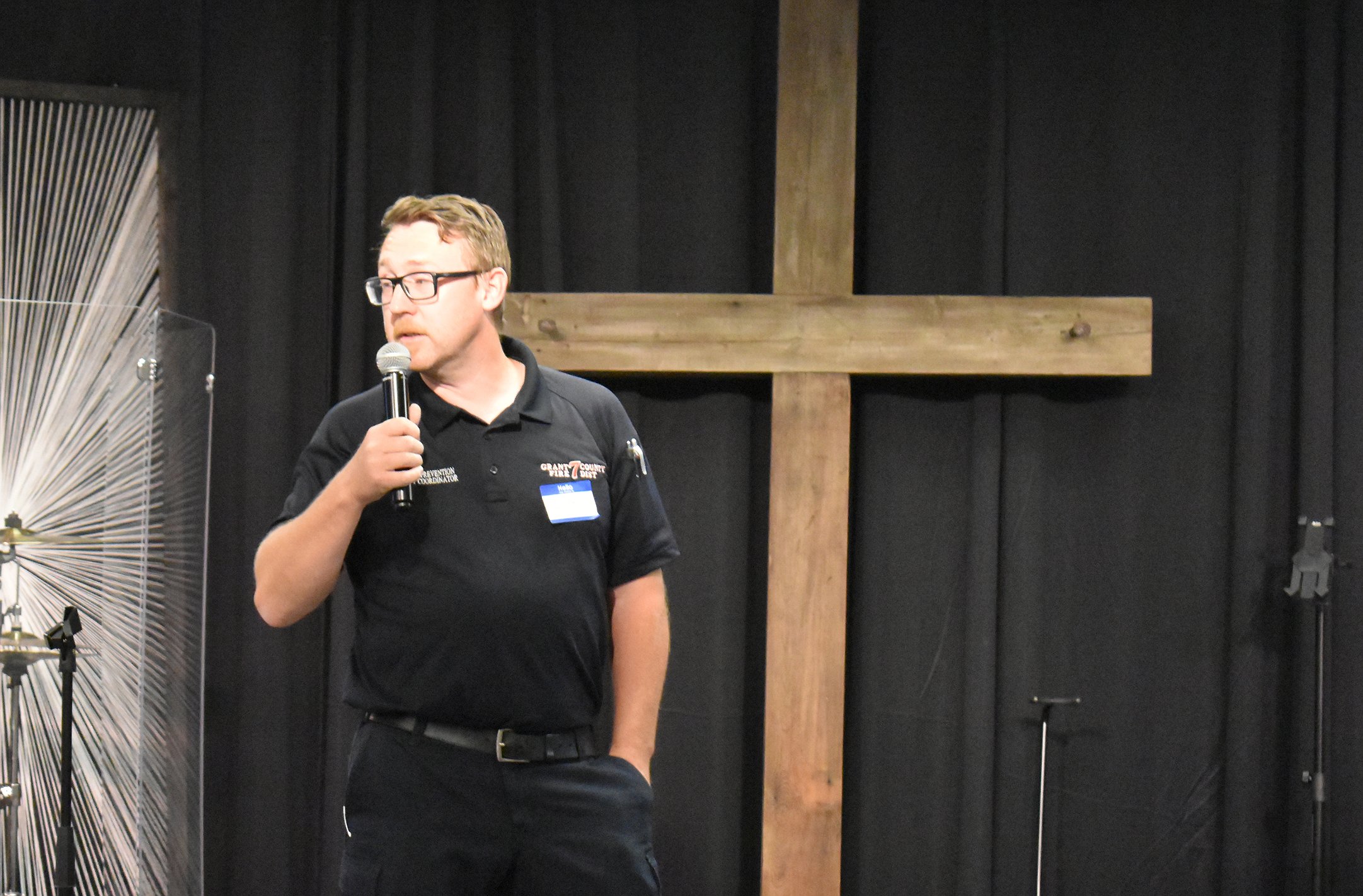 Soap Lake Community Prevention Coalition Coordinator Ryan Boldman discusses what works and what doesn’t at the Grant County Key Leader Event.
ARTICLES BY JOEL MARTIN
Endless battle
Noxious Weed Control Board works to keep invasive plants under control
MOSES LAKE — Some of the nastiest plants in Grant County were the topic of a class led by Jay Johnson, a consultant with the Grant County Noxious Weed Control Board, Tuesday. The Noxious Weed Control Board, as its name would suggest, is tasked with keeping weeds under control in Grant County. That’s not a small job; the board’s website lists 129 species of noxious weeds that are found around Grant County. A noxious weed is defined as an invasive, non-native plant that threatens agricultural crops, local ecosystems or fish and wildlife habitat, according to the Noxious Weed Control Board. Washington state law requires that these weeds be identified and their spread kept to a minimum, if not completely eradicated. “We’re one of those agencies a lot of people don’t really understand,” Johnson said. “We’re a county office and … our funding is tax-based assessment. When you get your tax bill and you look down at all the expenses that you pay for, there we are.”

BASIN EVENTS: Oct. 16-24
COLUMBIA BASIN — Whether you feel like shopping, crafting, learning or seeing a show, there’s something happening for you this week in the Basin. Oct. 16 ‘My Family (Mi Familia)’ screening Spanning three generations, “My Family (Mi Familia)” is a heartfelt drama that follows the Sánchez family as they build their lives in East Los Angeles. Through love, hardship, triumph, and sacrifice, the film explores the immigrant experience, the strength of family bonds, and the traditions that connect one generation to the next. Lowrider show and taco truck before the screening. Sponsored by Columbia Basin Allied Arts, EDUBS C/S and the Moses Lake Creative District. $12 per person. Doors open at 6 p.m., film begins at 7 p.m. at the Moses Lake Civic Center Auditorium, 401 S. Balsam St. Tickets and info: www.cba-arts.org.
Moses Lake author encourages women to look beyond church culture norms
MOSES LAKE — A Moses Lake author’s book, “A Christian Woman Striving to Live Her Faith in a Man-Controlled World,” takes aim at the role to which many churches relegate the female half of their congregations. “It’s to encourage women in the faith,” Linda Curran said. “A lot of churches say, ‘Teach Sunday school, do this, do that, but don’t (evangelize.)’" In her book, Curran recounts a time when she moved to a new community and joined a church there. She was surprised to learn that, as a new female member, she had been automatically assigned church cleaning duties. When she questioned it, she wrote, she was met with condescension and her objections were brushed aside. In other churches, she said, women who were capable of teaching were relegated to “women’s ministry.”