
River Honoring: Students learn stewardship lessons
BERL TISKUS | Hagadone News Network | UPDATED 5 months, 1 week AGO
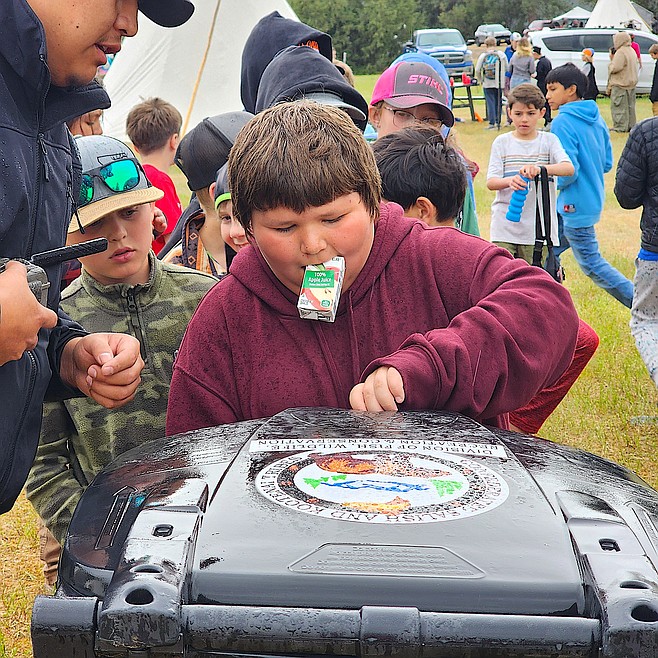
Learning to open a bear-proof garbage can takes both hands, but this youngster managed to save his juice while he concentrated during last week's River Honoring in the Moiese Valley. The annual two-day gathering, hosted by the Confederated Salish and Kootenai Tribes, drew nearly 1,000 students from schools across western Montana. (Berl Tiskus/Leader)
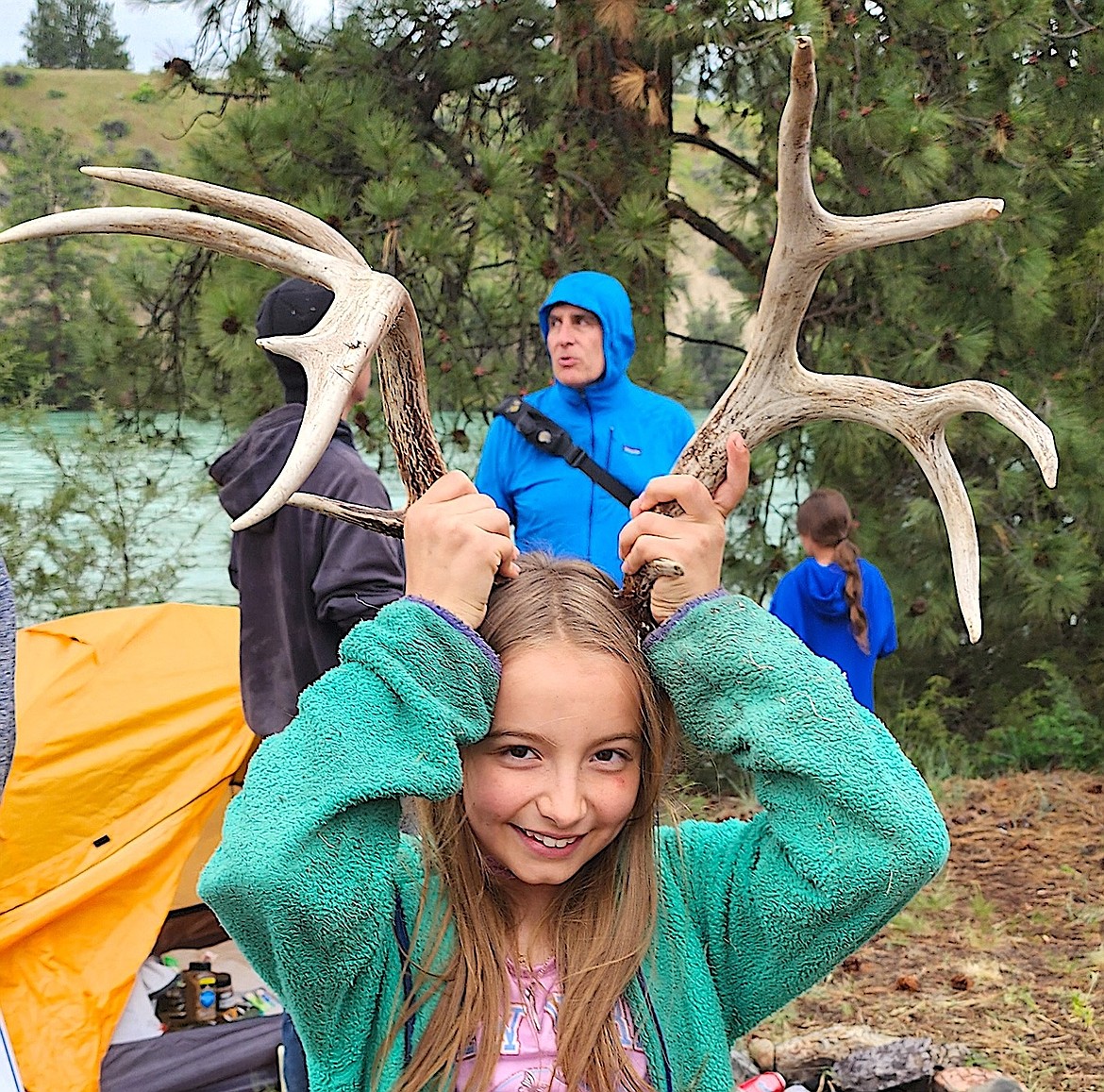
Avery, a student from Corvallis, imagines life as a deer by donning antlers at last week's River Honoring. (Berl Tiskus/Leader)
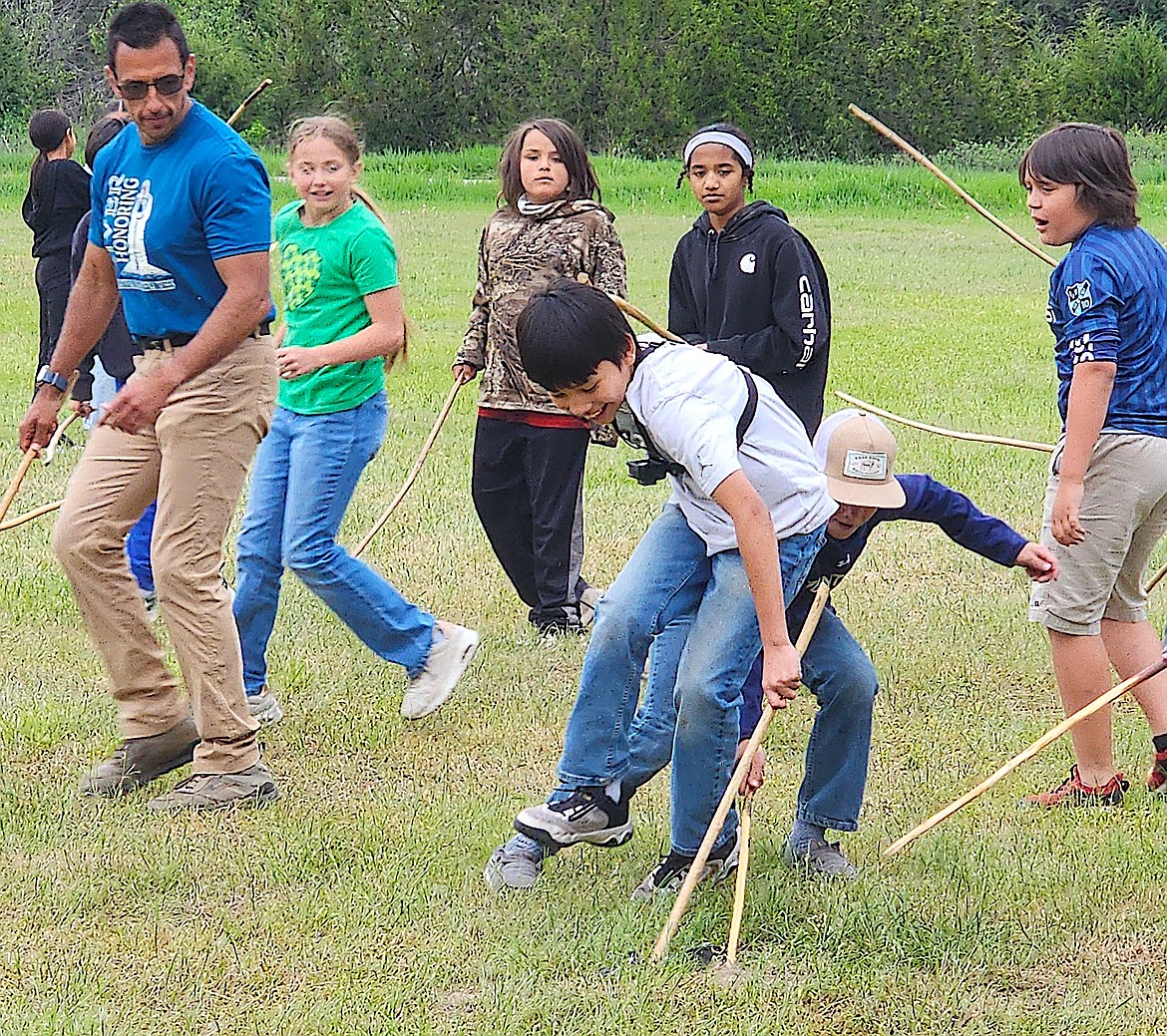
Two Ronan fourth graders skirmish during a game of double ball at last week’s River Honoring near Moiese. (Berl Tiskus/Leader)
Reporter Berl Tiskus joined the Lake County Leader team in early March 2023, and covers Ronan City Council, schools, ag and business. Berl grew up on a ranch in Wyoming and earned a degree in English education from MSU-Billings and a degree in elementary education from the University of Montana. Since moving to Polson three decades ago, she’s worked as a substitute teacher, a reporter for the Valley Journal and a secretary for Lake County Extension. | May 21, 2026 12:00 AM
The Flathead River flows by the historic Woodcock campsite in the Moiese Valley as it has for thousands of years. Although this is the 40th year of the Confederated Salish and Kootenai Tribes River Honoring, the jade-colored river has always been honored by tribal people.
And that’s what River Honoring is about — teaching kids about “stewardship of the river and the deep cultural significance of the Flathead River,” according to the CSKT website.
Stephanie Gillin, information and education specialist in the CSKT Natural Resources Department, begins organizing learning stations for the event in March. She says everyone enjoys coming so if someone has to cancel, a replacement is easy to find.
River Honoring began on Monday, May 11, when tipis rose on the open meadow and different community groups, such as Rotary, arrived to “check us out,” Gillin said.
Monday evening was a community dinner which honored elders Arlene Big Crane and Richard Alexander and educators Chris Clairmont, Corvallis, and Judd Tougas, Ronan.
Tuesday morning, the big yellow school buses lumbered up Moiese Valley Road and dropped off young learners, primarily fourth and fifth graders. Students attending were from Arlee, Charlo, Dayton, Dixon, Elrod (Kalispell), Hot Springs, Nkwusm in Arlee, Polson, Ronan, Pablo, St. Ignatius, Valley View, Corvallis and Mission Mountain Christian Academy, as well as homeschool children and people from Mission Mountain Empowerment.
According to Gillin, 500 youngsters came on Tuesday and 470 kids on Wednesday. Teachers and aids came along, too. This year “an amazing amount of volunteers” helped out as well.
Two loops around the big meadow were set up with 10 stations each. To the left, the Pierre Loop was named for elder Pat Pierre, and to the right, the Espinoza Loop honored Chief Pablo “Chib” Espinoza.
After a little organization, kids were assigned to certain tipis and the learning began. As they visited stations, children heard Salish and Kootenai Culture Committee elders tell stories, and learned about water usage, snow measuring and stream flows, horns and antlers, bear management, backcountry horse skills, forestry tree climbing, fire vehicles, ecology, how to leave wild country “better than you found it,” and other stewardship lessons.
To signal the student groups that it was time to move to the next section, the drum consisting of Mike Durglo, Antoine Paul, Les Trahan, Josh Durglo, and Stephen Small Salmon played a song next to their campfire.
Water, fish and bears, Oh my!
The CSKT’s Division of Engineering and Water Resources had a station dealing with restoration efforts on lands and waterways impacted by humans.
Morgan Schultz and his fellow workers had set up several buckets of water. The kids each filled a cup. Then they filed along a line of tubs marked household use, animals, irrigation, wildlife, and other ways water is used. Students poured the amount of water they felt their families used for each category, something kids may not have ever thought about.
A lot of the young people understood the concept, Schultz felt.
In another tipi with a board marked “native fish” on one side and “non-native fish” on the other, CSKT Fisheries had a game for kids to play. Cutouts of fish were handed out with the species' name on the back; youngsters then stuck their fish on either the native or non-native side.
Native species are those that existed in a geographic area before human intervention; non-native fish were brought into the area by people, even if it was 100 years ago.
Discussions between the kids and the staff ensued over the filled board.
The fisheries staff explained that their job was to study fish, and try to regulate the populations. Gill nets and shock boats, which electrify the water and stun fish without hurting them, allow staffers to collect fish, as do fish ladders on the Jocko River and elsewhere.
“The things we study are lengths and weights (of the fish), what the fish are eating,” explained one member of the team. “And we tag the fish to track their movements.”
Another stewardship activity involving wildlife was presented by Tribal Game Warden Asa Askins.
Even before the Askins began speaking, the fifth graders from K. William Harvey in Ronan peppered him with questions. “Is that a real gun” “Can I hold it?” “Can we get in the bear trap?” “I heard something that sounded like a shot. Is that from here?” “Did one of those bears ever chase you?”
Askins told the kids most bear/human problems are caused by trash. Bears smell garbage, and it smells tasty to them so they try to eat it. One way to keep bears away from trash cans is to store the containers inside a garage or other outbuilding that can be locked.
Askins also had a bear-proof trash can that the kids took turns learning to open it.
Another popular part of Askins’ station was a bear trap. The barrel-shaped wire cage is outfitted with stinky bait to lure the critter inside. Then the trap door slides shut, and the bear is caught. The trap can be mounted on a trailer so game wardens can haul it around to different areas where bears and humans aren't getting along.
Of course, kids wanted to get inside the cage but wisely weren’t allowed.
Tuesday was hot, nearly 80 degrees; Wednesday was cooler with rain showers. Nothing dismayed the kids or the presenters.
Each child received a River Honoring t-shirt, a “squishy” water bottle that collapsed into a hockey-puck size when empty and a prize. Loot in hand, they climbed on buses to head home happy, maybe dusty, and with lots of new information to think about.
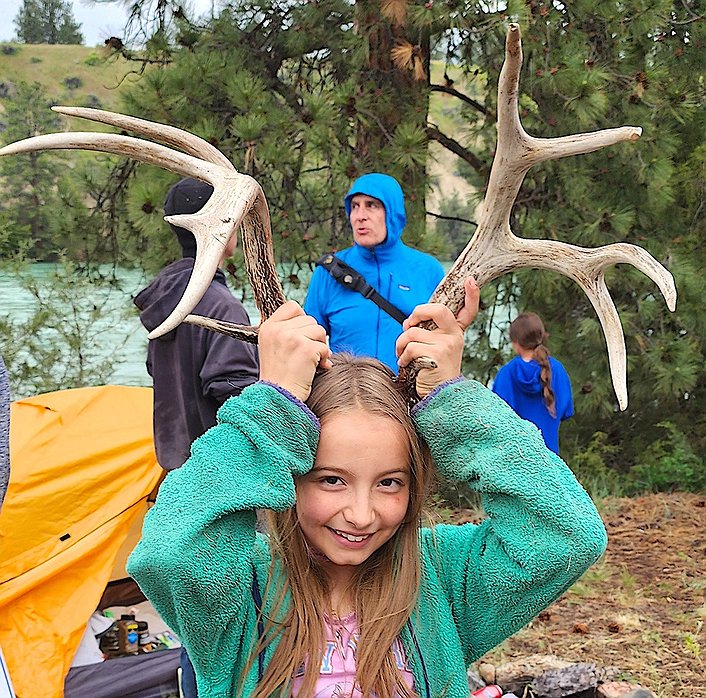 Avery, a student from Corvallis, imagines life as a deer by donning antlers at last week's River Honoring. (Berl Tiskus/Leader)
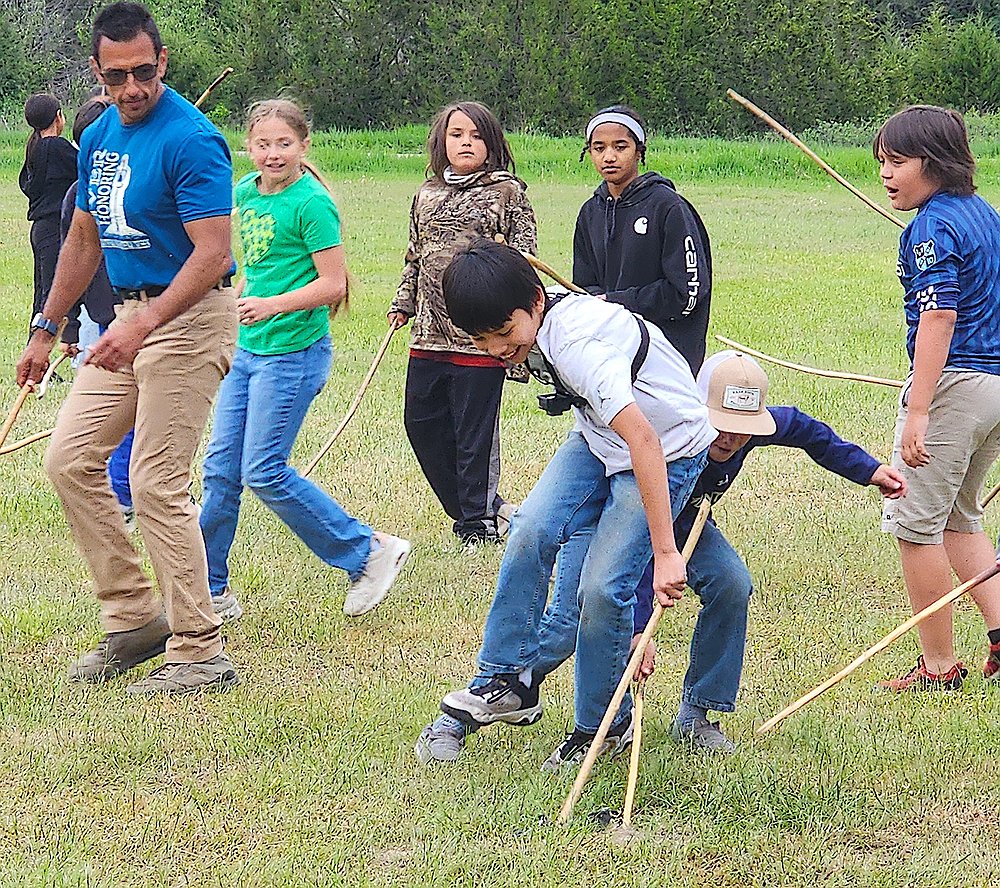 Two Ronan fourth graders skirmish during a game of double ball at last week’s River Honoring near Moiese. (Berl Tiskus/Leader)
ARTICLES BY BERL TISKUS

NRA Finals rodeo brings cowboys and cowgirls to town
The Northern Rodeo Association Finals are on this weekend, Oct. 22-24, at the Majestic Valley Arena in Kalispell. Rodeos start at 6:30 p.m. each night with the doors opening at 5:45 p.m.
Ronan City Council hires grant manager for Friends of the Children project, continues wastewater project work
At the business-packed Ronan City Council meeting Oct. 14, Ronan city attorney Clif Hayden reviewed the Friends of the Children grant administration contract, project administration plan, interlock agreement, and the city’s contract with the Montana Department of Commerce, taking questions from council members as he went through the documentation.

Mission Valley barrel racers compete in Great Falls
More than 280 barrel racers converged at Montana ExpoPark in Great Falls from Oct. 2-4 for the state finals of the Montana Barrel Horse Association, including several Mission Valley riders.