
Samaritan projects budget deficit in 2027
CHERYL SCHWEIZER | Hagadone News Network | UPDATED 32 minutes AGO
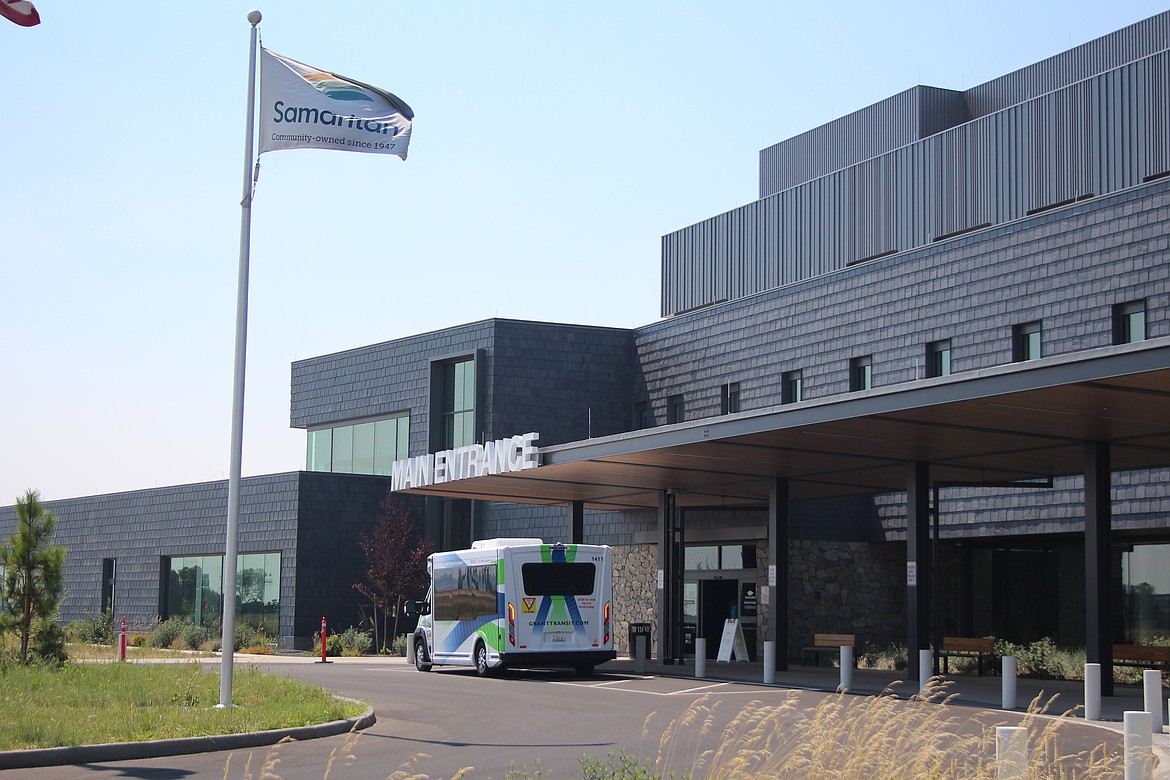
Samaritan's 2027 budget projects a loss due to expenses associated with the new Samaritan Hospital.
FILE PHOTO
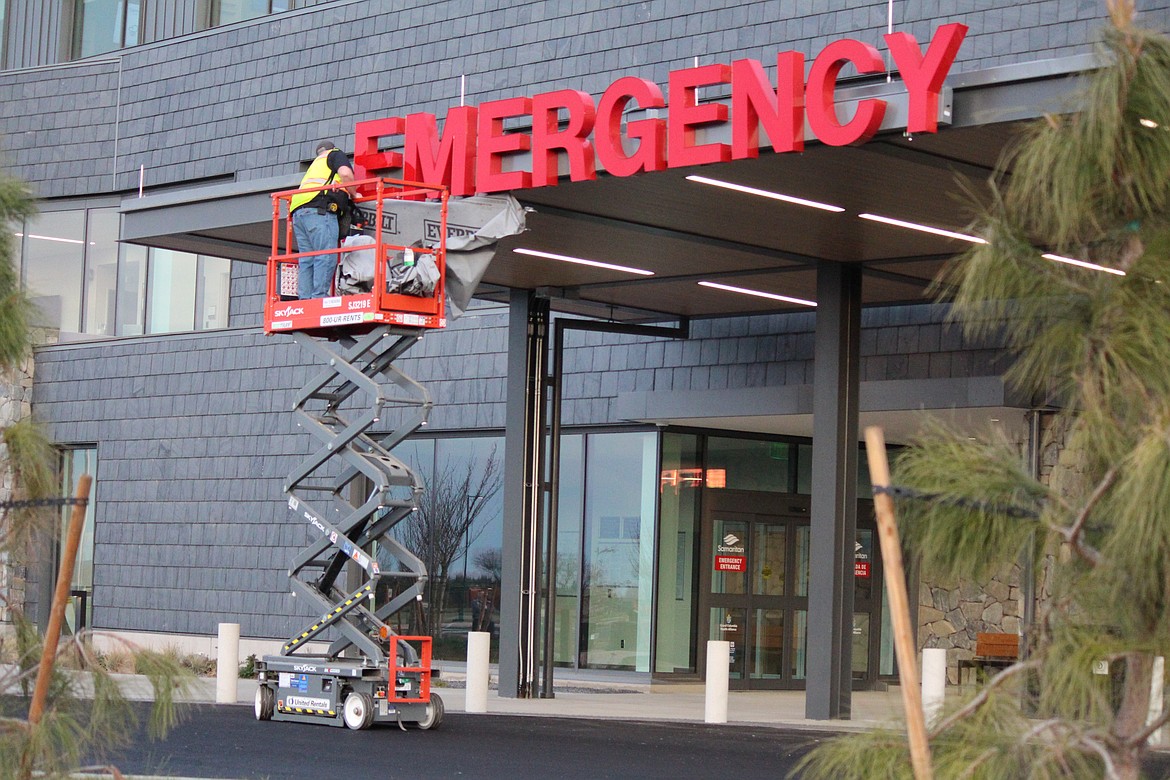
Jason Wilbur, Graham Construction, removes the covering from the ER sign as the new Samaritan Hospital opens for business in March. Expenses associated with its construction and valuation are the primary causes of a projected budget deficit at Samaritan in 2027.
Senior Reporter Cheryl Schweizer is a journalist with more than 30 years of experience serving small communities in the Pacific Northwest. She began her post-high-school education at Treasure Valley Community College and enerned her journalism degree at Oregon State University. After working for multiple publications, she has settled down at the Columbia Basin Herald and has been a staple of the newsroom for more than a decade. Schweizer’s dedication to her communities and profession has earned her the nickname “The Baroness of Bylines.” She covers a variety of beats including health, business and various municipalities. | November 13, 2026 3:25 AM
I guess what I want people to understand is, we made the investment of almost a lifetime here. I believe we went into that knowing full well that these are the impacts we would have to deal with.
— Darryl Wolfe, Chief Financial Officer, Samaritan Healthcare
MOSES LAKE — While Samaritan Healthcare is projected to make money through its operations in 2027, its bottom line will show a deficit of about $13.55 million. Samaritan Chief Financial Officer Darryl Wolfe said that reflects the construction of a new hospital, as well as a different approach to writing a budget.
About $7 million of the loss will be what's called depreciation. An asset – a building, equipment or whatever it is – loses value as it ages, according to accountingcoach.com, and businesses have to account for that lost value. In Samaritan's case, depreciation required to show up as an expense, Wolfe said.
"I guess what I want people to understand is, we made the investment of almost a lifetime here," Wolfe said. "I believe we went into that knowing full well that these are the impacts we would have to deal with."
For Samaritan, the depreciation expenses are calculated over 50 years, he said.
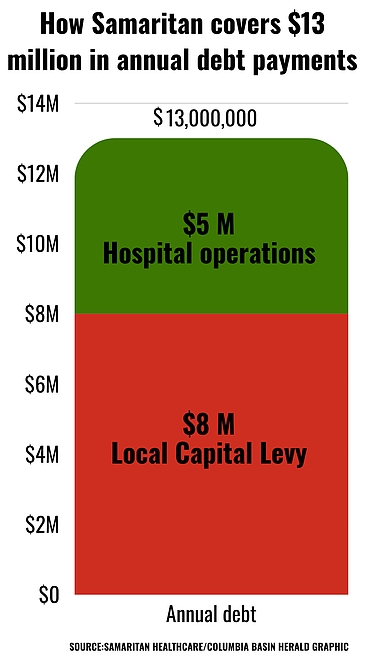
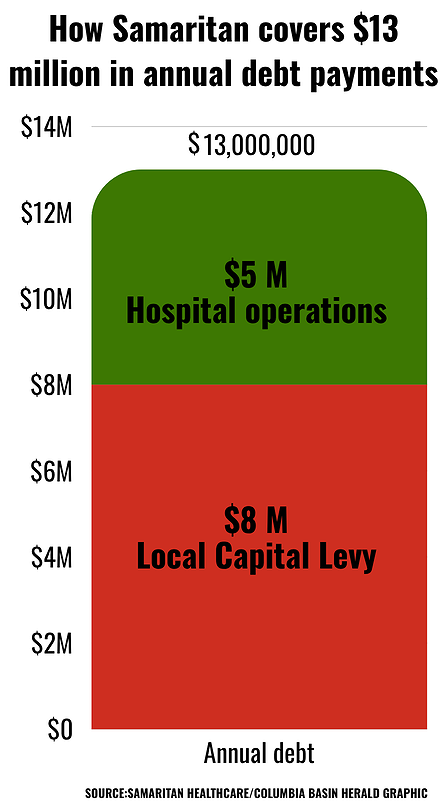
Samaritan also is paying back the loans associated with building the hospital, which cost about $225 million. Wolfe said the payback, called debt service, will be about $13 million per year.
Hospital district patrons approved a construction bond for the hospital in 2023, and that pays part of the cost, he said. The rest comes from money generated by business done by the hospital.
"We've been paying on loans since the construction started. That's not necessarily a change because we were paying on much higher-interest construction loans through the construction period," Wolfe said. "Now the construction's done, and the debt service is $13 million per year, but $8 million is funded by the local capital levy, and the rest is coming from operations."
Wolfe said the most effective way people can track how the hospital is doing is to look at the results of its "earnings before interest, depreciation and amortization" reports.
"That basically measures how much cash are you generating? How much money are we generating to pay our bills, pay our people, pay our debt, and all those things?" he said. "I would just say (people) really should be focusing on that number, because that's a better indicator of our financial health."
Wolfe told Samaritan commissioners Tuesday that the hospital is projected to end the year with about $16.7 million in its EBIDA category.
Samaritan officials also made some changes to the way the budget is prepared, which meant, Wolfe told hospital commissioners Tuesday, that revenue projections changed. In most categories, hospital utilization and department revenue are projected to increase by about one to two percent.
"We will be adjusting prices strategically, but for the most part volumes are going up just a little bit because we aren't building in a lot of extra things that we don't know are going to happen," he said.
That grew out of some assumptions made in the 2026 budget that didn't pan out, he said. Actual revenue has been below budget projections for most of the year as a result.
Chief Executive Officer Alex Town said there is potential for some expanded services and additional revenue, but hospital officials didn't want to count on it.
"In past years we've always been flush with cash. We've done extremely well, but now we're settled into the new facility (and) it is getting back to the reality of really relying on the operations of the organization," Town said. "So the philosophy for this year is, we didn't bake in any recruitments until we knew for sure we had signed contracts, and we didn't at this point."
Bad debt and charity care expenses are projected to increase, Wolfe said. The hospital is projected to end 2026 with about $20 million in bad debt and charity care expenses.
Wolfe said changes in federal rules, especially for Medicaid, are projected to cause those expenses, called uncompensated care, to increase in 2027.
"We're doing a lot of work up front to try to mitigate that as much as possible, keep patients on in the Medicaid program versus moving to self-pay or the uninsured (patient) bucket," he said. "(We're) really going to work hard on that but we still expect a rise in uncompensated care as a result of all that."
Samaritan does expect to add more staff in 2027, which will lead to salary and benefit increases, he said.
Town said the economics of hospitals are changing, and Samaritan has to be ready for them.
"The ebbs and flows in this industry – we're on that downturn right now. It's not all rosy for the health care industry," he said. "I feel very blessed that we're in this position; a lot of organizations are in a much more vulnerable situation. The challenge for us is to beat these metrics in the next several years, and I have confidence that this team will do it. But I just want to let you know, it is going to be rocky for the next few years. It's going to be tough, but this team can overcome that and make sure this organization is financially stable."
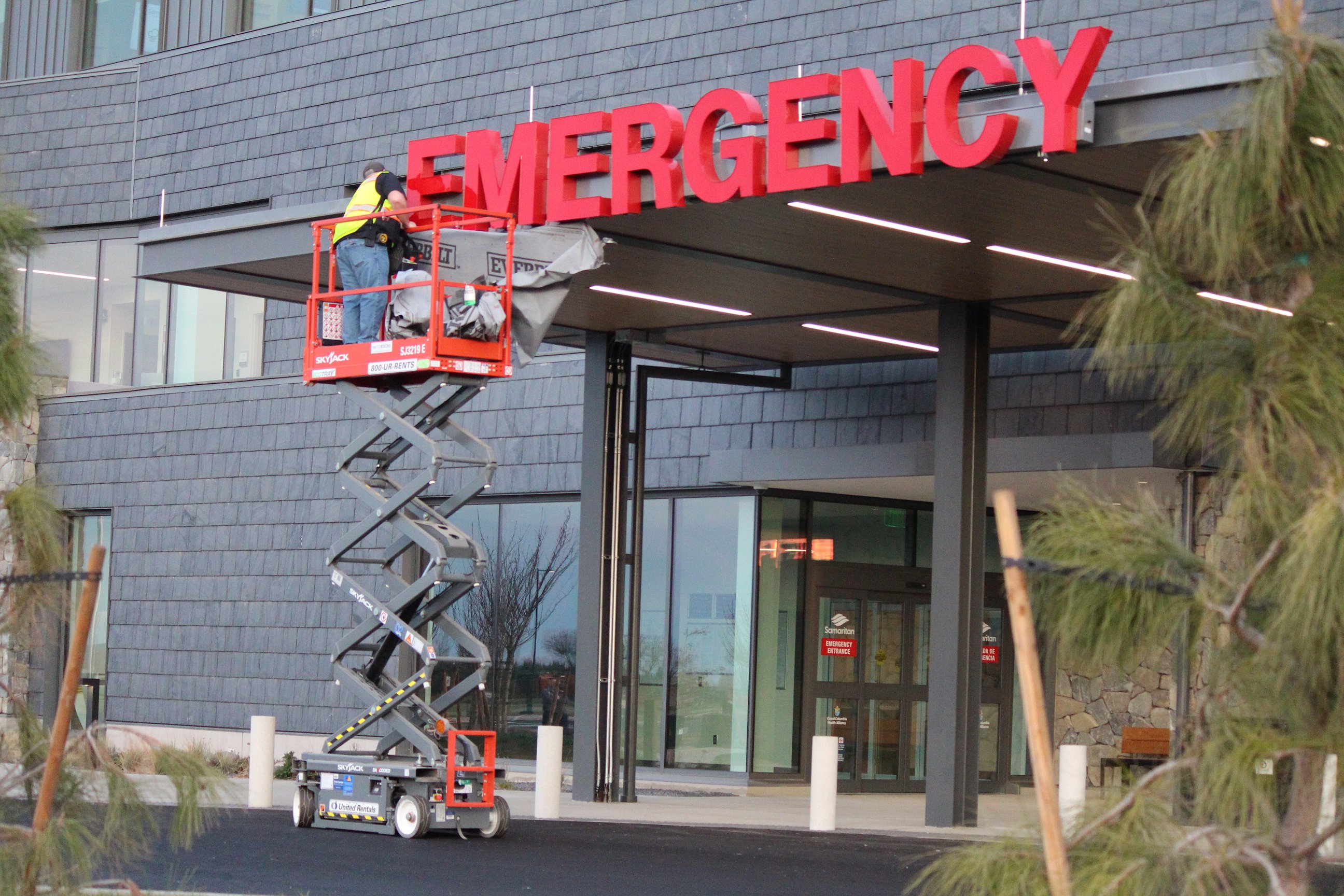 Jason Wilbur, Graham Construction, removes the covering from the ER sign as the new Samaritan Hospital opens for business in March. Expenses associated with its construction and valuation are the primary causes of a projected budget deficit at Samaritan in 2027.
ARTICLES BY CHERYL SCHWEIZER
Economic diversification crucial for Adams County's future, ACDC director says
OTHELLO — Kyle Niehenke, executive director for the Adams County Development Council, used the example of national companies to demonstrate some of the challenges of business development in a sparsely populated county.
Moses Lake City Council opts to forgo property tax increase
MOSES LAKE — While cities are allowed by state law to increase property taxes by one percent each year without a vote, Moses Lake City Council members opted not to raise that tax in 2027. What residents will pay in property taxes in 2027 was the subject of a discussion at Tuesday's council meeting, but Finance Director Sheila Danielson said city officials don't really know the answer to that question yet.

Samaritan projects budget deficit in 2027
MOSES LAKE — While Samaritan Healthcare is projected to make money through its operations in 2027, its bottom line will show a deficit of about $13.55 million. Samaritan Chief Financial Officer Darryl Wolfe said that reflects the construction of a new hospital, as well as a different approach to writing a budget. About $7 million of the loss will be what's called depreciation. An asset – a building, equipment or whatever it is – loses value as it ages, according to accountingcoach.com, and businesses have to account for that lost value. In Samaritan's case, depreciation required to show up as an expense, Wolfe said.