
Sila announces deal with Panasonic Energy Corporation
CHERYL SCHWEIZER | Hagadone News Network | UPDATED 25 minutes AGO
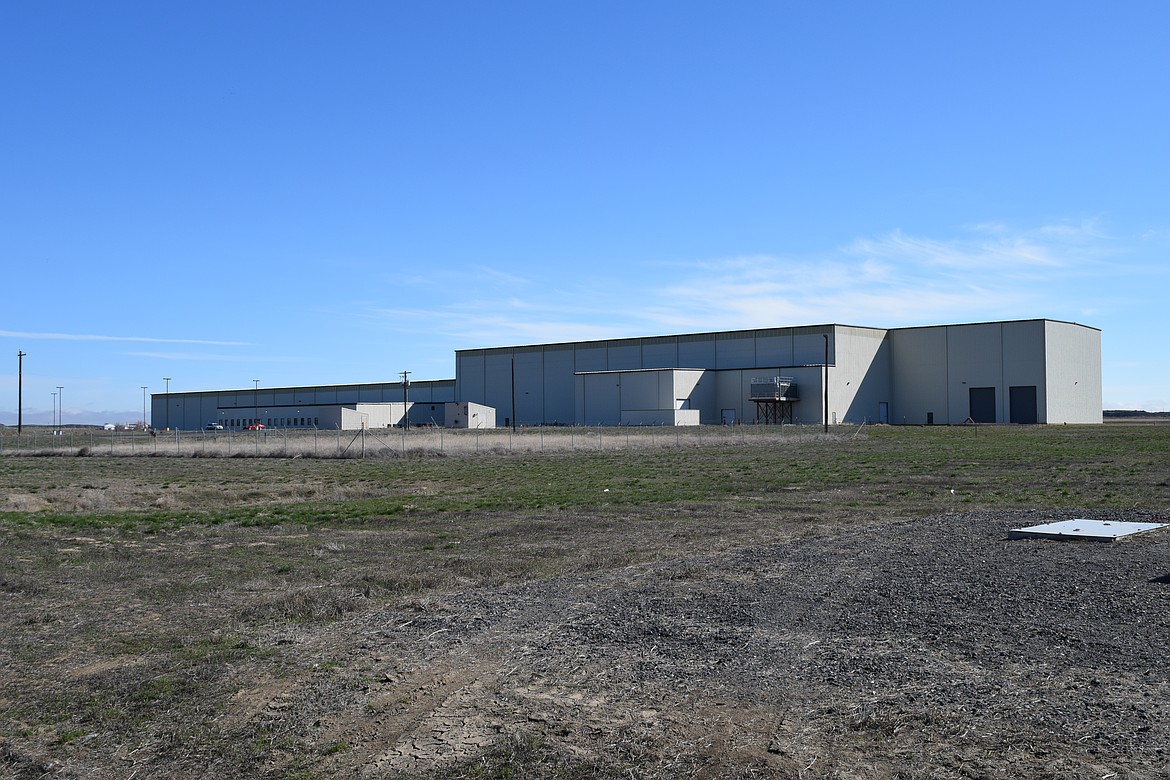
Sila Nanotechnologies has signed an agreement with Panasonic Energy Corporation to provide battery materials for the company.
FILE PHOTO
Senior Reporter Cheryl Schweizer is a journalist with more than 30 years of experience serving small communities in the Pacific Northwest. She began her post-high-school education at Treasure Valley Community College and enerned her journalism degree at Oregon State University. After working for multiple publications, she has settled down at the Columbia Basin Herald and has been a staple of the newsroom for more than a decade. Schweizer’s dedication to her communities and profession has earned her the nickname “The Baroness of Bylines.” She covers a variety of beats including health, business and various municipalities. | November 19, 2026 2:20 AM
MOSES LAKE — Sila Nanotechnologies will be providing materials manufactured at its Moses Lake facility to Panasonic Energy Corporation, according to an announcement released Wednesday. The silicon-carbon battery anode material produced in Moses Lake will be used in Panasonic battery cells, it said.
"The multi-year agreement is part of a long-term relationship," the press release said. "The partnership is also expected to support significant manufacturing and construction creation in the United States."
Over time, the agreement could lead to up to 500 additional jobs in Moses Lake as Sila expands, the press release said.
Gene Berdichevsky, Sila co-founder and chief executive officer, said its materials will be an important component in strengthening the US-based manufacture of advanced materials.
"This offtake agreement is a major commercial milestone for Sila, a signal that our Moses Lake plant will be ready to supply high-performance materials for our key strategic customers once qualified, and expand as needed," Berdichevsky said. "Partnering with a global industry leader like Panasonic validates our technology, ensuring anodes invented and manufactured in the U.S. are integrated into American-built cells to power critical industries for years to come."
Yasuaki Takamoto, chief executive officer of Panasonic Energy Corporation of North America, said Panasonic has been impressed with Sila's growth.
"Their technical leadership makes them a trusted partner as we work together toward meeting our highest quality and performance standards," Takamoto said. "This collaboration evidences Panasonic’s commitment to U.S. manufacturing while contributing to a more resilient battery supply chain in North America."
Sila received a $1.4 billion loan from the US Department of Defense Office of Strategic Capital earlier this summer.
"Securing strong commercial offtake agreements represents a key milestone and a natural next step toward demonstrating Sila’s execution and commercial readiness across the business," the press release said.
Berdichevsky said in an earlier interview that Sila’s facility on Wheeler Road will be manufacturing battery components that are designed to solve some of the challenges that have hampered development of more reliable batteries.
“We do make a new technology; we make silicon anodes. One of the really big advantages of silicon anodes is they can replace graphite anodes,” he said. “(Silicon anodes) are about five times lighter and two times smaller than graphite anodes in lithium-ion batteries.”
Components produced in the US will help solve a crucial supply issue, which was one of the attractions for the Department of Defense, he said.
“Graphite anodes come almost entirely from China, and certainly entirely from outside the U.S. We are going to be replacing those imported goods with domestically produced silicon anodes, so (replacing) imported graphite anodes with domestically produced silicon anodes,” he said.
In terms of battery performance, silicon has an advantage over graphite, he said.
“It makes the batteries much better. The places that really want much better batteries are things like drones, satellites, robotics, consumer electronics, and electric cars,” Berdichevsky said.
A lot of modern technology incorporates materials that are either not produced in the U.S. or are hard to find. Graphite anodes are one example, but not the only one.
The civilian market is a crucial component to being able to provide secure supply chains for military customers, he said.
"(The military) is a fairly small market. But though that's a small market, if you don't have an industrial base to support the broader industrial markets, you're not going to have the latest technology even for sort of small markets."
As a result, it's important for US manufacturers to be competitive when it comes to advanced applications.
"It's really important for the U.S. to have a broad industrial base for civilian applications in critical technologies," he said. "In particular in batteries, anode materials are incredibly concentrated in their production in China. The US is almost entirely dependent on the rest of the world for its anode production.”
The market for better batteries will continue to grow, he said.
“The world, this year, will buy about 2000 gigawatt hours' worth of batteries globally, and each one of those batteries has a graphite anode,” he said.
Sila's facility will produce anodes that will help generate about 1.5 gigawatt hours in its first phase, he said. The DOD financing will allow the company to ramp that up to the range of 10 gigawatt hours, he said.
“That'll still be a fraction of what the world needs. It'll be a decent fraction of what the U.S. needs, but still small maybe 10% of what the U.S. needs. This technology needs to grow into the existing market, and the existing market is going to double in the next five years, from 2,000 gigawatt hours to 4,000 gigawatt hours. So we have to grow at quite a pace to catch up,” Berdichevsky said.
ARTICLES BY CHERYL SCHWEIZER

Sila announces deal with Panasonic Energy Corporation
MOSES LAKE — Sila Nanotechnologies will be providing materials manufactured at its Moses Lake facility to Panasonic Energy Corporation, according to an announcement released Wednesday. The silicon-carbon battery anode material produced in Moses Lake will be used in Panasonic battery cells, it said.

New well, park design, street repair part of Royal City 2027 budget
ROYAL CITY — Royal City is tentatively scheduled to drill a new well in 2027 and work on a design for the rest of Lions Park. Those are among the projects included in the city's 2027 preliminary budget. Finance Director Janice Flynn said the preliminary budget is traditionally a work in progress. The final budget is scheduled for approval in late December. "There will be some changes (from the preliminary budget)," she said.

Work on Royal City's Apple Avenue second phase delayed
ROYAL CITY — Additional upgrades to Apple Avenue Northeast in Royal City will be on hold in 2027. City officials have been notified that a grant application to fund design of the next phase was denied by the Transportation Improvement Board. "There's a lot of need and less money," said Royal City Finance Director Janice Flynn. "We will reapply for it next year." The grant would've paid to design improvements and upgrades on Apple Avenue from Poplar Street Northeast to Slate Lane Northeast. The first phase, from the city limits to Poplar Street, was completed last month.